Get into jazz
This four-stage curriculum takes a complete beginner from "I like the sound of jazz" to a deep, historically grounded, and emotionally connected understanding of the music. Each stage builds on the last: first you learn how to listen and why jazz matters, then you meet the giants and their eras, then you go deep into the music's inner workings and landmark recordings, and finally you follow the story into the modern world.
Learning to Listen
BeginnerDevelop ears and enthusiasm — understand what jazz is, where it came from, and how to actively listen to it before diving into history or theory.
▸ Study plan for this stage
Pace: 8–10 weeks total. Book 1 ("Why Jazz Happened" by Marc Myers): 3–4 weeks at ~20–25 pages/day — it is a focused, argument-driven read best taken slowly so each chapter's causal claim can be absorbed and discussed. Book 2 ("Jazz" by Geoffrey C. Ward): 5–6 weeks at ~25–30 pages/day — it is a longer, ric
- Jazz did not emerge in a vacuum — Marc Myers argues that specific social, technological, and legal forces (the GI Bill, the rise of the LP, changes in copyright law, the decline of the big band, etc.) directly shaped the music's evolution, teaching readers to hear jazz as a product of its historical
- Active vs. passive listening — before engaging with theory, a beginner must learn to follow a single instrument, track a melody's transformation, and notice call-and-response patterns; both books model this by grounding every musical description in a concrete recording.
- The blues foundation — Geoffrey C. Ward's narrative repeatedly returns to the blues as jazz's emotional and structural bedrock; understanding the 12-bar blues form and its feeling is essential before tackling bebop or modal jazz.
- Improvisation as conversation — jazz musicians are not 'making it up randomly'; they are responding to each other in real time within agreed-upon structures (chord changes, a head, a form), a concept Ward illustrates through profiles of Louis Armstrong, Duke Ellington, and others.
- The role of place and community — New Orleans, Kansas City, Chicago, and New York each produced distinct jazz dialects; Ward's geographic storytelling shows how local culture, race, and economics shaped the sound of each scene.
- Race, segregation, and artistic ownership — both books are honest about how systemic racism affected who got recorded, who got paid, who got credit, and how the music was marketed; this context is inseparable from the music itself.
- The recording as a primary document — Myers's argument depends heavily on how recording technology changed what musicians could do and what audiences could hear; beginners should start treating each record as a historical artifact, not just entertainment.
- Swing, syncopation, and 'the groove' — Ward's narrative introductions to rhythm help beginners identify what makes jazz feel different from European classical music, building the physical, intuitive sense of the beat that underpins all further study.
- According to Marc Myers in 'Why Jazz Happened,' name at least three external (non-musical) forces he argues were responsible for a major shift in jazz's sound or business — and explain the mechanism by which each one worked.
- After reading Geoffrey C. Ward's account of New Orleans, what specific cultural ingredients came together there that did not exist in the same combination anywhere else, and why does Ward treat this as significant rather than accidental?
- How do both books treat the relationship between jazz and the African-American experience — where do Myers and Ward agree, and is there any tension between their emphases?
- Choose one musician profiled in 'Jazz' by Ward (e.g., Louis Armstrong, Duke Ellington, Billie Holiday, Charlie Parker). Based on Ward's account, how did that musician's personal biography shape their musical innovations?
- Myers argues that the long-playing record (LP) fundamentally changed jazz composition and performance. In your own words, what changed and what musical evidence does he offer?
- After completing both books, how would you explain 'active listening' to a friend who has never tried it — what specifically should they be paying attention to, and why does it matter?
- 'One Instrument at a Time' Listening Log — For every chapter of Ward's 'Jazz' that profiles a musician, find one recording mentioned or implied in the text, listen to it three times: first for overall feel, second tracking only the featured soloist, third tracking the rhythm section. Write 3–5 sentences per listen describing what you notice. By the end of the book you will have built a personal an
- The Myers Cause-and-Effect Map — After finishing 'Why Jazz Happened,' draw a visual diagram (on paper or digitally) mapping each external force Myers identifies to the musical change it produced. Include at least one representative recording for each node. This forces you to test whether his argument holds up and makes the book's thesis memorable.
- Blues Immersion Session — Before starting Ward's chapters on bebop, spend one dedicated evening listening only to 12-bar blues recordings (Robert Johnson, Bessie Smith, early Louis Armstrong). Then re-read Ward's relevant passages. Write a short paragraph on what you hear differently in the jazz that grew out of this tradition.
- Blind Listening Challenge — Pick any three tracks from different eras (pre-swing, bebop, post-bop) without reading the liner notes first. Write down: the approximate era, the mood, the instruments you can identify, and whether it swings. Then look up the actual details. Use Myers's framework to explain why the track sounds the way it does given when it was made.
- Reading-to-Listening Pairing Journal — Keep a running two-column journal as you read Ward: left column for a quote or idea from the book, right column for a specific musical moment in a recording where you can actually hear that idea. Aim for at least 20 paired entries across the full book. This is the core habit of an active jazz listener.
- Teach-Back Exercise — After finishing both books, explain 'why jazz happened' (in the Myers sense) to someone who has never read the book — a friend, a family member, or even a voice memo to yourself. Aim for five minutes. If you cannot explain a cause-and-effect chain clearly, return to that chapter before moving to the next stage.
Next up: Having built an intuitive ear, a personal listening vocabulary, and a broad chronological map of jazz history through Myers and Ward, the reader is now ready to move from 'what happened and why' to 'how does it actually work' — making Stage 2's deeper dive into jazz theory, form, and harmony feel like unlocking the grammar of a language they already love to speak.

A concise, accessible account of the social and cultural forces that shaped jazz decade by decade — perfect first read because it answers 'why does this music exist?' before asking you to study it.
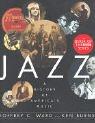
The companion book to Ken Burns's landmark PBS documentary, it tells the full sweep of jazz history in vivid, readable prose with rich photographs — an ideal orientation to the cast of characters and eras you'll explore next.
Meeting the Giants
BeginnerGet to know the towering personalities — Armstrong, Ellington, Parker, Davis, Coltrane — through biography, so the music becomes inseparable from the human stories behind it.
▸ Study plan for this stage
Pace: 12–14 weeks total, reading roughly 25–35 pages per day, 5 days a week. Suggested pacing: Bergreen's "Louis Armstrong" (weeks 1–4, ~480 pages); Teachout's "Duke" (weeks 5–8, ~460 pages); Carr's "Miles Davis" (weeks 9–11, ~350 pages); Kahn's "A Love Supreme" (weeks 12–13, ~200 pages); week 14 reserved
- The 'Great Man' arc in jazz: how individual genius, hardship, and ambition shaped the music's evolution from New Orleans to the avant-garde
- Louis Armstrong as the foundational voice — his invention of the jazz solo, his scat singing, and how his childhood poverty in New Orleans forged an irrepressible public persona (Bergreen)
- Duke Ellington's orchestra as a living compositional instrument — Teachout's portrait of how Ellington wrote *for* specific musicians, making personality and timbre inseparable from composition
- The tension between commercial success and artistic integrity, a thread running through all four books: Armstrong's Hollywood crossover, Ellington's Cotton Club years, Davis's repeated stylistic reinventions
- Miles Davis as a serial revolutionary — Carr traces how Davis catalyzed bebop, cool jazz, hard bop, modal jazz, and fusion, never settling into a single identity
- The album as a unified artistic statement: Kahn's forensic account of how 'A Love Supreme' was conceived, recorded in a single session, and released as a four-part spiritual suite rather than a collection of tracks
- Spirituality and transcendence in jazz: Coltrane's explicit religious framework in 'A Love Supreme' contrasted with the more secular but equally intense personal quests of Armstrong, Ellington, and Davis
- Race, power, and the jazz world: segregated venues, record-label exploitation, and how each giant navigated — or was shaped by — the racial landscape of 20th-century America
- After reading Bergreen, can you explain in your own words how Armstrong's early life in New Orleans — the Waifs' Home, Storyville, his mentorship under King Oliver — directly influenced the emotional character of his playing?
- Teachout argues that Ellington's greatest instrument was his orchestra. Using at least two specific musicians Teachout discusses (e.g., Johnny Hodges, Billy Strayhorn), explain what he means by this claim.
- Carr documents at least five distinct stylistic phases in Miles Davis's career. Can you name and briefly describe three of them, and identify one album or recording associated with each?
- Kahn's 'A Love Supreme' is structured around the making of a single album. What were the key spiritual, personal, and musical circumstances Coltrane brought into the recording studio on December 9, 1964, and how do they manifest in the suite's four movements?
- All four books portray their subjects navigating racism in the American music industry. Compare how Armstrong and Davis each responded to racial barriers — what strategies did they use, and how did those strategies reflect their different personalities and eras?
- Having read all four books, which figure do you think made the single most consequential stylistic innovation in jazz history, and what evidence from the texts supports your argument?
- Listening journal (ongoing, all 14 weeks): For each book, select 5 recordings directly mentioned or implied by the biography and listen before or while reading the relevant chapters. Write 3–5 sentences per recording connecting what you hear to something specific in the text — a life event, a collaborator, a stated intention.
- Personality timeline: After finishing each biography, draw a single-page timeline that maps major life events on top and major musical milestones on the bottom. When all four are done, lay them side by side to spot overlaps, influences, and historical context they share.
- Ellington orchestration exercise (after 'Duke'): Pick any Ellington recording Teachout references. Listen and try to identify at least three distinct instrumental voices. Write a short paragraph on how the interplay of those voices reflects Teachout's argument about the orchestra-as-instrument.
- 'A Love Supreme' deep-listen (after Kahn): Listen to the complete album in one uninterrupted sitting using Kahn's chapter on the four movements as a guide. Annotate the liner notes or a printed track list with moments where you can hear the spiritual or structural ideas Kahn describes.
- Comparative character sketch: Write a 400–600 word essay arguing which of the four figures — Armstrong, Ellington, Davis, or Coltrane — faced the greatest gap between their public image and their private self, drawing specific evidence from at least two of the four books.
- Curate a 'Giants' playlist: Build a chronological 90-minute playlist (one era per giant) that tells the story of jazz history as a relay race — each track should feel like a handoff from one giant to the next. Write a one-sentence liner note for each track explaining the connection.
Next up: By grounding the music in vivid human stories, this stage gives the reader emotional anchors — faces, struggles, and intentions — that make it natural to next ask *how* the music itself works, setting up a move into the theory, form, and language of jazz.
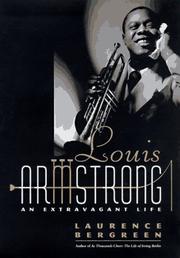
Armstrong invented the jazz soloist; starting here anchors everything that follows. Bergreen's biography is thorough yet compulsively readable, making Satchmo's genius feel visceral and real.

Ellington is the music's greatest composer; Teachout's authoritative biography shows how jazz grew from dance halls into an art form, bridging Armstrong's era to bebop.

Davis is the connective tissue of modern jazz — bebop, cool, hard bop, fusion. Reading Carr here lets you trace the music's evolution through one restless genius before tackling Coltrane.
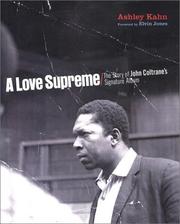
Focused on a single masterpiece, this book is the ideal introduction to Coltrane — it explains the album's spiritual ambition and musical architecture in terms any newcomer can grasp, and it sends you straight to the turntable.
Inside the Music
IntermediateUnderstand how jazz actually works — improvisation, harmony, rhythm, form — and learn to navigate the landmark recordings with informed ears.
▸ Study plan for this stage
Pace: 10–13 weeks total. Week 1–3: The Penguin Guide to Jazz Recordings — treat it as a reference atlas rather than a cover-to-cover read; skim the introductory essays, then deep-dive ~15–20 artist entries per session (~45 min/day), always pairing each entry with the actual recording. Week 4–9: Thinking i
- Improvisation as a learned, cumulative language — Berliner's core argument that jazz soloists build vocabulary through years of transcription, imitation, and recombination, not spontaneous inspiration alone
- Harmonic architecture: how chord changes, the ii–V–I progression, modal scales, and 'playing outside' give improvisers their roadmap
- Rhythm and swing feel: the role of the rhythm section (piano, bass, drums), syncopation, and the difference between straight and swung eighth notes
- Jazz form: blues (12-bar), rhythm changes (32-bar AABA), and modal frameworks — and how soloists navigate or subvert these forms
- The recording as primary text: how The Penguin Guide teaches critical listening by rating and contextualizing landmark albums, making discernment a skill
- Modal jazz and the 'new direction' of the late 1950s: how Kind of Blue's use of modes instead of dense chord changes opened new expressive space
- The social and collaborative dimension of jazz: Berliner's account of how musicians learn from mentors, peers, and the bandstand itself
- Close listening as active analysis: identifying head/solos/trading/outro, hearing call-and-response, and tracking a soloist's narrative arc across a take
- After reading Berliner, how would you explain to a non-musician the difference between 'spontaneous' and 'learned' improvisation — and why the distinction matters for how we listen?
- Using The Penguin Guide's critical framework, what criteria distinguish a 'landmark' recording from a merely good one? Pick two entries you read and defend their ratings.
- What specific musical problems did Miles Davis and the Kind of Blue ensemble solve by moving from chord-based to modal improvisation, and how does Ashley Kahn's account of the recording sessions illuminate those choices?
- How do the 12-bar blues form and the AABA 32-bar form each create different opportunities and constraints for an improvising soloist?
- Berliner describes multiple stages in a jazz musician's development. What are they, and what listening or practicing habits does he associate with each stage?
- Choose one track from Kind of Blue. Using concepts from all three books — critical evaluation (Penguin Guide), improvisational process (Berliner), and historical context (Kahn) — write a short analytical account of what you hear.
- The Penguin Guide Listening Log: For every artist entry you read in the Penguin Guide, listen to at least one of the recommended recordings the same day and write 3–5 sentences in your own words describing what you hear — instrumentation, mood, form, and one moment that surprised you.
- Berliner Vocabulary Notebook: As you read Thinking in Jazz, keep a running glossary of every musical term or concept Berliner introduces (lick, motif, trading fours, comping, etc.). For each term, find one moment in a recording from your Penguin Guide listening log where you can actually hear it.
- Transcription-Lite Exercise: Choose any 8–16 bar solo from a recording you've been assigned (it need not be a famous one). You don't need to notate it — instead, hum or sing it back repeatedly until you can anticipate every note. Then describe in writing the 'story' the soloist tells: where does tension build, where does it release?
- Kind of Blue Deep-Listen Session: Listen to the full album three times in sequence — first for pure pleasure, second following along with Kahn's track-by-track commentary, third with a timer to map the structure (head in, solo order, length of each solo, head out). Compare your structural map to what Kahn describes about the one-take recording process.
- Form-Mapping Drill: Pick four recordings from different eras in the Penguin Guide (e.g., early swing, bebop, hard bop, modal). For each, try to identify the underlying form (blues, AABA, modal, free) just by ear, then verify with liner notes or a quick reference. Track your accuracy over the course of the stage.
- Berliner's 'Conversation' Exercise: Re-read Berliner's chapters on interaction and collective improvisation, then listen to a rhythm-section-heavy track (a piano trio or quartet). Write a paragraph describing the 'conversation' between instruments: who is leading, who is responding, where do they agree or surprise each other?
Next up: By the end of this stage the reader can hear jazz structurally and historically — they have the critical vocabulary, the listening habits, and a deep case study in Kind of Blue — which positions them to move into more advanced study of specific sub-genres, individual artists, or jazz history as a broader cultural and social narrative.

The canonical listener's reference: opinionated, deeply knowledgeable reviews of thousands of albums. Use it as a map — read the essays on artists you've already met and let it guide every listening session from here on.
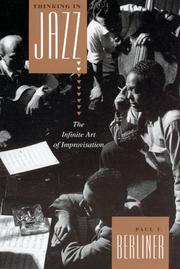
The definitive study of how jazz musicians learn to improvise, drawn from hundreds of interviews. It demystifies spontaneous creation and transforms how you hear every solo — essential for moving from passive listener to true appreciator.
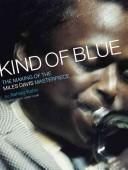
A deep dive into the most influential jazz album ever made, covering the modal revolution, the session musicians, and the recording day itself — puts everything learned so far into sharp musical focus.
From Bebop to Now
ExpertFollow jazz's restless evolution through bebop, free jazz, fusion, and contemporary scenes, and develop a personal critical perspective on where the music has been and where it is going.
▸ Study plan for this stage
Pace: 8–10 weeks total: Weeks 1–4 on "Stomping the Blues" (~20–25 pages/day, including re-reading dense passages on blues aesthetics); Weeks 5–10 on "The History of Jazz" (~30–35 pages/day, pausing at each era to listen to representative recordings before moving on).
- The blues as the foundational aesthetic and philosophical bedrock of all jazz — Murray's argument that blues music is not about despair but about stylizing and transcending adversity
- The concept of 'stomping the blues' as an act of affirmation: how swing, rhythm, and improvisation function as existential responses to the human condition
- Murray's 'antagonistic cooperation' — the interplay between soloist and rhythm section as a model for understanding jazz ensemble dynamics across all eras
- Bebop as a deliberate artistic revolution: Charlie Parker, Dizzy Gillespie, and Thelonious Monk's harmonic and rhythmic innovations as a rejection of commercialism and a claim for jazz as serious art
- Free jazz and the avant-garde (Ornette Coleman, Cecil Taylor, John Coltrane's later work) as an extension of — or rupture from — the blues continuum Murray describes
- Fusion's synthesis of jazz improvisation with rock and funk electricity (Miles Davis's 'Bitches Brew' era) as Gioia frames it: commercial gamble and genuine artistic experiment simultaneously
- Post-fusion pluralism: how contemporary jazz scenes (neo-traditionalism, M-Base, jazz-rap crossovers, global hybrids) reflect both a return to and a departure from the Murray-defined blues aesthetic
- Developing a personal critical lens: using Murray's aesthetic philosophy as a measuring stick against Gioia's historical narrative to form independent judgments about jazz's trajectory
- According to Murray in 'Stomping the Blues,' why is the blues fundamentally an aesthetic of affirmation rather than complaint, and how does this reframe the way we listen to jazz improvisation?
- How does Gioia's account of bebop's emergence in 'The History of Jazz' either support or complicate Murray's claim that all jazz is rooted in the blues sensibility?
- Trace the through-line from bebop to free jazz to fusion as Gioia presents it — what was each movement reacting against, and what did it preserve from what came before?
- Where do Murray and Gioia appear to agree or disagree on what makes jazz 'authentic'? Use specific passages or arguments from each book to support your answer.
- Based on Gioia's survey of contemporary jazz scenes, which currents do you find most vital, and how do you justify that judgment using Murray's aesthetic criteria?
- How has reading these two books — one a philosophical treatise, one a historical survey — changed or sharpened your own critical vocabulary for talking about jazz?
- Listening journal: For every major era Gioia covers (bebop, cool, hard bop, free, fusion, contemporary), choose one canonical album and write a one-page response using Murray's vocabulary — identify where the musicians are 'stomping the blues,' where antagonistic cooperation occurs, and where the blues continuum feels present or absent.
- Comparative close-reading: Select one passage from 'Stomping the Blues' where Murray defines his core aesthetic and one passage from 'The History of Jazz' describing a specific movement (e.g., free jazz). Write a 500-word analysis of where the two authors' frameworks align and where they create productive tension.
- Personal critical essay: After finishing both books, write a 1–2 page position paper answering 'Where is jazz going?' Draw explicitly on Murray's philosophical framework and Gioia's historical evidence to support your argument.
- Timeline + annotation exercise: Build a visual timeline of jazz from bebop to the present using Gioia's chapter structure as scaffolding. For each era, annotate it with a one-sentence Murray-style aesthetic verdict (e.g., 'Does this movement stomp the blues or abandon it?').
- Debate prep: Formulate the strongest possible argument both FOR and AGAINST the claim that fusion represents a betrayal of jazz's blues roots — using evidence from both books — then write a paragraph that synthesizes your own nuanced view.
- Peer or self-discussion: Identify three living or recent jazz artists not mentioned in either book and apply the critical tools from Murray and Gioia to evaluate their work, noting where the books' frameworks feel adequate and where they fall short.
Next up: By grounding jazz's entire arc — from blues roots through bebop, free jazz, fusion, and the contemporary scene — in both a rigorous aesthetic philosophy (Murray) and a comprehensive historical narrative (Gioia), the reader now possesses the critical vocabulary and chronological map needed to engage with more specialized or contemporary scholarship, whether that means deep-diving into a single arti
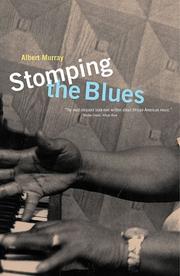
Murray's philosophical masterwork argues that the blues is the aesthetic and spiritual foundation of all jazz — reading it at this stage reframes everything you've heard and gives you a critical vocabulary that no other book provides.
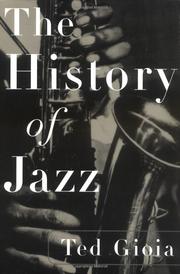
The most comprehensive single-volume history of the music from ragtime to the present, written by a musician-scholar. After the biographies and deep dives, Gioia's panoramic view ties all the threads together and carries the story into the 21st century.
Discussion
Keep reading
Paths that share books, cover the same subject, or open a related topic.