Hip-hop: the history of the culture
This curriculum moves from the street-level origins of hip-hop through its artistic craft and finally to its global, political, and commercial dimensions. Each stage builds the cultural vocabulary and historical context needed to fully appreciate the deeper analytical works that follow, taking a beginner from block-party basics to nuanced critical thinking about one of the world's most influential art forms.
Foundations: Where It All Began
BeginnerUnderstand the social conditions of the South Bronx that gave birth to hip-hop, meet its founding figures, and grasp the four foundational elements (DJing, MCing, breakdancing, graffiti).
▸ Study plan for this stage
Pace: 8–10 weeks total: Spend the first 5–6 weeks on "Can't Stop, Won't Stop" (~25–30 pages/day, 4–5 days/week), then 3–4 weeks on "The Hip Hop Wars" (~20–25 pages/day, 4–5 days/week). Allow one buffer day per week for reflection and journaling.
- The South Bronx as Ground Zero: How urban decay, white flight, arson-for-profit, Robert Moses's Cross Bronx Expressway, and municipal disinvestment created the social conditions that birthed hip-hop (Chang, Part I)
- The Four Foundational Elements: DJing (Kool Herc's merry-go-round technique and the birth of the breakbeat), MCing (vocal performance and crowd engagement), breakdancing/b-boying (physical expression and cipher culture), and graffiti writing (visual identity and territorial marking) — all introduced
- DJ Kool Herc, Afrika Bambaataa, and Grandmaster Flash as the Holy Trinity of hip-hop's founding: their distinct contributions, philosophies, and communities as documented in Can't Stop, Won't Stop
- The Universal Zulu Nation: Bambaataa's transformation of gang culture into creative culture as a model of hip-hop's redemptive social function (Chang)
- Hip-hop as a youth response to structural neglect: how the elements functioned as modes of survival, identity-building, and community-making for Black and Latino youth in the 1970s Bronx (Chang)
- The 'hip-hop wars' framework: Tricia Rose's identification of the core debates — does hip-hop reflect or cause social problems? — and her critique of both uncritical celebration and wholesale condemnation
- Commercialization vs. authenticity: Rose's argument that the corporate music industry's consolidation narrowed hip-hop's diversity and amplified its most controversial content, distorting its original communal values
- Stereotyping and representation: Rose's analysis of how mainstream hip-hop's most visible images (the gangsta, the hypersexualized woman, the hustler) became stand-ins for all of Black culture in public discourse
- According to Jeff Chang, what specific political, economic, and infrastructural forces made the South Bronx the neighborhood it was in the late 1960s and early 1970s, and why were those conditions necessary preconditions for hip-hop's emergence?
- How did DJ Kool Herc's 'merry-go-round' (or 'Merry Go Round') technique work, and why was isolating the breakbeat such a culturally significant innovation for dancers and the community?
- What role did Afrika Bambaataa and the Universal Zulu Nation play in redirecting gang energy into the four elements, and what does this tell us about hip-hop's original social mission?
- How does Tricia Rose define the 'hip-hop wars,' and what are the two opposing camps she critiques — what does each side get wrong, according to her?
- In The Hip Hop Wars, how does Rose explain the relationship between corporate consolidation of the music industry and the narrowing of hip-hop's content and representation?
- After reading both books together, how would you describe the tension between hip-hop as a grassroots community art form (Chang) and hip-hop as a commercialized, contested media product (Rose)?
- Annotated Timeline: As you read Can't Stop, Won't Stop, build a chronological timeline (1965–1985) mapping key political events (e.g., Cross Bronx Expressway, NYC fiscal crisis) alongside hip-hop milestones (Herc's first party, Bambaataa founding Zulu Nation, 'Rapper's Delight'). This forces you to see history and culture as intertwined.
- Element Deep-Dive Journal: After Chang introduces each of the four elements, write a one-page response for each: What problem or need did this element solve for young people in the Bronx? Find and listen to/watch one primary example (e.g., a Grandmaster Flash mix, early b-boy footage on YouTube) and describe what you notice.
- Founding Figures Comparison Chart: Create a three-column chart for Kool Herc, Afrika Bambaataa, and Grandmaster Flash. For each, record: home base/crew, primary innovation, philosophy/values, and lasting legacy as described by Chang. Use this to articulate what made each figure distinct.
- Rose's Argument in Your Own Words: After finishing each chapter of The Hip Hop Wars, write a 3–5 sentence summary of Rose's central claim in that chapter, then write 2–3 sentences of your own response — do you agree, disagree, or see a nuance she misses? This builds critical reading habits.
- Then-vs-Now Reflection Essay (500–700 words): After completing both books, write a short essay responding to this prompt: 'Chang shows us what hip-hop was built to do; Rose shows us what it became. What was lost, what survived, and what does that gap tell us about culture and capitalism?'
- Community Context Research: Pick one neighborhood outside the Bronx (any city, any era) where a local youth subculture emerged from conditions of poverty or neglect. Write a one-page comparison to the South Bronx conditions Chang describes — what is similar, what is different?
Next up: By grounding you in hip-hop's origins (Chang) and its contested public meaning (Rose), this stage gives you the historical and critical vocabulary needed to engage more deeply with hip-hop's artistic evolution, lyrical traditions, and genre diversification in subsequent stages.

The definitive origin story of hip-hop, tracing it from Bronx block parties to a global movement. It is the essential first read because it establishes the full historical and political context every subsequent book assumes you know.
Rose unpacks the most common debates about hip-hop's value and harm in plain, accessible language. Reading it second gives beginners a framework for thinking critically about the culture rather than just consuming it.
The Craft: MCing, Lyricism & Production
BeginnerDevelop a working understanding of hip-hop as a literary and sonic art form — how rhymes are constructed, how beats are made, and what separates good MCing from greatness.
▸ Study plan for this stage
Pace: 8–10 weeks total: Week 1–2 — "The Tao of Wu" (~20 pages/day, reflective pace to absorb RZA's philosophical asides); Week 3–5 — "Book of Rhymes" (~25 pages/day, with a notebook open for annotation); Week 6–9 — "How to Rap" (~30 pages/day, treated as an active workshop manual rather than passive readi
- The MC as philosopher-poet: RZA's 'Tao of Wu' frames lyricism not just as skill but as a vehicle for worldview, identity, and spiritual discipline — rap as a way of life, not merely a craft.
- Rap as formal poetry: Adam Bradley's 'Book of Rhymes' establishes that rap lyrics operate with the same literary devices as canonical poetry — meter, rhyme scheme, metaphor, alliteration, and assonance — and deserve the same close reading.
- Rhyme taxonomy: Bradley distinguishes perfect rhyme from near-rhyme, multisyllabic rhyme, and internal rhyme, showing how complexity and surprise in rhyme schemes separate average bars from memorable ones.
- Rhythm and flow: 'Book of Rhymes' introduces the concept of flow as the interplay between a rapper's delivery and the underlying beat — how syllables land on, before, or after the beat creates tension and personality.
- The anatomy of a rap verse: 'How to Rap' by Paul Edwards (drawing on interviews with dozens of MCs) breaks down verse structure — bar count, breath control, punchlines, hooks, and the architecture of a 16-bar verse.
- Delivery as meaning: Edwards' interviews reveal that tone, cadence, ad-libs, and vocal texture are not decorative — they are primary carriers of meaning and emotion, inseparable from the words themselves.
- Beat construction basics: 'How to Rap' covers how MCs interact with production — understanding BPM, the kick-snare relationship, sampling logic, and how to write to a beat rather than in spite of it.
- Authenticity and voice: Across all three books, a consistent theme emerges — the greatest MCs (RZA included) develop an unmistakable, consistent voice rooted in lived experience, reading, and relentless practice.
- After reading 'The Tao of Wu,' how does RZA's philosophical and spiritual framework (Wu-Tang philosophy, Five-Percent Nation, martial arts) directly shape his lyrical content and persona — and what does this suggest about the relationship between an MC's inner life and their art?
- Using the tools from 'Book of Rhymes,' can you identify and label at least three distinct rhyme types (e.g., perfect, multisyllabic, internal) in a verse of your choosing, and explain how Bradley's framework changes the way you hear the lyrics?
- How does Bradley define 'flow,' and how is it distinct from simply 'rhythm'? Can you describe a moment in a song where an MC's flow creates meaning beyond the literal words?
- According to 'How to Rap,' what are the structural components of a well-constructed verse, and how do professional MCs approach the relationship between writing and the beat they're writing to?
- How do all three books collectively argue that hip-hop lyricism is a serious literary and artistic discipline? What evidence or examples from each book would you use to make that case to a skeptic?
- What is the difference between an MC who is technically proficient and one who achieves greatness, according to the perspectives offered across 'The Tao of Wu,' 'Book of Rhymes,' and 'How to Rap'?
- 'Close Reading a Verse' (Book of Rhymes): Choose one verse from a rapper you admire. Print it out and annotate it exactly as Bradley does in the book — mark the rhyme scheme with letters, circle internal rhymes, underline metaphors, and scan the meter. Write a one-paragraph analysis as if submitting it to a literature class.
- 'Rhyme Scheme Replication' (Book of Rhymes + How to Rap): Pick a rhyme scheme Bradley analyzes (e.g., a complex multisyllabic or chain-rhyme pattern) and write 8 bars of your own using that exact scheme. Focus only on structure — content is secondary. Then read it aloud to feel where the stresses fall.
- 'Write to the Beat' (How to Rap): Find an instrumental online (any genre of hip-hop). Set a timer for 20 minutes and write a 16-bar verse directly to that beat, applying Edwards' advice on bar count, breath placement, and punchline positioning. Record yourself performing it and listen back critically.
- 'The Tao of You' (The Tao of Wu): RZA builds his MC identity from philosophy, mythology, and personal history. Write a one-page 'artistic manifesto' in RZA's spirit — what ideas, experiences, books, or beliefs would define YOUR MC persona and lyrical worldview, even if you never rap a word?
- 'Flow Mapping' (Book of Rhymes): Listen to the same verse three times. On the first listen, tap along to the beat. On the second, tap along to the rapper's syllables. On the third, note where the two diverge — where the MC rushes ahead of or lags behind the beat. Write down what emotional effect those moments create.
- 'MC Interview Synthesis' (How to Rap): Edwards structures his book around interviews with working MCs. Choose any five pieces of advice from different artists quoted in the book, write each one out, and then write a sentence explaining how it connects to something RZA demonstrates in 'The Tao of Wu' or Bradley analyzes in 'Book of Rhymes.' Look for the through-lines.
Next up: By internalizing how rhymes are built, beats are structured, and MC voices are forged, the reader is now equipped to move from craft analysis to cultural and historical context — understanding not just HOW hip-hop sounds, but WHY it emerged, where it traveled, and what it has meant to communities across decades.
RZA narrates his artistic philosophy and the making of Wu-Tang Clan in his own voice, making the creative process of hip-hop feel intimate and concrete before moving to more analytical texts.
A literary scholar applies the tools of poetry analysis — meter, rhyme, metaphor — to rap lyrics. This is the perfect bridge book that teaches readers to hear and read rap as serious literature.
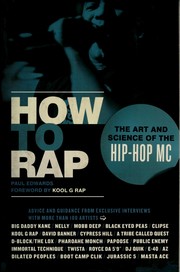
Built from interviews with dozens of top MCs, this book breaks down the technical craft of writing and delivering rhymes. It gives learners a practitioner's vocabulary for discussing lyricism with precision.
Voices from Inside: Memoir & Biography
IntermediateExperience hip-hop history through the eyes of its key architects, gaining a ground-level perspective that enriches the broader historical narrative already established.
▸ Study plan for this stage
Pace: 8–10 weeks total, roughly 20–25 pages per day. Spend ~3 weeks on "Makes Me Wanna Holler" (it is the longest and most immersive), ~3 weeks on "Decoded" (read slowly and treat every annotated lyric as a primary source), and ~2–3 weeks on "Rap on Trial" (denser argument-driven prose; pause to research
- Lived experience as historical evidence — McCall's memoir demonstrates how systemic racism, poverty, and street culture in 1970s–80s Black America created the exact conditions hip-hop emerged from, making autobiography a legitimate historiographical lens.
- Lyric as autobiography and social document — Jay-Z's annotations in Decoded reframe rap verses not as entertainment but as coded testimony, requiring the reader to treat lyrics with the same close-reading rigor as literary or historical texts.
- Code-switching and double consciousness — both McCall and Jay-Z navigate between street vernacular and mainstream institutional language, illustrating Du Bois's 'double consciousness' as a lived, daily survival strategy.
- The criminalization of Black voice — Rap on Trial exposes how prosecutors, judges, and juries have systematically treated rap lyrics as criminal confessions rather than artistic expression, building on the street realities McCall describes and the creative process Jay-Z illuminates.
- First-Amendment vulnerability of marginalized art — Nielson's legal analysis reveals that hip-hop is uniquely denied the fictional/artistic protections routinely granted to rock, country, and literary fiction, raising questions about whose speech the law truly protects.
- The street-to-studio pipeline — across all three books, the reader traces how raw neighborhood experience (McCall) becomes artistic capital (Jay-Z) and is then weaponized by the state (Nielson), forming a complete arc of Black creative expression under surveillance.
- Authenticity and its costs — 'keeping it real' is examined from multiple angles: as survival code in McCall, as artistic credibility in Jay-Z, and as a legal trap in Nielson.
- Narrative authority and who gets to tell the story — each author claims the right to narrate Black life on their own terms, challenging media, legal, and academic gatekeepers who have historically defined hip-hop from the outside.
- After reading Makes Me Wanna Holler, how does McCall's personal trajectory — from incarceration to Washington Post journalist — complicate simple narratives about hip-hop's relationship to crime and violence? What structural forces does he identify that shaped his world?
- Jay-Z argues in Decoded that rap lyrics must be read in context — biographical, historical, and communal. Choose one annotated song from the book: what meaning is lost when the lyric is stripped of that context, and how does this directly apply to the courtroom scenarios Nielson describes?
- How does Rap on Trial demonstrate that the legal system applies a double standard to hip-hop versus other musical genres? What specific evidentiary arguments does Nielson make, and what are their constitutional implications?
- Across all three books, how is the concept of 'authenticity' both a source of power and a source of danger for Black artists and communities? Where do McCall, Jay-Z, and Nielson agree or diverge on this tension?
- In what ways does the street environment McCall documents in the 1970s–80s function as a direct precursor to the lyrical content Jay-Z later monetizes and that prosecutors later criminalize? Trace one specific theme (e.g., drug economies, police brutality, neighborhood loyalty) across all three books.
- How do all three authors use personal or first-person evidence to challenge institutional authority — whether the prison system, the music industry, or the courts? What are the strengths and limitations of this approach as a form of historical argument?
- Lyric annotation exercise (Decoded): Select any two annotated songs from Decoded. Before reading Jay-Z's own notes, write your own annotation of the lyrics. Then compare your reading to his. Write a one-page reflection on what his insider context revealed that you missed — this trains the close-reading skill Nielson argues courts consistently fail to apply.
- Parallel timeline (Makes Me Wanna Holler + hip-hop history): As you read McCall, build a two-column timeline — one column for events in his life, one for concurrent hip-hop milestones (e.g., the release of 'The Message,' the crack epidemic's peak, N.W.A's formation). Identify at least five moments where his personal story and the music's evolution intersect.
- Mock legal brief (Rap on Trial): Using Nielson's framework, write a one-to-two page defense brief arguing why a rap lyric of your choosing (from Decoded or any artist you know) should be protected as artistic expression rather than admitted as evidence. Cite at least two of Nielson's legal precedents.
- Cross-book character study: Identify one recurring 'character type' that appears in all three books — e.g., the corner hustler, the absent father, the corrupt authority figure. Write a 500-word comparative analysis of how each author portrays this figure and what that reveals about their respective arguments.
- Institutional voice comparison: Find one mainstream news article from any era that covers either McCall's story, Jay-Z's music, or a rap-on-trial court case. Write a one-page comparison between the article's framing and the author's own account. Where does the institutional narrative diverge from the insider voice, and why does that gap matter?
- Reading group debate: Stage a structured discussion (solo journal or with a partner) arguing both sides of this proposition: 'Rap lyrics should receive the same evidentiary protections as any other fictional or artistic work in a court of law.' Use specific passages from all three books as your evidence base.
Next up: By grounding hip-hop's history in the lived, legal, and lyrical testimony of its actual participants, this stage equips the reader to critically interrogate the broader cultural, political, and commercial forces that shaped the genre — the exact terrain the next stage will map from a wider analytical vantage point.
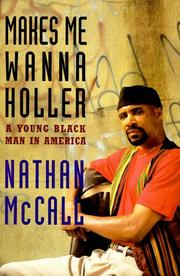
McCall's memoir of growing up Black in America provides the raw social reality that hip-hop was born to express, giving crucial human context before diving into artist-specific stories.
Jay-Z annotates his own lyrics and life story, offering a rare inside view of how a master MC thinks about language, hustle, and art — a primary source that rewards the analytical tools built in Stage 2.

Examines how rap lyrics are used as criminal evidence in U.S. courts, connecting personal artistic expression to systemic power — a natural escalation from Jay-Z's personal narrative to broader social stakes.
Going Deeper: Race, Commerce & Politics
IntermediateAnalyze hip-hop's complex relationship with the music industry, racial politics, and American capitalism, and understand how the culture both challenges and is co-opted by power.
▸ Study plan for this stage
Pace: 8–10 weeks total: Weeks 1–5 on "The Anthology of Rap" (~25–30 pages/day, treating it as both a literary reader and a historical document — read lyrics closely, don't skim); Weeks 6–10 on "Original Gangstas" (~20–25 pages/day, with slower reading around key biographical and industry chapters).
- Hip-hop as literary and oral tradition: Bradley's anthology frames rap lyrics as poetry with meter, rhyme schemes, and narrative voice — readers should internalize that lyrical analysis is a form of cultural criticism
- Periodization of hip-hop history: The Anthology of Rap organizes the canon into eras (old school, golden age, hardcore, post-millennium), revealing how the music's themes and forms shifted in response to social conditions
- The tension between authenticity and commercialization: Both books expose how 'street credibility' became a marketable commodity, and how the industry exploited that tension to sell records while diluting political content
- Gangsta rap as a product of place and policy: Westhoff's Original Gangstas roots N.W.A, Ice Cube, Eazy-E, and their peers in the specific geography of Compton and the political economy of deindustrialized Black Los Angeles
- Race, capitalism, and the music industry's gatekeeping: Original Gangstas details how Black artists were systematically underpaid, contractually exploited, and creatively constrained by predominantly white-owned labels even as their music generated enormous wealth
- Co-optation vs. resistance: Across both books, readers should track how hip-hop simultaneously critiques power structures (police brutality, poverty, racism) and is absorbed and neutralized by those same structures through commercialization
- Gender and representation: Both texts surface — sometimes uncomfortably — the misogyny embedded in gangsta rap's commercial rise, requiring readers to hold artistic significance and harmful representation in tension
- The role of the MC as social historian: Bradley's anthology demonstrates that rappers function as documentarians of Black American life, making lyrical choices that encode political and sociological meaning
- After reading The Anthology of Rap, how does Bradley's editorial framework argue for rap's place in the literary canon, and do you find that argument convincing or limiting? What does it include or exclude?
- Using specific lyrics from The Anthology of Rap, trace how the dominant themes of hip-hop shifted from the party-oriented old school era to the politically charged golden age to the commercially dominant hardcore era — what social forces drove each shift?
- Original Gangstas portrays Eazy-E, Dr. Dre, Ice Cube, and Suge Knight as distinct archetypes within the rap industry ecosystem. How did each figure's choices reflect a different strategy for navigating race and commerce, and who — if anyone — came out ahead?
- Westhoff documents the founding and collapse of Ruthless Records and the rise of Death Row Records. What do these business histories reveal about structural racism in the entertainment industry and the limits of Black entrepreneurship within it?
- Both books deal with the question of who gets to tell Black stories and profit from them. Drawing on both texts, construct an argument about the relationship between artistic control, financial ownership, and cultural authenticity in hip-hop.
- How do the women who appear in both books — as artists, partners, or subjects of lyrics — expose the gender politics of gangsta rap's commercial era, and what does their relative absence from the center of both narratives itself tell us?
- Close-reading lyric annotation: Select 3–5 rap texts from The Anthology of Rap across different eras. Annotate them as you would a poem — mark rhyme schemes, identify literary devices (metaphor, alliteration, assonance, synecdoche), and write a 1-paragraph interpretation of each. Then ask: what social or political argument is the lyric making?
- Era comparison chart: After finishing The Anthology of Rap, build a two-page chart mapping each era Bradley identifies against: (a) dominant themes, (b) lyrical style, (c) key political events of the period, and (d) the music industry's commercial posture toward hip-hop at that time. Use this as a reference when reading Original Gangstas.
- Business deal autopsy: Using Original Gangstas, reconstruct the key record deals Westhoff describes (e.g., Eazy-E's Ruthless contracts, the Death Row founding). Write a one-page 'deal memo' for each: Who held power? Who was exploited? What were the long-term consequences? Compare your findings to how similar deals work in today's streaming economy.
- Counternarrative research exercise: Original Gangstas centers male artists. Choose one woman mentioned in the book (e.g., Michel'le, Yo-Yo, or D.O.C.'s collaborators) and spend 30–60 minutes researching her own account of the same events. Write a half-page reflection on how her perspective changes or complicates Westhoff's narrative.
- Debate prep — co-optation or empowerment?: Write two short position papers (one page each) arguing opposite sides of this question: 'Did the commercialization of gangsta rap ultimately empower or undermine Black communities?' Draw evidence exclusively from The Anthology of Rap and Original Gangstas. Then identify which argument you actually find more persuasive and why.
- Listening + reading pairing: For each era covered in The Anthology of Rap, choose one album released in that period and listen to it while keeping the anthology open. Track at least three moments where the sonic choices (beat, delivery, silence) add meaning that the written lyric alone cannot convey. Write a short reflection on what this exercise reveals about the limits of treating rap purely as
Next up: By deeply understanding how hip-hop's political content and Black authorship were shaped — and often constrained — by commercial and racial power structures, the reader is now equipped to engage with more specialized or contemporary analyses of how individual artists, movements, and subgenres have navigated or resisted those same forces.

A comprehensive collection of rap lyrics treated as a literary canon. Having built critical tools in earlier stages, readers can now engage this anthology as a primary text and see the full arc of the tradition.

A deeply reported history of West Coast gangsta rap and Death Row Records that explores how hip-hop's most controversial chapter intersected with race, violence, and the music business.
Global Impact & the Future
ExpertSituate hip-hop within global culture, postcolonial theory, and the digital age, and think about where the art form is headed as it continues to evolve worldwide.
▸ Study plan for this stage
Pace: 2–3 weeks, ~20–25 pages/day; Don Lemon's book is relatively concise (~240 pages), so a steady daily pace leaves room for reflection, journaling, and the exercises below without feeling rushed.
- Intergenerational Black identity and the weight of inherited trauma, as Lemon traces his family's history from the Jim Crow South to the present day — a narrative arc that mirrors hip-hop's own roots in Black suffering and resilience
- The role of personal testimony and storytelling as political act: Lemon's memoir-essay hybrid models how individual voice can challenge dominant cultural narratives, echoing hip-hop's tradition of bearing witness
- Media, power, and representation: Lemon's career as a Black journalist in mainstream television illuminates the structural gatekeeping that hip-hop artists have long fought against in the music industry and broader culture
- Postcolonial echoes in American racial history: Lemon's framing of anti-Black racism as a systemic, historically constructed force connects to postcolonial theory's critique of how colonized peoples are othered and silenced
- The letter-to-the-next-generation form: Lemon writes explicitly to younger Black Americans, positioning the book as a bridge document — a device hip-hop has used since its inception (dedications, shout-outs, posse cuts) to transmit culture forward
- Digital-age activism and the amplification of Black voices: Lemon engages with how social media, viral video, and 24-hour news cycles have transformed racial justice discourse, paralleling hip-hop's own migration to streaming, TikTok, and global digital platforms
- Coalition, allyship, and the limits of solidarity: the book interrogates who shows up for Black communities and under what conditions — a tension central to hip-hop's global spread and the debates around cultural appropriation vs. authentic solidarity
- Hope as a radical stance: Lemon's refusal of despair, despite cataloguing systemic violence, resonates with hip-hop's persistent utopian imagination — the belief that art and community can prefigure a better world
- How does Lemon use his own biography — his Southern roots, his sexuality, his career in white-dominated media — to argue that Black identity in America is always already political, and how does that argument apply to hip-hop artists navigating mainstream commercial spaces?
- In what ways does 'This Is the Fire' function as a postcolonial text? Where does Lemon's critique of American racial structures overlap with, and where does it diverge from, classical postcolonial theorists' critiques of empire?
- Lemon addresses his letter explicitly to the next generation. How does this rhetorical choice shape the book's tone and argument, and what parallels exist in hip-hop's own tradition of mentorship, legacy, and cultural transmission?
- How does Lemon characterize the relationship between media representation and racial justice? What does his insider perspective as a CNN anchor reveal about the gatekeeping mechanisms that hip-hop has historically circumvented or been co-opted by?
- Where does Lemon locate hope for change — in institutions, in individuals, in collective action, or in culture itself? How does his answer compare to the visions of the future articulated in hip-hop's most forward-looking works?
- How does the book's engagement with digital activism and social media movements (e.g., Black Lives Matter) illuminate the conditions under which hip-hop is currently evolving globally, and what does that suggest about where the art form is headed?
- Annotated reading log: As you read each chapter of 'This Is the Fire,' identify one passage that could serve as liner notes or an epigraph for a hip-hop track. Collect these into a curated 'playlist companion' document, writing 2–3 sentences explaining each pairing and what it reveals about the intersection of Lemon's themes and hip-hop culture.
- Postcolonial lens essay (500–700 words): Choose one chapter from the book and apply a postcolonial framework (e.g., concepts like othering, hybridity, or the subaltern voice) to analyze Lemon's argument. Then extend your analysis: how do those same dynamics play out in hip-hop's global spread to regions like West Africa, South Korea, or Brazil?
- Media audit and comparison: Spend one week tracking how a single racial justice story is covered across (a) a mainstream TV news outlet, (b) a hip-hop media platform (e.g., The Source, Genius editorial, or a major artist's social media), and (c) an international outlet. Write a one-page reflection connecting your findings to Lemon's critique of media power and hip-hop's role as counter-narrative.
- Letter to the next generation: Mirroring Lemon's central rhetorical device, write your own 400–600 word letter to a future hip-hop listener born today. What do you want them to know about where the art form came from, what it has meant globally, and where you hope it is going? Draw directly on evidence and arguments from the book.
- Global hip-hop case study: Research one hip-hop scene outside the United States (e.g., Afrobeats-rap fusion in Nigeria, K-hip-hop in South Korea, or grime in the UK). Write a 1-page analysis of how that scene reflects, adapts, or challenges the themes Lemon raises — racial identity, systemic inequality, media gatekeeping, and intergenerational hope.
- Socratic seminar or discussion post: Pose the following question to a study partner, book club, or online forum — 'Is hope, as Lemon defines it, a sufficient engine for cultural and political change, or does it risk becoming a substitute for structural action?' Use at least three specific passages from 'This Is the Fire' and at least two examples from hip-hop history to support your position.
Next up: By grounding global hip-hop's future in the lived realities of Black identity, media power, and intergenerational responsibility that Lemon articulates, readers are now equipped to move into independent research, creative production, or advanced academic study — applying this stage's critical frameworks to original questions about where hip-hop goes from here.

Connects the cultural revolution hip-hop helped ignite to the ongoing struggle for racial justice, asking what the culture's legacy demands of the present moment — a fitting final reflection on the curriculum's full arc.
Discussion
Keep reading
Paths that share books, cover the same subject, or open a related topic.