Health policy is unusually hard to self-teach because the object of study is invisible. The same procedure carries four different prices depending on who is asking, the insurer is not really the payer, and the bill arrives months later from a company you never chose. Start with a book about the abstract design of systems and none of it sticks, because you have nothing to attach it to.
So this path starts with the artefact every reader has actually seen and works outward: the bill, then the alternatives other rich countries built, then the political history that explains why the American version is shaped this way, then the cost arguments, then the professional vocabulary. One thing to be clear about before you begin — this is a path for understanding a system, not for navigating your own coverage, diagnosis or care. Nothing here substitutes for a clinician, a benefits adviser or a patient advocate.
How the money actually moves
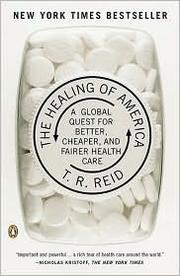
An American sickness is the right first book: a physician-turned-journalist reverse-engineers the medical bill piece by piece — hospitals, insurers, drugs, devices, the billing industry that sits between them. The healing of America comes second, because once you know how the American bill is constructed, T. R. Reid taking one bad shoulder to doctors in France, Germany, Japan, Britain and India becomes a comparison rather than a travelogue. Which Country Has the World's Best Health Care? then converts that into structure: an eleven-country comparison across financing, coverage, drug pricing and outcomes by a policy academic who helped design the Affordable Care Act, and which pointedly declines to name a single winner.
Why the American system looks like this
The social transformation of American medicine is the foundational history of how American doctors acquired professional authority and used it to shape financing on their own terms. Almost everything else in the field is written in reference to it, so read it before the narrower books. The Political Life of Medicare supplies the case study: the largest public programme treated as a political object, constrained at birth and repeatedly surviving attempts to restructure it. Remedy and reaction closes the stage with a century of failed reform attempts, written by a participant in the 1990s effort — which is both its strength and something to keep in mind while reading it.
The cost argument, which is genuinely unsettled
Three books, three incompatible diagnoses, and the point of the stage is that you can tell them apart. Overtreated makes the volume argument: a large share of spending buys care that does not help and sometimes harms. Priced Out makes the price argument, from the most influential health economist of his generation, and is the source of the standard position that prices rather than quantities drive American spending. Catastrophic care makes the market-side case that third-party payment itself is the structural fault; that diagnosis is widely disputed by health economists, and it is included so the stage is not one-sided. Read it against Reinhardt rather than on its own.
The analyst's toolkit
Understanding health policy is the standard teaching text — financing, access, quality, cost control — and works far better after the narrative books, when the terminology attaches to cases you already know. The American health care paradox reframes the whole subject by showing the United States is not an outlier on health-plus-social spending combined, only on the ratio between them. Deaths of Despair and the Future of Capitalism ends the path by connecting system design to mortality among less-educated Americans; its interpretation remains actively debated among economists, and reading it as a contested argument rather than a settled finding is the right posture.
A caveat on scope: eleven of these twelve books are about the United States or use it as the reference case. Readers outside the US will get the analytical machinery here but will need national sources for their own system. Follow the full path below to read them in order.
Follow the full ordered path here: Health Policy and How Healthcare Systems Work: The Books to Read First.
Ready to learn something deeply?
Build a reading path — free