Harmonica: the best method books to learn in order
This curriculum takes a complete beginner from picking up the harmonica for the first time all the way to confident blues improvisation, riffing, and expressive bending. Each stage builds directly on the last — first establishing correct technique and music literacy, then unlocking the signature blues sounds, and finally developing the improvisational ear and vocabulary needed to play with feeling and freedom.
First Notes & Foundations
BeginnerHold the harmonica correctly, produce clean single notes, understand basic music notation for harmonica (tab), and play simple melodies with confidence.
▸ Study plan for this stage
Pace: 2–3 weeks, ~15–20 pages/day (focusing on Parts 1–2 of Blues Harmonica For Dummies, covering setup, hand position, and basic single-note techniques)
- Proper harmonica grip and hand cupping technique to control airflow and tone quality
- Mouth positioning and embouchure for producing clean, isolated single notes (blocking adjacent holes)
- Understanding harmonica tab notation and how it maps to the physical layout of the instrument
- Breath control: distinguishing between draw (inhale) and blow (exhale) notes and their different pitches
- The chromatic scale on harmonica and how to navigate it using single-note technique
- Reading and playing simple melodies using tab, starting with familiar tunes in a single octave
- Developing muscle memory through consistent, focused practice on foundational techniques
- How do you hold a harmonica correctly, and what role does hand cupping play in tone control?
- What is the difference between a draw note and a blow note, and how do you produce clean single notes without sounding adjacent holes?
- How do you read harmonica tab notation, and what do the numbers and symbols represent?
- Can you play a simple, familiar melody (e.g., 'Mary Had a Little Lamb' or 'Twinkle Twinkle Little Star') cleanly using single notes?
- What breathing techniques help you sustain notes and transition smoothly between them?
- How does understanding the layout of the harmonica help you anticipate which holes to play for different pitches?
- Practice the basic grip and hand position for 5–10 minutes daily without playing, focusing on muscle memory and comfort
- Play individual blow and draw notes on holes 4–6 (middle register) to develop clean single-note isolation, aiming for zero adjacent-hole leakage
- Transcribe and play 'Mary Had a Little Lamb' and 'Twinkle Twinkle Little Star' from harmonica tab, repeating until smooth and confident
- Record yourself playing simple melodies and listen back to identify any unclear notes or breathing issues
- Practice breath control by sustaining single notes for 4–8 counts, focusing on steady airflow without wavering
- Work through the tab exercises in Blues Harmonica For Dummies Part 2, completing all single-note drills before moving to chords or bends
Next up: Mastering single-note technique and tab reading provides the solid technical foundation needed to progress to bending, chords, and more complex melodies in the next stage.
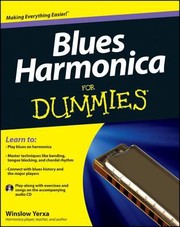
The single most accessible entry point for absolute beginners — covers how to hold the harp, breathe properly, read harmonica tab, and play first melodies without overwhelming the reader. Start here to build correct habits from day one.
Blues Technique & Signature Riffs
IntermediateMaster the core vocabulary of blues harmonica — wailing bends, vibrato, tongue blocking, and iconic riffs — and play through full 12-bar blues progressions expressively.
▸ Study plan for this stage
Pace: 4–5 weeks, ~20–30 minutes daily practice + 15–20 pages/week reading
- Bending technique: achieving smooth, controlled pitch bends from 1/4 to full-step bends using throat and tongue position
- Vibrato control: adding vibrato to bent and unbent notes for expressive, soulful phrasing
- Tongue blocking: using the tongue to isolate single notes and create rhythmic chop effects for authentic blues tone
- 12-bar blues progression: understanding the I–IV–V harmonic structure and how to navigate it on harmonica
- Iconic blues riffs and licks: learning signature Sonny Terry-style runs, turnarounds, and call-and-response patterns
- Breath control and phrasing: managing air pressure and note duration to create emotional impact and groove
- Hole positions and reed selection: knowing which holes and draw/blow techniques produce the blues sound needed for each phrase
- What is the step-by-step process for executing a controlled bend, and how do you know when you've achieved the target pitch?
- How does vibrato enhance a bent note, and what are the common mistakes beginners make when adding vibrato?
- Explain tongue blocking: what does it accomplish tonally, and how does it differ from pursed-lip single-note playing?
- Walk through a 12-bar blues progression on harmonica—which holes and techniques would you use to play through it expressively?
- Name three signature Sonny Terry riffs or licks from the Palmer Cooper book and describe the technique required for each.
- How do breath control and phrasing choices affect the emotional delivery of a blues solo?
- Bend practice routine: spend 10 minutes daily on 1/4, 1/2, 3/4, and full-step bends on holes 1–6 (draw), recording yourself to verify pitch accuracy
- Vibrato drills: add slow, medium, and fast vibrato to bent notes; practice sustaining vibrato for 4–8 beats without pitch wavering
- Tongue blocking isolation: practice blocking with your tongue to play single notes cleanly on holes 2–4, then add rhythmic chop patterns (on/off/on/off)
- 12-bar blues backing track: play along with a slow 12-bar blues in first position (C harmonica in C blues), using Glover's guidance to navigate I–IV–V changes
- Sonny Terry riff transcription: learn and memorize 3–5 specific licks from the Palmer Cooper book; record yourself playing them at tempo
- Full blues solo construction: compose and perform a 2–3 chorus solo over a 12-bar blues, incorporating bends, vibrato, tongue blocking, and at least two signature riffs
Next up: Mastering these core blues techniques and riffs gives you the expressive vocabulary to tackle advanced topics like cross-harp (second position) playing, minor pentatonic soloing, and developing your own signature style in the next stage.

A legendary, no-nonsense classic that has introduced generations of players to authentic blues harmonica style. Reading it after bending fundamentals are in place lets you absorb its riffs and attitude at the right moment.
Straight from one of the masters, this book teaches the raw, expressive country-blues approach — whoops, hollers, and rhythmic riffs — expanding your tonal palette well beyond basic blues licks.
Improvisation & Musical Freedom
IntermediateDevelop a personal improvisational voice — stringing riffs into solos, playing by ear, understanding positions and scales, and jamming confidently with other musicians.
▸ Study plan for this stage
Pace: 4–5 weeks, ~25–30 pages/day, with daily practice sessions (30–45 minutes)
- Position playing and hand placement for fluidity across the harmonica range
- Scale patterns and their application to improvisation in different keys
- Riff construction and how to chain riffs into coherent solo phrases
- Playing by ear: listening, transcribing, and reproducing melodies without notation
- Breath control and phrasing techniques that give solos musicality and expression
- Understanding harmonica limitations and strengths within ensemble contexts
- Jamming fundamentals: listening to other musicians, responding in real time, and maintaining groove
- How do position changes allow you to access the full range of the harmonica, and what are the hand techniques required for smooth transitions?
- What are the major and minor scale patterns available on the harmonica, and how do you apply them to improvise in different keys?
- How do you construct a riff, and what makes a sequence of riffs feel like a cohesive solo rather than disconnected phrases?
- What strategies can you use to play melodies by ear, and how does transcription practice improve your improvisational vocabulary?
- How do breath control, dynamics, and phrasing contribute to making your improvisation sound musical and intentional?
- What are the practical challenges of playing harmonica in an ensemble, and how do you adapt your playing to complement other instruments?
- Daily position drills: practice transitioning between first, second, and third positions on a single harmonica, focusing on smooth hand movement and clean note articulation
- Scale mastery: learn and memorize major and minor scale patterns in at least three different keys, then play them ascending and descending at varying tempos
- Riff library building: transcribe 5–8 riffs from recordings of harmonica players (blues, folk, or rock styles), then practice stringing them together into 8–16 bar solos
- Play-by-ear sessions: choose 3–4 simple melodies (folk songs, pop hooks, or blues standards) and learn to reproduce them on harmonica without sheet music
- Jamming practice: record backing tracks in different keys and tempos, then improvise over them for 5–10 minutes at a time, focusing on listening and responding
- Phrasing and dynamics work: record yourself playing the same riff or scale passage multiple times, varying breath control, volume, and articulation to develop expressive range
Next up: Mastering improvisation and position playing in this stage equips you with the technical foundation and musical vocabulary needed to explore advanced techniques—such as bending, overblowing, and specialized effects—that will elevate your harmonica voice to professional levels.

Baker's comprehensive guide bridges technique and musicianship, covering positions, scales, and how to construct solos — essential reading before tackling open-ended improvisation.
Discussion
Keep reading
Paths that share books, cover the same subject, or open a related topic.