H.G. Wells Reading Order: Where to Start
Wells published over fifty books and the ones people still read are almost all from a seven-year burst at the end of the 1890s. This order takes those scientific romances individually, in the order that best shows the ideas developing, then the prophetic novels of the 1900s, then the comic social novels that Wells himself considered his real work. Every title stands alone; the sequence is about watching a young science teacher turn one device — take a single change and follow it honestly — into a genre.
Start here: the two everyone knows
BeginnerRead the two short novels that invented most of modern science fiction, and see Wells's method — one impossible premise, then rigorous consequences.
▸ Study plan for this stage
Pace: Two weeks for about 330 pages. The Time Machine is 120 pages and genuinely reads in two evenings; give The War of the Worlds, at 206, a week and a half of 25-page sittings, because the middle section with the curate is where readers stall. Do not rush the Time Machine's frame chapters, which are hal
- The Wells device, which he invents here and never really improves on: introduce exactly one impossibility, then reason from it with complete rigour and change nothing else. Almost all later science fiction is a variation on that method.
- In The Time Machine the impossibility is time travel, but the subject is class. The Eloi and Morlocks are the leisured and the labouring split into two species by evolutionary time, and the horror is that the arrangement made sense at every step.
- The Time Machine does not stop at 802,701. The stretch on the dying beach under a swollen red sun is the passage that makes it more than a fable, and readers who remember only the Eloi have effectively stopped at the halfway point.
- The War of the Worlds applies the same method to the present day and to England specifically. The Martians land in Surrey, on named commons and roads, and the ordinariness of the geography is the effect.
- The novel opens by comparing the Martian invasion to what Europeans did to the Tasmanians. Wells is deliberately turning imperialism back on his own readers, and that inversion is the moral engine of the book.
- Period attitudes on race, class and eugenics run through Wells's work and belong to the work rather than only to his letters and essays. Even here the biology carries assumptions about degenerate and superior human stock; later books on this path state them far more openly. Read him aware of it — th
- Wells was a trained science teacher, and both books argue from real Victorian science: the second law of thermodynamics behind the dying sun, Darwinian adaptation behind the Martians' bodies, and the bacteria that finish the invasion.
- The Traveller's account of the Eloi changes three times as he learns more. What does he believe at each stage, and what does the sequence of wrong theories tell you about him?
- Why does Wells frame The Time Machine as a story told at a dinner party to sceptical listeners, and what would be lost told straight?
- In The War of the Worlds, what specifically has the narrator learned by the final chapters that he did not know in the first?
- The curate and the artilleryman are the two long human encounters in the invasion. What position does each represent, and does Wells endorse either?
- Both books end by shrinking humanity's importance. Is the effect the same in each?
- Read the last three chapters of The Time Machine twice. The far-future beach is where the book stops being about Victorian England and starts being about entropy.
- Look up Woking, Horsell Common and the Surrey road names on a map as you read The War of the Worlds. Wells wrote it as a local invasion of places he cycled through, and the specificity is recoverable.
- Mark the paragraph in chapter one about the Tasmanians and come back to it after the ending. It reframes the whole book.
- After both, write two sentences on what single change each novel makes and what it refuses to change. That formula is what you will test every later book on this path against.
Next up: You have the method in its purest form; the remaining romances of the 1890s push the same device into biology, chemistry and space.

The Traveller goes to the year 802,701 and finds the class system has become two species. Barely a hundred pages, and the purest demonstration of the Wells device — always the correct first book.
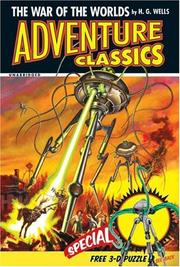
Martians land in Surrey and the British Empire discovers what invasion feels like. Read second: it applies the same method to the present day rather than deep time.
The rest of the scientific romances
BeginnerFinish the great 1890s run and see Wells push the premise into biology, invisibility and space.
▸ Study plan for this stage
Pace: Three weeks for roughly 600 pages. The Island of Doctor Moreau is short — the edition here is a Wordsworth Classics volume of 192 pages that carries other stories alongside the novel, so the novel itself is a long weekend. The Invisible Man at 170 pages goes quickly and lightly. The First Men in the
- The Island of Doctor Moreau is the nastiest and most morally serious of the romances and has aged least. Moreau is not mad; he is indifferent, and Wells makes the case for indifference as the real horror of a scientific method with no limiting principle.
- The Beast Folk's Law — the chant, the House of Pain, the recitation of what is and is not to be done — is Wells's argument about religion and civilisation as maintained fictions that decay the moment enforcement stops.
- Prendick's return to London is the point of the book. He cannot look at human faces without seeing the Beast Folk in them, which retroactively makes the island an argument about people rather than about vivisection.
- The Invisible Man is shorter and much funnier than its reputation. The first half is close to farce in a Sussex village inn, and Griffin is a petty, furious, physically uncomfortable man rather than a mastermind — invisibility mainly makes him cold, hungry and visible in the rain.
- Griffin's fall is a consequence of the premise, not a moral punishment: he cannot eat without his food being seen, cannot sleep safely, cannot be believed. Wells reasons the condition out to the end, which is again the method.
- The First Men in the Moon returns the sequence to social argument. The Selenites are a caste society where each individual is physically shaped to a single function, and Cavor's radio reports from the Grand Lunar describe human warfare to an audience that finds it incomprehensible.
- Bedford and Cavor split the book between the entrepreneur and the scientist, and Wells is hard on both. The commercial reading of the moon and the scientific one are equally destructive.
- Moreau explains himself at length. Is his self-defence coherent, and where exactly does the novel put the flaw in it?
- Where does the Law start to break down on the island, and what causes it — Moreau's death, Prendick's presence, or something already underway?
- What does Griffin actually want once he is invisible, and how much of his failure is caused by the condition rather than his character?
- How does the Selenite caste system differ from the Eloi-and-Morlock split, and which does Wells present as more frightening?
- Three books, three scientists — Moreau, Griffin, Cavor. What does Wells think the type has in common?
- Read the Beast Folk's Law aloud once. It is written to be chanted and its rhythm is what makes the later collapse land.
- Keep the final chapter of Moreau in mind while reading the other two: it is the only ending in the group where the narrator brings the horror home with him.
- Note every practical problem invisibility creates for Griffin. There are more than a dozen, and cataloguing them is the clearest demonstration of what 'rigorous consequences' means in practice.
- Compare Cavor's description of humanity to the Grand Lunar with the narrator's opening paragraph in The War of the Worlds. Wells is doing the same reversal twice, from opposite directions.
Next up: The 1890s run ends here, and the next two books drop the romance framing to argue directly about where industrial civilisation is going.

A vivisectionist on a Pacific island is making animals into men. The nastiest and most morally serious of the romances, and the one that has aged least.
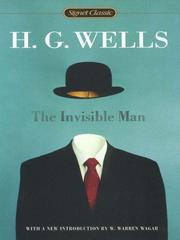
A scientist achieves invisibility and immediately becomes a monster. Shorter and funnier than its reputation, and it reads as comedy after Moreau's cruelty.
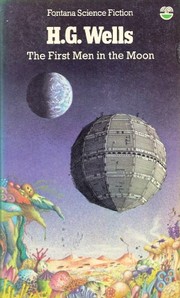
Two Englishmen reach the moon and find a caste society under the surface. It closes the sequence by returning to the social argument of The Time Machine on new ground.
The prophetic novels
IntermediateFollow Wells into the 1900s, where the science fiction becomes explicitly about where industrial civilisation is heading.
▸ Study plan for this stage
Pace: Three weeks for about 600 pages: The Food of the Gods at 300 and The War in the Air at 297. Both are looser and more episodic than the 1890s books and neither rewards a sprint; 30 pages a day is right. Expect the argument to interrupt the story in both, particularly in the final third of each.
- These are fables with a thesis rather than tightly-reasoned romances. The scientific premise now exists to carry a claim about progress, and the novels sag structurally where the claim takes over.
- The Food of the Gods runs its growth compound through three escalations — giant wasps and rats, then giant plants, then giant children — and the last of these is the real subject. Wells is arguing that scale changes kind.
- The book ends as an open confrontation between the giants and ordinary humanity, and Wells is unmistakably on the side of the giants. Read the closing speeches as what they are: a case for a coming greater humanity that supersedes the existing one.
- This is where the eugenic strain in Wells becomes explicit in the fiction rather than implied by it. The novel's sympathies rest on the idea that a larger, better human type ought to displace the smaller one, and it does not treat that as tragic. State it plainly and read on with it in view.
- The War in the Air was published in 1908 and imagines aerial bombardment collapsing civilisation six years before the First World War. The specific prediction that matters is not the airships but the consequence: that air power makes war unwinnable and therefore unending.
- Bert Smallways is deliberately an ordinary, ignorant shop-class Englishman swept into world events. Wells uses him to show catastrophe from ground level, and to argue that the people it happens to never understood the system that produced it.
- The War in the Air also contains the period's racial anxiety about Asia in undisguised form, in the shape of a mass Asiatic air fleet. It is a real feature of the book, not an aside, and reading it as anything other than the era's Yellow Peril writing would be dishonest.
- Does The Food of the Gods make a case against its own giants anywhere, or is the opposition given only to characters the book despises?
- What does Wells think scale actually does to a society — where in the novel is the argument stated rather than dramatised?
- In The War in the Air, what causes civilisation to collapse: the bombing itself, or the economic and political interdependence the bombing severs?
- Bert Smallways understands almost nothing of what happens to him. What does Wells gain by that, and what does he give up?
- Both books were written to persuade. Which one survives better as a novel, and why?
- Mark every passage in The Food of the Gods where a character argues for or against the giants, and read those passages consecutively at the end. That is the essay Wells embedded in the story.
- Note the date of publication of The War in the Air on the first page and keep it there. The book's force is entirely in what it did not yet know.
- Write down, before finishing The War in the Air, what you expect the ending to be. Wells refuses the two obvious endings, and noticing that is the point.
- Set the aerial destruction here beside the Martian heat-ray in The War of the Worlds. Ten years apart, the same city being destroyed, and only one of them needs an alien.
Next up: With the futurist Wells behind you, the last stage is the writer his own contemporaries valued most and modern readers rarely reach.

A growth compound escapes the laboratory and produces giant wasps, giant rats and eventually giant people. It is Wells arguing about scale and progress in fable form.

Written in 1908, it imagines aerial bombardment destroying civilisation, six years before the First World War. The most striking of his predictions and the natural companion to The War of the Worlds.
The completist tail: the comic social novels
IntermediateRead the Wells his contemporaries valued most — the Edwardian novelist of shop assistants and social climbing — and be able to explain why the reputation split.
▸ Study plan for this stage
Pace: Six to seven weeks for about 1,360 pages. Kipps is 355, Tono-Bungay 399, The History of Mr. Polly 256 and Ann Veronica 352. Keep the given order: Kipps is the easiest way in, Tono-Bungay is the most demanding and should not be first, Mr. Polly is the short comic recovery after it, and Ann Veronica i
- This is the Wells his contemporaries thought was the real Wells: an Edwardian comic novelist of shop assistants, drapers, lodging houses and social climbing, in the line running from Dickens to Arnold Bennett.
- The material is autobiography with the serial numbers filed off. Wells was apprenticed to a draper and hated it, and Kipps and Mr. Polly are both written from inside that experience rather than about it.
- Kipps turns on money arriving without the education to use it. The comedy is in the etiquette lessons and the anxiety about which fork; the seriousness is in Wells's claim that the English class system is a set of learnable signals designed to be unlearnable in one generation.
- Tono-Bungay is the most ambitious book on this path. A worthless patent medicine builds a national fortune, and Wells uses it as a diagnosis of an entire economy running on advertising and confidence rather than on anything real.
- Its structure is deliberately sprawling — country house, London, chemistry, aeronautics, a voyage to Africa — and readers who want a plot find it shapeless. Read it as a portrait of a society, which is what Wells said it was.
- The African quap episode in Tono-Bungay contains a killing and a racial callousness the narrator barely registers. It is the ugliest thing on this path and is presented almost in passing, which is precisely what makes it worth naming before you reach it.
- The History of Mr. Polly is the funniest and warmest thing Wells wrote, and its argument is one sentence long: a life you cannot bear can be walked away from. The famous act of arson at its centre is played as liberation rather than crime.
- Ann Veronica scandalised 1909 because its heroine leaves home to study science and to take a lover on her own terms. It is also where Wells the polemicist visibly starts to crowd out Wells the novelist — the last stretch argues rather than dramatises, and the reputation split this path is tracing be
- What exactly does Kipps fail to learn, and does the novel think the fault is his?
- What is Tono-Bungay itself — the medicine — a metaphor for, and where does the novel state it outright?
- Tono-Bungay ends on the sea with a destroyer rather than in a drawing room. What does that ending claim about the England the rest of the book has described?
- Mr. Polly and Kipps face the same trap. Why does one escape and the other not?
- What does Ann Veronica actually want, and how much of the novel's scandal was about her wanting it rather than about what she does?
- Wells thought these were his real work and posterity kept the scientific romances instead. Having read both, who was right?
- Read the first fifty pages of Kipps and Mr. Polly back to back at some point. The same draper's shop is described twice, ten years apart, in two entirely different moods.
- In Tono-Bungay, keep a note of every scheme Edward Ponderevo launches and what it is actually selling. The list is the novel's argument in compressed form.
- Read the quap chapters attentively rather than skimming to the end. Wells's blind spots are as much a part of the record as his foresight, and this is the clearest place to see one.
- After Mr. Polly, write down the sentence in it that comes closest to stating the book's philosophy. It is short, and most readers pick the same one.
- Finish by rereading the last page of The Time Machine. Fourteen years and a whole other career separate the two ends of this path, and the distance is the reason it is ordered this way.
Next up: You have read both Wellses — the inventor of a genre and the Edwardian social novelist — and can now pick up any of the other fifty books knowing which one you are getting.

A draper's apprentice inherits money and cannot manage the class it buys him. Drawn straight from Wells's own shop years, and the warmest thing he wrote.

A worthless patent medicine builds a fortune and a delusion. The novel Wells considered his best, and the most ambitious portrait of Edwardian England here.

A miserable shopkeeper burns down his own shop and walks away into a better life. The funniest of the three, and a good recovery after Tono-Bungay's scale.

A young woman leaves home to study science and take a lover, and scandalised 1909. The right closing book: it shows Wells the polemicist who eventually crowded out the novelist.
Discussion
Keep reading
Paths that share books, cover the same subject, or open a related topic.