Start with The Time Machine. It is 120 pages, it reads in two evenings, and it contains the device Wells invented and never improved on: introduce exactly one impossibility, then reason from it with complete rigour and change nothing else. Nearly all later science fiction is a variation on that method.
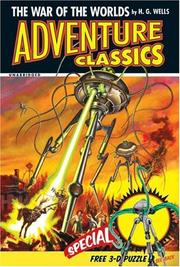
The obvious alternative is The War of the Worlds, which is the more famous book. Read it second. It is longer, its middle section with the curate is where readers stall, and it applies the same method to the present day rather than teaching you the method itself. Take the pair as a fortnight of reading, and do not rush the frame chapters of The Time Machine, which are half its argument. The book also does not stop at 802,701 — the stretch on the dying beach under a swollen red sun is the passage that makes it more than a fable, and readers who remember only the Eloi have effectively stopped at the halfway point.
One thing to carry through the whole path: period attitudes on race, class and eugenics run through Wells's work, and they are inside the fiction rather than confined to his letters. The War of the Worlds opens by comparing the Martian invasion to what Europeans did to the Tasmanians, which is Wells turning imperialism back on his own readers. Later books on this path are far less careful, and the stages below say where.
The rest of the scientific romances
The Island of Doctor Moreau, The Invisible Man, The First Men in the Moon. Three weeks. A note on the first: our record is a Wordsworth Classics volume that carries other stories alongside the novel, so the page count belongs to the collection rather than the novel, which is a long weekend on its own. The Island of Doctor Moreau is the nastiest and most morally serious of the romances and has aged least — Moreau is not mad, he is indifferent. The Invisible Man is shorter and much funnier than its reputation, close to farce in the first half, and Griffin's fall is a consequence of the premise rather than a moral punishment. The First Men in the Moon returns the sequence to social argument by way of a caste society where each individual is physically shaped to a single function.
The prophetic novels
The food of the gods and how it came to earth and The war in the air. These are fables with a thesis rather than tightly-reasoned romances, and they sag structurally where the claim takes over; 30 pages a day is the right pace. The food of the gods and how it came to earth ends in open confrontation between giants and ordinary humanity, and Wells is unmistakably on the side of the giants — the eugenic strain becomes explicit in the fiction here rather than implied by it. The war in the air, published in 1908, imagines aerial bombardment collapsing civilisation six years before the First World War; it also contains the period's racial anxiety about Asia in undisguised form, in the shape of a mass Asiatic air fleet, which is a feature of the book rather than an aside.
The completist tail: the comic social novels
Kipps, Tono-Bungay, The History of Mr. Polly, Ann Veronica, in that order and about six weeks for 1,360 pages. This is the Wells his contemporaries thought was the real one: an Edwardian comic novelist of shop assistants, drapers and lodging houses, working the line from Dickens to Arnold Bennett, and writing from inside a draper's apprenticeship he had hated. Kipps is the easiest way in. Tono-Bungay is the most ambitious book on the path and should not be first — a worthless patent medicine builds a national fortune, and readers who want a plot find it shapeless; its African quap episode contains a killing and a racial callousness the narrator barely registers, presented almost in passing. The History of Mr. Polly is the funniest and warmest thing he wrote. Ann Veronica scandalised 1909 and is also where the polemicist starts to crowd out the novelist.
Where to stop
Most readers stop after the scientific romances, and that is a complete experience. Go on if you want to answer the question the path is really asking: Wells thought the Edwardian novels were his real work and posterity kept the romances instead, and after both halves you can say who was right. Discover has more routes like this one.
Follow the full ordered path here: H.G. Wells Reading Order: Where to Start.
Ready to learn something deeply?
Build a reading path — free