Guy Gavriel Kay Reading Order: Where to Start
Almost everything Kay has written is a standalone, set in a world one quarter-turn away from a real historical moment — Renaissance Italy, Moorish Spain, Tang China, Byzantium. The only true multi-book sequences are the Fionavar Tapestry trilogy and the two-volume Sarantine Mosaic. Read by accessibility rather than chronology: the early Fionavar books are the least characteristic and the most likely to put a new reader off, so they belong at the end, not the beginning.
Start here: the two best entry points
IntermediateMeet the Kay method — invented names over recognisable history, and a narrator who tells you decades in advance which of these people will die — in the two novels most readers name as his best.
▸ Study plan for this stage
Pace: Six to seven weeks. Tigana runs around 670 pages and The Lions of Al-Rassan around 520, and both are slow to start and then very hard to put down. Expect the first 120 pages of Tigana to feel like homework and the last 200 to disappear in a night.
- The quarter-turn. Kay does not invent worlds from nothing — he takes a real historical moment, renames everyone, adds one small element of the numinous, and writes it as fantasy. Tigana is Renaissance Italy under foreign occupation; The Lions of Al-Rassan is Moorish Spain at the start of the reconqu
- Why he does it: the renaming buys him the right to invent freely without falsifying real people, and it buys the reader suspense about outcomes they might otherwise know
- Prolepsis is Kay's signature move. The narrator will tell you, decades in advance, which of these people will die and how they will be remembered. It sounds like it should kill tension and it does the opposite
- Tigana's premise is memory as a weapon: a conquered province has had its name magically erased so that no one born outside it can hear the word. The novel is about cultural erasure and about what resistance costs the people who choose it
- Tigana contains an early sexual relationship between a young woman and the tyrant she intends to destroy, written with more ambiguity than a revenge plot usually allows. It has been argued about since 1990 and is worth going in knowing about
- The Lions of Al-Rassan sets a physician between two great soldiers on opposite sides of a religious war, and its structure guarantees that at least one relationship you care about will end badly. It is the more emotionally devastating of the two, and readers say so consistently
- Kay writes second-tier historical actors — court physicians, mosaicists, poets, minor nobility — rather than kings. The view from just below power is the consistent vantage of his whole career
- Why does Kay rename real history rather than write it straight? Name two things the quarter-turn lets him do that a historical novel could not
- How does telling you in advance that a character will die change the way you read their scenes?
- In Tigana, what exactly has been taken from the province, and why is a name a plausible thing to build a novel of resistance around?
- The Lions of Al-Rassan sets up a triangle where every possible ending costs something. Where in the book do you first realise that, and how does Kay engineer it?
- Which of the two is the better novel, and which is the better introduction? They may not be the same
- After finishing each, spend ten minutes reading about the real history behind it — the Italian city-states for Tigana, eleventh-century Al-Andalus and the fall of the taifa kingdoms for Al-Rassan. Do this after, not before
- Mark the first prolepsis you notice in each book and go back to it at the end. Kay plants them early and they read completely differently in retrospect
- Note who the viewpoint characters are and what their jobs are. The pattern holds across every book in this path
- If Tigana's opening chapters are hard going, push to the Sandre di Astibar sequence before deciding. That is where the novel starts working for most readers
Next up: You now know Kay's method and his emotional register, which is what the Sarantine Mosaic assumes from page one.
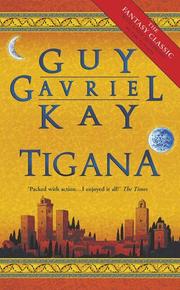
A conquered province has had its name magically erased from memory. The most common recommendation for a first Kay, and the book where his interest in memory and cultural loss is clearest.
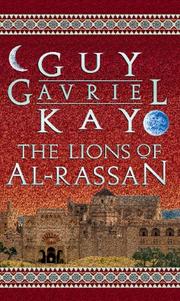
A version of Moorish Spain at the moment the reconquest begins, with a physician between two soldiers on opposite sides. The other standard entry point, and the more emotionally devastating of the two.
The Sarantine Mosaic, in order
IntermediateRead Kay's one two-volume sequence, which must be taken in order, and see him work at his largest scale.
▸ Study plan for this stage
Pace: Eight to nine weeks. Sailing to Sarantium is around 560 pages and Lord of Emperors around 570. Read them back to back with no other book in between — this is one novel published in two volumes, and the split falls at a point that resolves nothing.
- This is Kay's one two-volume sequence and the only place in his work where a book genuinely does not stand alone. Sailing to Sarantium ends mid-argument; Lord of Emperors is the payoff for everything it sets up
- The setting is Byzantium under a Justinian figure, with a Theodora figure beside him and a Hagia Sophia being built. The chariot factions, the court intrigue and the imperial ambition are all lifted at a quarter-turn from the sixth century
- Crispin is a mosaicist, and the craft is the novel's argument: a mosaic is made of dead fragments that only become an image at a distance, which is also Kay's theory of how a life is understood
- The journey out matters as much as the destination. Roughly the first third of Sailing to Sarantium is a road novel, and the encounter in the forest is the moment the numinous enters the sequence properly
- Chariot racing is given enormous space and is not filler. The factions are political institutions and the races are where the city's rivalries are actually conducted
- Kay's largest cast to date, and his most sustained interest in the relationship between an artist and a patron who can have him killed
- Byzantine history is unfamiliar to most English-language readers in a way Renaissance Italy is not, and Kay uses that. You will not be able to guess the shape of the ending from history you half-remember
- Why is a mosaicist the right protagonist for this story rather than a soldier or a courtier?
- What happens on the road to Sarantium that could not happen inside the city, and why does Kay spend a third of the first volume getting there?
- How does the chariot racing function politically? Trace one race to a consequence in the plot
- Sailing to Sarantium ends at a specific moment. What has been resolved and what has not, and why is that a defensible place to break?
- What does Lord of Emperors do with the dome, and how does the craft argument get paid off?
- Do not read a summary of Justinian and Theodora before starting. Read one afterwards — the quarter-turn is much more interesting once you have felt it work
- Keep a short cast list of the factions and the court. This is Kay's most populated book and the names are the main navigational difficulty
- Note every time someone describes the mosaic in progress. Read those passages together at the end; they form the novel's statement of purpose
- Buy or borrow both volumes before you start. Stopping between them to obtain the second is the most common way readers lose the thread
Next up: Sarantium is Kay at his largest scale, and the standalones next show how he adapts that machinery to four different civilisations.
A mosaicist is summoned to a version of Justinian's Constantinople. The first half of a single story — do not read it alone, and do not read it second.

The conclusion, and the payoff for everything the first volume sets up. The two books are one novel split in half, so this follows immediately.
The mature standalones
IntermediateWork through the run of independent historical fantasies and be able to describe how Kay adapts his voice to each borrowed civilisation.
▸ Study plan for this stage
Pace: Four to five months for the four. A Song for Arbonne is around 500 pages, Under Heaven around 570, River of Stars around 640, and Children of Earth and Sky around 570. Take Under Heaven and River of Stars as a pair with as little gap between them as you can manage; the other two can sit wherever you
- A Song for Arbonne is troubadour Provence facing a northern invasion — a warm, courtly society under threat from a puritanical one. It was written before The Lions of Al-Rassan and is the most overlooked book he wrote, and the right change of register after Sarantium
- Under Heaven is Tang dynasty China at the moment before the An Lushan rebellion. It opens with a gift of two hundred and fifty Sardian horses, which is a lethal gift, and the whole novel proceeds from that one problem
- River of Stars is set four centuries later in the same world, under a Song-like dynasty that has responded to the earlier catastrophe by systematically weakening its own military. It is a novel about a civilisation over-correcting, and it is far better as the second half of a pair
- The two Chinese books are not a series and share no characters, but River of Stars is in constant argument with the war Under Heaven leads up to. Reading them apart loses the argument entirely
- Under Heaven is the more propulsive; River of Stars is the more melancholy and the more openly about the cost of a policy. Readers who bounce off the second usually do so because they expected another adventure
- Children of Earth and Sky returns to the Sarantium world centuries later, in a Renaissance Adriatic of city-states, pirates and spies. It reads far richer if the Mosaic is behind you, because the fallen empire in its background is the one you watched being built
- Kay's voice adapts to each borrowed civilisation — the poetry in the Chinese books, the courtly formality in Arbonne, the mercantile bustle in Children of Earth and Sky — while the structural moves stay identical
- What does A Song for Arbonne value that its northern antagonists do not, and does Kay make the antagonists more than a foil?
- Why is a gift of horses a lethal problem in Under Heaven? Trace the logic from the first chapter
- How is River of Stars a response to Under Heaven rather than a sequel to it? Name the specific policy the later dynasty has adopted and why
- Children of Earth and Sky depends on echoes from the Sarantine Mosaic. Find three and say what each one adds
- Across four civilisations, what stays constant in Kay's method? Be specific about technique rather than theme
- Read Under Heaven and River of Stars within a month of each other. The pairing is the whole point of including both
- For each book, write one line on which real historical moment it is a quarter-turn from. If you cannot say, look it up afterwards
- Keep tracking the prolepsis. By now you should be able to spot Kay flagging a death a hundred pages before it happens
- Rank the four by how well the borrowed civilisation is realised, then by how much you enjoyed them. The two lists rarely match and the mismatch is worth thinking about
Next up: You have now read the writer Kay became, which is the only fair position from which to read the trilogy he started as.

Troubadour Provence facing a northern invasion. Written before Al-Rassan and often overlooked, it is the warmest of the standalones and a good change of register after Sarantium.

Tang dynasty China, a gift of two hundred and fifty horses, and the An Lushan rebellion coming. The first of the Chinese pair and the more propulsive.

Set four centuries later in the same world, under a Song-like dynasty that has learned the wrong lesson from Under Heaven's war. It reads far better as the second half of a pair.

Renaissance Adriatic city-states, pirates and spies, in the world of the Sarantine Mosaic centuries on. Read after Sarantium, whose echoes it depends on.
The completist tail: back to Fionavar
IntermediateRead Kay's one trilogy, in order, and understand why it is placed last rather than first despite being written first.
▸ Study plan for this stage
Pace: Three to four months. The Summer Tree is around 380 pages, The Wandering Fire around 300, The Darkest Road around 420, and Ysabel around 420. The trilogy is quick reading but the first hundred pages of The Summer Tree are the biggest tonal adjustment in this path, so give them patience rather than s
- The Fionavar Tapestry is Kay's only true trilogy and must be read in order: The Summer Tree, then The Wandering Fire, then The Darkest Road. Nothing about them stands alone
- It is deliberately last in this path despite being written first. It is the most conventionally high-fantasy thing Kay did — five Toronto students taken into another world, a dark lord under a mountain, Arthurian material arriving in force — and it is the version of Kay most likely to put off a new
- The context is real and worth knowing: Kay assisted Christopher Tolkien in editing The Silmarillion for publication before writing these, and the trilogy is openly working in that tradition rather than around it
- The Arthurian strand that arrives in The Wandering Fire is the strongest element of the trilogy and the clearest early sign of the writer he became — the reworking of an existing story rather than the invention of a new one
- The Darkest Road contains several of the emotional set pieces Kay spent the next thirty years refining. Reading it after the mature books lets you see the technique in its unpolished first form
- Ysabel is a contemporary novel set in Provence, around Aix and the Sainte-Victoire, with a teenage protagonist and a very old story repeating itself. It stands on its own, but its best moment is a connection back to Fionavar that only lands if you have finished the trilogy
- Reading the early work last is a deliberate inversion. The trade is that you lose the experience of watching a writer develop and you gain a much higher chance of finishing the path at all
- What is Fionavar doing that the later books never do again, and is its absence from them a gain or a loss?
- How does the Arthurian material change the trilogy when it arrives, and why does Kay hold it back until the second volume?
- Which moves in The Darkest Road do you recognise from Tigana or The Lions of Al-Rassan, and how have they been refined?
- Does Ysabel work as a standalone for a reader who has not read the trilogy? Say what they would miss
- Having now read everything in order of accessibility rather than publication, would you recommend the same order to someone else? Where would you change it?
- Read the trilogy straight through as one book. Split across months it loses what momentum it has
- Keep a list of moments that felt like drafts of scenes in the later novels. It is a short list and a genuinely illuminating one
- Read Ysabel last, immediately after The Darkest Road, while the trilogy is still fresh. The payoff has a short shelf life
- Write a paragraph on what Kay kept from Fionavar and what he abandoned. That paragraph is the summary of his whole career
Next up: This closes the path: everything Kay has written now stands in front of you as a standalone choice, in whatever order you like.
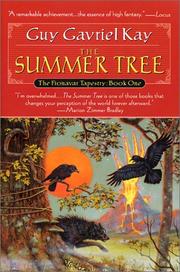
Five Toronto students are taken into another world. Written straight after Kay helped edit The Silmarillion, it is the most conventionally high-fantasy thing he did — start the trilogy here, but only after the books above.
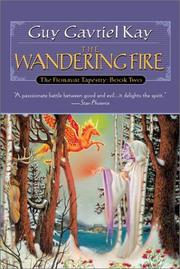
The middle volume, where the Arthurian material arrives in force. It is unreadable out of order and pays off the first book's cost directly.
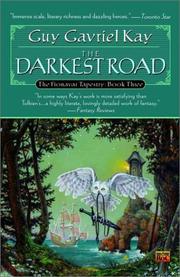
The conclusion of the trilogy and the source of the emotional moves Kay would spend the rest of his career refining.
A contemporary novel set in Provence that quietly connects back to Fionavar. The correct final book in this path, because its best moment only lands for readers who finished the trilogy.
Discussion
Keep reading
Paths that share books, cover the same subject, or open a related topic.