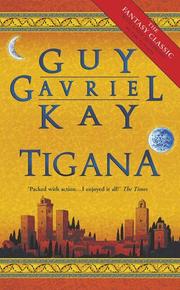
Start with Tigana. Almost every Kay novel is a standalone, so the entry point is the one decision that matters, and this is the book that demonstrates the method: take a real historical moment — Renaissance Italy under foreign occupation — rename everyone, add one small element of the numinous, and write it as fantasy. The premise is memory as a weapon, a conquered province whose name has been magically erased so that nobody born outside it can hear the word.
The obvious alternative is publication order, which means beginning with The summer tree and the Fionavar Tapestry. That is the most conventionally high-fantasy thing Kay did — five Toronto students taken into another world, a dark lord under a mountain, Arthurian material arriving in force — and it is the version of him most likely to put a new reader off. This path puts it last deliberately. You lose the experience of watching a writer develop; you gain a much higher chance of finishing.
Expect the first 120 pages of Tigana to feel like homework and the last 200 to disappear in a night. If the opening is hard going, push to the Sandre di Astibar sequence before deciding — that is where the novel starts working for most readers. One thing worth knowing in advance: Tigana contains an early sexual relationship between a young woman and the tyrant she intends to destroy, written with more ambiguity than a revenge plot usually allows, and it has been argued about since 1990.
Start here: the two best entry points
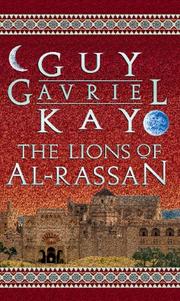
Tigana, then The lions of Al-Rassan, which is Moorish Spain at the start of the reconquest and sets a physician between two great soldiers on opposite sides of a religious war. Its structure guarantees that at least one relationship you care about ends badly, and readers consistently name it the more devastating of the two. Read about the real history after each book rather than before; the quarter-turn is more interesting once you have felt it work.
The Sarantine Mosaic, in order
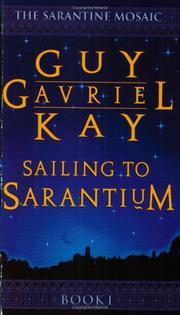
Sailing to Sarantium (The Sarantium Mosaic) then Lord of Emperors (Sarantine Mosaic, Book 2). This is the one place in Kay's work where a book genuinely does not stand alone — it is a single novel published in two volumes, and the split resolves nothing. Get both before you start; stopping between them to obtain the second is the most common way readers lose the thread. The setting is Byzantium at a quarter-turn, with a Justinian figure, a Theodora figure and a Hagia Sophia going up, and the protagonist is a mosaicist, because a mosaic is made of dead fragments that only become an image at a distance.
The mature standalones
A song for Arbonne is troubadour Provence facing a puritanical northern invasion, and the most overlooked book he wrote. Under Heaven is Tang dynasty China just before the An Lushan rebellion, opening with a gift of two hundred and fifty horses that is a lethal gift. River of stars is set four centuries later under a Song-like dynasty that has responded to that catastrophe by systematically weakening its own military. The two are not a series and share no characters, but the second is in constant argument with the war the first leads up to — read them within a month of each other or the argument disappears. Readers who bounce off River of stars usually do so because they expected another adventure; it is the more melancholy book and openly about the cost of a policy. Children of earth and sky returns to the Sarantium world centuries later and reads far richer with the Mosaic behind you.
The completist tail: back to Fionavar
The summer tree, The wandering fire, The darkest road — Kay's only true trilogy, and the one sequence here that must be read in order because nothing in it stands alone. He assisted Christopher Tolkien in editing The Silmarillion before writing it, and the trilogy works openly in that tradition. Read it straight through as one book. Then Ysabel, a contemporary novel set around Aix and the Sainte-Victoire, immediately afterwards: it stands on its own, but its best moment is a connection back to Fionavar that only lands while the trilogy is fresh.
Where to stop
After the standalones is a perfectly good stopping point, and many readers never go back to Fionavar at all. If you do, read it as the early work it is rather than as the culmination. Discover has more ordered routes through single authors.
Follow the full ordered path here: Guy Gavriel Kay Reading Order: Where to Start.
Ready to learn something deeply?
Build a reading path — free