Gustave Flaubert Reading Order: Where to Start
This curriculum takes an intermediate reader on a deep, structured journey through Flaubert's life and art — beginning with his two great novels, moving into his stranger late work, and culminating in the letters and critical scholarship that reveal the obsessive craftsman behind the prose. Each stage builds the contextual and stylistic literacy needed to fully appreciate the next, so that by the end the reader can hear Flaubert's voice not just on the page but in his own words and in the best critical minds he has inspired.
The Two Masterpieces
IntermediateRead Flaubert's two central novels in the intended order, developing an ear for his free indirect style, his irony, and his relentless pursuit of le mot juste.
▸ Study plan for this stage
Pace: 8–10 weeks total: Weeks 1–4 for Madame Bovary (~25–30 pages/day, including re-reading key passages); Weeks 5–9 for Sentimental Education (~30–35 pages/day, it is roughly twice as long); Week 10 reserved for comparative reflection, journal review, and exercise completion.
- Free indirect style (style indirect libre): Flaubert's technique of blending a character's inner voice with the narrator's third-person narration without quotation marks or attribution, creating ironic distance — study Emma Bovary's romantic fantasies and Frédéric Moreau's self-delusions as primary
- Le mot juste: Flaubert's obsessive search for the single precise word; notice how individual word choices in both novels carry enormous tonal and moral weight, and how different English translations handle this challenge.
- Irony and narrative distance: Flaubert never editorializes openly; his irony operates through juxtaposition, anticlimax, and the gap between characters' self-perception and reality — Emma's death vs. her romantic ideals, Frédéric's passive drift through the 1848 Revolution.
- Romantic illusion vs. bourgeois reality: Both novels anatomize the collision between idealized desire (Emma's novels, Frédéric's love for Madame Arnoux) and the mediocrity of provincial or Parisian bourgeois life.
- The flawed protagonist as social mirror: Emma Bovary and Frédéric Moreau are both deeply compromised figures; Flaubert uses their failures not for moral condemnation but to indict the society that shaped them.
- Structure and anticlimax: Flaubert deliberately deflates expected dramatic peaks — Emma's affairs bring no liberation, the 1848 Revolution changes nothing for Frédéric — making the form itself an argument about futility.
- The role of objects and material detail: Flaubert loads physical descriptions (Emma's wedding cake, the agricultural fair, Frédéric's furnished apartments) with social and psychological meaning, anticipating later realist and naturalist fiction.
- Temporal manipulation: Compare the compressed, suffocating time of Emma's provincial life in Madame Bovary with the sweeping, loosely episodic decades of Frédéric's life in Sentimental Education, and what each structure says thematically.
- In Madame Bovary, identify three passages where free indirect style is at work. Whose values are being expressed — Emma's, the narrator's, or an ironic fusion of both? How does the ambiguity serve Flaubert's purpose?
- How does Flaubert use the Comices agricoles (agricultural fair) scene in Madame Bovary to satirize romantic rhetoric? What structural technique does he deploy, and what does it reveal about both Emma and Rodolphe?
- Frédéric Moreau witnesses the 1848 Revolution firsthand yet remains essentially passive and unchanged. What does Flaubert suggest about the relationship between historical upheaval and individual moral development in Sentimental Education?
- Compare Emma Bovary's romantic illusions with Frédéric's idealization of Madame Arnoux. In what ways are these delusions similar in origin and function, and how does each novel punish or simply exhaust them?
- Flaubert famously said 'Madame Bovary, c'est moi.' Based on your reading of both novels, what autobiographical or self-critical dimension do you detect in each book, and how does it complicate a purely satirical reading?
- How does the ending of Sentimental Education — Frédéric and Deslauriers concluding that their best memory was a youthful visit to a brothel they never entered — function as a summation of the novel's themes of passivity, nostalgia, and failed desire?
- Free indirect style hunt: As you read, keep a dedicated notebook. Each day, copy out 2–3 sentences you suspect are in free indirect style. Write a brief annotation: What would this sentence look like as direct speech? What irony or ambiguity is lost if you make it explicit? By the end of both novels you will have a personal anthology of Flaubert's technique.
- Translation comparison (le mot juste in practice): Choose one famous passage from Madame Bovary (e.g., Emma's wedding, the blind beggar's song) and one from Sentimental Education (e.g., the opening Seine boat scene, the sacking of the Tuileries). Read the same passage in two different English translations side by side. Write a one-page analysis of where the translations diverge and what each choic
- Irony mapping exercise: Select one chapter from each novel and draw a simple two-column table: 'What the character believes is happening' vs. 'What the narrator's framing implies is actually happening.' This visual gap-mapping trains your eye for Flaubert's ironic method.
- Object close-reading: Choose one significant object from each novel (e.g., Emma's wedding bouquet or the lathe-turned cigar case in Madame Bovary; Frédéric's first glimpse of Madame Arnoux or the auctioned furniture in Sentimental Education). Write a 300–500 word analysis of how Flaubert loads that object with social, psychological, and thematic meaning.
- Structural anticlimax essay: Write a 500–700 word comparative essay arguing how Flaubert uses structural anticlimax in both novels. Use at least two specific scenes from each book. Focus on how the form — the deliberate deflation of climax — is itself a philosophical statement about bourgeois life and romantic aspiration.
- Character voice imitation: Write one page of prose in Flaubert's free indirect style, using a contemporary character who holds romantic or idealistic illusions clearly at odds with their mundane reality. Then annotate your own paragraph: where did you achieve the ironic double-voice, and where did you slip into either pure narration or pure interior monologue? This exercise makes the technique unf
Next up: Mastering Flaubert's irony, free indirect style, and bourgeois critique in these two central novels gives you the critical vocabulary and aesthetic sensitivity needed to explore how his methods were received, contested, and transformed by the writers — Maupassant, Zola, James, and others — who came directly under his influence in the next stage.
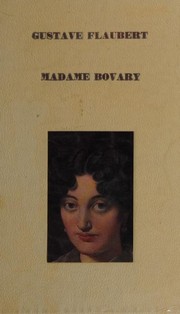
The natural entry point and Flaubert's most celebrated novel; its provincial realism, devastating irony, and revolutionary narrative technique set the standard against which everything else in his work is measured.

Read immediately after Bovary, this novel deepens the themes of illusion and disappointment on a historical canvas; its looser, more melancholy structure rewards the stylistic intuition built by the first book.
The Stranger, Darker Flaubert
IntermediateEncounter the visionary, hallucinatory, and satirical sides of Flaubert that the realist novels only hint at, rounding out a complete picture of his artistic range.
▸ Study plan for this stage
Pace: 8–10 weeks total: Week 1–2 — Three Tales (~30 pages/day; it's short but dense, re-read each tale before moving on); Weeks 3–5 — The Temptation of Saint Anthony (~20–25 pages/day; slow, meditative reading recommended given its hallucinatory prose); Weeks 6–10 — Bouvard and Pécuchet (~20 pages/day wit
- The triptych structure of Three Tales and how Flaubert uses three radically different historical settings (contemporary Normandy, biblical Carthage/Judea, medieval hagiography) to probe a single obsession: the nature of sainthood, sacrifice, and transcendence
- Hallucinatory prose and visionary spectacle in The Temptation of Saint Anthony — how Flaubert uses dramatic monologue, parade-of-heresies structure, and sensory overload to dramatize the war between faith and doubt
- Satire of bourgeois epistemology in Bouvard and Pécuchet — the novel as a systematic demolition of every 19th-century intellectual system (science, philosophy, religion, pedagogy, politics) through the lens of two hapless autodidacts
- The Dictionary of Received Ideas (appended to Bouvard and Pécuchet) as a standalone satirical form: the idea that cliché is not merely stylistic failure but a symptom of ideological conformity
- Flaubert's lifelong theme of the 'idée reçue' (received idea) — how stupidity (la bêtise) functions as both a comic and a tragic force across all three books
- The relationship between asceticism and artistic creation: Anthony's temptations mirror Flaubert's own decades-long struggle with this manuscript, making the book a meta-artistic document
- Generic hybridity — Three Tales blends realism, legend, and symbolism; The Temptation is a prose poem/philosophical drama; Bouvard and Pécuchet is an encyclopedic anti-novel — showing Flaubert's refusal to be confined by a single mode
- The unfinished and the fragmentary as aesthetic statements: Bouvard and Pécuchet was left incomplete at Flaubert's death, and its very incompleteness enacts the futility it satirizes
- In Three Tales, how does Flaubert use the figure of the simple or naïve believer differently across 'A Simple Heart,' 'The Legend of Saint Julian Hospitator,' and 'Herodias,' and what does the juxtaposition of these three portraits suggest about his attitude toward faith?
- The Temptation of Saint Anthony was rewritten three times over nearly thirty years. Based on the final text, what does the parade of gods, heresies, and philosophical systems reveal about Flaubert's view of the relationship between religion and desire?
- How does the comedy of Bouvard and Pécuchet differ from conventional satire? Is the reader meant to feel superior to the two clerks, or does Flaubert implicate the reader in their failures?
- What role does the concept of 'la bêtise' (stupidity or received ideas) play across all three books in this stage, and how does its treatment evolve from the pathos of Félicité in Three Tales to the encyclopedic farce of Bouvard and Pécuchet?
- How do the formal and generic experiments in these three books — prose poem, hagiographic triptych, encyclopedic anti-novel — expand or complicate the picture of Flaubert you formed from his realist novels?
- The Temptation ends with Anthony's vision of matter teeming with life and his cry to 'be matter.' How does this materialist-mystical conclusion relate to the themes of temptation, renunciation, and artistic obsession throughout the work?
- Close-reading journal: After finishing each of the three tales in Three Tales, write a one-page comparison of how Flaubert handles the moment of spiritual transcendence or death in each — track the specific imagery, sentence rhythm, and narrative distance he uses, noting what shifts and what stays constant.
- Temptation mapping: As you read The Temptation of Saint Anthony, keep a running log of every figure, god, heresy, or philosophical system that appears to Anthony. After finishing, group them thematically and write a short essay arguing for what you think the structural logic of the parade is — is it random, escalating, circular?
- Bêtise catalogue: While reading Bouvard and Pécuchet, collect 15–20 examples of the protagonists' intellectual errors. For each, identify whether the failure is one of method, of source, of overconfidence, or of received ideas — then check the Dictionary of Received Ideas and find at least five entries that directly correspond to errors made in the main narrative.
- Rewrite exercise: Choose one entry from the Dictionary of Received Ideas and expand it into a short scene (one to two pages) in the style of Bouvard and Pécuchet, showing the cliché being earnestly deployed by the two clerks. This forces active engagement with Flaubert's satirical mechanism.
- Comparative essay (500–700 words): Argue whether 'A Simple Heart' from Three Tales is best read as sincere pathos, ironic satire, or something that refuses both categories. Use at least two specific passages as evidence, and consider how your answer changes your reading of Bouvard and Pécuchet.
- Timeline of composition: Research and construct a simple timeline showing when Flaubert worked on each of the three books in this stage alongside his other major works. Reflect in a short paragraph on what it means that The Temptation and Bouvard and Pécuchet were lifelong obsessions — how does that biographical fact inflect your reading of their themes of futility and obsession?
Next up: Having now encountered Flaubert's full artistic range — from realist precision to hallucinatory vision to encyclopedic satire — the reader is equipped to step back and engage with his letters, critical essays, and the scholarly literature that situates him as the founding figure of literary modernism and a decisive influence on writers from Maupassant to Kafka to Borges.

This late triptych — including 'A Simple Heart' — is Flaubert at his most concentrated and compassionate; reading it after the two novels shows how his style distilled to near-perfection in short form.
The lifelong obsession Flaubert kept returning to across decades; reading it now reveals the visionary, philosophical, and anti-realist undercurrent that runs beneath all his work.

His unfinished final novel, a savage encyclopedic satire of human stupidity; it is best approached last among the fiction because it demands familiarity with Flaubert's irony at full stretch.
Flaubert in His Own Words
ExpertHear Flaubert's aesthetic philosophy, his anguish over style, and his intimate self-portrait through his extraordinary correspondence — the essential companion to the fiction.
▸ Study plan for this stage
Pace: 6–7 weeks, ~15–20 pages/day — the letters reward slow, ruminative reading; allow extra time to re-read key passages and write responses before moving on
- Le mot juste — Flaubert's obsessive pursuit of the single perfect word and its moral weight in his aesthetic system
- The 'gueuloir' test — his practice of reading prose aloud to catch rhythmic and sonic failures, revealing that style is inseparable from music
- Impersonality and the hidden author — his doctrine that the artist must be absent from the work like God from creation, present everywhere but visible nowhere
- The religion of Art — Flaubert's quasi-sacred conception of literature as the only worthy vocation, demanding total self-sacrifice
- Anguish as method — his letters expose how suffering, self-doubt, and near-paralysis were not obstacles to writing but constitutive of his creative process
- Contempt for bourgeois mediocrity (la bêtise) — his sustained, darkly comic critique of philistinism as both a social and aesthetic evil
- The writer's solitude — Reclusion at Croisset as a deliberate philosophical and practical choice, and what it cost him personally
- Friendship as intellectual laboratory — his correspondences with George Sand, Louis Bouilhet, and Ivan Turgenev as spaces where aesthetic ideas were tested and refined
- How does Flaubert define the relationship between form and content in the letters, and why does he insist they are ultimately inseparable?
- What specific techniques or rituals does Flaubert describe for testing and revising prose, and what do these reveal about his theory of style?
- How do the letters to George Sand complicate or enrich the image of Flaubert as a cold, impersonal aesthete?
- In what ways does Flaubert's concept of 'la bêtise' function as both a social critique and an aesthetic standard — and where do the two overlap?
- How does Flaubert's account of his own suffering while writing Madame Bovary or Salammbô illuminate (or contradict) his doctrine of authorial impersonality?
- What does the correspondence reveal about Flaubert's views on the relationship between the writer's life and the writer's work — and how does this tension play out across different letter-recipients?
- Keep a 'letter journal': after each reading session, write a one-paragraph response in the style and spirit of Flaubert's own letters — opinionated, precise, self-dramatizing — reacting to what you just read. This forces active engagement with his voice.
- Select three passages where Flaubert describes a specific stylistic struggle (e.g., a sentence that took days to write). Locate the corresponding passage in Madame Bovary or another work from the curriculum and analyze whether his stated intention is legible in the finished prose.
- Practice the gueuloir yourself: choose a paragraph from any Flaubert novel, read it aloud, and write a brief annotation identifying the rhythmic and sonic effects you notice. Then read his own description of the passage's composition (if available in the letters) and compare your observations.
- Map Flaubert's aesthetic doctrines: create a two-column chart with 'Principle stated in the letters' on one side and 'Evidence in the fiction' on the other, drawing only on books already read in the curriculum. Aim for at least eight paired entries.
- Write a 600-word critical essay answering: 'Is Flaubert's doctrine of impersonality a genuine aesthetic philosophy or an elaborate self-mythology?' Use only evidence from the Selected Letters.
- Trace a single theme — e.g., solitude, boredom, or the suffering artist — across letters written to at least three different correspondents. Write a short comparative note on how Flaubert modulates his voice and argument depending on his audience.
Next up: Internalizing Flaubert's aesthetic philosophy and creative anguish through the letters equips the reader to engage with scholarly and critical interpretations of his work with a first-hand standard of comparison — making the next stage's secondary literature feel like a conversation rather than a lecture.
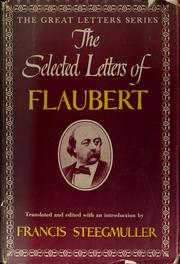
Selected and translated by Francis Steegmuller, these letters are among the greatest in literary history; they expose the suffering, humor, and fanatical dedication to art that produced the novels, and are best read after the fiction so every reference lands.
Critical Depth
ExpertSituate Flaubert within literary history and theory through the two most essential critical works written about him, achieving a scholarly and interpretive command of his achievement.
▸ Study plan for this stage
Pace: 10–14 weeks total: Weeks 1–4 for Culler's "Flaubert" (~25–30 pages/day, including re-reading dense theoretical passages); Weeks 5–13 for Sartre's "The Family Idiot" (~20–25 pages/day across its massive volumes, with dedicated reflection days every two weeks); Week 14 reserved for synthesis, comparat
- Culler's concept of 'naturalization' and how readers domesticate Flaubert's radical narrative irony into conventional meaning
- Free indirect discourse (style indirect libre) as Flaubert's signature technique for dissolving the boundary between narrator and character consciousness
- Flaubert as the founder of the modern novel: his self-conscious literariness and the foregrounding of form over content
- Culler's structuralist and post-structuralist framework for reading Flaubert — the text as a system of codes resisting stable interpretation
- Sartre's existentialist-psychoanalytic method: the 'progressive-regressive' biographical approach applied to Flaubert's childhood and family constellation
- The concept of the 'family idiot' (l'idiot de la famille): Gustave's passive constitution, his positioning within the Flaubert family structure, and how neurosis becomes the engine of artistic vocation
- Sartre's theory of the 'neurotic solution': how Flaubert's 1844 crisis at Pont-l'Évêque functions as a chosen retreat into illness that liberates him for literature
- The tension between Sartre's totalizing biographical ambition and the irreducible opacity of Flaubert's subjectivity — the limits of existential psychoanalysis
- According to Culler, in what specific ways does Flaubert's use of free indirect discourse destabilize readerly certainty about irony, and why does this make his novels structurally 'unreadable' in a productive sense?
- How does Culler position Flaubert at the origin of literary modernity, and what formal and ideological features of his prose support that claim?
- What does Sartre mean by calling Gustave the 'idiot of the family,' and how does the dynamics of the Flaubert household — particularly the roles of Achille-Cléophas and Caroline — shape Gustave's passive constitution?
- How does Sartre interpret the nervous crisis of 1844, and why does he argue it represents an existential 'choice' rather than a purely medical event?
- Where do Culler's and Sartre's projects most productively converge, and where do they most sharply diverge in their accounts of what makes Flaubert significant?
- How does each critic handle the relationship between Flaubert's biography and his style — and which approach do you find more illuminating for reading the novels themselves?
- Close-reading drill: Select a single passage of free indirect discourse from a Flaubert novel (e.g., the agricultural fair scene or Emma's early romantic reveries) and annotate it using Culler's vocabulary — identify every point where narrator and character voice blur, and write a 400-word analysis of how irony is generated and resisted.
- Concept-mapping exercise: After finishing Culler, draw a diagram connecting his key theoretical terms (naturalization, vraisemblance, symbolic codes, irony) and trace how each term applies to at least one specific textual moment Culler discusses.
- Sartre reading journal: Every 50 pages of 'The Family Idiot,' write a half-page entry answering: What new dimension of Gustave's constitution has Sartre uncovered? What evidence does he use, and does it convince you?
- Comparative thesis essay (1,000–1,500 words): Argue for or against the following claim — 'Culler's structuralist Flaubert and Sartre's existentialist Flaubert are ultimately incompatible portraits.' Use specific passages and arguments from both books as evidence.
- Methodological audit: Choose one chapter from each book and write a one-page breakdown of the critical method on display — what kind of evidence is privileged, what assumptions underlie the argument, and what is left out or suppressed by each approach.
- Scholarly conversation exercise: Find one peer-reviewed article that cites both Culler and Sartre on Flaubert, summarize how the article positions them in relation to each other, and write a paragraph explaining whether you agree with that positioning based on your own reading.
Next up: Mastering Culler's formal-theoretical lens and Sartre's totalizing biographical method equips the reader with two fully articulated critical frameworks that can be tested, challenged, or extended when moving into primary source reading, comparative literary study, or original research on Flaubert's manuscripts and correspondence.
A rigorous and accessible structuralist study of how Flaubert's irony and indeterminacy work; it gives the reader precise critical tools to articulate what they have already felt in the novels.
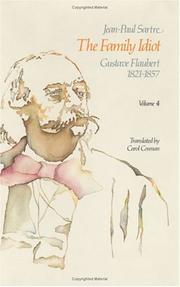
Sartre's monumental (and unfinished) existential biography of Flaubert is one of the most ambitious critical projects of the 20th century; read last, it rewards the reader who already knows the life and work intimately.
Discussion
Keep reading
Paths that share books, cover the same subject, or open a related topic.