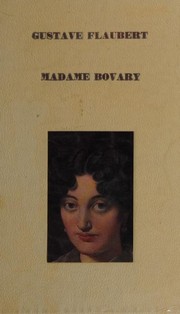
Start with Madame Bovary. This is one of the rare cases where the most famous book is also the correct entry: it is the most tightly controlled thing Flaubert wrote, the plot is legible from the first page, and every sentence is doing the work the reputation claims. There is no gentler on-ramp, because everything else he wrote is either harder, stranger or unfinished.
Which translation you read matters more than which book you read first. Lydia Davis and Francis Steegmuller are the two versions most often recommended, for different reasons — Davis for fidelity to the sentence rhythms, Steegmuller for readability. Flaubert spent five years on the prose, so a flat translation genuinely costs you the book.
After Bovary
Go to Three Tales next. It is short, and "A Simple Heart" — the story of a servant, her life, and eventually her parrot — is the most purely affecting thing he wrote. It also shows the range: one contemporary story, one medieval legend, one biblical set piece, all in a hundred and fifty pages.
Then Sentimental Education, and here you need a warning. Many critics consider it his greatest novel; many first-time readers find it unbearable. It is deliberately anticlimactic. Frédéric Moreau fails to act, repeatedly, across a decade that includes the 1848 revolution, and the book refuses to reward him or to punish him decisively. If you go in expecting the momentum of Madame Bovary, you will bounce. Go in expecting a study of wasted potential rendered at exactly the pace of wasted potential, and it becomes extraordinary.
The letters
The Selected Letters of Gustave Flaubert is the book to read fourth, and a serious case can be made that it is the best thing he produced. The correspondence with Louise Colet in particular is the greatest sustained account of what writing well actually costs — the days spent on a paragraph, the hatred of the bourgeoisie, the theory of the impersonal narrator worked out in real time. Read it after two novels, when you know what he is agonising over.
The difficult late books
The Temptation of Saint Anthony and Bouvard and Pécuchet are for readers who have decided they want all of Flaubert.
The Temptation of Saint Anthony is a hallucinatory closet drama of heresies and demons that he rewrote across thirty years. It has no plot in any ordinary sense. Bouvard and Pécuchet, unfinished at his death, is a joke about two copyists who attempt every field of human knowledge and fail at each — a joke sustained far past the point where most readers find it funny, which is at least partly the intention.
Neither is a book to recommend to someone who has read one Flaubert. Both are essential to anyone who has read four.
Criticism and biography
Jonathan Culler's Flaubert is the compact critical study to read alongside the novels; it is particularly good on the uses of stupidity as a subject. Sartre's The Family Idiot is the opposite: a three-volume, several-thousand-page existential biography that is more a monument to Sartre than a guide to Flaubert. Read it only if that sentence sounds appealing rather than alarming.
Where to stop
Madame Bovary, Three Tales and the letters are a complete education. Add Sentimental Education if the first two left you wanting the harder version. Everything after that is optional, and honest readers admit it.
To keep building from here, browse Discover.
Follow the full ordered path here: Gustave Flaubert Reading Order: Where to Start.