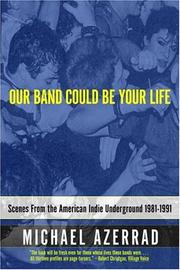
Start with Michael Azerrad's Our Band Could Be Your Life, a narrative history of thirteen American underground bands from Black Flag to Fugazi between 1981 and 1991. It ends exactly where the standard grunge story begins, and almost everything in the rest of this list is a consequence of the label network, touring circuit and ethics it describes.
The second thing to know before you start is what kind of book you are holding. This subject is unusually thick with participant accounts — a manager's memoir, a drummer's memoir, a biography written with a band's cooperation while its singer was alive, a set of private notebooks published after a death. Those are primary sources with interests attached, not neutral histories, and they are more useful when you read them as such. The oral histories are a third category again: they preserve the disagreement rather than resolving it.
Where the decade came from
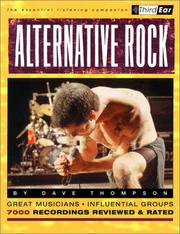
Our Band Could Be Your Life is the prehistory. Dave Thompson's Alternative Rock is a reference survey rather than a narrative — hundreds of bands, labels and records with the connections mapped — and works best kept open beside the narrative books instead of read straight through.
Nirvana, at three distances
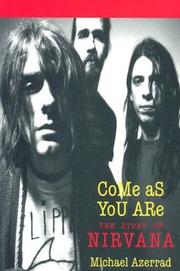
Azerrad's Come as you are was written in 1993 with the band's full cooperation and while Kurt Cobain was alive, which makes it the only Nirvana book not shaped by how the story ended. Read it first for that reason. Charles Cross's Heavier than Heaven is the full posthumous biography, written with access to the journals and to Courtney Love; it is more complete than Azerrad and more contested, and several of its conclusions have been disputed by people who were present. Cobain's Journals is a facsimile of his notebooks published without editorial framing — raw material rather than an account, and published over objections about whether he would have wanted it public. Danny Goldberg's Serving the Servant is the manager's account of the business machinery: the Geffen deal, and how a band that distrusted the industry was processed by it. It is a memoir by an interested participant and it is the corrective to the myth the other three build.
Seattle, from the inside
Mark Yarm's Everybody loves our town is the definitive oral history, hundreds of interviews arranged so that participants openly contradict one another. The format is the argument: nobody agrees on what happened. Greg Prato's Grunge Is Dead is a second oral history with substantially different interviewees and is stronger on the pre-1988 bands — the U-Men, Green River, Malfunkshun — that Yarm compresses. Patty Schemel's Hit so hard is a memoir by Hole's drummer covering addiction, being a gay woman in that scene, and the years after the money stopped. It is the best first-person account here and it carries the human cost the oral histories can only gesture at.
The parallel scenes
Chuck Klosterman's Fargo rock city is a memoir and defence of the hair metal that grunge is usually credited with killing, written by someone who loved it in rural North Dakota; read it to complicate a story written almost entirely by people glad that metal died. Sara Marcus's Girls to the front is the history of riot grrrl — Bikini Kill, Bratmobile, the zines — running in the same towns at the same time and largely written out of the grunge narrative. David Browne's Goodbye 20th Century is the Sonic Youth biography and the story of the band that signed to a major label first and opened the door the rest walked through.
The gold rush and the aftermath
Jim Ruland's Corporate Rock Sucks is a history of SST Records and the clearest account anywhere of what independent-label economics actually were, including how badly the label treated its bands — the business counterweight to Azerrad's romance. Lizzy Goodman's Meet Me in the Bathroom is an oral history of New York rock from 2001 onward, and reads as the direct sequel to this whole path. Follow the full ordered path below.
Follow the full ordered path here: Best Books on Grunge and 1990s Rock, in Reading Order.
Ready to learn something deeply?
Build a reading path — free