Gore Vidal Reading Order: Where to Start
Vidal wrote two careers at once: a seven-novel history of the American republic called Narratives of Empire, and a separate stream of scandalous satires and essays. The mistake most readers make is starting Narratives of Empire at its first-published volume rather than its best one. This order opens with the two strongest books in the sequence, fills in the rest in the order of American history rather than publication, then turns to the novels that made him notorious and the essays that made him formidable.
Start here: the two best Narratives of Empire novels
IntermediateEnter the American chronicle at its high point and learn Vidal's method — a narrator close enough to power to be cynical about it.
▸ Study plan for this stage
Pace: Six to seven weeks. Burr runs around 430 pages and Lincoln around 660, and both are conventional narrative novels that move quickly — the length is the only demand they make. Roughly 25 pages a day gets you through both comfortably.
- Vidal wrote from an explicit political position and never disguised it: he was an anti-imperial republican who held that the United States had traded a republic for an empire, and he was hostile to the founding myths on principle. That is the frame these novels are built inside, and knowing it lets
- Burr's method: an old man narrating in 1833, with everything filtered through his contempt. Washington is a poor general, Jefferson a hypocrite, Hamilton a schemer. Vidal is not neutral and does not pretend to be
- The nested narrator. Charlie Schuyler is transcribing Burr, which gives Vidal a second layer of doubt — you are reading a young man's record of an old man's grudges
- Vidal's habit of putting real figures in invented private scenes, defended in his own afterwords on the grounds that nothing contradicts the documented record. Read those afterwords; they are where he shows his working
- Lincoln is the outlier: the one book in the sequence where Vidal takes a president entirely seriously, and it is the most admired thing he wrote. The Lincoln here is seen from outside, through Seward, Chase and Hay, never from within
- Historians disputed particular claims in Lincoln, notably around Lincoln's health and around Vidal's handling of the sources. He answered in print at length; the exchange is part of the book's history
- The pleasure of the political novel done properly — cabinet meetings, patronage, newspapers and money treated as the actual mechanics of power
- What does Burr's narration gain by being retrospective and vindictive, and what does it cost the reader in reliability?
- Why does Vidal never enter Lincoln's head, and what is the effect of watching him only through subordinates?
- Burr demolishes the founders and Lincoln elevates a president. Are these the same author's politics or a contradiction?
- Where in Burr can you tell the difference between what is documented and what Vidal invented, and where can you not?
- What is Vidal's argument about the republic in these two books, stated in one sentence without his adjectives?
- Read Vidal's afterword to each novel. He lists what he changed, and the list is short enough to be checkable
- Pick one founder Burr insults and read a short factual account of them afterwards. The gap between the two is where Vidal's method lives
- Keep a cast list from Burr onward. The Narratives of Empire sequence recycles families across seven books and the surnames are load-bearing
- After Lincoln, write down what you now think Vidal believes about power. You will test that answer against Empire in the next stage
Next up: Burr and Lincoln establish the voice and the family; the remaining five volumes turn them into a two-century argument.
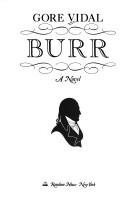
The correct first Vidal: Aaron Burr in old age, demolishing the founders one by one. It is funny, fast and completely self-contained, and it establishes the sceptical voice the whole sequence runs on.
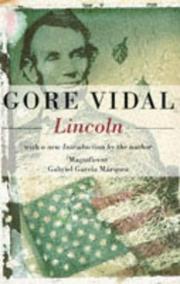
The most admired book he wrote, and the most conventionally novelistic. Read second because after Burr's demolition you can appreciate what it costs Vidal to take a president seriously.
The rest of Narratives of Empire, in the order of the history
IntermediateComplete the seven-novel chronicle from Reconstruction to the Cold War, reading in internal chronology rather than publication order, and trace the argument that the republic became an empire.
▸ Study plan for this stage
Pace: Five to six months for the five, at roughly a month each. 1876 and Hollywood are around 350 to 450 pages, Empire and Washington D.C. similar, The Golden Age around 470. This stage is a genuine commitment and the reason to make it is cumulative: the argument only exists across the whole run.
- You are reading in internal chronology, not publication order. Washington, D.C. was published first, in 1967, but is set latest of the five here — taking it in place keeps the timeline intact and avoids opening on the weakest volume
- 1876 returns Charlie Schuyler from Burr as narrator, which is why it comes first: the Gilded Age and the stolen Hayes-Tilden election seen by someone you already know
- Empire is where the thesis is stated outright. Hearst, Theodore Roosevelt and the Spanish-American War are Vidal's chosen moment when the republic became an empire, and everything before and after is arranged around it
- Hollywood follows Empire directly in cast and plot: Wilson, the First World War, and the invention of mass persuasion through film. Vidal's claim is that the movies and the propaganda state are the same invention
- Washington, D.C. covers the New Deal and the postwar Senate and is the most conventional novel of the seven — Vidal wrote it before he had the sequence in mind
- The Golden Age is the capstone: the road to Pearl Harbor, the American century, and Vidal himself appearing as a character. It also contains his most contested historical claim, that Roosevelt deliberately provoked the Japanese attack. He states it as fact; most historians do not accept it
- The Sanford and Schuyler families as the connective tissue. Vidal uses a single fictional dynasty to keep two hundred years of American power in one room
- In Empire, what exactly is the change Vidal claims took place, and what evidence does the novel offer for it beyond assertion?
- How does Hollywood connect film to political power, and is the connection argued or assumed?
- Reading Washington, D.C. in chronological place rather than first — what does that ordering fix, and what does it expose about the book?
- The Golden Age advances a specific claim about Pearl Harbor. What is the standard historical view, and how does Vidal handle the counter-evidence?
- Across seven volumes, what is the through-line? State the sequence's argument in three sentences
- Where does Vidal's contrarianism sharpen the history, and where does it substitute for it?
- Draw the family tree as you go. Two hundred years of Sanfords and Schuylers is genuinely hard to hold otherwise, and the connections are half the design
- After Empire, read a one-page factual summary of the Spanish-American War and compare it with the novel's version. Do the same after The Golden Age for Pearl Harbor
- Keep a list of the moments Vidal treats as turning points. Seven volumes produce maybe five, and they are the skeleton of the whole sequence
- Take a break of a week between Hollywood and Washington, D.C. The jump in register between the two is the roughest join in the sequence
- At the end, write the sequence's thesis and then write the strongest objection to it. If you cannot do the second, you have read him too sympathetically
Next up: The chronicle is the public Vidal; the next stage is the writer who made himself unpublishable in respectable places.
The stolen election and the Gilded Age, narrated by Burr's son Charlie Schuyler. It picks up a character you already know, which is why it comes straight after the first two.
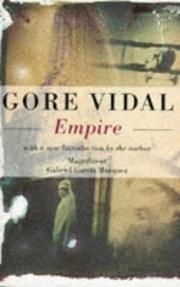
Hearst, Theodore Roosevelt and the Spanish-American War — the moment Vidal thinks the republic turned. The thesis of the whole sequence is stated most plainly here.

Wilson, the movies and the invention of American mass persuasion. Follows Empire directly in both plot and characters.
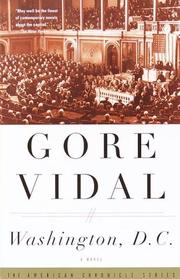
Published first but set late — the New Deal and postwar Senate. Reading it here rather than first keeps the chronology intact and avoids opening on the weakest volume.
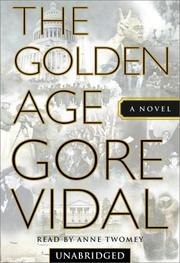
The capstone, covering the road to Pearl Harbor and the American century, with Vidal himself walking on at the end. Only worth reading after the six above.
The other Vidal: the novels that caused trouble
IntermediateSee the satirist and the classicist working outside the American chronicle, and understand why Vidal spent decades on the wrong side of respectable opinion.
▸ Study plan for this stage
Pace: Six to eight weeks. The City and the Pillar is short, around 200 pages. Julian is the long one at roughly 500 pages and is the most demanding book in the path — it is written as a memoir with two commentators annotating it, and the apparatus takes a hundred pages to get comfortable with. Myra Brecki
- The City and the Pillar, published in 1948, treated a relationship between two young men as ordinary rather than tragic, and the New York Times and other papers refused to review Vidal's next several novels because of it. He wrote television and screenplays for a decade as a direct result
- Vidal revised the ending in 1965 and the revised text is the one usually in print. If the ending strikes you as abrupt, that history is why — check which version you have
- Julian is the emperor who tried to reverse Christianity's adoption by Rome, narrated in his own words with two elderly philosophers annotating in the margins decades later. The three-voice structure is the whole design
- Julian is where Vidal's hostility to organised monotheism, a fixture of his essays for fifty years, is worked out at length and in a fair fight
- Myra Breckinridge is deliberately obscene, formally a diary, and a satire on Hollywood, gender and American self-invention. It outraged 1968 and was meant to. It contains a sexual assault scene played for shock and comedy that a lot of readers find genuinely unpleasant, and it is fair to know that b
- Vidal's public position on sexual identity — that there are acts rather than kinds of people, a line he repeated for decades — shapes all three of these books, and it put him at odds with the gay political movement as much as with conservatives
- The range on display: three books across two decades, one plain and historic, one erudite and structured, one gleefully filthy, all recognisably the same intelligence
- What was genuinely new about The City and the Pillar in 1948, and how much of the book survives the loss of that novelty?
- How do Julian's two annotators change what you believe about the memoir they are commenting on?
- What is Julian actually arguing about religion, and does the novel let the other side speak?
- Myra Breckinridge is a satire — of what, exactly? Name the targets and say which ones still land
- Vidal held that there are homosexual acts but not homosexual people. What do these three novels do with that position?
- Check the copyright page of The City and the Pillar to see whether you have the 1948 or the 1965 text, and read a note on the difference afterwards
- Read Julian's marginal commentary as a separate strand — skim just the annotations across a hundred pages and see the second novel hiding in them
- Set a Myra Breckinridge chapter beside a Burr chapter. Same author, five years apart, and the discipline of the historical novels is easier to see from the other side
- Write a paragraph on what these three cost him professionally and what they bought him. The trade is the story of his career
Next up: Having seen the novelist at his most provocative, the essays are where most critics think he was actually best.

The 1948 novel about a gay relationship that got him blacklisted by reviewers for years. Historically the most consequential thing he wrote, and short.
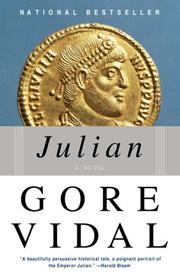
The apostate emperor's memoir, and the best evidence that Vidal was a serious historical novelist before Burr. Read after The City and the Pillar to see the range in one decade.
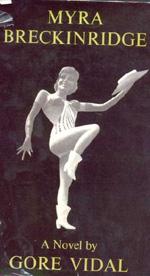
The gleefully obscene satire of Hollywood and gender that outraged 1968. Placed last in this stage because it is best enjoyed once you know how controlled a writer he otherwise was.
The completist tail: essays and memoir
IntermediateMeet the writer most critics think was his best self, and get his own account of the life the novels keep circling.
▸ Study plan for this stage
Pace: Six weeks. The Last Empire is a collection and should be grazed rather than read cover to cover — pick a dozen pieces across the literary and political halves. Palimpsest is around 430 pages and is the fastest-reading book in the path, because Vidal is gossiping.
- The essayist is the Vidal many critics rate highest: the sentences are tighter than in the novels and the argument has nowhere to hide behind a character
- The Last Empire collects work from the late 1990s and the turn of the century — literary criticism, sex, and American power — and gives you the range in one volume
- Vidal's late political writing is stridently anti-imperial and grew more so; in the years after 2001 he wrote pieces about American foreign policy and about the September 11 attacks that many readers found conspiratorial. Those are outside this collection, but they are the direction of travel and wo
- His literary criticism is a genuinely separate achievement from his politics. The essays on American novelists and on the state of fiction are the least polemical writing he produced
- Palimpsest is the memoir: the political family, his grandfather Senator Gore, Jimmie Trimble, the grudges, and the decades of feuds. Vidal knew personally most of the names in the Narratives of Empire footnotes, which is the reason to read it last
- The memoir's title is its method — a life written over an earlier life, with the erasures visible. It is selective and Vidal says so
- What holds the two careers together: a single conviction that American public life is a performance staged over an oligarchy, argued in fiction, essays and on television for sixty years
- Reading the essays after the novels, which arguments turn out to have been running underneath the fiction all along?
- Where is Vidal a better critic than polemicist, and can you tell the difference from the prose alone?
- What does Palimpsest tell you about the sources of the Narratives of Empire that the novels do not?
- Vidal's contrarianism is his method and also his blind spot. Give one example of each from this stage
- Having finished the path, which Vidal do you think will last — the chronicler, the satirist, or the essayist?
- Read three literary essays and three political ones from The Last Empire and compare how carefully each is argued. The difference is the honest measure of him
- Cross-check a person Palimpsest is rude about against another account of them. Vidal's memoir is a source and a weapon simultaneously
- Return to the sequence thesis you wrote in stage two and revise it now that you have his own account of where it came from
- Choose your next Vidal deliberately. If you want more essays, the larger collected volumes cover fifty years; if you want more fiction, Creation and Duluth are the two most often named after the ones here
Next up: This closes the path: you have both careers, the chronicle and the provocateur, and the man's own account of where they met.

A late essay collection covering literature, sex and American power — the best single sample of the prose style that made his reputation as an essayist.
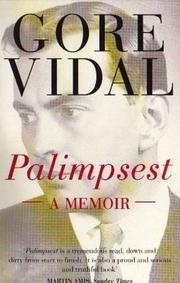
The memoir, and the natural endpoint: the family politics, Jimmie Trimble, and the grudges, told by a man who knew every name in the Narratives of Empire footnotes.
Discussion
Keep reading
Paths that share books, cover the same subject, or open a related topic.