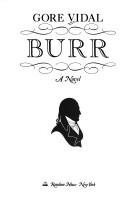
Start with Burr. It is the best entry to the seven-novel Narratives of Empire sequence and the fastest way to find out whether Vidal is for you: an old man narrating in 1833, with Washington a poor general, Jefferson a hypocrite and Hamilton a schemer, all filtered through his contempt. If that arrangement delights you, the other six will too. If it reads as sneering, you have lost 430 pages rather than five thousand.
The alternative would be Washington, D.C., which Vidal published first, in 1967, before he had the sequence in mind. Starting there means opening on the weakest volume, out of position, without the family you need. Read the sequence in the order of the history instead: Burr, Lincoln (Narratives of a Golden Age), 1876, Empire, Hollywood, Washington, D.C., The Golden Age.
The publication-versus-chronology question
This is a real disagreement and it is worth deciding deliberately. The case for publication order is that you watch Vidal's thesis form, and Washington, D.C. makes more sense as an apprentice work than as a late instalment. The case for historical order is stronger: the Sanford and Schuyler families are the connective tissue across two hundred years, 1876 returns the narrator of Burr, and Hollywood follows Empire directly in cast and plot. Read chronologically. Take a week's break between Hollywood and Washington, D.C., which is the roughest join in the sequence.
Start here: the two best volumes
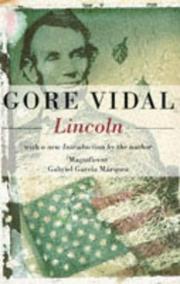
Burr runs around 430 pages and Lincoln (Narratives of a Golden Age) around 660, and both move quickly. Lincoln (Narratives of a Golden Age) is the outlier — the one book where Vidal takes a president entirely seriously, and the most admired thing he wrote. You never enter Lincoln's head; you watch him through Seward, Chase and Hay. Historians disputed particular claims, notably around Lincoln's health and Vidal's handling of sources, and he answered in print at length; the exchange is part of the book's history. Read his afterwords, where he lists what he invented.
The rest of the chronicle
1876, Empire, Hollywood, Washington, D.C., The Golden Age — five or six months at roughly a month each. Empire is where the thesis is stated outright: Hearst, Theodore Roosevelt and the Spanish-American War as the moment the republic became an empire. The Golden Age is the capstone, with Vidal appearing as a character, and it contains his most contested claim — that Roosevelt deliberately provoked the Japanese attack on Pearl Harbor. He states it as fact; most historians do not accept it. Draw the family tree as you go.
The other Vidal: the novels that caused trouble
The city and the pillar, published in 1948, treated a relationship between two young men as ordinary rather than tragic, and the New York Times and other papers refused to review his next several novels as a result; he wrote television and screenplays for a decade because of it. He revised the ending in 1965 and the revised text is the one usually in print, so check your copyright page. Julian is the most demanding book here — the emperor who tried to reverse Christianity's adoption by Rome, narrated in his own words with two elderly philosophers annotating in the margins, and the apparatus takes a hundred pages to settle into. Myra Breckinridge is deliberately obscene and was meant to outrage 1968; it contains a sexual assault scene played for shock and comedy that many readers find genuinely unpleasant.
The completist tail
The Last Empire is a collection and should be grazed — a dozen pieces across the literary and political halves. Many critics rate the essayist above the novelist, and the literary criticism is the least polemical thing he produced. Palimpsest is the memoir and the fastest-reading book on this path, because Vidal is gossiping; he knew personally most of the names in the sequence's footnotes, which is the reason to read it last.
Where to stop
After The Golden Age is a clean stop with the whole argument in hand. If you only want the good parts, Burr and Lincoln (Narratives of a Golden Age) are a complete experience on their own. More single-author routes are on Discover.
Follow the full ordered path here: Gore Vidal Reading Order: Where to Start.