Go: the best books to learn the ancient game and improve fast
This curriculum takes a complete beginner from the basic rules of Go all the way to strategic thinking and advanced positional concepts, across four carefully sequenced stages. Each stage builds directly on the last — first establishing the rules and core vocabulary, then developing tactical sharpness, then refining shape and positional judgment, and finally introducing the deeper strategic frameworks that separate strong club players from beginners.
Foundations: Rules, Concepts & First Steps
BeginnerUnderstand the complete rules of Go, basic terminology, and how to play a full game with confidence from the very first stone to counting the score.
A free, concise, and widely praised introduction to the rules and basic concepts of Go. It is the clearest starting point for an absolute beginner and establishes the essential vocabulary used in every book that follows.
Tactics: Life & Death and Reading
BeginnerDevelop the ability to read ahead, recognize basic life-and-death situations, and avoid elementary tactical mistakes — the single most important skill for rapid improvement.
▸ Study plan for this stage
Pace: 4–5 weeks, ~20–25 pages/day, with 2–3 days per week dedicated to problem-solving exercises
- Reading ahead: visualizing multiple moves in sequence without playing them on the board
- Life and death fundamentals: recognizing when groups are truly alive, dead, or in danger
- Basic tactical patterns: atari, capture, escape routes, and eye formation
- Counting liberties: the mechanical skill underlying all tactical assessment
- Recognizing unsettled positions: knowing when a group's fate is still undecided
- Elementary mistakes: common tactical blunders that lose stones or groups unnecessarily
- Practical reading discipline: when to read deeply versus when to estimate and move on
- How do you determine whether a group is alive, dead, or in a critical state by counting liberties and identifying potential eye shapes?
- What does it mean to 'read ahead' and how do you practice visualizing 3–5 moves without playing them?
- Can you identify the difference between a group that is truly alive and one that is merely temporarily safe?
- What are the most common elementary tactical mistakes beginners make, and how do you avoid them?
- How do you recognize basic life-and-death patterns (like the ladder, the net, the snapback) when they appear in your games?
- When should you spend time reading a position deeply versus accepting a reasonable estimate and moving on?
- Work through every life-and-death problem in 'The Second Book of Go' systematically; do not skip any, even if they seem easy
- For each problem, write down your reading process: what moves did you consider, how many moves ahead did you read, and why?
- Play 10–15 teaching games against a stronger opponent (or AI) and ask them to point out every tactical mistake you make; analyze each one
- Set a timer and solve 5–10 life-and-death problems daily from the book; track your accuracy and speed over time
- Replay your own recent games and identify every moment where a group's life or death was in question; re-read those positions carefully
- Practice counting liberties in positions from the book without moving stones; say the count aloud to build the habit
- Create a personal 'mistake journal': whenever you lose a stone or group unnecessarily in a game, record the position and the tactical pattern you missed
Next up: Mastering life-and-death reading and tactical pattern recognition establishes the foundation for the next stage, which will layer strategy and positional judgment on top of this tactical accuracy—allowing you to make sound strategic decisions because you can trust your ability to calculate the tactical consequences.
Structured problem sets specifically designed for beginners build the habit of reading and pattern recognition from the ground up. Starting here, before strategy books, ensures tactics are internalized rather than just understood intellectually.

Bridges the gap between pure tactics and positional thinking by covering key tactical themes — ladders, nets, snapbacks, and basic ko — in a narrative format that contextualizes the problems just practiced.
Shape & Opening: Building Good Instincts
IntermediateLearn to play efficient, well-shaped stones in the opening and middle game, understand joseki at a practical level, and stop making the common shape mistakes that hold beginners back.
▸ Study plan for this stage
Pace: 6–8 weeks, ~20–25 pages/day, with 2–3 days per week dedicated to playing practice games
- Efficient stone placement: recognizing when stones work together vs. when they are wasted moves
- Shape fundamentals: identifying good shapes (solid, flexible, economical) and bad shapes (heavy, rigid, overconcentrated)
- Joseki as a practical tool: understanding the purpose and direction of standard opening sequences, not memorizing them blindly
- Direction of play: how to assess which part of the board offers the most value and how to shift strategy between opening and middle game
- Common beginner shape mistakes: overconcentration, playing too close to opponent stones, creating unnecessary weaknesses
- Practical application in opening and early middle game: translating shape principles into concrete move choices
- Balance between territory and influence: recognizing when to secure points vs. when to build frameworks
- What makes a stone 'efficient' in the opening, and how do you recognize when stones are working together vs. wasting moves?
- How do you distinguish between a good shape and a bad shape, and what are the three most common shape mistakes beginners make?
- What is the practical purpose of studying joseki, and how should you use joseki knowledge when the game deviates from standard sequences?
- How do you determine the direction of play—which part of the board to focus on—and when should you shift from opening strategy to middle game strategy?
- Can you analyze a position from an actual game and identify which stones are overconcentrated or poorly shaped, and suggest improvements?
- What is the relationship between territory and influence in the opening, and when should you prioritize one over the other?
- Play through 10–15 complete joseki sequences from 'Lessons in the Fundamentals of Go', then play 5 games where you consciously apply those sequences and note where your game deviates—analyze why the deviation occurred
- Collect 5 of your own recent games; for each, identify 3 moves that violated good shape principles and propose better alternatives using concepts from Kageyama
- Study 8–10 opening positions from 'The Direction of Play'; for each, write down which area of the board you would focus on next and justify your choice based on the principles presented
- Play 10 handicap games (2–4 stones) against a stronger opponent, focusing solely on making efficient, well-shaped moves in the first 50 moves; review with a stronger player or engine to identify shape weaknesses
- Create a personal 'shape reference sheet' with 15–20 diagrams of good vs. bad shapes from both books; test yourself weekly by identifying shapes in live games or problem sets
- Solve 20–30 tsumego (life-and-death problems) that emphasize shape and efficiency; focus on understanding *why* the correct move is efficient, not just memorizing answers
Next up: This stage equips you with the pattern recognition and practical judgment needed to play sound, purposeful moves in the opening and middle game, preparing you to tackle more complex strategic concepts like territory evaluation, invasion, and endgame precision in the next stage.
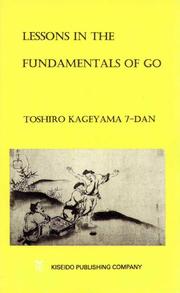
Widely considered one of the greatest Go books ever written, Kageyama's frank and witty style teaches the reader how to think about the game correctly — covering shape, direction of play, and the mindset of improvement. It belongs here because the reader now has enough tactical grounding to appreciate its lessons.

A deep and opinionated treatment of opening strategy and the concept of direction — which side to approach, how to build frameworks, and how to think globally. This is the capstone of the shape-and-opening stage and prepares the reader for strategic study.
Strategy & Whole-Board Thinking
IntermediateUnderstand high-level strategic concepts — influence, thickness, moyo, invasion, reduction, and endgame — and begin to integrate all prior knowledge into coherent whole-board plans.
▸ Study plan for this stage
Pace: 8–10 weeks, ~40–50 pages/day with 2–3 days per week for problem sets and game review
- Tesuji as tactical building blocks that enable strategic plans and create the conditions for territory and influence
- Influence and thickness: how to build and leverage them, and the difference between overconcentrated and efficient shapes
- Moyo (framework): recognizing potential territory, invading and reducing enemy moyo, and defending your own
- Invasion and reduction techniques: when to invade directly versus reduce from the outside, and how to calculate viability
- Attack and defense as strategic tools: using attack to gain territory or weaken opponent's position, and defending efficiently without passivity
- Whole-board balance: integrating local tactics (tesuji) with regional strategy (influence, moyo) and global game flow
- Endgame principles: recognizing when the game transitions from fighting to counting, and managing the final points
- How does a tesuji serve a larger strategic purpose beyond winning a single local battle? Give an example from Davies.
- What is the difference between influence and territory, and why does Ishigure emphasize building influence in the opening and early middlegame?
- Describe moyo and explain how invasion and reduction interact: when would you invade directly into enemy moyo, and when would you reduce from outside?
- In Ishida's framework, what makes a defense active rather than passive, and how does attacking the opponent's stones sometimes serve a defensive purpose?
- How do you recognize when the game has transitioned from the fighting phase to the endgame, and what strategic priorities shift at that moment?
- Analyze a full game (9×9 or 13×13): identify one tesuji, one moment of influence-building, one moyo situation, and one invasion or reduction decision.
- Work through all tesuji problems in Davies' book; for each, write one sentence explaining how that tesuji could serve a larger strategic goal (e.g., securing influence, enabling an invasion).
- Play 10 slow games (9×9 or 13×13) focusing on building and leveraging influence rather than fighting for immediate territory; review each game and identify where you built moyo and where you could have invaded or reduced.
- Study 5 professional games from Ishigure's book; for each, mark the opening (influence-building), middlegame (moyo and invasion/reduction), and endgame phases; write a 3–4 sentence summary of the strategic arc.
- Solve 15–20 invasion and reduction problems: for each position, decide whether to invade directly or reduce, justify your choice, and calculate the outcome.
- Play 5 games where you deliberately practice one attack-and-defense theme from Ishida per game (e.g., attacking to gain territory, defending actively, using counterattack); annotate one key moment from each game.
- Conduct a whole-board analysis of a professional game: identify the moyo at the midpoint, trace how it was invaded/reduced/defended, and explain how the outcome of that moyo struggle determined the game's result.
Next up: This stage transforms you from a tactician who sees isolated problems into a strategist who understands how tactics, influence, and territory interact across the board, preparing you to study opening theory, positional judgment, and professional-level game analysis in the next stage.
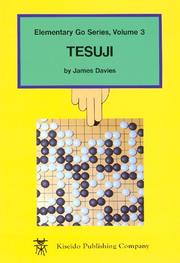
Covers the essential tactical motifs (tesuji) that appear repeatedly in real games. Placed here, after shape study, the reader can now see why each tesuji works in terms of good and bad shape rather than just memorizing the move.
A focused study of opening theory and the strategic logic behind the first moves of the game, including how to build and reduce moyos. It synthesizes the opening and strategic ideas from all prior stages into a coherent framework.

The definitive intermediate text on the strategic concepts of attacking, defending, and using thickness. Reading this last gives the learner a complete strategic vocabulary and a clear path toward strong club-level play.
Discussion
Keep reading
Paths that share books, cover the same subject, or open a related topic.