Best Books to Learn Galois Theory, in Order
Galois theory explains why there is no formula in radicals for the general quintic, and it does so by translating a question about polynomials into a question about groups. The translation is the whole subject, and it is not learnable cold: you need field extensions, splitting fields and enough group theory to recognise a solvable group. So this path spends its first two stages getting you there — the historical story first, because it is short and it tells you what the theorem is for, then the abstract algebra the theorem is stated in — before four treatments of Galois theory proper. Several of those display simply as Galois Theory; each entry says whose book it is and what it is like, because they differ enormously in level.
The Story First
BeginnerUnderstand what the unsolvability of the quintic actually claims, and why it took three centuries and two young mathematicians to settle it.
▸ Study plan for this stage
Pace: 2 to 3 weeks, about 910 pages but the lightest stage by far. Mario Livio's The Equation That Couldn't Be Solved is 368 pages of popular history with no algebra required — a week at a comfortable pace. Peter Pesic's Abel's Proof is 221 pages and is genuinely mathematical in places, with Abel's 1824 p
- The claim to be understood precisely: there is no formula in radicals for the roots of the general polynomial of degree five or higher. This is not 'nobody has found one' — it is a proof that none exists.
- Radicals means a specific and restricted toolkit: the coefficients, the four arithmetic operations, and nth roots. Solutions to the quintic exist; they simply cannot be written with those tools.
- The cubic and quartic were solved in sixteenth-century Italy, in public contests, and Livio's account of del Ferro, Tartaglia, Cardano and Ferrari explains why the quintic looked like the obvious next problem for nearly three hundred years.
- Abel proved impossibility in 1824. Galois did something different and more general: he gave a criterion telling you which particular equations are solvable by radicals and which are not.
- The bridge between the two is symmetry. Permuting the roots of a polynomial is a group, and the structure of that group decides solvability — this is the translation the whole subject is about.
- Pesic is more mathematical than Livio and follows the actual line of argument from Cardano through Lagrange to Abel, which makes the logical difference between 'not found' and 'cannot exist' properly clear.
- Infeld's book is a novel and should be read as one. The duel, the night before it, the manuscript margins — the popular Galois story has a literary source, and knowing that in advance is worth more than the story itself.
- State the unsolvability theorem precisely, including what 'solvable by radicals' is allowed to use.
- Why does the quartic yield to the same broad method as the cubic while the quintic does not? Livio and Pesic answer this differently in emphasis — what is the common core?
- What is the difference between Abel's result and Galois's, and why is Galois's the one the subject is named after?
- Where does permuting the roots of a polynomial first appear in Pesic's account, and whose idea was it before Galois?
- Which parts of the standard Galois biography are documented and which come from Infeld's novel and its successors?
- Work Cardano's formula by hand on one cubic with three real roots, following Livio's presentation, and expand the result to verify it. Doing this once makes the rest of the path concrete: you have used the thing that is about to be proved impossible one degree up.
- Read Pesic's appendix containing Abel's 1824 paper alongside his main-text summary of it, and write down every step of the summary that the original does not visibly contain.
- Take Lagrange's observation as Pesic presents it — that the resolvent of a cubic takes fewer values under permutation of the roots than you would expect — and check the count yourself for one specific cubic.
- After Infeld, make a two-column list: claims about Galois's life that the novel dramatises, and claims that Livio and Pesic support with sources. The overlap is smaller than most readers expect.
Next up: You now know what the theorem claims and why it mattered; the next stage builds the algebraic vocabulary in which it can actually be stated.
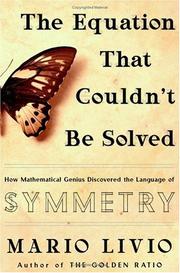
Popular history covering the cubic and quartic contests of the Renaissance, then Abel and Galois, then symmetry as a general idea. No algebra required, and the fastest way to know what question the rest of this path answers. Start here.
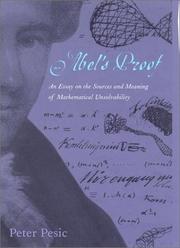
Short and more mathematical than Livio: Pesic follows the actual argument from Cardano to Abel's 1824 impossibility proof, with the original papers in an appendix. Read it second — it makes the distinction between 'no formula has been found' and 'no formula exists' properly clear.
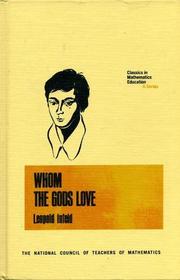
A biographical novel about Galois by the physicist who collaborated with Einstein, written in 1948. Included as a novel, not as history — it is where a large part of the romantic Galois legend comes from, and it is worth knowing that before meeting the legend elsewhere.
The Algebra You Need First
IntermediateGet comfortable with groups, rings and fields — especially normal subgroups, quotient groups and solvability — because Galois theory is unreadable without them.
▸ Study plan for this stage
Pace: 8 to 12 weeks, and this is the stage most self-studiers underestimate. Charles Pinter's A Book of Abstract Algebra is 384 pages in short chapters with graded exercise sets and assumes no prior abstract algebra — six weeks doing the exercises, not reading around them. M. A. Armstrong's Groups and Sym
- Group, subgroup, normal subgroup, quotient group. Normality is the concept that will not be optional later — the fundamental theorem of Galois theory pairs normal subgroups with normal field extensions.
- A solvable group is one with a chain of subgroups, each normal in the next, whose successive quotients are abelian. Learn this definition until you can produce the chain for a given small group on demand.
- S5 is not solvable because A5 is simple and non-abelian. This one fact is the whole obstruction to solving the quintic, and everything in stage three exists to connect it to polynomials.
- Rings, ideals, quotient rings and fields, and in particular the construction of a field as a quotient of a polynomial ring by an irreducible polynomial — the machine that builds every field extension you will meet.
- Irreducibility criteria, especially Eisenstein's, because you cannot compute a Galois group without first knowing your polynomial is irreducible.
- A group as a symmetry group of a concrete object, which is Armstrong's whole approach and exactly the intuition Galois theory needs: a Galois group is the symmetry group of a field extension.
- Cayley diagrams, which Carter uses for everything including a visual treatment of solvability and of the quintic result, and which make solvable groups feel inevitable rather than definitional.
- Pinter's last chapters reach Galois theory itself, so the book doubles as a preview of stage three — read them, but do not expect them to substitute for it.
- Give the definition of a solvable group and produce the chain explicitly for S3 and for S4.
- Why is A5 simple, and what does simplicity have to do with solvability?
- Given an irreducible polynomial over the rationals, describe the field you get by quotienting the polynomial ring by it, and say what its dimension as a vector space is.
- What is the difference between a subgroup and a normal subgroup in terms of what you can do with the quotient?
- How does Armstrong's picture of a symmetry group of a solid relate to a permutation group on the roots of a polynomial?
- State Eisenstein's criterion and apply it to decide irreducibility of a polynomial of your own choosing.
- Work every exercise in Pinter's chapters on quotient groups and on solvable groups, not a selection. These are the two chapters the rest of the path is standing on.
- Following Armstrong, compute the full symmetry group of the cube and identify it as a permutation group, then check your answer against his own treatment of the same object.
- Draw the Cayley diagrams of A4 and S4 by hand using Carter's conventions, then locate a subnormal series with abelian quotients in each picture. Carter does S4 himself — draw yours before reading his.
- Using Gallian as the reference, write the complete subgroup lattice of S4 and mark which subgroups are normal. You will use this lattice directly against a field diagram in stage three.
- Prove, from the definition, that a quotient of a solvable group is solvable and that an extension of a solvable group by a solvable group is solvable. These are the two closure properties the quintic argument actually uses.
- Verify by hand that A5 has no non-trivial proper normal subgroup by working through the conjugacy classes and checking that no union containing the identity has the right order.
Next up: With groups, fields and solvability in hand, you can finally state the correspondence the whole subject is about and prove it.

The gentlest genuinely rigorous introduction in print, in short chapters with graded exercise sets, and cheap. Its last chapters reach Galois theory itself, so it doubles as a preview. The right book if you have never done abstract algebra.

Group theory taught through symmetry groups of concrete objects, which is exactly the intuition Galois theory needs — a Galois group is a symmetry group of a field extension. Short, and it pays off directly in stage three.
Cayley diagrams for everything, including a visual treatment of solvability and of the quintic result at the end. Read it alongside Armstrong rather than instead of him: it builds the picture that makes solvable groups feel inevitable rather than arbitrary.
The standard undergraduate course text, with far more worked examples than Pinter and a full treatment of rings and fields. Use it as the reference for this stage; Dummit and Foote is the heavier alternative if you want a book that will still be useful in graduate work.
Galois Theory Proper
BeginnerBuild field extensions and splitting fields, prove the fundamental theorem of Galois theory, and derive both the quintic result and the ruler-and-compass impossibilities.
▸ Study plan for this stage
Pace: 12 to 16 weeks, the heart of the path and the point at which the reading becomes genuinely technical. Jörg Bewersdorff's Galois Theory for Beginners: A Historical Perspective is 180 pages and the soft landing — it works up from actually solving cubics and quartics, so it assumes little beyond stage
- Field extensions as vector spaces, the degree of an extension, and the tower law. Every dimension count later is this one idea repeated.
- The splitting field of a polynomial, and why it is unique up to isomorphism — the object whose symmetries form the Galois group.
- Separability and normality, and what goes wrong without them. In characteristic zero over the rationals separability is free, which is why most first courses can be brisk about it.
- The fundamental theorem of Galois theory: an inclusion-reversing bijection between the intermediate fields of a Galois extension and the subgroups of its Galois group, under which normal subgroups correspond to normal subextensions.
- Solvability by radicals corresponds to solvability of the Galois group — the translation the whole subject exists to make.
- The quintic result then follows from stage two's fact that S5 is not solvable, together with the construction of a specific quintic whose Galois group is S5.
- The classical impossibilities — trisecting a general angle, doubling the cube, squaring the circle, and which regular n-gons are constructible — fall out as degree arguments, and Stewart does them as applications to keep the theory anchored.
- Artin's route is different in kind rather than in difficulty: he treats the whole theory through linear independence of characters and the dimension of fixed fields, and this is the presentation nearly every modern textbook inherits.
- State the fundamental theorem of Galois theory in full, including the hypotheses on the extension.
- Given a specific polynomial of degree 4, compute its splitting field, its degree over the rationals, and its Galois group.
- Which regular n-gons are constructible with ruler and compass, and what is the degree argument that decides it?
- Write out the chain of reasoning from 'S5 is not solvable' to 'the general quintic is not solvable by radicals'. Every arrow, no hand-waving.
- What does Artin's proof of the fundamental theorem use in place of the counting arguments Stewart uses?
- Cox spends hundreds of pages on solvable quintics and Lagrange resolvents. What does the fundamental theorem not tell you that those chapters supply?
- Follow Bewersdorff's derivation of the cubic and quartic solutions and reproduce each on paper with his own worked coefficients, checking the roots numerically at the end. The abstraction in Stewart arrives afterwards as an answer to a computation you have already done.
- Compute the Galois group of x^4 minus 2 over the rationals in full: find the splitting field, its degree, the group, and then draw the subgroup lattice beside the subfield lattice and check the correspondence line by line. This is the single most useful concrete exercise in the subject.
- Prove, following Stewart's ruler-and-compass chapter, that a 60 degree angle cannot be trisected, writing down the minimal polynomial explicitly and justifying its irreducibility yourself.
- Construct a specific quintic with Galois group S5 by the standard argument on the number of real roots, and verify each hypothesis rather than quoting the recipe.
- Read Artin's proof of the fundamental theorem and write down which theorem in Stewart each of Artin's steps corresponds to. Then count how many pages each takes. The compression ratio is the lesson.
- Take one theorem from Cox's chapters on solvable quintics and work his worked example with different coefficients of your own choosing.
Next up: You can now prove the theorem in its standard form, which is the prerequisite for seeing it generalised and for reading the argument Galois himself actually made.

Bewersdorff's Galois Theory for Beginners: A Historical Perspective works up from actually solving cubics and quartics to the general theory, so the abstraction arrives as an answer to a computation you have already done. The soft landing into this stage.
Stewart's textbook, the standard readable course and the one most self-studiers finish. It does the classical constructions — trisecting the angle, doubling the cube, the regular 17-gon — as applications, which keeps the theory anchored. This is the main text of the path.
Artin's famous Notre Dame lectures with Arthur Milgram: about eighty pages, entirely linear-algebraic in approach, and the source of the modern presentation everyone else uses. Read it after Stewart as a compression, not before — it assumes you already know where it is going.
The broadest of the four: Cox develops the theory and then spends hundreds of pages on what it is good for, including solvable quintics, Lagrange resolvents and the Kronecker-Weber theorem. Use it as the book to widen into once Stewart is comfortable.
Depth and History
BeginnerSee the theory in its full modern generality, and read what Galois and his predecessors actually argued.
▸ Study plan for this stage
Pace: 12 to 16 weeks, and this stage is optional in a way the previous two are not — take whichever of the three books answers a question you now have. Patrick Morandi's Field and Galois Theory is a 281-page graduate text and assumes a full first-year graduate algebra course; it goes well past the finite-
- The finite-degree Galois correspondence is a special case. Infinite Galois extensions need the Krull topology on the Galois group, and Morandi is where that arrives.
- Transcendental extensions, transcendence bases, and why the correspondence does not simply extend to them.
- Galois cohomology, Hilbert's Theorem 90 and the norm and trace maps — the beginning of the machinery that class field theory is built on.
- Lagrange's resolvent is the historical origin of the whole subject, and Tignol shows it doing real work in Cardano's, Vandermonde's and Gauss's hands before Galois abstracts it.
- Gauss's treatment of cyclotomic equations is the first substantial success of the resolvent method, and Tignol argues it directly rather than restating it modernly.
- Edwards's approach is genuinely different mathematics, not a different exposition: explicit resolvents and constructions in place of abstract extensions, reaching the same theorem by a route that is constructive.
- Reading Galois's own memoir after a modern proof shows how much of the standard machinery he had to build from nothing, and how much of the modern formulation is later tidying.
- Naming matters on this page: four of these books display simply as Galois Theory. Stewart's is the readable course, Artin's the 82-page lectures, Cox's the 602-page broad treatment, and Edwards's the constructive historical one; Morandi's is Field and Galois Theory and Bewersdorff's is Galois Theory
- What breaks in the Galois correspondence for an infinite extension, and how does the Krull topology repair it?
- State Hilbert's Theorem 90 and say what it is the cohomological shadow of.
- What is a Lagrange resolvent, and how does Tignol show it being used before anyone had the word 'group'?
- How does Edwards construct the Galois group of a polynomial without introducing abstract field extensions?
- Where in Galois's own memoir does he assume something a modern textbook proves, and where does he prove something a modern textbook assumes?
- Having read all three, what does the abstract formulation gain over the constructive one, and what does it lose?
- Work Morandi's exercises on infinite Galois extensions for one explicit example — the algebraic closure of a finite field is the standard one — and identify the topology concretely rather than abstractly.
- Take a cubic and compute its Lagrange resolvent by hand following Tignol's presentation, then identify the same object inside the modern proof you learned from Stewart. Naming the same thing twice in two languages is the point.
- Follow Edwards's construction of the Galois group for a specific quartic all the way through, then set it beside the abstract computation of the same group you did in stage three. Write down what each method makes easy and what each hides.
- Read Galois's memoir in Edwards's translation with the modern statement of the fundamental theorem open beside it, and annotate each proposition of the memoir with its modern counterpart.
- Using Tignol, trace one idea — the resolvent, or the count of values a function takes under permutation — from Lagrange through Vandermonde and Gauss to Galois, in a page of your own notes. That single chain is the history of the subject.
Next up: This is the last stage: you can state and prove the theorem in modern form, read it in its original form, and see where it continues into algebraic number theory.
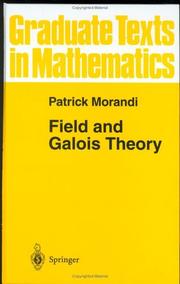
A graduate treatment that goes well past the finite-degree case — infinite extensions, transcendental extensions, Galois cohomology. The right next book if the third stage was comfortable and you want the version algebraic number theory will assume.

Not a textbook but a history done in full mathematical detail: Cardano, Lagrange, Vandermonde, Gauss, Abel and then Galois, each argued in their own terms before being restated modernly. It explains why the modern formulation looks the way it does, which no course text does.
Edwards builds the theory the way Galois did, around explicit resolvents and constructions rather than abstract field extensions, and prints a translation of Galois's memoir. A genuinely different route to the same theorem, and the most rewarding book here once you already know the standard proof. Fourth and last of the volumes on this page titled simply Galois Theory.
Discussion
Keep reading
Paths that share books, cover the same subject, or open a related topic.