Best Books to Learn Representation Theory, in Order
Representation theory turns abstract groups into matrices, where they can be computed with, and it is one of the few subjects that genuinely unifies algebra, geometry, number theory and physics. This path is honest about the cliff: it assumes a full undergraduate course in linear algebra and one in abstract algebra through group theory, modules and a little Galois, so it opens with two books that let you check that assumption before spending money. From there it runs the standard route — finite groups and character theory first, then character theory as a research subject, then Lie algebras and Lie groups, and finally the geometric and combinatorial picture where representations become varieties and Young diagrams.
The algebra assumed on page one
IntermediateConfirm you have the group theory, module theory and linear algebra that every book below silently assumes, and see representations arise naturally from symmetry before they are formalised.
▸ Study plan for this stage
Pace: Two weeks if you are only checking, a full term if you are not — and which of those it is decides whether the rest of the path works. This stage is a diagnostic, so treat page counts as a ceiling rather than a plan. Armstrong is 186 pages and moves at 15-20 pages a sitting because the group theory a
- A group as something that acts on a set, not merely a set with an operation — Armstrong's whole framing
- Orbits, stabilisers and the counting theorem that relates them
- Conjugacy classes and why the class equation is the first real structural tool
- Modules over a ring, and a vector space as a module over a field
- Linear operators, eigenvalues, diagonalisation and the change-of-basis machinery a representation is expressed in
- The trace of a matrix and its invariance under conjugation — the fact the entire next stage rests on
- Artin's own first pass at representations of finite groups, which states exactly what stage two assumes
- What does it mean for a group to act on a set, and can you produce three genuinely different actions of the symmetric group on three letters?
- Why is the trace of a matrix unchanged by conjugation, and why does that make it the natural invariant of a representation?
- What is the class equation, and how does it yield the fact that a p-group has a nontrivial centre?
- In what sense is a representation of a group a module, and over which ring?
- Can you list the conjugacy classes of the symmetric group on four letters and say why the count matters?
- Work Armstrong's chapters on group actions and the counting theorem with a pen, deriving the orbit-stabiliser result yourself before reading his proof
- Do every exercise in Artin's chapter on group representations and characters; if you cannot finish them, you have your answer about readiness
- Write down, from Armstrong's symmetry chapters, the symmetry group of the cube and its action on the four diagonals, and identify the resulting homomorphism to the symmetric group on four letters
- Compute the conjugacy classes of the symmetric groups on three and four letters by hand and record the class sizes — you will need exactly these tables in stage two
- Diagonalise a handful of small matrices over the complex numbers from Artin's linear algebra exercises, and note which are not diagonalisable and why
Next up: Artin's representations chapter is a compressed sketch of the entire next stage, so once it reads easily you are ready for James and Liebeck to slow it down and prove it.

The gentlest honest entry: it develops group theory from symmetries of real objects, so the idea that a group is something that acts arrives before any formalism. Read it first if you have never seen a group action; skip it if you can state the orbit-stabiliser theorem without looking it up.

The prerequisite check. Artin covers linear algebra, group theory and a first pass at group representations and characters in the same book, and its chapter on representations of finite groups is the shortest complete statement of what the next stage assumes. The catalogue record is the second edition, which is the one to buy.
Finite groups and characters: the first course
IntermediateLearn Maschke's theorem, Schur's lemma, the character table and orthogonality relations, and be able to construct and read the character table of a small finite group.
▸ Study plan for this stage
Pace: Eight to twelve weeks, and this is the stage to be unhurried about — every later book assumes it cold. We hold no page count for James and Liebeck or for Steinberg, so budget by chapters rather than by length: work James and Liebeck at roughly one chapter a sitting with all the exercises attempted,
- Maschke's theorem and complete reducibility over the complex numbers
- Schur's lemma and its consequences for endomorphisms of an irreducible representation
- The character of a representation, and why it determines the representation up to isomorphism
- The first and second orthogonality relations, and the character table as a square array
- The regular representation and the sum-of-squares formula for the orders of irreducibles
- Induced and restricted representations, and Frobenius reciprocity
- Brauer's theorem on induced characters, which is where Serre goes beyond the first course
- Why does Maschke's theorem fail in characteristic dividing the group order, and what breaks first?
- Given the order of a group and the sizes of its conjugacy classes, what can you say about the dimensions of its irreducible representations before computing anything?
- What exactly does Frobenius reciprocity assert, and why is it the computational workhorse of the subject?
- How do the two orthogonality relations differ in what they say about rows versus columns of a character table?
- Where does Serre's argument need integrality of character values, and why does that make Brauer's theorem hard?
- Construct the character table of the symmetric group on four letters from scratch using the class sizes you computed in stage one, then check it against James and Liebeck's
- Do the same for the alternating group on five letters, and use the orthogonality relations as the arithmetic check rather than looking the answer up
- Take one worked example from Steinberg's random-walk chapter and reproduce the mixing-rate calculation with the character table you built
- Read Serre's proof of Frobenius reciprocity and rewrite it in the module language James and Liebeck use, to confirm the two books are saying the same thing
- Induce a character from a subgroup of index two in a group of your choice and verify the result decomposes as Frobenius reciprocity predicts
Next up: Once you can build a character table without help, the next stage stops asking you to compute them and starts using them to prove theorems about the group itself.

The accessible first course, co-written with Martin Liebeck: worked character tables, full proofs and exercises, and no assumed module theory. Start here rather than with Serre. Our record is an early printing — buy the current second edition, which reorganises the later chapters.

A short modern alternative or companion to James and Liebeck that gets to applications — Fourier analysis on finite groups, random walks, the probability of shuffling — unusually fast. Read it alongside if the theory feels unmotivated.

The classic, and deliberately placed third: under two hundred pages, and it assumes you already know what a character is. Its treatment of induced representations, Brauer's theorem and integrality is the one most later books are working from.
Character theory as a research subject
BeginnerMove from computing character tables to proving theorems with them — Burnside's p-q theorem, Frobenius groups, Clifford theory — and see how the compact-group case generalises the finite one.
▸ Study plan for this stage
Pace: Three to four months for 569 pages, which sounds slow until you attempt Isaacs. His 303 pages are exercise-heavy and written for people who intend to prove things: five to eight pages a day with a notebook is a realistic honest pace, and the exercises are where the content actually is — they carry r
- Burnside's p-q theorem, and why a purely group-theoretic statement wanted a character-theoretic proof
- Frobenius groups and the Frobenius kernel — the theorem with still no character-free proof
- Clifford theory and the behaviour of characters under restriction to a normal subgroup
- Algebraic integers and character values, and the divisibility arguments they license
- Haar measure on a compact group as the replacement for averaging over a finite group
- The Peter-Weyl theorem as the compact-group analogue of the decomposition of the regular representation
- Why unitarity is automatic for finite and compact groups and fails elsewhere
- Where in the proof of Burnside's p-q theorem does the algebraic-integer argument actually do the work?
- What is the precise statement of Clifford's theorem, and what does it let you conclude about a character restricted to a normal subgroup?
- Why has no character-free proof of Frobenius's theorem on Frobenius kernels ever been found, and what would one have to supply?
- In what sense is Haar measure the same object as the sum over group elements divided by the group order?
- What does Peter-Weyl replace, and which finite-group statement is it the limit of?
- Work Isaacs's chapter on Burnside's theorem line by line and reconstruct the integrality argument without the book open
- Do the exercises at the end of Isaacs's Clifford theory chapter — they contain results he uses later without proof, so skipping them costs you twice
- Take a Frobenius group you can write down explicitly, such as the affine group of a small prime field, and verify the kernel is normal by direct computation before reading the general proof
- Read Simon's treatment of the circle group and the special unitary group of rank one, and write out how each finite-group theorem you learned in the previous stage restates itself there
- Compare Simon's proof of orthogonality for compact groups with the finite proof in Serre and list precisely which steps changed
Next up: Simon has already replaced the finite sum with an integral and the group with a compact Lie group, so the next stage's shift to Lie algebras is a change of technique rather than of subject.

The reference for anyone who wants to use characters to prove structural theorems about groups rather than merely tabulate them. Dense, exercise-heavy, and the book every paper in the area assumes; the widely available printing is the inexpensive Dover reissue of the 1976 text.

The bridge out of the finite case. Simon treats finite groups and compact Lie groups with the same machinery — Haar measure, Peter-Weyl — so the transition to the next stage stops looking like a change of subject.
Lie algebras and Lie groups
BeginnerUnderstand root systems, weights, Cartan subalgebras and the classification of semisimple Lie algebras, and be able to decompose a representation of a classical group into irreducibles.
▸ Study plan for this stage
Pace: Six months to a year, and the schedule matters more here than anywhere else on the path because the four books total 1,457 pages at wildly different densities. Stillwell's 217 pages are an on-ramp and can be read in three weeks at 15 pages a day; skip it only if you have had a differential geometry
- The exponential map and the correspondence between a matrix Lie group and its Lie algebra
- Cartan subalgebras, roots and root systems, and the classification into the four infinite families plus five exceptions
- Weights, weight spaces and highest weight vectors
- The Weyl group, Weyl chambers, and the geometry that makes the classification finite
- Verma modules and the construction of irreducible highest-weight representations
- The Weyl character formula, and its specialisation to the dimension formula
- Compact versus complex versus real forms, and why the same algebra answers three different questions
- Complete reducibility for semisimple Lie algebras and the unitarian trick that proves it
- Why does the representation theory of a compact Lie group reduce to the representation theory of a complex semisimple Lie algebra?
- What is a root system, and why does the classification of them not depend on any Lie theory at all?
- Given a dominant integral weight, how do you construct the corresponding irreducible representation, and where does the Verma module get truncated?
- What does the Weyl character formula compute, and how do you extract a dimension from it?
- What is a real form, and why does the special unitary group of rank one and the special linear group over the reals share a complexification?
- Where exactly does Hall's restriction to matrix groups let him avoid manifolds, and what does he give up by it?
- Compute the root system of the special linear Lie algebra of rank two by hand from Humphreys's definitions, draw it, and identify the Weyl group as a symmetry group of your drawing
- Follow Stillwell's construction of the Lie algebra of the rotation group in three dimensions by differentiating curves, then redo it as Hall does through the matrix exponential and confirm you get the same bracket
- Use the Weyl dimension formula to compute the dimensions of the first several irreducible representations of the special linear algebra of rank two, and check them against the explicit constructions in Hall
- Decompose the tensor square of the standard representation of the special unitary group of rank two into irreducibles by hand, then again by characters, and confirm the two methods agree
- Read Humphreys's proof of Weyl's complete reducibility theorem after Hall's analytic one, and write a paragraph on what each proof needs that the other does not
- Look up one specific result in Knapp — the Iwasawa decomposition is a good target — and trace which definitions from Hall and Humphreys it depends on
Next up: Root systems and highest weights are algebra; the next stage shows you the same objects as geometry and as combinatorics, which is what makes them computable.
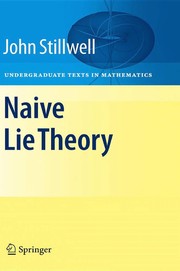
A deliberate on-ramp. Stillwell builds the classical groups and their Lie algebras using only linear algebra and calculus, no manifolds, which makes the next three books survivable. Skip it only if you have already had a differential geometry course.

The best-paced graduate introduction: matrix Lie groups first, so the analysis stays elementary, then the full representation theory of semisimple algebras. Our record is the 2003 first edition — buy the second edition, which is substantially expanded and is the one now assigned.
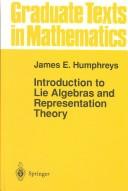
The purely algebraic core: root systems, the Weyl group, Verma modules and the Weyl character formula, with no analysis at all. Unchanged since 1972 and still the standard text for the classification; read it after Hall for proofs Hall states.
Where the path stops being a course and becomes a reference: real forms, the structure theory of noncompact groups, and the representation theory that underlies harmonic analysis. Our record is the first edition; the second edition is significantly rewritten and is the one to own.
The geometric and combinatorial picture
BeginnerSee representations as geometric objects and as combinatorics — flag varieties, highest weight orbits, Young diagrams and the Littlewood-Richardson rule — and know which of the standard tools applies to a given decomposition problem.
▸ Study plan for this stage
Pace: Four to six months, and the reading rate finally rises because two of these three books teach by example rather than by theorem. Fulton and Harris runs to 551 pages and is designed to be worked through: their method is to compute the classical groups in explicit detail before any general statement,
- Explicit constructions of the irreducible representations of the classical groups, family by family
- Schur-Weyl duality between the symmetric group and the general linear group acting on tensor powers
- Young diagrams and standard Young tableaux as an index set for irreducibles
- The Littlewood-Richardson rule and the combinatorics of decomposing a tensor product
- Symmetric functions, Schur polynomials and their identification with characters
- Flag varieties and highest weight orbits — representations as geometric objects
- Classical invariant theory and the first and second fundamental theorems
- Schubert calculus as the geometry behind the Littlewood-Richardson coefficients
- How does Schur-Weyl duality let you read off the representations of the general linear group from those of the symmetric group?
- What does the Littlewood-Richardson rule compute, and can you state it precisely enough to apply it without an example in front of you?
- Why is the Schur polynomial the character of an irreducible representation, and of which group?
- What is the flag variety of a group, and in what sense is an irreducible representation realised on functions over it?
- Which of the three tools — characters, tableaux, or geometry — would you reach for to decompose a given tensor product, and why?
- Work Fulton and Harris's explicit treatment of the special linear group of rank two and rank three with pen and paper, reproducing every weight diagram they draw
- Decompose a tensor product of two irreducible representations of the general linear group of rank three three ways — by the Weyl character formula from the previous stage, by the Littlewood-Richardson rule from Young Tableaux, and by Fulton and Harris's explicit method — and confirm the answers agree
- List all standard Young tableaux of a small shape by hand and check the count against the hook length formula in Young Tableaux
- Read Goodman's statement of the first fundamental theorem of invariant theory for the orthogonal group and work out what it says for a concrete small case
- Take one Schur polynomial identity from Young Tableaux and verify it in three variables by direct expansion
Next up: This is the end of the path: from here the natural continuations are the modular representation theory Isaacs gestures at, the infinite-dimensional theory Knapp opens, or the geometric representation theory the flag variety chapters point toward.
Fulton and Harris, and despite the subtitle it belongs here, not at the start: it teaches by working out the classical groups in explicit detail before stating general theorems. The catalogue holds it under the bare display title Representation theory, but it is the full 1991 Springer GTM.

Goodman and Wallach's rewrite of their earlier book, and the modern account of classical invariant theory, Schur-Weyl duality and the algebraic-group point of view. The record lists only Goodman; Nolan Wallach is the co-author.

The combinatorial finale: symmetric functions, the Littlewood-Richardson rule and Schubert calculus, tied back to the representations of the symmetric and general linear groups. Short, and it makes the character formulas of the previous stage computable by hand.
Discussion
Keep reading
Paths that share books, cover the same subject, or open a related topic.