Crossword and puzzle solving: the best books to sharpen your mind
This curriculum takes a complete beginner from zero puzzle knowledge to confident, strategic crossword and cryptic clue solving. The four stages build deliberately — first establishing core vocabulary and grid mechanics, then unlocking the logic of cryptic clues, then sharpening speed and strategy, and finally diving into the art of wordplay at an advanced level.
Foundations: Grid Basics & Puzzle Mindset
BeginnerUnderstand how crossword grids work, learn common puzzle conventions, and build the solver's mindset needed to approach any puzzle with confidence.
▸ Study plan for this stage
Pace: 2–3 weeks, ~20–25 pages/day, with 2–3 puzzle-solving sessions per week
- How crossword grids are constructed: symmetry, black squares, and numbering systems
- Common crossword conventions: abbreviations, foreign words, wordplay clues, and fill patterns
- Clue types and how to decode them: definitions, cryptic hints, fill-in-the-blank, and themed clues
- The solver's mindset: starting with confident answers, using crossing letters, and managing uncertainty
- Grid navigation and notation: how to track your progress and avoid common filling errors
- Building a mental word bank of common crossword answers and letter patterns
- What role does symmetry play in crossword grid design, and why do constructors use it?
- How do you distinguish between a straightforward definition clue and a wordplay or cryptic clue?
- What strategies should you use when you're stuck on a clue—and how do crossing letters help you move forward?
- Why are abbreviations, foreign words, and variant spellings so common in crosswords, and how do you recognize them?
- How should you approach filling in a grid: what order makes sense, and what mistakes should you avoid?
- What is the 'solver's mindset,' and how does it differ from trying to solve a puzzle by brute force?
- Complete 3–5 beginner-level crossword puzzles from the book, working through them without checking answers first; then review to identify patterns in clues and answers
- Create a personal glossary of 20–30 common crossword abbreviations and conventions (e.g., ERA, OREO, AEON) as you encounter them
- Solve 2–3 puzzles using only across clues, then only down clues, to build comfort with grid navigation in both directions
- Take one completed puzzle and annotate it: mark which clues were definition-based, which used wordplay, and which relied on crossing letters
- Practice the 'confident start' technique: solve 2 puzzles by filling in only answers you're very sure about first, then use crossing letters to fill gaps
- Attempt 1–2 themed puzzles from the book and write a short reflection on how the theme helped (or hindered) your solving strategy
Next up: This foundation in grid mechanics, clue types, and the solver's mindset equips you to move into intermediate strategies—such as pattern recognition, advanced wordplay decoding, and specialized puzzle types—with the confidence and vocabulary needed to tackle more complex challenges.
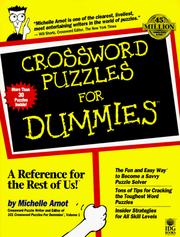
The ideal starting point — it demystifies grid structure, common fill words, and solving habits in plain language, giving beginners a solid foundation before anything else.
Builds directly on the basics by walking through real NYT puzzles day by day, teaching the reader how difficulty scales across the week and what to expect from mainstream American crosswords.
Cracking Cryptics: Introduction to Cryptic Clues
BeginnerRecognize and decode the main cryptic clue types — anagrams, hidden words, double definitions, charades, and reversals — so no clue format feels alien.
▸ Study plan for this stage
Pace: 2–3 weeks, ~25–30 pages/day, focusing on chapters covering cryptic clue mechanics and worked examples
- Anagrams: recognizing anagram indicators (e.g., 'mixed', 'broken', 'scrambled') and identifying the letters to rearrange
- Hidden words: spotting how answers are concealed within clue text and recognizing 'hidden word' indicators (e.g., 'in', 'contains', 'part of')
- Double definitions: understanding clues that offer two separate, valid definitions of the same answer word
- Charades: decoding clues where the answer is built from component parts concatenated together
- Reversals: identifying when a word or phrase must be read backwards and recognizing reversal indicators (e.g., 'back', 'reverse', 'returning')
- Wordplay and misdirection: how cryptic clues use puns, homophones, and misleading surface readings to obscure the true answer
- The anatomy of a cryptic clue: separating the definition from the cryptic mechanism and understanding how both parts work together
- What are the five main types of cryptic clue mechanisms, and how does each one work?
- How do you distinguish between the definition part and the cryptic mechanism part of a clue?
- What are common anagram indicators, and how do you identify which letters to rearrange?
- How do hidden word clues conceal answers, and what words signal that a hidden word mechanism is at play?
- What makes a double definition clue different from other cryptic clue types, and why can it be deceptively simple?
- How do charade clues build answers from smaller components, and what does the clue text reveal about how those parts fit together?
- Work through 10–15 anagram clues from Connor's examples, identifying the anagram indicator and the letters to rearrange before checking the answer
- Solve 10–15 hidden word clues, circling the hidden answer within the clue text and noting the indicator word used
- Solve 8–10 double definition clues without looking at answers first, then reflect on how the two definitions relate
- Decode 10–12 charade clues by identifying the component parts and how they combine to form the answer
- Solve 8–10 reversal clues, marking which word or phrase is reversed and confirming the reversal indicator
- Create your own cryptic clues (one of each type) for five common words, then swap with a study partner or test them on yourself after a week
- Solve a mixed set of 20–30 cryptic clues from Connor's worked examples, labeling each clue type before solving
Next up: Understanding these five foundational clue types equips you to recognize how cryptic clues work in isolation; the next stage will layer in more complex mechanisms—such as combinations of multiple clue types, advanced wordplay, and how to navigate ambiguity when a clue could fit multiple patterns.
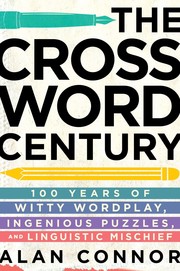
Provides rich cultural and historical context for how cryptic conventions evolved, deepening intuition for why clues are constructed the way they are.
Strategy & Speed: Solving Smarter
IntermediateDevelop systematic solving strategies, pattern recognition, and the ability to work through a stuck grid using crossing letters, wordplay logic, and lateral thinking.
▸ Study plan for this stage
Pace: 6–8 weeks, ~40–50 pages/day (alternating between both books; start with Sutherland for 2 weeks, then integrate Fatsis for pattern recognition and competitive context)
- Cryptic clue deconstruction: identifying definition, wordplay mechanism (anagrams, reversals, hidden words, homophones, charades), and subsidiary indicators
- Crossing letters as solving anchors: using intersecting words to narrow possibilities and break through stuck grids
- Pattern recognition in wordplay: spotting common cryptic devices and building a mental library of clue types
- Lateral thinking and misdirection: understanding how cryptic clues mislead and training yourself to think beyond literal meanings
- Speed development through systematic elimination: prioritizing high-confidence clues first, using crossing letters to cascade solutions
- Competitive solving mindset: learning from expert solvers (Fatsis) how to manage time, handle pressure, and develop confidence in your solving process
- Grid navigation strategies: tackling easier clues first, building momentum, and using partial answers to unlock harder sections
- What are the main components of a cryptic clue, and how do you identify the definition versus the wordplay mechanism?
- How can crossing letters help you solve a clue you're stuck on, and what systematic approach should you use when a grid section feels impossible?
- What are at least five common cryptic wordplay devices (e.g., anagrams, reversals, hidden words), and how do you recognize each one in a clue?
- How does lateral thinking and misdirection work in cryptic clues, and why do solvers often get stuck on 'obvious' interpretations?
- What strategies do competitive solvers use to increase speed without sacrificing accuracy, and how can you apply these to your own solving?
- How do you approach a partially completed grid when you're stuck, and what role do crossing letters play in your next move?
- Complete 3–4 cryptic crosswords per week from Sutherland's examples, timing yourself and noting which clue types slow you down most
- Create a personal 'cryptic clue decoder' notebook: collect 20–30 clues from both books, categorize them by wordplay type (anagram, reversal, hidden word, etc.), and write out the solving logic for each
- Solve 2–3 grids per week using the 'crossing letters first' method: identify all clues with crossing letters already filled in, solve those first, then use them to unlock adjacent clues
- Practice lateral thinking: take 5 cryptic clues from Sutherland and write down your first instinct answer, then the correct answer; reflect on where your thinking was misdirected
- Speed drills: solve the same cryptic crossword twice, one week apart, and track your time improvement; aim for 10–15% faster completion on the second attempt
- Competitive immersion: read a chapter from Fatsis, then solve a cryptic grid while imagining you're in a tournament; reflect on how pressure affects your strategy and confidence
Next up: This stage transforms you from a novice who recognizes cryptic patterns into a confident solver who can systematically dismantle any clue and navigate a full grid under pressure, preparing you for the next stage where you'll tackle advanced cryptic variants, speed competitions, and specialized puzzle types.

Bridges the gap between knowing clue types and actually solving full cryptic grids, with step-by-step strategies for working through a puzzle from start to finish.
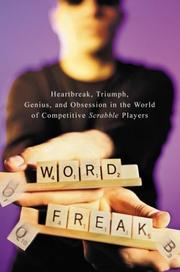
Though focused on Scrabble, this book builds deep intuition for wordplay, pattern recognition, and the competitive puzzle mindset that transfers directly to advanced crossword solving.
Mastery: Wordplay, Construction & Advanced Solving
ExpertUnderstand puzzles from the constructor's perspective, master advanced wordplay devices, and develop the fluency to tackle the hardest cryptic and thematics with ease.
▸ Study plan for this stage
Pace: 8–10 weeks, ~40–50 pages/day (with puzzle-solving practice sessions 4–5 days/week)
- Constructor's mindset: understanding how setters design themes, misdirection, and difficulty curves
- Advanced wordplay devices: homophones, anagrams, hidden words, reversals, and cryptic indicators in Ximenes-style cluing
- Cryptic clue anatomy: definition + wordplay mechanism, and how to parse complex multi-part clues
- Thematic construction principles: symmetry, interlocking grids, theme placement, and constraint satisfaction
- Cryptic solving fluency: rapid identification of clue types and mastery of common cryptic conventions
- Ximenes principles: fairness, elegance, and the distinction between cryptic and American-style puzzle design
- Meta-solving skills: recognizing when a puzzle is themed, identifying the theme early, and exploiting it strategically
- How does understanding a constructor's constraints and design goals change your approach to solving difficult puzzles?
- What are the key differences between Ximenes-style cryptic cluing and American crossword conventions, and why does fairness matter in cryptic design?
- Given a cryptic clue, can you identify the definition, the wordplay mechanism, and the cryptic indicator(s), then solve it confidently?
- How would you construct a thematic crossword with a specific constraint (e.g., all theme answers are anagrams of each other), and what symmetry rules would you follow?
- What strategies do you use to rapidly identify whether a puzzle is themed, and how do you exploit the theme to solve faster?
- How do homophones, reversals, hidden words, and anagrams function as cryptic devices, and what clue language signals each one?
- Solve 10–15 cryptic puzzles from the Guardian or Times, timing yourself and annotating each clue with its structure (definition + mechanism + indicator)
- Construct a 15×15 American-style crossword with a simple theme (e.g., all theme answers start with the same letter or share a common word), then swap with a peer for feedback
- Reverse-engineer 5 published cryptic clues: identify the definition, wordplay type, and indicator, then write your own clue for the same answer using a different mechanism
- Solve 3–5 themed puzzles (from Berry or published sources) and write a one-page analysis of the theme, how it's distributed, and how recognizing it accelerated your solving
- Construct a cryptic clue for 10 difficult words, ensuring each clue is fair, elegant, and follows Ximenes principles; have a peer rate them for clarity and difficulty
- Complete a 'clue-writing workshop': take 5 answers and write 3 different cryptic clues for each (one homophone-based, one anagram-based, one reversal-based), then refine the best
Next up: This stage equips you with both solver's fluency and constructor's insight, positioning you to either specialize in puzzle construction, tackle championship-level cryptic competitions, or mentor others—depending on your next goal.

Patrick Berry is one of the most respected constructors alive; working through his challenging puzzles with his own commentary teaches advanced solving by exposing the constructor's intent.
The canonical, authoritative text on cryptic clue standards written by the legendary setter Ximenes — essential reading for anyone who wants to understand the deep rules and elegance behind expert-level cryptics.
Discussion
Keep reading
Paths that share books, cover the same subject, or open a related topic.