Flannery O'Connor Reading Order: Where to Start
This curriculum moves through Flannery O'Connor's work in the order she herself might have recommended: absorb the short fiction first (where her voice is most concentrated and perfected), then encounter the novels (which reward readers already fluent in her symbolic world), and finally turn to her letters and essays to understand the theological and artistic convictions driving everything. Starting at an intermediate level, each stage deepens your grasp of her grotesque Catholic vision, her Southern Gothic style, and her fierce moral imagination.
The Short Stories — First Half
IntermediateGet fluent in O'Connor's voice, her use of the grotesque, and her signature 'moment of grace' structure through her most celebrated and accessible stories.
▸ Study plan for this stage
Pace: 6–8 weeks total; Week 1–3: Read "A Good Man Is Hard to Find" (the full collection, ~10–12 stories) at a pace of 1–2 stories per sitting, ~3 sittings per week, pausing after each story for brief reflection notes. Week 4–6: Read "Everything That Rises Must Converge" (~9 stories) at the same pace. Week
- The Grotesque as Revelation: O'Connor's use of physical deformity, violence, and moral ugliness not for shock value but as a vehicle for spiritual truth — seen in characters like The Misfit ('A Good Man Is Hard to Find') and Hulga ('Good Country People').
- The Moment of Grace: O'Connor's signature structural climax — a sudden, often violent intrusion that cracks open a character's self-delusion and offers (though does not guarantee) a transformative encounter with grace. Study how this moment functions differently in 'A Good Man Is Hard to Find' vs. '
- The Flawed Protagonist and Spiritual Blindness: Nearly every O'Connor protagonist is defined by pride, self-righteousness, or willful ignorance. Track how characters like Julian ('Everything That Rises Must Converge') and the grandmother embody this blindness before their moment of rupture.
- Southern Gothic Setting and Social Texture: O'Connor roots her theology in the specific landscape of the mid-20th-century American South — its racial hierarchies, class anxieties, and religious culture — as seen in the bus scene in 'Everything That Rises Must Converge' and the roadside world of 'A G
- O'Connor's Narrative Voice and Free Indirect Discourse: Her narrators are close-third-person and often adopt the limited, irony-laden perspective of the protagonist, letting readers see the character's self-deception from the inside. Identify moments where the narrator's irony diverges sharply from
- Violence as Sacrament: In O'Connor's Catholic framework, physical violence is frequently the only force strong enough to shatter a character's ego and make grace possible. Analyze how the murders in 'A Good Man Is Hard to Find' and the fatal shock in 'Everything That Rises Must Converge' function th
- Recurring Character Types — The Intellectual, The Matriarch, The Prophet-Fool: O'Connor returns to recognizable archetypes across both collections. Map these types (e.g., Hulga as the cynical intellectual, the grandmother and Julian's mother as Southern matriarchs) to understand her thematic obsessi
- Irony and Dark Comedy: O'Connor is deeply funny — her comedy is dry, savage, and inseparable from her moral vision. Practice identifying the comedic register of scenes before their violent turns, and ask what the humor is doing theologically.
- In 'A Good Man Is Hard to Find,' does the grandmother achieve genuine grace in her final moment with The Misfit, or is O'Connor leaving the question deliberately open? What textual evidence supports your reading?
- How does O'Connor use physical description — of bodies, clothing, and landscapes — to signal moral and spiritual states in both collections? Choose two specific characters from different stories to compare.
- Julian in 'Everything That Rises Must Converge' believes himself morally superior to his mother, yet O'Connor clearly implicates him in the story's tragedy. How does her narrative voice expose Julian's self-delusion without ever directly condemning him?
- What role does race play in 'Everything That Rises Must Converge,' and how does O'Connor use the integration of the bus to force a collision between her characters' self-images and reality? How does this compare to the social tensions simmering in the roadside world of 'A Good Man Is Hard to Find'?
- Select one story from each collection and trace the exact structural arc of the 'moment of grace': What is the protagonist's ruling illusion? What event shatters it? What is left ambiguous afterward?
- O'Connor described her use of the grotesque as necessary for an audience that is 'hard of hearing' — she had to 'shout' and draw 'large and startling figures.' After reading both collections, do you find this strategy spiritually effective, aesthetically satisfying, both, or neither? Ground your answer in specific stories.
- Story-by-Story Grace Map: After finishing each story, fill in a simple three-column chart — (1) The protagonist's central illusion or pride, (2) The violent or shocking rupture event, (3) What is left open or transformed. Do this for every story in both collections to build a comparative database of O'Connor's structure.
- Voice Imitation Exercise: Choose one paragraph of O'Connor's free indirect discourse (e.g., the grandmother's interior observations in 'A Good Man Is Hard to Find' or Julian's self-congratulatory thoughts in 'Everything That Rises Must Converge'). Rewrite it in first-person confessional voice, then in a neutral third-person journalistic voice. Reflect in 200 words on what O'Connor's chosen mode ac
- Character Archetype Casting: List every major character across both collections and assign each to one of O'Connor's recurring types (Matriarch, Intellectual/Cynic, Prophet-Fool, Innocent, Villain-as-Mirror). Note any characters who resist easy categorization and write a paragraph on why.
- Close-Reading the Comedic Turn: Select two scenes — one from each collection — that are genuinely funny before turning dark or violent. Write a 300-word analysis of each explaining how the comedy functions: Does it lower the reader's guard? Does it indict the character? Does it make the violence more or less bearable?
- Theological Annotation Pass: On your re-read of 2–3 stories, annotate every image, gesture, or line of dialogue that carries sacramental or theological weight (light, blood, eyes, hands, the cross, fire, etc.). At the end, write a one-page reflection on whether O'Connor's Catholic vision feels imposed on the stories or organically embedded in them.
- Comparative Essay (500–700 words): Compare the 'moment of grace' in 'A Good Man Is Hard to Find' (the title story) and 'Everything That Rises Must Converge' (the title story). Argue which moment O'Connor renders more ambiguous and why that ambiguity is central to her moral vision.
Next up: Mastering O'Connor's short fiction — her compressed structure, theological irony, and grotesque imagery — gives the reader the essential interpretive toolkit needed to tackle her longer, more architecturally complex novels, where the same forces of grace, violence, and spiritual blindness play out across sustained narratives with deeper character development.
Her first story collection introduces the full range of her Southern Gothic world — violent epiphanies, comic grotesques, and fierce moral reckoning. Reading it first establishes the essential O'Connor vocabulary you'll carry through everything else.
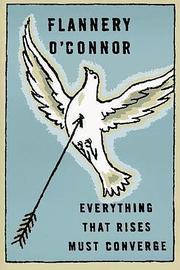
Her second and final story collection, published posthumously, shows her craft at its most refined and her themes — racial tension, pride, and grace — at their most complex. It builds directly on the patterns established in the first collection.
The Novels
IntermediateExperience O'Connor's longer narrative arc and see how her obsessions with prophecy, redemption, and spiritual violence sustain a full novel-length structure.
▸ Study plan for this stage
Pace: 6–8 weeks total: Weeks 1–3 for Wise Blood (~20–25 pages/day, including pause days for reflection); Weeks 4–7 for The Violent Bear It Away (~18–22 pages/day, slower pace to track the layered prophetic structure); Week 8 reserved for comparative review, re-reading key passages, and completing synthesi
- The 'Christ-haunted' protagonist: how Hazel Motes in Wise Blood and Francis Marion Tarwater in The Violent Bear It Away are defined by their violent resistance to — and ultimate surrender to — a divine call they cannot escape
- Negative theology and inverted faith: O'Connor's technique of depicting grace through blasphemy, self-destruction, and anti-religion (the Church Without Christ; Tarwater's flight from prophecy)
- Prophecy as compulsion vs. choice: the way both novels frame the prophetic vocation not as a gift freely accepted but as an inescapable, almost predatory force
- Spiritual violence and the grotesque as sacramental vehicles: blinding, drowning, self-mortification, and murder as the physical enactments of spiritual transformation
- The rural South as theological landscape: how O'Connor uses the geography, poverty, and social texture of the American South to externalize interior spiritual states
- Mentor/antagonist doubles: the role of Asa Hawks and Onnie Jay Holy in Wise Blood, and old Mason Tarwater and Rayber in The Violent Bear It Away, as competing spiritual authorities pulling protagonists in opposite directions
- Redemption without consolation: O'Connor's refusal of easy conversion — grace arrives as wound, not comfort — and how this sustains tension across novel-length narratives
- Narrative structure as spiritual arc: how each novel's plot mirrors a theological journey (resistance → crisis → violent illumination → ambiguous but irreversible change)
- By the end of Wise Blood, has Hazel Motes been redeemed? What textual evidence supports your reading, and how does Mrs. Flood's final vision of 'a pin point of light' complicate or confirm it?
- How does O'Connor use the recurring motif of eyes and vision — Asa Hawks's fake blindness, Hazel's self-blinding, Tarwater's drowning of Bishop — to construct a theology of spiritual sight across both novels?
- In The Violent Bear It Away, Rayber represents secular rationalism as a counter-force to old Mason's prophecy. Does the novel treat Rayber with sympathy, contempt, or something more ambiguous? How does his love for Bishop function as his one vulnerability?
- Both novels feature a young man fleeing a prophetic inheritance imposed by an older male figure. What are the key structural and thematic differences in how Wise Blood and The Violent Bear It Away handle this flight-and-return pattern?
- How does O'Connor sustain theological seriousness across a full novel without the compression of the short story form? Identify at least two specific craft techniques she uses in each novel to maintain thematic momentum.
- What role does the city (Taulkinham in Wise Blood, the unnamed city Tarwater visits) play as a spiritual environment, and how does it contrast with the rural settings in each novel?
- Close-reading journal: After finishing each chapter of both novels, write 2–3 sentences identifying one image or action that functions on both a literal and a spiritual/symbolic level. At the end of each novel, review your journal to map the pattern of O'Connor's symbolic vocabulary.
- Character doubling chart: Draw a two-column table for each novel listing the 'prophet/believer' figures against the 'rationalist/skeptic' figures. For each pairing, note one scene where they directly clash and write a sentence on what O'Connor seems to be arguing through the outcome.
- Comparative passage analysis: Select the climactic moment of violence or revelation in each novel (Hazel's self-blinding in Wise Blood; Tarwater's baptism/drowning of Bishop in The Violent Bear It Away). Write a 400–600 word comparative essay on how O'Connor stages grace through an act that is simultaneously criminal or self-destructive.
- Rewrite exercise: Choose one scene in which a character explicitly rejects religion or prophecy (e.g., Hazel's street preaching of the Church Without Christ; Tarwater's insistence he will not baptize Bishop). Rewrite the scene from the point of view of the opposing character to expose the dramatic irony O'Connor builds in.
- Theological context annotation: Read O'Connor's own essay 'The Fiction Writer and His Country' from Mystery and Manners (outside text, brief). Annotate 5–8 passages from Wise Blood or The Violent Bear It Away where her stated intentions about writing for a 'hostile audience' are visibly at work in the prose.
- Synthesis essay: After completing both novels, write a 600–800 word essay arguing which novel more successfully sustains O'Connor's thematic obsessions at novel length, using specific scenes, images, and structural choices as evidence.
Next up: Mastering how O'Connor's obsessions operate at novel length — with their full weight of recurring imagery, doubled characters, and slow-burn spiritual arcs — equips the reader to return to her short fiction with a much sharper eye for how she compresses the same theological machinery into a single, devastating scene.
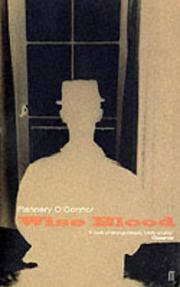
Her first novel, about a self-declared prophet of a 'Church Without Christ,' is best read after the stories because its dark comedy and theological intensity are far easier to navigate once you know her symbolic register.
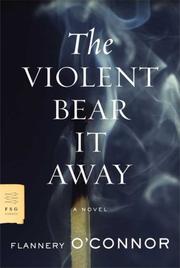
Her second and more mature novel deepens the prophetic theme and is structurally richer than Wise Blood; reading it second lets you see her novelistic ambitions grow and her theology become more fully articulated.
The Letters and Essays — Her Mind Behind the Work
ExpertUnderstand the Catholic intellectual framework, the literary theory, and the personal faith that consciously shaped every story and novel you have just read.
▸ Study plan for this stage
Pace: 8–10 weeks total: Weeks 1–3 cover Mystery and Manners (~20–25 pages/day, reading each essay slowly and annotating); Weeks 4–9 cover The Habit of Being (~35–40 pages/day, reading letters chronologically and keeping a running journal); Week 10 is reserved for synthesis, re-reading key passages from bo
- The 'Catholic novelist' problem: O'Connor's argument in Mystery and Manners that writing from a Catholic worldview in a secular age requires distortion, violence, and the grotesque to make grace visible to a spiritually blind audience
- Prophetic vision vs. social realism: O'Connor's insistence that the fiction writer is not a sociologist or moralist but a prophet who renders reality whole — including its supernatural dimension
- The Incarnational aesthetic: her theological conviction, drawn from Aquinas and Teilhard de Chardin, that grace works through concrete, sensory, physical detail — 'the concrete is the way of the mystic as well as the artist'
- The 'moment of grace' as structural principle: how O'Connor consciously engineers a violent or shocking climax in each story as the hinge-point at which a character is offered (and usually resists) divine grace
- The role of the grotesque: her distinction between the Gothic grotesque (mere shock) and her own use of the grotesque as a theological lens that reveals the deformity of a soul cut off from God
- Intellectual formation and influences: the letters in The Habit of Being reveal her sustained engagement with Aquinas, Maritain, Teilhard, von Hügel, and the Catholic literary revival — showing these were not decorative references but living intellectual tools
- Faith under pressure: the letters document her 16-year battle with lupus, and show how her theology of suffering directly informed the redemptive violence in her fiction — her life and art were a single argument
- The writer's vocation as moral act: O'Connor's repeated insistence in both books that a writer who distorts reality toward ugliness or sentimentality commits an artistic and spiritual failure simultaneously
- According to Mystery and Manners, why does O'Connor believe the Catholic fiction writer must use shock, violence, and the grotesque rather than gentle or uplifting imagery — and what does this reveal about her assumptions regarding her audience?
- How do the letters in The Habit of Being show O'Connor actively translating her theological reading (Aquinas, Maritain, Teilhard) into specific craft decisions? Identify at least two letters where she makes this connection explicitly.
- O'Connor argues in Mystery and Manners that 'a story is a way to say something that can't be said any other way.' What does she mean, and how does this position her against both didactic religious fiction and purely aesthetic modernism?
- How does O'Connor's experience of chronic illness, as documented in The Habit of Being, complicate or deepen the theology of suffering and grace she articulates in Mystery and Manners? Do the two books tell a consistent story?
- What is O'Connor's critique of the 'pious style' and sentimental Catholic fiction in Mystery and Manners, and can you find letters in The Habit of Being where she applies this same critique to specific contemporary writers or her own early drafts?
- After reading both books, how would you characterize the relationship between O'Connor's private faith (letters) and her public literary theory (essays)? Are they the same argument in different registers, or do tensions exist?
- Annotation cross-reference: As you read each essay in Mystery and Manners, flag every abstract claim O'Connor makes about craft or theology. Then search The Habit of Being for a letter where she says the same thing in personal, unguarded language. Build a two-column document pairing the public formulation with the private one.
- Reverse-engineer a story: Choose one story you read in an earlier stage (e.g., 'A Good Man Is Hard to Find' or 'The Violent Bear It Away') and, using only evidence from Mystery and Manners, write a one-page 'design brief' as if you were O'Connor explaining to a workshop why every major craft choice was made. Then check your brief against what she actually says in relevant letters.
- Intellectual genealogy map: Draw a diagram of the thinkers O'Connor cites or discusses across both books (Aquinas, Maritain, Teilhard, von Hügel, etc.). For each node, write one sentence summarizing what specific idea she borrows and one sentence showing where that idea appears in her fiction.
- Letter close-reading: Select five letters from The Habit of Being spanning different years and different correspondents (e.g., 'A' vs. Betty Hester, Robert Lowell, Cecil Dawkins). Write a one-paragraph character study of O'Connor as an intellectual based solely on those letters — her tone, her certainties, her doubts.
- Contested claim debate: O'Connor argues in Mystery and Manners that a writer cannot be both a good Catholic and a good writer if they subordinate art to piety. Write a one-page steelman of the opposing view, then write a one-page rebuttal using only her own words from both books as evidence.
- Synthesis essay: After completing both books, write a 600–800 word essay answering: 'Did Flannery O'Connor succeed on her own terms?' Use her criteria from Mystery and Manners as the evaluative standard and her letters as biographical evidence for or against.
Next up: Having internalized O'Connor's own theological and aesthetic framework from her essays and letters, the reader is now equipped to encounter scholarly and critical perspectives — biographies, literary criticism, and cultural histories — that can be evaluated against, and tested by, the author's own stated intentions.
This collection of her lectures and essays on fiction and faith is the single best key to her entire body of work — read after the fiction so that her theoretical statements illuminate stories you already know intimately.
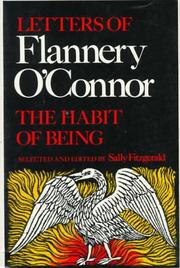
Her selected letters, edited by Sally Fitzgerald, reveal the wit, suffering, and rigorous intelligence behind the public work; reading it last gives you the most personal and complete portrait of the artist.
Discussion
Keep reading
Paths that share books, cover the same subject, or open a related topic.