Artemis Fowl books in order: where to start with Eoin Colfer
Eoin Colfer is read in a particular order because Artemis Fowl is not really eight adventures — it is one character arc, in which a twelve-year-old criminal mastermind who kidnaps a fairy in book one has, by the last page of book eight, given up everything he built. Read out of sequence, the later books are incomprehensible: they turn on who Artemis has become, and each one closes on a change of state that the next assumes. This path runs the eight core novels straight through, then handles the spin-offs and graphic novels that sit alongside them, and finishes with the non-Artemis books that show why Colfer is worth following past the series he is famous for.
The First Four: Where Everyone Starts
BeginnerMeet Artemis as a villain and watch the series quietly stop being about the heist. These four introduce the fairy world, the LEPrecon officer Holly Short, and the running bargain between the two of them that the rest of the series spends its time renegotiating.
▸ Study plan for this stage
Pace: Three to four weeks. These are children's novels of roughly 280 to 330 pages each and a confident reader takes three or four days over one, so a book a week is comfortable and reading two in a week is easy. Read them strictly in order — Artemis Fowl, The Arctic Incident, The Eternity Code, The Opal
- The premise as book one states it: a twelve-year-old criminal mastermind obtains a copy of the fairy Book, uses it to kidnap a LEPrecon officer, and holds her for a ransom of fairy gold. Artemis is the antagonist of his own first novel and the series never fully lets you forget it.
- The Fowl Manor siege in book one is the whole engine — Artemis versus Commander Root, Foaly's technology, and the time-stop. Every later confrontation is a variation on the rules established during it.
- The shift from adversary to ally in The Arctic Incident is the structural event of the series. Artemis and Holly Short go from hostage-taker and hostage to reluctant partners, and every subsequent book renegotiates the terms of that partnership rather than restating it.
- Artemis Senior. His disappearance is the motive for book one's theft and his return in book two starts the slow pull toward Artemis becoming a person with obligations. Track the father across all four.
- The mind-wipe at the end of The Eternity Code, which is the single strongest reason to read these in sequence. Artemis begins book four having forgotten books one to three, and the reader has not — the entire fourth novel is built on that asymmetry, and a reader starting at book four simply loses th
- Butler and Juliet as the physical solution to a series whose hero is a physically unimpressive child. Notice how often the plot's escape depends on Butler and what Colfer does in the one book where it cannot.
- The Opal Deception was written as an ending — Colfer originally intended to stop at four — which is why it kills a major character, resolves a villain seeded two books earlier, and reads with a finality the next book has to work around.
- The comic register: Mulch Diggums, Foaly's sarcasm, and the technology jokes exist to keep the tone light while the plots get progressively darker. Watch the ratio change across the four.
- In book one, at what point does Artemis do something that is not in his own interest? Name the page-level moment, if there is one.
- What exactly changes between Artemis and Holly during The Arctic Incident, and what specific event causes it?
- The Eternity Code ends with a mind-wipe. List everything Artemis loses and everything the reader keeps. Why does that gap make book four work?
- Who dies in The Opal Deception, and what does the series lose by it? Is the loss earned by what precedes it?
- Trace Artemis's father across the four books. What does he want, and how does what Artemis wants from him change?
- If The Opal Deception was meant to be the ending, what has been closed off by its final page and what is left genuinely open?
- Keep a running list of every rule of fairy magic as it is introduced — the Book, the time-stop, the requirement of an invitation to enter a human dwelling, the healing, mesmer, the Ritual. Note the book and the situation where each first appears. Colfer plays fair with these rules and the later plots turn on them, so the list is worth having by book five.
- Reread the final chapter of The Eternity Code immediately before starting The Opal Deception, then read book four's opening chapters. Write down every line that reads differently because you remember what Artemis does not.
- Take the first scene between Artemis and Holly in book one and the equivalent scene in The Opal Deception and set them side by side. Mark what each says about the other and who is doing the persuading. Four books of character change are visible in two pages.
- Count the number of times Butler solves the immediate problem in each of the four books, and note the one book where he is unavailable and what Colfer does instead. This is the cleanest way to see how the series stops relying on him.
Next up: The Opal Deception closes the story Colfer originally planned; the next four books restart it as something stranger and more science-fictional and take Artemis somewhere his twelve-year-old self would not recognise.
The correct starting point and non-negotiable: the whole premise — a boy genius extorting a fairy civilisation that has hidden underground for millennia — is set up here, and nothing later makes sense without the siege at Fowl Manor. Note the catalogue also carries a graphic-novel adaptation under a very similar title; this entry is the 1999 novel.
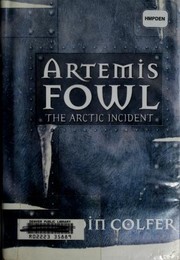
Read second. Artemis and Holly go from adversaries to reluctant allies, which is the shift the entire rest of the series is built on, and Artemis's father returns — the thread that eventually drags the character toward becoming a decent person. Catalogued as Artemis Fowl and the Arctic Incident.
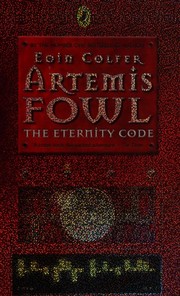
Third, and the one that raises the stakes to something Artemis cannot outsmart alone. It ends on a deliberate reset that is the single biggest reason to read this series in order — start at book four and you will be reading about a boy who has forgotten the previous three volumes without knowing that is the joke.
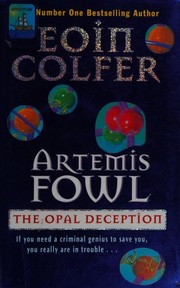
Fourth, and the darkest of the early run: it kills a major character and pays off the villain seeded two books earlier. Colfer originally planned to stop here, which is why it reads like a conclusion and why the second half of the series has a noticeably different shape.
The Second Half, and the Real Ending
BeginnerFollow the arc from clever child to something closer to an adult. These four are longer, stranger and more science-fictional than the first four, and they resolve the series properly.
▸ Study plan for this stage
Pace: Four to five weeks. These four are longer than the first four — The Lost Colony and The Time Paradox run past 350 pages — and the plotting is denser, so allow a week each and expect to reread the odd chapter. The order is fixed: The Lost Colony, The Time Paradox, The Atlantis Complex, The Last Guard
- The Lost Colony changes what kind of series this is: demons, a lost eighth fairy family displaced in time, and Number One as a new viewpoint character. From here the plots run on the series' own accumulated mythology rather than on heists.
- Minerva Paradizo in The Lost Colony as the first character to be Artemis's intellectual equal, and what her presence exposes about how the earlier books flattered him.
- The Time Paradox is the book that most requires the earlier ones: Artemis travels back and works against his own younger self. It is a direct commentary on the character from book one, and it fails completely if you have not met that character.
- The Atlantis Complex takes the moral arithmetic seriously — Artemis's guilt over everything he has done manifests as a condition affecting his behaviour and his speech. This is the series declining to let the early crimes be a joke, and it is the slowest-paced book of the eight.
- Holly's arc across the second half. She loses her institutional position, and the relationship with Artemis is renegotiated on very different terms from book two's. The Last Guardian closes this, and it is the emotional line the finale is actually about.
- Opal Koboi as the series' constant. Track how her scheme changes scale from The Arctic Incident to The Last Guardian; the escalation is the clearest measure of how far the books travel.
- The Last Guardian is a genuine ending in a way children's series endings rarely are. It settles what the earlier volumes deferred, and it costs something.
- The tonal problem the second half is solving: a hero who has become decent is less funny than a hero who is a criminal. Watch how Colfer replaces the source of comedy — more Mulch, more Foaly, more of Artemis being wrong.
- What does The Lost Colony add to the world that the first four books had no use for, and what does the series give up by adding it?
- Minerva is introduced as Artemis's equal. What does she actually do in the plot, and is she used as fully as her introduction promises?
- In The Time Paradox, which Artemis is the antagonist? Say precisely what the older one wants and what the younger one wants.
- How is the Atlantis Complex condition depicted, and where does the book treat it as comedy and where as a real cost?
- Trace Holly's professional position across all eight books. What has she lost by the last, and what has she gained?
- The Last Guardian ends the series. What does it close that The Opal Deception left open, and would you have preferred the earlier ending?
- Take the fairy-magic rules list you built in the first stage and mark every rule the second half breaks, bends or explains away. The Time Paradox in particular tests whether the series has been playing fair, and the list is how you find out.
- Read the confrontation between the two Artemises in The Time Paradox with book one open beside you, and check the older Artemis's predictions about his younger self against what the younger one actually does in the 1999 novel. Colfer is quoting himself and the accuracy is the point.
- Track Opal Koboi's plan across the four books she appears in and write each as one sentence. Laid out in a column, the escalation from corporate sabotage to what she attempts in The Last Guardian is stark.
- Pick any three consecutive chapters of The Atlantis Complex and mark each joke as either at Artemis's expense or at someone else's. Do the same for three chapters of book one. The shift in who the series laughs at is the whole second half in miniature.
- After The Last Guardian, write the one-paragraph summary of Artemis's arc that a reader who started at book five could not write. That paragraph is the argument for reading the eight in order.
Next up: With the eight-book arc complete, the next stage sorts out the adaptations and the sequel series that sit around it, which are easy to mistake for part of the sequence.

Fifth. Introduces the demon Number One and a time-displaced eighth fairy family, and it is where the series stops being a heist franchise and starts running on its own mythology. Catalogued as Artemis Fowl. The Lost Colony.

Sixth, and only readable here: Artemis travels back and meets his younger self, so the book is a direct commentary on the character he was in book one. The emotional payoff is entirely dependent on having read the first five.

Seventh. Artemis's guilt over everything he has done manifests as a psychological condition, which is the series taking its own moral arithmetic seriously rather than waving it away. Slower than the others, and it sets up the finale.

Eighth and final. Read it last; it is an ending in the full sense and it closes the Artemis-and-Holly relationship that began in book two. Everything the earlier volumes deferred is settled here.
The Spin-Offs Around the Edges
BeginnerUnderstand what the graphic novels and the sequel series actually are, and where they belong in the order, so you do not mistake either for part of the main sequence.
▸ Study plan for this stage
Pace: A week or two. The graphic novel is a single sitting; The Fowl Twins is a full novel of around 350 pages and takes a few days. Neither belongs inside the main eight, which is the point of the stage. The Fowl Twins is pitched at a similar age to early Artemis Fowl and has the same register of comic p
- The graphic novel is an adaptation of book one, scripted by Colfer with Andrew Donkin. It is not an additional story and it contains nothing the novel does not. Read it instead of book one or after book one, never between books.
- What an adaptation cuts is instructive. The graphic novel has to externalise Artemis's interior scheming, which the prose keeps hidden, so the reader is told things earlier than the novel tells them.
- The catalogue record for the graphic novel lists several creators, which reflects more than one adaptation of the series existing; the Colfer and Donkin version of book one is the one this stage means.
- The Fowl Twins is a sequel series about Myles and Beckett, Artemis's younger brothers, set after The Last Guardian. It assumes you know what the Fowl family is and treats Artemis's absence as an established fact.
- Why it has to come after the eight: the book's jokes and its emotional shorthand both depend on the reader having a settled idea of Artemis, and it would spoil the finale for anyone who has not read it.
- Myles and Beckett split Artemis's character in two — the intellect and the physicality, the calculation and the impulse — which is a deliberate structural choice and worth noticing rather than accepting as coincidence.
- The other spin-off material in the series' orbit, including the illustrated Artemis Fowl Files, is companion material rather than plot, and nothing in the main eight requires it.
- What does the graphic novel show the reader that the first novel withholds? Name two specific moments.
- Where would a reader be if they read the graphic novel and then started at book two? What would they be missing?
- How does The Fowl Twins handle Artemis's absence, and what does the handling assume you already know?
- In what way do Myles and Beckett divide Artemis's traits between them, and does that make the pair more or less interesting than the original?
- Is The Fowl Twins a continuation or a restart? Argue from what it does with the fairy world rather than from the marketing.
- Read the first chapter of the Artemis Fowl novel and the corresponding pages of the graphic novel back to back, and list everything the adaptation adds, cuts or moves. This is the fastest way to see what prose was doing that pictures cannot.
- Write down every fact about Artemis that The Fowl Twins assumes without explaining. The length of the list is the argument for reading it last.
- Take one scene from The Fowl Twins featuring both brothers and rewrite it in a sentence as it would have gone with Artemis alone. Doing this makes visible how much of the new series' comedy comes from having split the character.
- Decide, and write down in two sentences, what you would give a nine-year-old who cannot yet manage a 300-page novel: the graphic novel, or nothing yet. The answer depends on whether you mind them meeting the story out of its proper form, and it is worth settling deliberately.
Next up: Artemis Fowl is one series by a writer with a range the series does not show; the last stage is the books that make the case for reading Colfer past it.
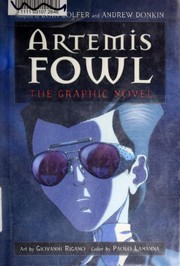
An adaptation of book one by Colfer with Andrew Donkin, not an extra story. Useful as a re-entry point or for a reluctant reader, but it replaces the first novel rather than adding to it — read it instead of, never between.

The sequel series, starring Artemis's younger brothers, set after The Last Guardian. Read it only once the main eight are done: it assumes you know what the Fowl family is and treats Artemis's absence as a fact you already understand.
Colfer Without Artemis
IntermediateSee the writer behind the series — the same comic timing and plot engineering applied to standalone books, including one for adults and one written on commission for somebody else's universe.
▸ Study plan for this stage
Pace: Four to five weeks. Airman is the longest at around 400 pages and is the one to give real time; The Supernaturalist and Half Moon Investigations are shorter, around 260 and 290 pages, and read in a few days each; And Another Thing is a full adult-market novel of around 300 pages. Read them in the or
- Airman as the strongest of the standalones: Conor Broekhart, born in a hot-air balloon over nineteenth-century Saltee, is framed, imprisoned on a prison island, and works his way toward flight and revenge. Colfer has said the debt to The Count of Monte Cristo openly and the structure follows it clos
- What Airman does that Artemis Fowl does not: sincerity. The comedy is present but subordinate, the emotional stakes are direct, and the protagonist is capable rather than clever. Readers who find Artemis too pleased with himself usually prefer this.
- The Supernaturalist as evidence of range in the other direction — a corporate dystopia, children with no protectors, and an ending that withholds the reassurance every Artemis Fowl book eventually delivers.
- Half Moon Investigations reduces the machinery to nothing: a twelve-year-old private detective, a school, no fantasy element at all. It is the purest sample of Colfer's comic voice available and the shortest commitment.
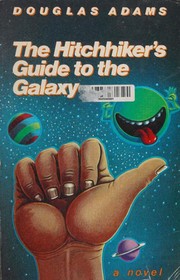
- And Another Thing is the sixth Hitchhiker's Guide to the Galaxy novel, written by Colfer at the request of Douglas Adams's estate. It is somebody else's universe, written to somebody else's voice, and it is the clearest measure of how far Colfer's comedy does and does not travel.
- Reading And Another Thing last is deliberate: it only means anything once you know what Colfer's own voice sounds like, and the interesting question is which sentences are his and which are an impression of Adams.
- The through-line across all four: Colfer's plots are engineered rather than organic — set-ups planted early and paid off precisely — and it is easier to see in the standalones, where there is no series to hide the joins.
- What does Airman take from The Count of Monte Cristo, and where does it deliberately depart? Name the departures.
- How does Conor Broekhart differ from Artemis Fowl as a protagonist? Answer in terms of what each is good at and what each wants.
- The Supernaturalist withholds the comic reassurance of the Artemis books. Where specifically does it do so, and what is the effect?
- Half Moon Investigations has no fantasy element. What is left carrying the book, and is it enough?
- In And Another Thing, which passages read as Adams and which as Colfer? Quote one of each and say what distinguishes them.
- Having read all four, what would you now say Colfer is actually good at — and is it the same thing the Artemis Fowl books are famous for?
- Read the opening chapter of Airman and the opening chapter of Artemis Fowl consecutively and compare how each introduces its protagonist: what we are told, what we are shown, and how long before we are asked to like him. The difference is the whole case for Airman.
- Track one planted detail through Airman from its first appearance to its payoff, noting the page each time. Colfer's plotting is unusually mechanical and following one thread end to end shows you how the machine is built.
- Pick a comic set piece from Half Moon Investigations and one from Artemis Fowl and identify the joke structure in each — misdirection, deflation, understatement, running gag. The register is the same and the surrounding apparatus is not.
- Read the first fifty pages of And Another Thing with a Douglas Adams novel to hand, and mark five sentences in Colfer that you think Adams would not have written. Then mark two you think he might have.
- Rank the four standalones by which you would give to a reader who has just finished The Last Guardian and wants more, and write one sentence of justification each. This is the actual decision the stage exists to support.
Next up: This is the final stage; you now have the eight-book Artemis Fowl arc in its correct order, the spin-offs placed rather than confused with it, and the standalones that show what Colfer does when the series is not in the way.
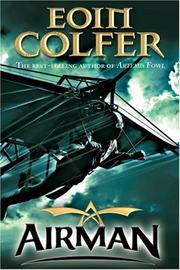
The best of the standalones and the natural next read: a nineteenth-century Irish aeronautics story that is essentially The Count of Monte Cristo with a flying machine. Longer and more sincere than Artemis Fowl, and the one most often preferred by readers who found the series too clever.
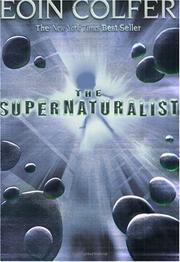
Colfer's dystopian science fiction, and the closest he comes to writing something bleak. Read it after Airman if you want the range rather than the reassurance — it shows how much of Artemis Fowl's warmth was a choice.
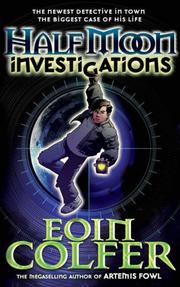
A small-scale schoolyard detective comedy — the pure comic register with no fantasy machinery attached. A short, low-commitment way to test whether you like Colfer's voice on its own.
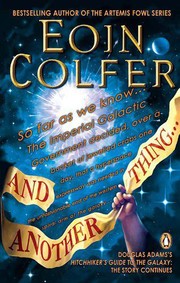
The sixth Hitchhiker's Guide to the Galaxy novel, written by Colfer at the Douglas Adams estate's request. Read last, and read it as a curiosity: it is the clearest measure of how far Colfer's comic voice does and does not travel. Catalogued with a trailing ellipsis.
Discussion
Keep reading
Paths that share books, cover the same subject, or open a related topic.