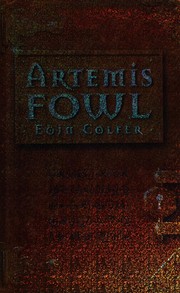
Start with Artemis Fowl, the 1999 novel, and read the eight core books in publication order. Unlike most children's series with a numbered spine, this one is not eight adventures in a shared world — it is one arc, in which a twelve-year-old criminal mastermind who kidnaps a fairy in book one has, by the last page of book eight, given up everything he built to get there. Each novel closes on a change of state the next one assumes.
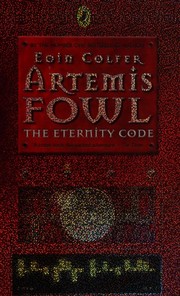
The obvious alternative is to start with whichever book the reader has been given, which normally means starting somewhere in the middle. Do not. Artemis Fowl and the Eternity Code, the third novel, ends on a deliberate reset that only works if you have read the first two, and a reader who begins at book four is reading about a boy who has forgotten three volumes they never read. That is a joke rather than a plot hole, and it lands on nobody who came in late.
One catalogue note before the list: our records also carry a graphic-novel adaptation under a very similar title, so check what you are buying. Artemis Fowl here is the novel.
The first four
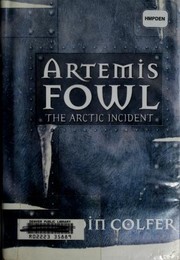
Artemis Fowl sets up the premise — a boy genius extorting a fairy civilisation that has been hidden underground for millennia — and the siege at Fowl Manor that nothing later makes sense without. Artemis Fowl and the Arctic Incident moves Artemis and the LEPrecon officer Holly Short from adversaries to reluctant allies, which is the shift the entire rest of the series renegotiates, and brings his father back into play. Artemis Fowl and the Eternity Code raises the stakes past what Artemis can outthink alone. The Opal Deception is the darkest of the early run: it kills a major character and pays off a villain seeded two books earlier. Colfer originally planned to stop here, which is why it reads like a conclusion and why the back half has a noticeably different shape.
The second half
These four are longer, stranger and more science-fictional. Artemis Fowl. The Lost Colony introduces a time-displaced eighth fairy family and the demon Number One, and is where the series stops being a heist franchise and starts running on its own mythology. Artemis Fowl and the Time Paradox sends Artemis back to meet his younger self, making the whole book a direct commentary on the character he was in book one — it is only readable here. Artemis Fowl and the Atlantis Complex turns his guilt into a psychological condition, which is the series taking its own moral arithmetic seriously; it is slower than the others and sets up the finale. The Last Guardian is an ending in the full sense, and closes the relationship that began in book two.
The spin-offs, and where they go
Artemis Fowl. The Graphic Novel is an adaptation of the first book by Colfer and Andrew Donkin, not an extra story. It is useful as a re-entry point or for a reluctant reader, but it replaces the first novel rather than adding to it — read it instead of, never between. The Fowl twins starts the sequel series about Artemis's younger brothers, set after The Last Guardian; it assumes you know what the Fowl family is and treats Artemis's absence as an established fact, so save it until the main eight are done.
Colfer without Artemis
Airman is the best of the standalones and the natural next read: a nineteenth-century Irish aeronautics story that is essentially a Count of Monte Cristo plot with a flying machine attached. It is longer and considerably more sincere than Artemis Fowl, and readers who found the series too pleased with itself often prefer it. The Supernaturalist is his dystopian science fiction and the bleakest thing he has written — read it after Airman to see how much of Artemis Fowl's warmth was a choice. Half Moon Investigations is a small-scale schoolyard detective comedy with no fantasy machinery at all, and a short, low-commitment way to test the voice.
And Another Thing… is the sixth Hitchhiker's Guide to the Galaxy novel, written by Colfer at the Douglas Adams estate's request. Read it last and read it as a curiosity: it is the clearest measure of how far a comic voice does and does not travel into somebody else's universe. Our catalogue holds it with a trailing ellipsis, which is how it was published.
Where to stop
The Last Guardian is a real ending and stopping there is entirely reasonable. The sequel series is a different proposition with a different cast, and enjoying the first eight books is no guarantee of enjoying it.
Follow the full ordered path here: Artemis Fowl books in order: where to start with Eoin Colfer.
Ready to learn something deeply?
Build a reading path — free