Artemis Fowl Reading Order: Where to Start
Artemis Fowl is eight books plus a three-book spin-off, and it is one of the rare children's series where publication order and reading order are the same — with two exceptions worth knowing about. The companion volume of short stories sits between books four and five, and the Fowl Twins books are set after the main series and spoil its ending, so they genuinely come last. The other thing worth knowing before starting: the character in book one is a criminal, and the series is a long argument about whether he stops being one. Reading it out of order breaks that arc more than it breaks the plot.
The First Three
BeginnerMeet Artemis, Butler and the Lower Elements Police, and read the tight opening trilogy that was originally the whole plan.
▸ Study plan for this stage
Pace: Two to three weeks. Artemis Fowl is 288 pages, The Arctic Incident 320 and The Eternity Code 344 — fast, heavily plotted books that a committed reader will finish in two or three sittings each. Read them in this order and close together; the three were conceived as one arc and the third was written
- Artemis as the villain of his own first book — the series only works because Colfer refuses to make him likeable in volume one
- The Book, the fairy Rituals and the rules of magic, which Colfer establishes early and then holds to for eight books
- The LEP, Holly Short and Foaly as a full second cast with their own institutional politics, so the fairy world is a bureaucracy rather than a wonderland
- Butler and the manservant convention: the bodyguard's loyalty is the emotional load-bearing element long before Artemis has friends
- The heist structure — a plan explained after the fact rather than before — which is why re-reading the last chapter of book one is more rewarding than reading it once
- The Eternity Code as an intended endpoint: Artemis builds something he should not have, and the price is paid rather than reversed
- In book one, what does Artemis actually want the gold for, and when are you told?
- How does Colfer keep you reading about a protagonist who is committing a serious crime against a sympathetic victim?
- What changes in book two when Artemis needs the fairies' cooperation rather than their money — and who has to concede first?
- The Eternity Code ends with a real loss. What is it, and why would the series be different if book four had simply undone it?
- Name three rules of fairy magic established in these three books that later volumes depend on.
- After finishing book one, go back and reread the final chapter, then reread chapter one. Colfer plants the whole trick in the opening; find the three planted details.
- Keep a one-page rules sheet for fairy magic as you read — the Ritual, the invitation to enter a human dwelling, the mesmer, the time-stop. Books six and eight both turn on rules established here.
- Track Holly's opinion of Artemis across the three books with one quoted line per book. That line is the actual plot of the series.
- At the end of The Eternity Code, write down what you think the series is about in one sentence, and keep the note. You will check it against your answer after book eight.
Next up: You have finished the arc Colfer originally planned, which is why book four opens by breaking the resolution he had just written.
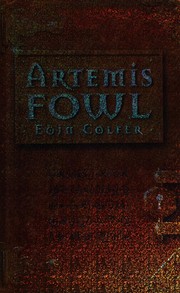
A twelve-year-old criminal mastermind kidnaps a fairy for ransom and is entirely the villain of his own book. Start here — the series' whole trajectory depends on how unlikeable he is allowed to be in book one.
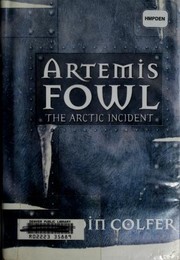
Book two, in which Artemis needs the fairies' help rather than their gold, and the goblin plot introduces the wider LEP world. Catalogued as Artemis Fowl and the Arctic Incident; read it second, since it is the first crack in his self-sufficiency.
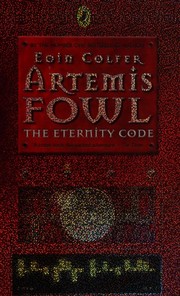
Book three, and the intended ending of the original arc: Artemis builds something he should not have, loses Butler, and pays a real price. The best-plotted book in the series.
The Middle Books
BeginnerFollow the series past its planned conclusion into the arc that introduces Opal Koboi as a recurring antagonist.
▸ Study plan for this stage
Pace: Two to three weeks. The Opal Deception is 352 pages, The Lost Colony 385, and The Artemis Fowl Files is a 197-page companion of two short stories plus background material rather than a novel. Read The Opal Deception straight after The Eternity Code, then the Files, then The Lost Colony. Content, sta
- Opal Koboi as the series' first genuine antagonist, and what changes when the threat is no longer Artemis himself
- The memory wipe as a plot device with teeth: Colfer resets his own protagonist and then has to earn the character back
- Colfer's escalation problem and his solution — each book raises the scale of the world rather than the stakes of the heist
- The Files as a companion volume: two stories and world-building, optional to the plot and genuinely useful for the fairy politics
- Demons, Hybras and No1 in The Lost Colony — a whole new species introduced this late, and the machinery that makes it possible
- The time jump at the end of The Lost Colony, which reorders the ages of the cast and is the hinge the last three books hang on
- Who dies in The Opal Deception, and what does that death do to Artemis specifically rather than to the plot?
- After the memory wipe, how does Colfer re-establish Artemis's relationship with Holly without simply repeating book one?
- What does The Artemis Fowl Files add that the novels do not, and would you now call it optional or not?
- Why must The Lost Colony come before books six and seven — what precisely would be unreadable without it?
- Opal is a more capable villain than Artemis ever was. Does that make the series better or does it cost it something?
- Write down, at the end of The Opal Deception, exactly what Artemis remembers and what he does not. Book five depends on your holding that distinction and the text will not restate it.
- Read the Files' two short stories after book four, then decide for yourself whether they belong there — and write one sentence defending your placement. This is the only genuinely arguable position in the whole reading order.
- Keep a timeline as you read The Lost Colony: dates, ages of Artemis, Holly and the twins, and where the jump lands. Books six through eight all reference it.
- Compare Opal's plan in book four with Artemis's in book one. Both are heists; list the three things Opal does that Artemis would not.
Next up: The time jump is in place and the cast has been aged, which is the exact setup the closing arc uses to ask whether Artemis has changed.
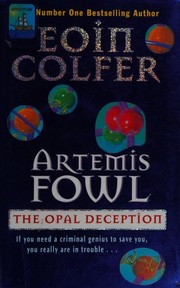
Book four, and the darkest turn in the series — a major character dies and it is not undone. Read it directly after The Eternity Code; the emotional reset only works in sequence.
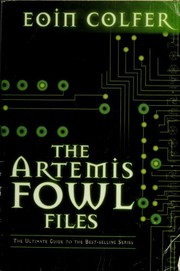
The companion volume: two short stories plus interviews and background on the fairy world. It slots naturally here, after book four, and is genuinely optional — it adds texture, not plot.

Book five, introducing the demons, Hybras and No1, and ending on a time jump that reshapes the rest of the series. Do not skip it — books six and seven are unreadable without it.
The Last Three
BeginnerRead the closing arc, in which the series pays off the question of whether Artemis has actually changed.
▸ Study plan for this stage
Pace: Two to three weeks. The Time Paradox is 391 pages, The Atlantis Complex 376 and The Last Guardian 336. Read them in order and without a long break — the last three are more continuous than any other run in the series. Content, stated plainly: The Atlantis Complex depicts a fictional fairy psychiatri
- The time-travel confrontation in The Time Paradox: the older Artemis meeting the younger one is the most literal possible statement of the series' question
- Guilt made mechanical — the Atlantis Complex as a plot device that externalises what the earlier books only implied
- The divisiveness of book seven and why it exists: without it the finale has nothing to redeem
- Colfer closing his own loops — the Ritual, the mesmer, Opal, the Butler debt, all called back in The Last Guardian
- An ending with a cost, and how children's series usually avoid one
- Why the spin-off must come after this book rather than beside it: The Fowl Twins references this ending directly
- In The Time Paradox, what does the older Artemis learn from meeting the younger one that he could not have learned any other way?
- Is The Atlantis Complex a fair way to portray the accumulated cost of the earlier books, or a device? Argue both sides.
- Which specific elements from book one are resolved in The Last Guardian? Find at least three.
- Has Artemis stopped being a criminal by the end, and does the book actually claim he has?
- Compare your one-sentence answer from stage one with the ending. What did you get wrong, and was Colfer aiming at something else all along?
- Reread the first chapter of Artemis Fowl immediately after finishing The Last Guardian. The two chapters are the whole argument of the series in about forty pages.
- Chart the time-travel logic of The Time Paradox on paper — two Artemises, one lemur, the order of causes. Colfer plays fair, and the diagram proves it.
- List every callback in The Last Guardian to an earlier book and note which volume it comes from. Anything you cannot place is a book worth skimming again.
- Write the two-sentence case you would make to someone who bounced off The Atlantis Complex and wants to skip to book eight. Making that case forces you to say what book seven is doing.
Next up: The main sequence is finished and its ending is spoilable, which is precisely why the spin-off starts here.

Book six sends Artemis back to meet his own younger self, which is the most direct way the series could possibly ask its central question. Read it here, immediately after the time jump that set it up.

Book seven, in which the accumulated guilt manifests as a psychological condition. The most divisive book in the series and the one that makes the finale land.

Book eight, and a real ending with a real cost. Everything from book one is on the table here, which is why the spin-off books must come after it.
The Fowl Twins
BeginnerRead the spin-off trilogy, set after the main series and following Artemis's younger brothers.
▸ Study plan for this stage
Pace: Two weeks. The Fowl twins is 432 pages, Deny All Charges 336 and Get What They Deserve 340. They read faster than their page counts suggest — the prose is broader and the chapters shorter than the late Artemis books — and they are written for a slightly younger reader than book seven or eight was. R
- Myles and Beckett as a deliberate split of Artemis into two people: the intellect and the instinct, arguing with each other on the page
- The intrusive comic narrator, which is new — the main series is told straight and the spin-off is not
- Continuity with the main series: these books assume the ending of The Last Guardian as fact, which is the entire structural reason they come last
- A lower-stakes, faster register, and what a series gains and loses by resetting its scale after a finale
- The recurring supporting cast — how much of the LEP apparatus survives into the new books, and what has been retired
- Closing a sequence twice: the trilogy ends the spin-off and the Fowl story together, and it does bring Artemis back
- How do Myles and Beckett divide between them the traits that made Artemis interesting, and does the division work?
- What does the new narrator let Colfer do that the main series' voice did not?
- Which events of The Last Guardian do these books rely on you already knowing?
- Is the spin-off written for the reader who finished book eight, or for a new younger reader — and can it really be both?
- Does bringing Artemis back at the end strengthen the finale of the main series or dilute it?
- Read the first chapter of The Fowl twins and the first chapter of Artemis Fowl back to back. Write down three differences in how each introduces its child genius.
- Note every reference in book one of the spin-off that a reader who stopped at The Last Guardian would need. The list is the argument for the reading order.
- Keep a tally of Myles-versus-Beckett problem solving across the three books: who solves what. The pattern reverses somewhere in book two — find where.
- Having finished all eleven books, write the reading order out as you would give it to someone else, including where you would place the Files and why. That single note is the deliverable of this whole path.
Next up: The Fowl sequence is complete, so the only thing left is Colfer's work outside it.

Myles and Beckett Fowl, eleven years old and already a problem. Written for a slightly younger reader than the late Artemis books, and it references the main series' ending directly — which is the whole reason it belongs after The Last Guardian rather than beside it.

Book two of the spin-off, broader and funnier, with the twins' dynamic fully established. Read straight on from the first.

Closes the spin-off trilogy and, with it, the whole Fowl sequence. The natural last stop, and it does bring Artemis back.
If You Want More Colfer
BeginnerMove on to his standalone novels, which are better written than the Fowl books and much less well known.
▸ Study plan for this stage
Pace: Two weeks, or one if you only take Half Moon Investigations. Airman is 416 pages, historical rather than fantastical, and is the more substantial book; Half Moon Investigations is 308 pages, contemporary, comic and much lighter. Read Airman first if you want the best novel Colfer has written; take H
- Colfer outside genre furniture: Airman has no magic and its inventiveness is engineering rather than fairy technology
- The Saltee Islands as an invented nineteenth-century setting built on a real place, and how that differs from building a hidden fairy world
- Wrongful imprisonment and escape as a structure — a much older tradition than the heist, and Colfer is working in it deliberately
- The comic detective register of Half Moon Investigations, which is the closest thing to Artemis's narrating voice outside the series
- What an author path is for: recognising the same writer's habits — the loyal heavy, the plan explained late, the adult institutions treated as absurd — in books with nothing else in common
- What does Airman do that the Fowl books never attempt, and is the difference one of subject or of ambition?
- Conor's escape depends on engineering that has to be plausible. Where does Colfer show the working, and where does he ask you to take it on trust?
- Which of Colfer's recurring habits from the Fowl books show up in Half Moon Investigations?
- If a reader liked Artemis for his arrogance, which of these two books do you send them to, and why?
- List the recurring Colfer moves you can now name from the Fowl books — the plan revealed after the fact, the loyal protector, the comic bureaucracy — and mark which appear in Airman and which in Half Moon Investigations.
- Read the flying-machine sequences in Airman and write down what Conor actually builds, in order. Colfer is more careful with the mechanics than the Fowl gadgets ever required him to be.
- Read the opening chapter of Half Moon Investigations aloud. The voice is the whole point of the book and it is more obvious out loud.
- Pick which of the eleven Fowl books plus these two you would keep if you could keep three, and write one line each. It is a harder choice than it looks and it is the fairest test of the path.
Next up: This is the end of the path: the full Fowl sequence in order, plus the two standalone novels that show what Colfer does when he is not writing about a criminal mastermind.
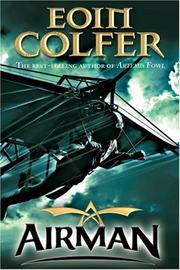
A nineteenth-century Saltee Islands adventure about a boy imprisoned for a murder he did not commit who builds a flying machine to escape. Widely considered his best novel, and a complete change of register from Artemis Fowl.
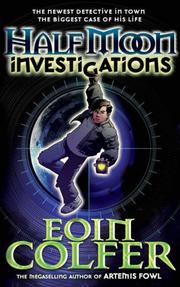
A twelve-year-old private detective in an Irish town, and the closest thing to Artemis's comic voice outside the series. A good short landing point if Airman's scale is more than you wanted.
Discussion
Keep reading
Paths that share books, cover the same subject, or open a related topic.