Eagles of the Empire Reading Order: Where to Start
Eagles of the Empire is a long-running Roman army series — well past twenty volumes and still going — following two soldiers, Macro and Cato, from the invasion of Britain outward across the empire. There is no chronological puzzle to solve: publication order is chronological order, and the books are close third-person military adventure in which the ranks, postings and relationships carry forward book to book. This path covers the first twelve, which take the pair from raw recruits to command, and then tells you where you can stop without loose ends.
Start Here: The Invasion of Britain
BeginnerMeet Macro and Cato as centurion and new recruit, learn how a Roman legion actually functions, and follow the AD 43 invasion from the beach inland.
▸ Study plan for this stage
Pace: Three to four weeks, about 40 pages a day. Under the Eagle is 251 pages, The Eagle's Conquest 320 and When the Eagle Hunts 433 in the edition listed here. The prose is plain and the chapters short, so this stage moves faster than the totals imply; only the third book needs a full fortnight.
- The series rests on one mismatch: Macro is a career centurion who fought his way up and can barely read, Cato is an educated imperial freedman with no muscle and no idea, and every book runs some version of that friction
- Scarrow's real subject is the Roman army as a machine — pay, kit, marching order, latrines, the century as a social unit — and the plots are a delivery system for it
- The historical anchor is genuine: the AD 43 Claudian invasion, the Second Legion Augusta, the crossing of the Medway, Caratacus. The campaign chronology is real; the two soldiers are not
- The viewpoint stays low. You get the invasion from inside a century rather than from the commander's tent, which is why strategy arrives as rumour and is usually wrong
- The formula repeats, and that is the genre working as designed: a posting, an enemy, a superior who is either incompetent or corrupt, a battle, a promotion. You are reading for variation within a form, not for surprise
- When the Eagle Hunts is the most self-contained of the three and the first to show how violent the series is willing to be; if the tone puts you off here, it does not soften later
- Cato's promotions start early and never stop, and tracking his rank is the simplest way to keep the whole sequence straight
- What does Cato know in Under the Eagle that Macro does not, and how long does the book take to make it an asset rather than a liability?
- The invasion is a real campaign. Where does Scarrow keep to the record and where does he invent, and can you tell from inside the novel?
- The Eagle's Conquest runs a conspiracy against Claudius under the battle narrative. Does the political plot earn its space, or is it there to occupy the pair between engagements?
- When the Eagle Hunts makes the Druids the enemy. What is the series' attitude to the Britons generally, and does it distinguish between them?
- After three books, describe the shape of a Scarrow chapter. If you can do it accurately, you have understood what you are signing up for.
- Keep one index card with the Roman rank ladder on it — legionary, optio, centurion, prefect, tribune, legate — and mark where each man stands at the end of each book.
- Sketch the Medway crossing from the description in The Eagle's Conquest, then compare it with any map of the campaign. The geography is followable, which is unusual in this genre.
- Note the point in Under the Eagle where Macro stops being an obstacle and starts being a friend. It is earlier than most readers remember.
- If the violence in When the Eagle Hunts is more than you want, stop at three books. It is a clean exit and nothing later gets gentler.
Next up: The invasion is under way and the pair are established; the next stage pushes the campaign west and starts pulling their careers apart.

The only place to begin: an educated ex-slave from the imperial palace is dumped into the Second Legion under a hard-bitten centurion, on the Rhine, on the eve of the British invasion. The whole series rests on that mismatch, and it is set up here.
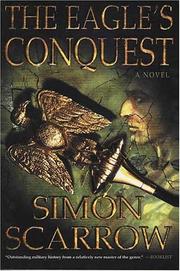
The landing in Britain and the battle of the Medway, with a conspiracy against Claudius running underneath. Read straight on — it picks up within weeks of the first book.

A rescue mission among the Druids of the Dark Moon, and the most self-contained of the early books. It is also where the series first shows how nasty it is willing to be.
The British Campaign
BeginnerFollow the grinding advance west against Caratacus, and watch Cato promoted past the point where the original pairing is comfortable.
▸ Study plan for this stage
Pace: Four weeks, about 40 pages a day. The Eagle and the Wolves is 440 pages, The Eagle's Prey 320 and The Eagle's Prophecy 320. Read the first two in sequence with no gap — the court martial in the second only lands if the training campaign in the first is still fresh.
- The Eagle and the Wolves is the series' best argument that Rome held territory through client kings and native levies rather than through legions alone, and it puts both men into the unglamorous job of making that work
- Independent command is the promotion the books have been building toward, and this is where you see how badly it can go
- The Eagle's Prey uses decimation — the execution of one man in ten — as more than a shock detail; it is the pivot the whole novel turns on and the reason both careers change shape
- A court martial does something a battle cannot: it makes the army's own rules the antagonist, which is the most interesting recurring move Scarrow has
- The Eagle's Prophecy takes them out of Britain and onto the Adriatic with the imperial fleet, ending the single-campaign narrative and turning the series into a sequence of postings
- Once the postings begin, the formula becomes explicit — new theatre, same two men, same friction — and the repetition is the product rather than a flaw in it
- Cato outranks his own mentor sooner than the books are quite comfortable with, and that awkwardness is handled better than most of the plots around it
- In The Eagle and the Wolves, what does training native levies reveal about what the Britons want from Rome, and is any of it granted?
- The Eagle's Prey turns the Roman command structure into the threat. Who is actually responsible for the disaster, and does the novel make the responsible party pay?
- Decimation was a real and rarely used punishment. How does Scarrow stage it, and does he editorialise or leave the judgment to you?
- The Eagle's Prophecy is a naval book. What survives the change of element, and what does the series lose without a marching column?
- Three books into the formula, name the element that varies most between them. That element is what will keep you reading or stop you.
- Update the rank card after each book. Both men move, and one of those moves sets up the next stage.
- Mark the page where the decimation begins and the page where the book returns to ordinary business. The distance between them is Scarrow's judgment about how much horror this series can carry.
- After The Eagle's Prophecy, write down what you expect the next book to look like. If you are broadly right, that is not a failure of the series — it is the genre keeping its promise.
- Read the paragraph on Caratacus's defeat in any short history of Roman Britain. The novel and the record line up closely enough to be worth checking.
Next up: With Britain behind them the pair become a travelling pair of problem-solvers, and the next stage is the series at its widest.
Macro and Cato seconded to train native levies for a client king. The best book of the early run on how Rome actually held territory — with allies, not just legions.

The defeat of Caratacus, followed by a decimation and a court martial. The consequences here reshape both characters' careers, so it cannot be skipped.
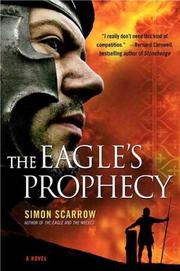
Out of Britain and onto the Adriatic, chasing pirates for the imperial fleet. The first change of theatre, and the point at which the series stops being a single campaign narrative.
The Eastern Postings
IntermediateFollow the pair to Judaea, Egypt and Crete, where the enemy is politics and famine as often as an army.
▸ Study plan for this stage
Pace: Four weeks, about 40 pages a day. The Eagle in the Sand is 416 pages, Centurion 336 and The Gladiator 346. The first two are one continuous eastern campaign, so read them back to back; The Gladiator is the odd one out and benefits from a short gap before it.
- The Judaean garrison in The Eagle in the Sand is the series' best treatment of ordinary imperial soldiering: a rotten unit, a frontier nobody in Rome thinks about, and the slow work of repair
- Parthia gives Scarrow a peer enemy for the first time, and the Roman army stops being automatically superior to whatever it meets
- Centurion is largely a siege, which suits the series — Scarrow writes endurance far better than he writes manoeuvre
- The Roman and Parthian struggle over Armenia is real history, and the client-kingdom politics in these two books track the actual pattern of the eastern frontier
- The Gladiator strips both men of rank, authority and equipment after an earthquake on Crete, which is the most useful thing the series ever does to them: the formula only becomes visible once it is removed
- The slave revolt in The Gladiator is the one time these books look at Roman society from underneath, and the view does not last
- By this stage the repetition is undeniable and you should decide how you feel about it, because nothing in the remaining books will change it
- What is actually wrong with the garrison in The Eagle in the Sand, and is the fix military, administrative or personal?
- In Centurion, how does Scarrow keep a siege interesting across several hundred pages? List the devices; there are fewer than you would expect.
- Do the Parthians get to be a civilisation or only an enemy? Find the evidence either way.
- The Gladiator removes their rank. What are Macro and Cato without the army, and does the book find them interesting?
- The slave revolt raises a question the series never answers. What is it, and is leaving it unanswered a failure or a limit of the form?
- Keep the rank card going and add a second line for where each book is set. Geography is this series' main variable.
- Read a short summary of the Roman and Parthian wars over Armenia before starting Centurion. Twenty minutes of background makes the siege legible.
- After The Gladiator, write a paragraph on what the series would be if the two of them never got their commissions back, then read on and see how fast that gets undone.
- Pick the book in this stage you enjoyed least and work out whether the problem was the plot or the formula. Only one of those improves later.
Next up: The eastern campaign is finished, and the last stage brings them to Rome itself and to the point where this list stops.
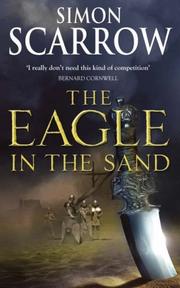
A rotten garrison on the desert frontier in Judaea, with Parthia across the border. Scarrow at his best on the unglamorous work of holding a line nobody in Rome cares about.

The Roman-Parthian struggle over Armenia, and a siege that runs most of the book. Read it directly after The Eagle in the Sand; the two are one continuous eastern campaign.

Crete after an earthquake, a slave revolt, and the two of them shipwrecked with no authority at all. The most unusual setup in the series and a genuine change of pace.
Rome, and Where to Stop
IntermediateFollow them to Egypt and then into imperial politics in Rome itself, and reach a natural stopping point before the series runs on.
▸ Study plan for this stage
Pace: Three weeks. Praetorian is 497 pages, the longest book on this path, and it is a conspiracy novel rather than a battle novel, so it reads slower — give it two weeks at about 35 pages a day. The Blood Crows carries no page count in our records but runs to a similar length as the rest of the series; a
- This list holds eleven books, not the full run. There is one more volume in the published sequence between The Gladiator and Praetorian — the tenth, set in Egypt — which is not in our catalogue, so the numbering on your spines will not match this page. Praetorian reads perfectly well without it
- Praetorian is the series' one true espionage novel: undercover in the Praetorian Guard during the last months of Claudius, with almost no open fighting in it
- The imperial politics that has hummed underneath since the conspiracy in book two finally becomes the plot, which is either the payoff or the moment you notice the series was never really about politics
- The Blood Crows returns to Britain under Nero with both men now senior officers, closing a loop that opened on the invasion
- Stopping here is reasonable and this is the place to do it. The series runs well past twenty volumes with no ending in sight, and nothing is left dangling at The Blood Crows that will nag at you
- What happens if you carry on is simply more of the pattern set out in the last three stages — new province, new corrupt official, new campaign — with the historical setting doing steadily more of the work than the characters. The books stay in strict chronological order, so you can rejoin later by s
- Praetorian is a novel about Roman politics written at a soldier's eye level. What does that viewpoint make visible, and what does it structurally hide?
- Claudius is a real emperor with a well-documented death. How does Scarrow handle an outcome many readers already know?
- The Blood Crows puts both men in senior command. Is the Macro and Cato friction still the engine, or has the series had to find another one?
- Set the first chapter of Under the Eagle beside the first chapter of The Blood Crows. What has changed in the writing, and what has deliberately not?
- Eleven books in, state in one sentence what this series is for. If your answer is a version of the same pleasure again, competently delivered, that is not a criticism — it is the genre's actual promise, and it tells you whether to keep going.
- Before starting Praetorian, check your edition's series numbering against this list. There is a volume between it and The Gladiator that this path does not include.
- Finish the rank card. Read top to bottom, it is a better summary of the series than any plot description.
- After The Blood Crows, wait a fortnight before buying anything else. If you still want the next one after two weeks, the series is working for you; if you do not, you have had a complete eleven-book run and owe it nothing.
- Read the historical notes at the back of any two of these books side by side. Scarrow is explicit about where he departs from the record, and it is a fair test of how much of the history you actually absorbed.
Next up: That is Macro and Cato from the Rhine to senior command in Britain, which is a complete arc; anything beyond it is more of the same, and you now know exactly what that means.

Rome, undercover in the Praetorian Guard, in the last months of Claudius. A conspiracy novel rather than a battle novel, and the one where the imperial politics that has hovered since book one finally takes centre stage.
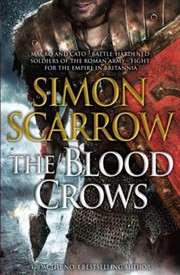
Back to Britain under Nero, with both men now senior officers, which is a satisfying place to leave them. The series continues for many more volumes from here, so treat this as a natural pause rather than an ending — pick it up again by setting rather than out of obligation.
Discussion
Keep reading
Paths that share books, cover the same subject, or open a related topic.