E.L. Doctorow Reading Order: Where to Start
Doctorow's novels are not a series and share no characters, but they do add up to something — a hundred-and-fifty-year account of America told one era at a time, each book written in a different voice borrowed from its period. Because of that, chronological reading order by publication is much less useful than reading order by accessibility, then by era. Start with Ragtime, which is the book his reputation rests on and also the easiest to read; end with the late experiments, which are short and strange and reward knowing what he usually does.
Start Here: The Famous Two
BeginnerMeet Doctorow's method — real historical figures dropped into invented lives, narrated in a period-appropriate voice — in the two novels where it works most cleanly.
▸ Study plan for this stage
Pace: 3 weeks, ~30 pages a day. Ragtime (270 pages) in about nine days, though it reads faster than that once the rhythm takes and plenty of people finish it in three sittings. Billy Bathgate (336 pages) in eleven days; it has a plot with real stakes and will pull you along.
- Doctorow writes American history as fiction and puts real people into invented lives without ever marking which is which. Houdini, Emma Goldman, J.P. Morgan and Henry Ford do and say things in Ragtime they did not do or say, delivered in exactly the same voice as the fictional family. That refusal t
- Know this before page one: Ragtime has almost no quotation marks. Dialogue sits unmarked inside the narration and the sentences are short, flat and declarative. It looks like a mistake for about ten pages and then becomes the point.
- The flatness is doing period work. The prose is built to move like a piano roll, mechanical and syncopated, which is the sound of the era the book is about rather than a stylistic tic.
- The family at the centre of Ragtime has no names — Father, Mother, Mother's Younger Brother, the Little Boy — while the historical figures keep theirs in full. That inversion decides where your sympathy is allowed to settle.
- Coalhouse Walker's storyline is where the comedy stops. The tonal turn is abrupt, visible in the sentences, and entirely intended.
- Billy Bathgate is the accessible one: first person, a boy apprenticed to Dutch Schultz's gang in 1935, a narrator who actually talks to you. Same method, ordinary coming-of-age shape — and Schultz was a real gangster doing invented things.
- A catalogue note: our record for Billy Bathgate is filed under a film tie-in title. The novel is simply Billy Bathgate, and that is what to search for.
- Where in Ragtime does the seam between documented and invented become invisible to you, and does it bother you once you notice afterwards?
- The prose in Ragtime reports rather than dramatises. What does that cost the book, and what does it buy?
- Why do Houdini and Morgan keep their names while the central family lose theirs? Work out what each choice does to your sympathy.
- Coalhouse Walker's escalation is handled with none of the irony the rest of the novel runs on. What changes in the sentences when his story takes over?
- Billy narrates from years later. Find the places where the older Billy is plainly editing the boy.
- Read the first three pages of Ragtime, stop, and read them again before going on. The rhythm is the whole barrier and two passes usually clear it.
- Keep a list of the historical figures in Ragtime as they appear, then look up two of them afterwards. The gap between the record and the novel is where Doctorow is working.
- Mark the paragraph in Ragtime where the tone stops being playful. It is a single identifiable pivot and readers agree on it more than you would expect.
- After Billy Bathgate, write one sentence describing what Doctorow does, then test it against Ragtime. If it fits both books you have the method.
Next up: These two make the method enjoyable; the next pair use the same method on material where enjoyment is beside the point.
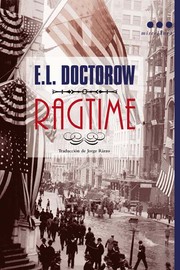
The obvious first book: pre-war America with Houdini, Emma Goldman and J.P. Morgan moving through the lives of three fictional families, told in short flat declarative sentences that read like a player piano. If you only read one Doctorow, read this one.
A boy apprenticed to Dutch Schultz's gang in 1935 New York, and the most purely enjoyable of the novels — it has a plot that pulls. Read it second, because it shows the same method serving a straightforward coming-of-age story.
The Serious Ones
IntermediateRead the two novels where the historical method carries real moral weight rather than pleasure, and see what he does with events that are still contested.
▸ Study plan for this stage
Pace: 4 weeks, ~25 pages a day. The Book of Daniel (303 pages) over two weeks — it is the hardest book on this path and 25 pages is a full day's work here. The March (383 pages) in the two weeks after; it is longer but moves quickly, because the viewpoint keeps changing.
- The Book of Daniel reimagines the Rosenberg case — Julius and Ethel Rosenberg were executed in 1953 after a conviction for conspiracy to commit espionage, and the case is still argued about — through the invented grown son of an invented couple. Doctorow changes the names and declines to settle the
- It is narrated in a broken first person that switches between I and he mid-paragraph, jumps decades without warning and breaks into outright essay. Nothing signals any of the transitions.
- Daniel is not a sympathetic narrator and the novel is deliberate about it. His cruelty to his wife is on the page, undefended and unexplained away.
- The March removes the single viewpoint entirely. Sherman's army moves through Georgia and the Carolinas and the narration hands off between soldiers, freed people, surgeons and Sherman himself, sometimes inside a single page.
- That structure is the argument: the army is the protagonist, individuals are picked up and dropped, which is what a marching army does to the people in its path.
- Both books place you inside events people still argue about and refuse to tell you what to conclude. If you want a verdict on the Rosenbergs or on Sherman, neither novel supplies one, and that is a position rather than an evasion.
- The March is the late book that most resembles Ragtime in structure, which is why it belongs here rather than with the later experiments.
- Daniel keeps interrupting his own story with essays on Disneyland, on execution, on the American left. What are those passages doing that narrative could not?
- The novel never settles whether the Isaacsons were guilty. What does the refusal gain, and what does it cost?
- Locate three points where the narration switches between first and third person. What is happening to Daniel each time?
- In The March, whose story do you find yourself following, and what happens to your reading when Doctorow drops that person without warning?
- Both novels describe violence at length. Compare how the sentences behave in each — the difference is thirty-four years of a writer changing his mind about how to render it.
- Keep a timeline while reading The Book of Daniel. It moves between at least three periods and provides no signposts at all.
- In The March, note every viewpoint handover across fifty pages. The pattern is not random and you will be able to describe it after one chapter of tracking.
- Read the last two pages of The Book of Daniel, then the first two. Both are about the same act of writing, and the pairing reframes the whole book.
- Look up the basic chronology of the Rosenberg case before you start, so you can tell which departures are Doctorow's rather than gaps in your own knowledge.
Next up: With the two hardest books behind you, the rest of the historical sweep is a matter of filling in eras, and the novels get considerably shorter.
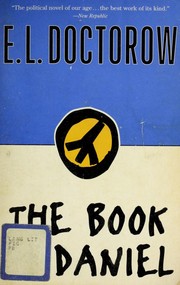
The Rosenberg executions reimagined through the grown son of the accused couple, narrated in an angry, broken first person. His first great novel and by some distance his hardest; read it after Ragtime so the shift in voice reads as a choice.
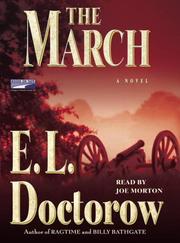
Sherman's army moving through Georgia and the Carolinas, told through dozens of shifting viewpoints, soldiers, freed slaves and surgeons alike. The late-career novel that most resembles Ragtime in structure and is the best place to go after The Book of Daniel.
America, Era by Era
IntermediateFill in the rest of the historical sweep, from the frontier to the Depression to mid-century New York, and see how deliberately he moved around the map.
▸ Study plan for this stage
Pace: 4 weeks, ~25 pages a day. Welcome to Hard Times (212 pages) in a week, World's Fair (288 pages) in eleven days, Homer and Langley (208 pages) in a week. These are the three shortest novels on the path and the easiest stretch of it. Read them in this order: frontier, then a Depression childhood, then
- Welcome to Hard Times is a first novel and an anti-Western: a town destroyed, rebuilt and destroyed again, with none of the moral repair the genre exists to deliver.
- He wrote it while reading Western screenplays for a living, and it reads as a direct rebuttal of the ones he was being paid to read.
- World's Fair is the outlier in the whole body of work. It is a Bronx childhood so close to his own that it functions as memoir with the names changed, and it is the one book where the method relaxes and lets you settle.
- The 1939 World's Fair ending is the seam working gently for once — a real event used as the horizon of a childhood that feels wholly real.
- Homer and Langley takes the Collyer brothers, two genuine New York hoarders, and moves them through a twentieth century that did not happen in that order. He extends their lives by decades. It is his most open falsification and he does not flag it anywhere.
- Narrating that novel through the blind brother means the house is described by touch and sound. The hoard is never seen, only navigated, which is why the book is claustrophobic rather than grotesque.
- Read together these are three Americas — frontier, immigrant city, sealed interior — each with its own diction. That is the entire project in miniature and in under 800 pages.
- Welcome to Hard Times is narrated by a man writing in ledgers. What is he trying to accomplish by writing, and does the novel let him accomplish it?
- World's Fair inserts first-person accounts from other family members. What do they let Doctorow do that a child narrator alone cannot?
- The real Collyer brothers died in 1947 and the novel carries them decades further. Once you know that, does the book lose anything?
- Each of these three has a distinct sentence rhythm. Describe all three in your own words — a hundred pages of each should be enough.
- Which of the three feels least like Doctorow, and what exactly is missing from it?
- Read one page each of Welcome to Hard Times, World's Fair and Homer and Langley aloud, back to back. Three different Americans are talking and you can hear it immediately.
- Look up the Collyer brothers either side of reading Homer and Langley and list what Doctorow changed. It is not a short list.
- In World's Fair, mark the passages that could be lifted straight into a memoir, then ask what the fiction is actually for.
- Write down the year each of these three is set in, add the eras from the earlier stages, and you have his map of America. The gaps in it are as telling as the coverage.
Next up: The pattern is clear enough now that the last stage can afford to break it — four novels where the history thins out and the voice takes over the work.
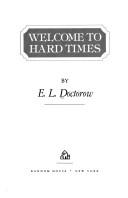
His first novel, a bleak anti-Western about a town destroyed and rebuilt and destroyed again, written while he was reading Western screenplays for a living. Short, and the origin of everything after it.
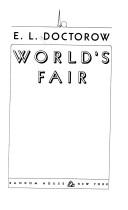
A Bronx childhood in the 1930s, so close to his own that it reads as memoir with the names changed, ending at the 1939 World's Fair. The warmest book he wrote and the one that explains his attachment to New York.
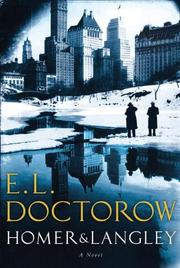
The Collyer brothers, hoarders who died among their own newspapers, narrated by the blind one across a deliberately falsified twentieth century. Read it after World's Fair — it is the same city seen from inside a sealed house.
The Deeper Cuts
IntermediateFinish with the formally restless novels, where the historical scaffolding thins out and the voice does most of the work.
▸ Study plan for this stage
Pace: 6 weeks, ~30 pages a day. Loon Lake (258 pages) in nine days, The Waterworks (281 pages) in ten, City of God (377 pages) in two weeks or more — it is the one book here you may want in short daily doses — and Andrew's Brain (208 pages) in a week. Keep this order; it alternates difficult and easy on p
- Loon Lake gives you no reliable narrator at all. It shifts person mid-sentence, drops into verse and into resume-style fragments, and attributes almost nothing. It is the most formally aggressive of the mid-career books.
- The Waterworks is the deliberate relief: a tightly plotted gothic mystery in 1871 New York written in a convincing pastiche of nineteenth-century newspaper prose. It is the most conventionally satisfying novel on this path.
- City of God is barely a novel — a stolen crucifix, a writer's working notebook, and long digressions on cosmology, the Holocaust and God, assembled with no conventional narrative. Some readers give up on it, and that is a defensible thing to do.
- Andrew's Brain is a single voice talking to an unnamed listener while lying, or misremembering, or being medicated. The historical scaffolding is gone entirely.
- The pattern across the four is worth naming: as the history thins out, the unreliability thickens. With no documented record to run along, the seam between real and invented runs through the narrator instead.
- The late prose gets shorter and stranger without getting simpler. Andrew's Brain at 208 pages is not a quick read.
- This is his least-loved work and the reviews said so at the time. Reading it last is what lets you tell an experiment that failed from one you were not yet equipped for.
- Loon Lake switches persons without warning. Whose voice is the poetry in, and can you defend your answer from the text?
- The Waterworks is the most plotted book here. Is the pastiche doing anything beyond pleasure — is there an argument inside the imitation?
- City of God asks you to hold several unconnected registers at once. Which one is the novel and which are the digressions? Readers answer this differently, so commit to an answer.
- Andrew's Brain gives you a narrator who may be inventing all of it. What specifically in the text licenses your doubt?
- Having read eleven novels, state what Doctorow is doing with American history in one sentence — a sentence that would not describe an ordinary historical novelist.
- In Loon Lake, mark every point where the person changes across thirty pages. The pattern is describable, and once you have it the book stops being difficult.
- Read fifty pages of The Waterworks alongside any real 1870s newspaper column. The imitation is close enough that you can check his work.
- If City of God stalls, read only the notebook sections straight through and then go back. That is a legitimate route and much better than abandoning it.
- Set the first page of Ragtime beside the first page of Andrew's Brain. Forty years apart and the same refusal to tell you where the invention starts.
- Pick the Doctorow you would hand to someone who has just said they do not read historical novels, and write the two-sentence case.
Next up: That is the whole arc, frontier gunfight to a neuroscientist talking in the dark, and you can now place any Doctorow you have not read — the story collections, the essays — by its era and its voice inside a chapter.

Depression-era drifting told in shifting persons, poetry and unattributed fragments, with no reliable narrator at all. The most experimental of the mid-career books; read it once the earlier novels have taught you his rhythms.
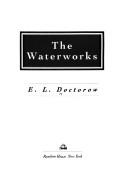
A gothic mystery in 1871 New York, written in a convincing pastiche of nineteenth-century newspaper prose. The most tightly plotted thing he wrote after Billy Bathgate and an easy palate-cleanser after Loon Lake.
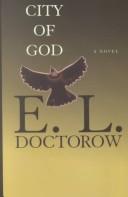
A stolen crucifix, a writer's notebook, and long digressions on cosmology, the Holocaust and God, assembled with no conventional narrative at all. Genuinely difficult and sometimes exasperating; read it late or not at all.

His last novel: a cognitive scientist talking to an unnamed listener, unreliable from the first page. Short, and the right ending to this path — the historical apparatus is gone and only the voice is left.
Discussion
Keep reading
Paths that share books, cover the same subject, or open a related topic.