Don DeLillo Reading Order: Where to Start
This curriculum moves through Don DeLillo's career in three tightly focused stages, beginning with an accessible entry point that establishes his signature themes—consumer culture, media saturation, and existential dread—before tackling his two great novels of American life, and closing with the compressed, crystalline late fiction. Because the learner starts at an intermediate level, the path skips early apprentice work and builds steadily toward the density and ambition of Underworld.
Entry Point: Finding DeLillo's Voice
IntermediateAbsorb DeLillo's prose style, dark comedy, and obsession with American spectacle before confronting his more demanding works.
▸ Study plan for this stage
Pace: 8–10 weeks total: Weeks 1–5 for White Noise (~25–30 pages/day, including re-reading key passages), Weeks 6–10 for Libra (~30–35 pages/day). Budget extra time at the end of each book for reflection and exercises.
- The 'Airborne Toxic Event' as metaphor: how DeLillo uses environmental catastrophe in White Noise to externalize existential dread and the American fear of death
- Death anxiety as narrative engine: Jack Gladney's obsession with mortality in White Noise and how DeLillo transforms a universal fear into dark, absurdist comedy
- Simulacra and media saturation: the role of television, advertising, and consumer culture in White Noise as systems that simultaneously numb and terrify
- DeLillo's prose rhythm: his signature style of flat, deadpan declarative sentences, eerie non-sequiturs, and dialogue that feels both banal and portentous
- The 'most photographed barn' motif: how White Noise introduces DeLillo's central argument that mediated experience has replaced direct experience in American life
- Conspiracy as a way of seeing: how Libra reframes the JFK assassination not as settled history but as a narrative constructed from competing plots, paranoia, and coincidence
- The lone gunman vs. the system: Libra's Lee Harvey Oswald as a man shaped by Cold War ideology, marginalization, and the gravitational pull of larger historical forces
- History as fiction, fiction as history: DeLillo's blurring of the documentary and the novelistic in Libra, and what that implies about how Americans process trauma
- In White Noise, how does Jack Gladney's academic specialty — Hitler Studies — function as both satire of American celebrity culture and a personal defense mechanism against his fear of death?
- What does the 'most photographed barn in America' scene in White Noise argue about authenticity, and where do you see the same argument echoed later in the novel or in Libra?
- How does DeLillo use consumer brand names and television dialogue as a kind of ambient 'white noise' in the novel — what effect does this stylistic choice create, and what is he critiquing?
- In Libra, how does DeLillo construct Oswald as a sympathetic yet unknowable figure, and what narrative techniques does he use to keep the reader inside and outside Oswald's consciousness simultaneously?
- How does the character of Nicholas Branch (the CIA analyst writing the secret history of the assassination) in Libra mirror the reader's own experience of trying to make sense of overwhelming, contradictory information?
- Taken together, what do White Noise and Libra suggest is DeLillo's core vision of America — its relationship to fear, spectacle, violence, and the stories it tells about itself?
- Prose imitation: Choose any mundane scene from your own life (a grocery run, watching TV, a commute) and write 1–2 pages in DeLillo's style — flat declarative sentences, brand names, overheard non-sequiturs, and a sudden intrusion of existential dread. Compare your draft to a passage from White Noise.
- Annotation sprint: Re-read the 'most photographed barn' scene in White Noise and the opening pages of Libra with a pen in hand. Mark every instance where DeLillo signals that reality is being replaced by representation. Write a one-paragraph synthesis of your findings.
- Character mapping for Libra: Draw a diagram of the conspiracy's key players (Win Everett, T-Jay Mackey, Oswald, Ruby) and draw arrows showing who is manipulating whom, who has incomplete information, and where the plan breaks down. Annotate with page references.
- Death-anxiety log: As you read White Noise, keep a running list of every scene or line where death is mentioned, feared, or deflected with humor. At the end of the novel, review the list — what patterns emerge in how DeLillo structures the escalation?
- Comparative close-reading essay (500–700 words): Choose one scene from White Noise and one from Libra that both involve a character watching or consuming media (TV, news, surveillance). Argue how DeLillo's treatment of the media moment differs or evolves between the two books.
- Research and reflect: Read one short primary source about the JFK assassination (a single Warren Commission excerpt or a contemporary newspaper front page from November 1963) and then re-read a Libra chapter involving Oswald. Write a journal entry on how DeLillo's fictional account changes, deepens, or complicates the historical record for you as a reader.
Next up: Mastering DeLillo's voice, his dark comedy, and his twin obsessions with death and American spectacle in these two accessible entry points equips the reader with the interpretive vocabulary needed to tackle his more formally experimental and thematically dense works ahead.
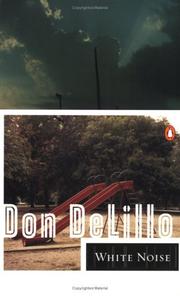
The essential entry novel and DeLillo's most celebrated book; its supermarket aisles, toxic clouds, and death-haunted suburbia introduce every major theme and stylistic tic—deadpan dialogue, brand-name incantation, paranoid systems-thinking—that the rest of the curriculum deepens.
Reading this JFK-assassination novel immediately after White Noise shows how DeLillo scales his methods to historical conspiracy and national myth, preparing the reader for the vast archival imagination of Underworld.
The Summit: Underworld
IntermediateNavigate DeLillo's masterwork with the thematic and stylistic vocabulary already in place, understanding its reverse chronology, its Cold War archaeology, and its vision of America as a system of waste and memory.
▸ Study plan for this stage
Pace: 10–13 weeks total. Mao II: 2–3 weeks at ~20–25 pages/day (208 pages). Underworld: 8–10 weeks at ~30–35 pages/day (827 pages) — read the Prologue ("The Triumph of Death") first as a standalone session, then proceed through the six parts in reverse-chronological order, pausing at the end of each part
- Reverse chronology as archaeology: Underworld moves backward from the 1990s to 1951, treating history as sediment to be excavated layer by layer rather than narrated forward
- The Cold War as a structuring absence: the bomb and the Soviet threat organize American consciousness, consumer culture, and collective anxiety without ever appearing directly on the page
- Waste as cultural memory: garbage, nuclear fallout, graffiti, and detritus function as the true archive of American life — what a society throws away reveals what it truly values
- The crowd and the individual: both Mao II and Underworld open with mass gatherings (a Moonie wedding, the 1951 Giants–Dodgers playoff) to interrogate how individual identity dissolves into or is constituted by collective spectacle
- The novelist vs. the terrorist: Mao II's central argument — that the terrorist has replaced the novelist as the figure who reshapes mass consciousness — anticipates Underworld's meditation on how images and systems of violence circulate through culture
- Systems thinking and connectivity: Underworld's vast cast and sprawling timeline enact DeLillo's vision of America as an interconnected system in which a single object (the Bobby Thomson home-run baseball) threads through disparate lives across decades
- The image and the simulacrum: both novels are saturated with photographs, films, and media representations that compete with or displace lived reality — Mao II's Warhol silkscreens, Underworld's Eisenstein footage and Bruegel reproduction
- Silence, language, and the limits of narrative: DeLillo's prose style — its parataxis, its oracular sentences, its sudden shifts in register — is itself a formal argument about what language can and cannot hold
- In Mao II, Bill Gray argues that the terrorist and the novelist now occupy the same cultural space. What specific scenes or images does DeLillo use to dramatize this claim, and does the novel ultimately endorse, complicate, or undercut it?
- How does Underworld's reverse chronology change the emotional and intellectual experience of reading? What would be lost — thematically and structurally — if the novel were told in forward chronological order?
- The Bobby Thomson home-run baseball travels through many hands across Underworld's decades. What does this single object accumulate in terms of meaning, and how does DeLillo use it to argue something about how history and value are constructed?
- Both Mao II and Underworld are deeply concerned with crowds and mass spectacle. Compare the Moonie wedding in Mao II with the Prologue's Polo Grounds scene in Underworld: how does each crowd scene function differently, and what does each reveal about the individual's relationship to collective experience?
- Waste — nuclear, domestic, industrial — is Underworld's most persistent metaphor. Identify at least three distinct registers in which waste operates in the novel and explain what each reveals about postwar American civilization.
- DeLillo's prose style in both novels is often described as 'oracular' or 'incantatory.' Select one extended passage from each book and analyze how sentence rhythm, syntax, and diction enact the novel's thematic concerns rather than merely describing them.
- The Object Biography: Choose one object that appears in multiple sections of Underworld (the baseball, a piece of waste, a photograph) and write a 600-word 'biography' of that object tracing its meaning as it passes through different characters and decades — then write a short reflection on what this exercise reveals about DeLillo's method.
- Chronology Reconstruction: After finishing Underworld, construct a linear timeline of all major events and characters on index cards or a spreadsheet. Then write a one-page argument for why DeLillo's chosen reverse order is the only order that makes the novel's thematic point about memory and history.
- Mao II Debate: Stage a written debate (two 300-word position statements) between the view that Bill Gray's death is a defeat for literature and the view that it is DeLillo's ironic proof that the novelist still matters. Use specific textual evidence from Mao II for both sides.
- Prose Imitation: Select a one-page passage from the Underworld Prologue and rewrite it in a conventional realist style (clear chronology, named narrator, explanatory transitions). Then write a paragraph analyzing what the rewrite loses and what DeLillo's original achieves that yours cannot.
- Waste Mapping: Create a visual map or annotated list of every significant instance of waste, garbage, or refuse in Underworld, categorizing each by type (nuclear, domestic, artistic, linguistic). Write a 400-word synthesis arguing what the cumulative pattern reveals about the novel's vision of American history.
- Image vs. Text: Find the actual historical photograph or artwork referenced in either novel (e.g., Bruegel's 'The Triumph of Death' in Underworld, or Warhol's Mao silkscreens in Mao II). Write a 500-word close reading of how DeLillo's prose description of the image differs from the image itself, and what that gap means for his argument about representation.
Next up: Mastering Underworld's systems-level thinking, its meditation on history as layered waste, and its argument about the novelist's cultural role equips the reader to engage DeLillo's later, leaner work — where those same anxieties are compressed into post-9/11 and digital-age contexts with even greater formal austerity.
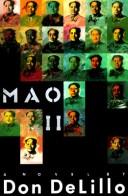
This shorter, intense novel about a reclusive novelist and the power of crowds is the ideal bridge to Underworld: it meditates on authorship, mass culture, and the image—questions Underworld will answer on an epic scale.
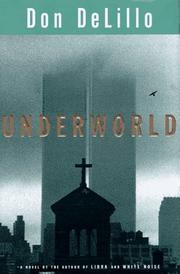
The centerpiece of the curriculum and one of the great American novels; read now, after White Noise, Libra, and Mao II, the reader can track its hundreds of characters, its reverse-chronological sweep from 1992 to 1951, and its argument that waste is the secret history of the Cold War.
Late Style: The Short and Concentrated Fiction
ExpertExperience how DeLillo's late career strips his prose to its barest, most philosophical essentials—short novels and a story collection that feel like concentrated distillations of everything that came before.
▸ Study plan for this stage
Pace: 8–10 weeks total: ~2 weeks for The Body Artist (~120 pp, reread key passages slowly), ~2.5 weeks for Cosmopolis (~210 pp, ~25 pp/day with annotation pauses), ~3.5 weeks for The Angel Esmeralda (9 stories, ~2–3 days per story for close reading and journaling). Budget extra time for re-reading — these
- Temporal compression and dislocation: how DeLillo collapses past, present, and future within single scenes, especially in The Body Artist's grief-warped time and Cosmopolis's single-day implosion
- Stripped prose as philosophical act: the deliberate move away from maximalist density toward spare, aphoristic sentences that carry metaphysical weight
- The body as site of meaning: Lauren Hartke's physical rituals in The Body Artist and Eric Packer's bodily vulnerability in Cosmopolis as meditations on mortality and selfhood
- Capital, technology, and apocalypse: Cosmopolis as an autopsy of late-stage financial capitalism, where the limo becomes a sealed world of abstraction colliding with street-level reality
- The uncanny and the spectral: the mysterious figure of Mr. Tuttle in The Body Artist as an embodiment of grief, time, and the limits of language
- Urban marginality and grace: The Angel Esmeralda's recurring figures of the dispossessed (the homeless, the dying, the forgotten) as unexpected vessels of the sacred or transcendent
- Compression as career distillation: how each of these three works condenses DeLillo's lifelong obsessions — death, media, language, violence, time — into their most essential form
- The short story cycle as unified vision: how The Angel Esmeralda's nine stories function as a coherent late-career statement rather than a miscellany
- In The Body Artist, how does DeLillo use the ambiguous figure of Mr. Tuttle to externalize Lauren's grief, and what does the novel ultimately suggest about the relationship between language, time, and loss?
- Cosmopolis unfolds over a single day in a single vehicle — how does this radical formal constraint serve DeLillo's critique of financial abstraction, and what does Eric Packer's deliberate pursuit of his own death reveal about the novel's thematic core?
- Across The Angel Esmeralda, what role does urban poverty and social invisibility play in generating moments of the sacred or miraculous, and which stories most powerfully dramatize this tension?
- How does DeLillo's prose style in these three works differ from his earlier maximalist novels like Underworld or White Noise — what has been removed, and what effect does that removal create?
- The body — its fragility, its performance, its destruction — is central to all three works. How does each book treat corporeality differently, and what cumulative argument about the human body emerges across the stage?
- Which stories in The Angel Esmeralda feel most directly in conversation with The Body Artist or Cosmopolis, and what does that intertextual resonance reveal about DeLillo's late-career preoccupations?
- Close-reading log for The Body Artist: After each reading session, transcribe 2–3 sentences that feel grammatically or rhythmically strange, then write a paragraph analyzing what that strangeness does — how does the syntax itself enact disorientation or grief?
- Cosmopolis capitalism map: As you read, track every moment where abstract financial data collides with a concrete physical or human event (a protest, a body, a meal). Build a two-column log and write a 500-word reflection on what pattern emerges.
- Story-by-story response journal for The Angel Esmeralda: After finishing each of the nine stories, write one paragraph identifying the story's central image of marginality or grace, and one sentence connecting it to a theme from The Body Artist or Cosmopolis.
- Imitation exercise — write a 300–400 word scene in DeLillo's late style: choose a single confined space (a room, a car, a waiting area), a character in a state of loss or transition, and strip your prose to short declarative sentences and fragments. Avoid metaphor; let objects carry the weight.
- Comparative essay (800–1,000 words): Argue for or against the following claim — 'The Angel Esmeralda is the key that unlocks both The Body Artist and Cosmopolis.' Use specific textual evidence from all three books.
- Re-read the opening and closing pages of all three works back-to-back in a single sitting. Write a one-page reflection: What image, word, or gesture recurs? What does DeLillo seem to be saying, across these three endings, about how things — lives, days, stories — conclude?
Next up: Mastering DeLillo's late concentrated style — its philosophical spareness, its obsession with time, the body, and capital — equips the reader to engage his most recent work with the critical vocabulary and formal sensitivity needed to assess whether his final novels represent culmination, repetition, or something altogether new.
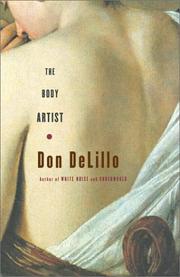
This brief, haunting novella about grief and time is the first major work of DeLillo's late period; its radical slowing-down of prose and attention to bodily presence marks a decisive stylistic turn.
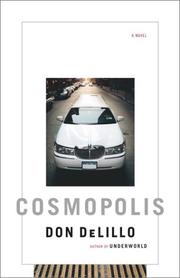
A single day in a limousine crossing Manhattan; reading it after The Body Artist shows the two poles of late DeLillo—interior stillness versus the kinetic, hallucinatory flow of capital and information.
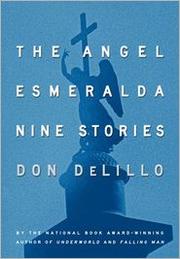
DeLillo's only story collection gathers nine stories spanning decades and is the ideal closing volume: it lets the reader see the full arc of his career in miniature, including the late minimalist mode, and rewards everything learned in the earlier stages.
Discussion
Keep reading
Paths that share books, cover the same subject, or open a related topic.