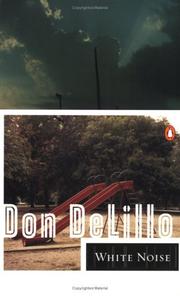
Start with White Noise. It is the most accessible book DeLillo wrote and it is also, conveniently, one of his best: a professor of Hitler studies, a family that talks in advertising slogans, an airborne toxic event, and a pill that cures the fear of death. It is funny in a way the rest of the work often is not, it runs around three hundred pages, and its comedy of supermarkets and television is the clearest possible statement of what he spent fifty years writing about.
The alternative starting points are worse. Underworld is the acknowledged monument and it is 827 pages that open with a fifty-page baseball game and then run backwards through four decades; starting there is a good way to decide DeLillo is not for you. The early novels, meanwhile, are not in this catalogue and are patchy anyway.
The mid-career core
White Noise, then Libra, then Mao II. Libra is the Kennedy assassination told through Lee Harvey Oswald as a man being written into a plot by other people, and it is the most conventionally gripping novel he produced — it has a story, and the story pulls. It is also the book that best shows what DeLillo does with paranoia: not as a conspiracy theory, but as a way of describing how it feels to live inside systems you cannot see.
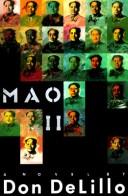
Mao II is shorter and stranger — a reclusive novelist, a photographer, crowds, terrorism — and its central argument, that the terrorist has replaced the novelist as the person who alters consciousness, has aged into being uncomfortably discussed. It is slighter than the two around it but it is the hinge of his thinking.
Underworld, honestly
Underworld is the big one, and it is worth reading, and you should know what you are agreeing to. The opening baseball sequence at the 1951 Giants-Dodgers playoff is frequently called the best hundred pages he ever wrote and was published separately as a novella. After that the book moves backwards in time through waste management, the Bronx, nuclear testing and graffiti, with a structure that is thematic rather than narrative. There is no plot pulling you forward; the connections are made sideways, and long stretches are essayistic. Readers who love it call it the great American novel of the second half of the century. Readers who do not finish it usually stall somewhere in the middle third, and that is a common outcome. Give it a month and do not read it as your second DeLillo.
The late, thin novels
The Body Artist and Cosmopolis are both short and both divide readers sharply. The Body Artist is a hundred pages about grief and a possibly imaginary man in a house, written almost without event; it is the closest he came to writing a prose poem. Cosmopolis follows a billionaire crossing Manhattan in a limousine to get a haircut while his fortune collapses, and its dialogue is deliberately unnatural in a way that some find visionary and many find airless. Read them if the earlier books convinced you the sentences alone are worth showing up for.
The Angel Esmeralda collects the short fiction across the whole career, and it is an unusually good way to sample the late style in small doses. If you are unsure about the thin novels, read the stories first.
Where to stop
After Underworld is a completely respectable stopping point, and a great many readers do exactly that. The mid-career run from White Noise to Underworld is the reputation; everything after is minor by comparison, by broad critical consensus rather than any settled fact. Note too that the early novels — Americana, End Zone, Ratner's Star, The Names — are not on this path. Among them The Names has real admirers and is the one to seek out if you finish the list above and want more.
Follow the full ordered path here: Don DeLillo Reading Order: Where to Start.
Ready to learn something deeply?
Build a reading path — free