Doing Business in China: The Best Books, in Order
This path builds a working picture of what a foreign firm actually encounters in China: the factory floor, the negotiating table, the financial system behind both, and the Party that sets the rules. It starts with first-hand accounts because they are the fastest correction to boardroom assumptions, then moves to the deal mechanics, the macroeconomy and finally the political structure. One warning applies to the whole list: this subject dates faster than almost any other, so every book here is chosen because its analysis of how the system works has outlived its news cycle, and you should read each one with its publication date in mind.
The view from the factory floor
BeginnerUnderstand sourcing, quality control and manufacturing in China as the people doing it experience them, before any theory.
▸ Study plan for this stage
Pace: Five weeks, 939 pages, roughly 30 pages a day. Poorly Made in China (Paul Midler, 2009, revised 2011) at 241 pages and Mr. China (Tim Clissold, 2004) at 272 are fast first-person narratives; Factory Girls (Leslie T. Chang, 2008) is the long one at 426 pages and the slower read, because it is reporte
- Quality fade — Midler's term for a supplier's specification drifting downward after the first good production run, and why it is a business model rather than a failure
- The asymmetry of information in sourcing: the foreign buyer sees the sample, the factory sees everything else
- Clissold's account of what happens when foreign capital is invested without control of the operating entity, cash or chops
- Chang's migrant workers as the actual subject of the manufacturing story — the same factories, seen by the people inside them
- Why all three authors are participants rather than neutral analysts, and what each of them is arguing for
- Publication dates as load-bearing information: 1990s deal-making, 2000s sourcing and 2000s migrant labour are three different Chinas
- What specifically is quality fade, and what did Midler's clients do or fail to do that made it possible?
- Where did the money in Mr. China actually go, and at which decision point could Clissold's fund have stopped it?
- How do Chang's Min and Chunming describe the factory work that Midler and Clissold describe from the buyer's side, and where do the two accounts genuinely conflict?
- Midler is a sourcing consultant writing about his own clients — what does that vantage point systematically make him better and worse at seeing?
- Which of the problems in these three books are about China, and which are about any manufacturing relationship where one party controls production?
- Build a one-page list of every specific supplier tactic Midler names in Poorly Made in China, with the countermeasure he recommends beside it; that list is the book's practical residue
- Trace the ownership and control structure of one of Clissold's investments as Mr. China describes it — who held the licence, the chop, the bank account, the staff — and mark where control diverged from ownership
- Take one worker's arc in Factory Girls and write down her stated reasons for each job change; then check them against the assumptions about labour turnover in Midler's chapters
- Date-stamp all three books on a single timeline against China's WTO accession in 2001 and note which of each author's claims depend on that being recent
Next up: You now know what the operational relationship feels like from the inside, which is the only honest preparation for reading about how such relationships are negotiated in the first place.
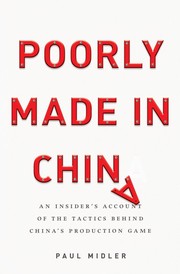
Midler worked as a go-between for American importers and Chinese factories, and this is the clearest account anywhere of quality fade, price renegotiation after tooling, and why your first production run is the best one you will get. Start here because it inoculates you against every optimistic assumption that follows.
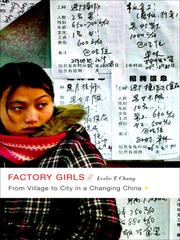
Chang followed young migrant women working in Dongguan's factories, and it supplies the half of the supply chain that business books leave out. Read it second so the labour force stops being an abstraction in a cost model.
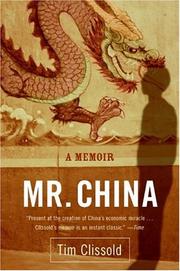
Clissold helped invest hundreds of millions of dollars into Chinese joint ventures in the 1990s and lost a great deal of it. A funny, painful memoir of every way a foreign partner can misread control, ownership and what a signed agreement means.
Deals, partners and the negotiating table
IntermediateLearn how joint ventures, relationships and negotiations actually run, and where foreign managers reliably misjudge them.
▸ Study plan for this stage
Pace: Six weeks, 1,124 pages — the heaviest stage in the path. One Billion Customers (James McGregor, 2005) is 344 pages and organised as case studies with lessons appended, so it can be read a case at a time. Chinese Rules (Tim Clissold, 2014) is 256 pages and revisits the same territory as Mr. China a d
- Guanxi as reciprocal obligation with a ledger, not as friendship or as bribery — and why McGregor keeps returning to who owes whom
- The joint venture as a structure in which the foreign partner's leverage falls the moment the technology transfers
- Negotiation as a process that continues after signature: what a Chinese counterparty may regard a contract as recording
- Face as an operational constraint on what can be said in a room, from Seligman's protocol account through to McGregor's case studies
- The distance between the executive interviews in China CEO — self-reported, by people still in post — and the failure narratives in Clissold
- Clissold's 2014 argument that the rules changed rather than that foreigners learned them
- What does McGregor's account of a specific joint-venture negotiation show about when the foreign side's leverage peaks?
- Where do Chinese Rules and Mr. China disagree about the same author's earlier experience, and what does Clissold say he got wrong?
- The executives in China CEO are describing operations they still run — which categories of problem would you expect that to make them silent about?
- Seligman's book is from 1999: which of its claims are about protocol that has changed, and which are about hierarchy that has not?
- What is the difference, in these books, between a relationship that produces access and one that produces enforcement?
- Take three of McGregor's cases and write out the sequence of leverage — who needed what, and at which moment — then compare that sequence with the failure Clissold describes in Mr. China
- Pull the recurring pieces of advice from China CEO's interviews and mark each one as either operational (staffing, localisation, patience) or political; the balance between the two is the book's real finding
- Read Seligman alongside a McGregor banquet or negotiation scene and mark every protocol point Seligman predicts that McGregor's narrative actually confirms
- Write the same one-paragraph joint-venture proposal twice — once as Mr. China's fund would have framed it in 1994 and once as Chinese Rules would frame it in 2014 — and identify what had to change
Next up: Deals do not fail or succeed in a vacuum; the next stage supplies the industrial and credit system that determines which deals were ever available.
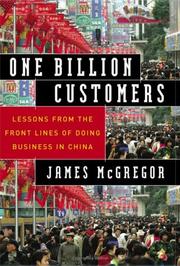
McGregor's case studies of foreign companies in China are still the standard introduction to how deals get done and undone, told through specific firms rather than generalities about culture.

Clissold's follow-up, written after he had learned the lessons Mr. China taught him the hard way, and framed as an explicit set of operating principles. Read it directly after the memoir so you see the same events reinterpreted.
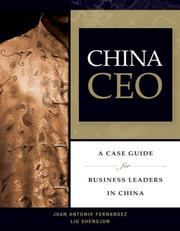
Built from interviews with two dozen multinational executives running China operations, this is the management-level companion to the war stories: hiring, retention, delegation and control.
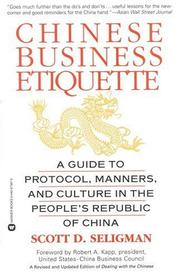
The practical protocol book on meetings, banquets, gift-giving and face. Dated in its examples and still the most useful thing to read the week before your first trip.
The economy you are operating inside
IntermediateUnderstand the industrial rise, the credit system and the debt overhang that shape what any foreign firm can do.
▸ Study plan for this stage
Pace: Six weeks, 1,078 pages, and this is where the reading gets harder. China, Inc. (Ted C. Fishman, 2005) is journalistic and 352 pages. The End of Copycat China (Shaun Rein, 2014) is a 236-page consultant's argument. Red Capitalism (Carl E. Walter, 2011, revised 2012) is the difficult one: 234 pages of
- Fishman's 2005 thesis that China's scale alone reprices global labour and inputs — and how much of it survived the following two decades
- Rein's claim that low-cost manufacturing was ending and that domestic brands, service and innovation were the next market — an argument made in 2014 by a consultant selling into it
- The state banking system as a fiscal instrument: how Red Capitalism describes non-performing loans being moved rather than resolved
- Local government financing vehicles, shadow banking and the property channel, as McMahon lays them out
- Why the cost and availability of credit to your Chinese partner is a fact about your own deal
- The dating problem at its sharpest — a 2005 book about a cheap-labour economy, a 2011 book about a pre-shadow-banking one, and a 2018 book about the debt overhang neither anticipated
- What was Fishman right about in 2005, what was he wrong about, and what has simply become unmeasurable since?
- Rein argues costs would rise and innovation would follow — what evidence does he offer, and what is his commercial interest in the conclusion?
- In Red Capitalism, what actually happened to the bad loans stripped from the state banks, and why does Walter say the problem was relocated rather than removed?
- How does a local government financing vehicle work, in McMahon's account, and who bears the loss when it fails?
- If your Chinese joint-venture partner is a state-owned enterprise, what do these four books tell you about the real cost of its capital?
- Reconstruct, from Red Capitalism, the flow of a single bad loan from a state bank to an asset management company and onward — draw it as a diagram, because the book's argument is a plumbing argument
- List Rein's specific predictions from The End of Copycat China with their dates, and mark each one against what happened
- Put Red Capitalism's 2011 description of the banking system beside McMahon's 2018 one and write down exactly which channels had grown in between
- Take one of Fishman's central 2005 claims about wage arbitrage and check it against the labour picture in Factory Girls from the first stage; the two books were published within three years of each other
Next up: Credit, industrial policy and market access are all set by the same institution, so the final stage reads the political system that decides them.

The book that framed China's manufacturing rise for a general business audience. Read it as a period document of the boom years and as the baseline the later books argue against.

Rein's argument that the cheap-imitation model was already over and that the competitive threat had moved to innovation and domestic brands. The direct counterweight to China, Inc.

Walter spent years inside Chinese investment banking and explains how the state banking system, not the stock market, allocates capital. The single most useful book here for understanding why a Chinese competitor can outlast you.
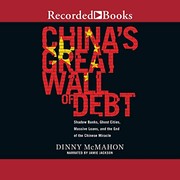
The clearest account of local-government financing vehicles, shadow banking and the property build-out. Read it after Red Capitalism, which gives you the plumbing it describes going wrong.
Who actually decides
IntermediateSee the political system that sits above every commercial decision, and the society it governs.
▸ Study plan for this stage
Pace: Five weeks, 981 pages. Cracking the China Conundrum (Yukon Huang, 2017) is 263 pages of applied economics by a former World Bank country director for China; it argues against several consensus positions and expects you to have the previous stage's material in hand. The Party (Richard McGregor, 2010)
- The Party as a parallel institution inside every enterprise: the Organisation Department, the nomenklatura system, and the red phone on the chief executive's desk
- Why the distinction between a state-owned enterprise and a private firm is weaker than the corporate documents suggest
- Huang's contrarian readings — on debt, on corruption, on inequality and on the trade balance — and the fact that they are minority positions
- Osnos's three registers: fortune, truth and faith, and how personal ambition collides with political limits
- What all three books imply about the ceiling on any foreign firm's autonomy
- Dating again: McGregor's Party is pre-Xi, and the centralisation after 2012 is outside his book's frame
- How does the Organisation Department's appointment power reach into a listed company, in McGregor's account?
- Which consensus claims does Huang argue are wrong, and what is his evidence — and would Red Capitalism accept it?
- What does Osnos's reporting show about the limits of individual advancement that an institutional account like McGregor's cannot?
- The Party was published in 2010: which of its mechanisms have been strengthened since, and which of its assumptions about collective leadership no longer hold?
- After four stages, what is the honest answer to what a foreign firm controls in China, and what it only appears to control?
- Draw the reporting lines McGregor describes for a large state-owned enterprise — board, chief executive, Party committee, Organisation Department — and then mark where your own hypothetical joint venture would sit on that chart
- Take Huang's argument on China's debt and set it directly against McMahon's from the previous stage, listing the specific points of factual disagreement rather than of emphasis
- Follow one of Osnos's individual subjects to the end of their arc and write down the exact moment at which the political constraint became binding
- Date every book in this path on one timeline, then write a paragraph on which of the path's conclusions you would want re-reported before acting on them commercially
Next up: This completes the path: factory floor, negotiating table, credit system and Party, with every book's publication date attached so you know how old each picture is.

Huang, a former World Bank China director, systematically tests the common claims about Chinese debt, investment and trade against the data. The corrective to any single narrative you have picked up so far.

The best account of how the Communist Party operates inside state firms, banks and private companies. If you read one book on why the org chart is not the power structure, this is it.
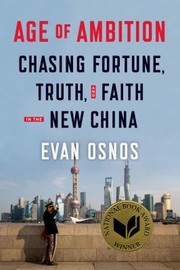
Osnos's portrait of individual ambition colliding with Party control gives you the society your customers and employees live in. A humane close to a path that otherwise reads as risk management.
Discussion
Keep reading
Paths that share books, cover the same subject, or open a related topic.