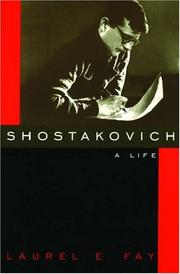
Start with Laurel Fay's Shostakovich, not with the memoir everyone argues about. Fay's is a documentary biography: it establishes what can be shown from archives, press and correspondence, and it is deliberately restrained about what the music means. Read it first and you acquire a factual baseline against which every later claim can be measured. Read the memoir first and you acquire a story, into which every subsequent fact then gets fitted.
That matters more here than for almost any other composer, because the central question — whether Shostakovich was a loyal Soviet artist, a secret dissident encoding protest in his scores, or something less tidy than either — has been argued for four decades and is not resolved. What follows is an order that presents the argument as it actually developed, with each position attributed to whoever holds it.
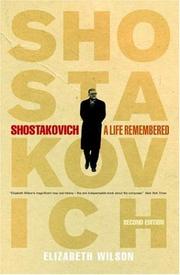
Note that two books on this path display under the bare title Shostakovich: Fay's biography and Elizabeth Wilson's very different book. Buy by author.
The documented life, and the remembered one
Fay's biography is the archival spine. Wilson's Shostakovich is the complementary volume, built from the testimony of friends, pupils and colleagues, arranged chronologically with her own connective commentary. It is the richest source of first-hand recollection in English, and Wilson is explicit that recollection decades after the fact is evidence of a particular and limited kind.
The dispute, in the order it happened
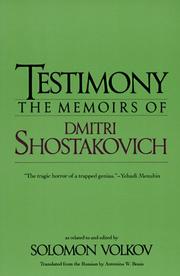
Testimony appeared in 1979, presented by Solomon Volkov as Shostakovich's memoirs, related to and edited by him. The composer in its pages is bitter, contemptuous of the Soviet regime, and reads his own symphonies as concealed protest. It changed how a generation heard the music.
The new Shostakovich by Ian MacDonald builds on that book, reading work after work as coded dissent and offering a political decoding of the symphonies and quartets. It is vivid, and it inherits whatever authority Testimony has.
Then the objections. Fay published a study of the typescript finding that the pages Shostakovich had signed were the opening page of each chapter, and that those specific pages consisted of material he had previously published elsewhere — raising the question of what exactly he had been shown and had authorised. Shostakovich Reconsidered by Allan Ho and Dmitry Feofanov is the book-length reply: they argue the recycled openings are innocuous, marshal witness statements they say corroborate the memoir's substance, and attack the sceptics' case directly. A Shostakovich Casebook, edited by Malcolm Hamrick Brown, collects the other side — Fay's work among documentary essays and translations examining the memoir's provenance.
A third objection is worth holding in mind while reading both: the argument can run in a circle. The dissident reading of the music is supported by Testimony, and Testimony is in turn defended on the grounds that the music sounds like dissent. Neither party has produced the manuscript evidence that would settle it. This path does not take a side, and readers should notice that most single books on the composer do.
Primary documents and archival research
Story of a friendship prints Shostakovich's letters to Isaak Glikman with Glikman's commentary, and it is the closest thing to unmediated Shostakovich available in English — guarded, ironic, occasionally very direct. Shostakovich and Stalin is Volkov's later argument about the composer's relationship with the regime; it is by the editor of the disputed memoir, which readers should weigh for themselves.
Stalin's music prize by Marina Frolova-Walker is the corrective a lot of this literature needs: an archival study of how the Stalin Prize committees actually deliberated, based on the minutes. It shows a system of judgement, argument and self-interest rather than a monolith, and it complicates any account in which composers simply obeyed or simply resisted.
Scholarship, the music, and two books that are not history
The Cambridge companion to Shostakovich, edited by Pauline Fairclough and David Fanning, is the survey of current scholarship across the works and the controversies. Shostakovich studies, edited by Fanning, is the more specialised collection, and it assumes you can read about musical structure.
Music for silenced voices by Wendy Lesser takes the fifteen string quartets as the way into the life — a good choice, since the quartets were less exposed to official scrutiny than the symphonies. Two books close the path and neither is scholarship: Symphony for the city of the dead by M. T. Anderson is narrative nonfiction written for young readers about the Leningrad symphony and the siege, well sourced and unusually good; The noise of time by Julian Barnes is a novel, imagining the composer's inner life across three encounters with power. Read it last, as fiction, once you know which parts are invention.
Follow the full path below to take the books in this sequence, or browse more reading paths on music and the Soviet century.
Follow the full ordered path here: Best Books on Dmitri Shostakovich, in Reading Order.