Best Books on Digital Forensics, in Reading Order
This curriculum builds deep expertise in digital forensics across four progressive stages, starting from solid intermediate-level foundations in disk and evidence handling, then advancing through memory forensics, network and mobile forensics, and finally real-world casework and professional practice. Each stage sharpens both technical skills and investigative methodology, so that by the end the reader can conduct and document a full forensic investigation from acquisition to court-ready report.
Foundations: Disk Forensics & Evidence Handling
IntermediateMaster disk acquisition, file system analysis, evidence integrity, and chain-of-custody principles — the bedrock skills every digital forensic examiner must own.
▸ Study plan for this stage
Pace: 8–10 weeks, ~40–50 pages/day (mix of dense technical content and practical labs)
- File system structures (FAT, NTFS, ext2/3/4, HFS+) and how deleted data persists in unallocated space
- Disk acquisition methods (physical vs. logical imaging) and write-blocking to maintain evidence integrity
- Chain-of-custody documentation, hashing (MD5, SHA-1, SHA-256), and evidence authentication protocols
- File carving and recovery techniques for fragmented and deleted files across different file systems
- Forensic analysis workflows: identifying artifacts, timeline reconstruction, and interpreting metadata
- Open-source forensic tools (Autopsy, The Sleuth Kit, FTK Imager alternatives) and their proper application
- Legal and procedural requirements for evidence handling, admissibility, and expert testimony
- Live system acquisition vs. dead-disk analysis trade-offs and when to use each approach
- Explain the differences between FAT, NTFS, and ext file systems in terms of metadata storage and how each handles deleted file recovery.
- What is a write-blocker, why is it essential in disk acquisition, and what happens to chain-of-custody if one is not used?
- How do you calculate and verify cryptographic hashes of forensic images, and why is hash validation critical for evidence admissibility?
- Describe the complete chain-of-custody process from acquisition through analysis to courtroom presentation.
- What is file carving, when is it necessary, and what are its limitations compared to file system-based recovery?
- Compare the capabilities and appropriate use cases for Autopsy, The Sleuth Kit, and other open-source tools covered in the readings.
- Acquire a test disk image using write-blocking hardware and open-source tools; calculate and document hashes at each step.
- Parse and analyze a FAT32, NTFS, and ext3 file system image; locate and recover deleted files from unallocated clusters.
- Create a complete chain-of-custody form for a simulated forensic case, including acquisition, analysis, and storage documentation.
- Perform file carving on a disk image using tools like Scalpel or Foremost; compare results with file system-based recovery methods.
- Build a forensic timeline from file system metadata (MAC times) and interpret anomalies that suggest user activity or tampering.
- Analyze a real-world scenario (e.g., data theft, unauthorized access) using Autopsy; document findings in a professional report with evidence references.
Next up: This stage establishes the technical and procedural foundation for evidence acquisition and initial analysis; the next stage will build on these skills by diving into specific artifact recovery (registry, logs, memory), advanced timeline analysis, and case-specific investigative techniques.

The definitive technical reference on FAT, NTFS, Ext, and other file systems. Reading this first gives you the low-level vocabulary — inodes, MFT entries, slack space — that every later book assumes you already know.

Grounds the file-system theory in practical, tool-agnostic workflows using Autopsy, Sleuth Kit, and other open tools, reinforcing acquisition and evidence-handling procedures without vendor lock-in.

Provides the procedural and legal framework — chain of custody, documentation standards, and forensic soundness — that transforms raw technical skill into court-admissible work. Read after the technical foundations so the procedures have concrete meaning.
Memory Forensics
IntermediateAcquire, parse, and analyze volatile memory to recover running processes, network connections, injected code, and artifacts that never touch the disk.
▸ Study plan for this stage
Pace: 6–8 weeks, ~40–50 pages/day with lab time
- Memory acquisition techniques (dd, FTK Imager, Volatility) and handling chain of custody for volatile data
- Virtual Address Space (VAS) layout, paging structures, and kernel vs. user-mode memory organization
- Process reconstruction: parsing EPROCESS structures, VAD trees, and PEB/TEB to identify running processes and their memory regions
- Injected code detection: identifying code caves, suspicious memory permissions, and unpacking techniques to recover in-memory malware
- Network artifact recovery: reconstructing open sockets, listening ports, and network connections from kernel structures without relying on disk artifacts
- Rootkit detection and hidden process identification through memory inconsistencies and kernel hook analysis
- Volatility framework fundamentals: plugin architecture, memory profile selection, and custom plugin development for targeted analysis
- What are the key differences between memory acquisition methods (dd, FTK Imager, Volatility), and how do you choose the right method for a given scenario?
- How do you reconstruct a process's virtual address space from memory, and what structures (EPROCESS, VAD, PEB) tell you about its memory layout and loaded modules?
- What techniques can you use to identify injected code or malware in memory, and how do you extract and analyze it?
- How can you recover network connections and open sockets from memory without relying on disk artifacts, and what kernel structures contain this information?
- What are the indicators of a rootkit or hidden process in memory, and how do you detect them using memory forensics?
- How do you develop and deploy custom Volatility plugins to extract specific artifacts from a memory dump?
- Acquire a memory dump from a live Windows system using multiple methods (dd, FTK Imager, Volatility's own acquisition tools) and compare the results for completeness and integrity
- Parse EPROCESS and VAD structures manually from a memory dump using a hex editor and Volatility to understand the underlying data structures
- Use Volatility's pslist, pstree, and handles plugins to reconstruct a process tree and identify suspicious parent-child relationships or hidden processes
- Inject shellcode into a running process using a tool like CreateRemoteThread or process hollowing, then recover and analyze the injected code from a memory dump
- Analyze a memory dump from a system with active network connections using Volatility's netscan and netstat plugins, then correlate findings with process information
- Acquire and analyze a memory dump from a system infected with a known rootkit (e.g., in a lab environment), identifying hidden processes and kernel hooks
- Write a custom Volatility plugin to extract a specific artifact (e.g., clipboard contents, browser history, or registry hives) from a memory dump
Next up: This stage equips you with the ability to extract and analyze volatile artifacts from memory, setting the foundation for the next stage where you'll integrate memory findings with disk-based forensics and develop a complete incident response timeline.
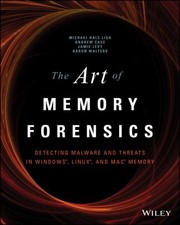
The canonical, comprehensive guide to Windows, Linux, and Mac memory analysis using the Volatility framework. It is placed here — after disk fundamentals — because understanding process structures and kernel objects requires the OS-level intuition built in Stage 1.
Network & Mobile Forensics
IntermediateReconstruct network intrusions from packet captures and logs, and extract digital evidence from iOS and Android devices including app data, call records, and location artifacts.
▸ Study plan for this stage
Pace: 8–10 weeks, ~40–50 pages/day. Allocate 4–5 weeks to "Network Forensics" (450–500 pages), then 4–5 weeks to "Android Forensics" (350–400 pages). Include 1–2 weeks for hands-on labs and integration.
- TCP/IP stack fundamentals and packet structure analysis for forensic reconstruction of network communications
- Packet capture tools (tcpdump, Wireshark) and log parsing techniques to identify intrusion artifacts and timeline events
- Network intrusion indicators: suspicious ports, protocols, payloads, and anomalous traffic patterns that reveal attack vectors
- Android architecture, file systems (ext4, YAFFS2), and the role of SQLite databases in storing app data, contacts, and call records
- Forensic acquisition methods for Android devices: logical extraction, physical extraction, and handling locked/encrypted devices
- Location artifacts in Android: GPS data, cell tower logs, Google Location Services, and third-party app location caches
- App data forensics: extracting evidence from WhatsApp, Telegram, Facebook, and other messaging apps via shared preferences and database files
- Chain of custody, evidence integrity, and documentation standards for both network and mobile forensics investigations
- How would you reconstruct a multi-stage network intrusion using packet captures and system logs, and what artifacts would indicate lateral movement?
- What are the key differences between logical and physical Android device acquisition, and when would you use each method?
- How do you extract and interpret location artifacts from an Android device, including GPS traces, cell tower associations, and app-based location data?
- Describe the forensic significance of SQLite databases in Android apps—which databases would you prioritize for a social media investigation?
- What network indicators (ports, protocols, packet signatures) would you look for to identify command-and-control (C2) communications in a pcap file?
- How would you handle evidence from an encrypted or locked Android device, and what are the legal and technical constraints?
- Analyze a provided pcap file using Wireshark to identify suspicious traffic patterns, extract HTTP requests/responses, and document the timeline of attacker activity.
- Parse network logs (firewall, proxy, DNS) to correlate events with packet capture data and reconstruct a complete intrusion narrative with IOCs (indicators of compromise).
- Perform a logical acquisition of an Android test device using adb (Android Debug Bridge) and extract the data directory; parse SQLite databases to recover deleted messages and contacts.
- Extract location artifacts from an Android device's Google Location Services database and map GPS coordinates to a timeline; cross-reference with cell tower logs if available.
- Recover app data from a messaging application (WhatsApp, Signal, or Telegram) on an Android device, including encrypted message metadata and media file artifacts.
- Document a complete forensic investigation chain of custody for both a network intrusion case (pcap + logs) and a mobile device seizure, including hashing and integrity verification.
Next up: This stage equips you with the ability to reconstruct both network-level attacks and extract mobile device evidence, preparing you to integrate these findings into a cohesive digital forensics investigation and advance to cloud forensics, IoT device analysis, or advanced incident response techniques.

Covers packet-level analysis, protocol reconstruction, and log correlation in a case-driven style. Reading it after memory forensics means you can correlate network IOCs with in-memory artifacts for a complete picture.

Mirrors the iOS book for the Android ecosystem, covering logical and physical acquisition, the Dalvik/ART runtime, and key app artifacts. Reading both mobile titles back-to-back builds a platform-agnostic mobile forensics methodology.
Advanced Casework & Professional Practice
ExpertIntegrate all prior skills into end-to-end investigations, write defensible forensic reports, handle anti-forensics, and understand the legal and ethical obligations of expert testimony.
▸ Study plan for this stage
Pace: 8–10 weeks, ~40–50 pages/day, with 1–2 weeks allocated per major section (evidence handling, chain of custody, report writing, anti-forensics, legal/ethical frameworks)
- End-to-end digital investigation workflow: from initial response through evidence collection, analysis, and reporting
- Chain of custody documentation and evidence integrity maintenance as legal and technical requirements
- Forensic report writing standards: clarity, objectivity, reproducibility, and defensibility in court
- Anti-forensics techniques (data hiding, encryption, obfuscation, log tampering) and countermeasures
- Expert witness testimony: qualification, admissibility standards (Daubert/Frye), cross-examination preparation, and ethical obligations
- Legal frameworks governing digital evidence: admissibility rules, search and seizure law, privacy considerations, and jurisdiction-specific requirements
- Incident response integration: coordinating forensic investigation with live response, preservation, and containment
- Ethical obligations: impartiality, scope management, avoiding bias, and professional responsibility in adversarial contexts
- What are the critical steps in preserving digital evidence from the moment of discovery through final report delivery, and how does chain of custody documentation support legal admissibility?
- How do you structure a forensic report to withstand cross-examination, and what elements make it defensible in court?
- What are the main anti-forensics techniques discussed in the literature, and what forensic countermeasures can detect or overcome them?
- What are the Daubert or Frye standards for expert testimony, and how do you qualify as an expert witness in digital forensics?
- How do incident response and forensic investigation overlap, and what are the key coordination points between live response and post-incident analysis?
- What legal and ethical obligations apply to digital forensic examiners, and how do you maintain impartiality when working for prosecution or defense?
- Write a complete chain of custody form for a seized hard drive, including initial acquisition, storage, transfer, and analysis phases; review it against Casey's evidence handling standards
- Draft a mock forensic report (5–8 pages) on a simulated case (e.g., email fraud, data theft), following professional structure: executive summary, methodology, findings, conclusions, and limitations; have a peer review it for clarity and defensibility
- Conduct a live-response simulation: document volatile data collection (memory, network connections, running processes) before powering down a system, then perform forensic imaging; compare the two datasets to identify what was lost
- Research and document 3–5 anti-forensics techniques (e.g., encrypted containers, log deletion, steganography) and design forensic approaches to detect or recover evidence despite these obstacles
- Prepare a mock expert witness testimony outline for a hypothetical case, including qualification statement, methodology explanation, findings presentation, and anticipated cross-examination questions
- Analyze a real-world incident response case study (from Casey or Luttgens) and map it to legal requirements: identify search warrant scope, chain of custody gaps, and report defensibility issues
Next up: This stage equips you to conduct and defend complete investigations; the next stage would typically focus on specialization (e.g., mobile forensics, cloud forensics, malware analysis) or advanced topics like large-scale incident response and automation in forensic workflows.
The most thorough treatment of how digital evidence is evaluated legally and scientifically. It ties together disk, memory, network, and mobile evidence into a unified investigative and legal framework — best absorbed after hands-on technical experience.

Bridges forensics and incident response with real case workflows, triage decisions, and report writing. It is the capstone read: every technique from earlier stages appears here in the context of a live investigation under time and legal pressure.
Discussion
Keep reading
Paths that share books, cover the same subject, or open a related topic.