Daphne du Maurier Reading Order: Where to Start
Du Maurier spent her career being filed as a romantic novelist and spent most of it writing something closer to psychological horror, so the reading order that works is the one that moves you steadily away from the romance label. Start with Rebecca and My Cousin Rachel, the two novels built on an identical trick — a narrator who cannot establish whether the woman at the centre is guilty — then the Cornish adventure novels, then the short stories, which are where she is most openly frightening. The late novels are the deep end and are best kept for last.
Start Here: The Two Unreliable Narrators
BeginnerMeet du Maurier's central device — a narrator whose account you slowly stop trusting — and see it done twice, thirteen years apart.
▸ Study plan for this stage
Pace: 3 weeks, ~35 pages a day. Rebecca (386 pages) in about eleven days, My Cousin Rachel (348 pages) in ten. Read them back to back with nothing in between — the second book depends on you remembering exactly how the first one withheld information.
- She is sold as a romantic novelist and is not one. The pastel covers and the shelving next to love stories are a marketing decision that has outlived her, and a reader who arrives expecting romance has picked up the wrong book — both novels here are gothic suspense running on dread.
- The engine in both is a narrator who cannot establish whether the woman at the centre is guilty, and who keeps acting as though the question is settled while telling you it is not.
- Rebecca's narrator is never named. That is not a flourish — the missing name is the argument, a woman occupying a position rather than a life, with the dead first wife still holding the title.
- My Cousin Rachel ends without telling you the answer, permanently. There is no clue you missed and no last chapter that resolves it; if you need resolution, know that before you start rather than at page 348.
- Maxim's confession arrives halfway through Rebecca and quietly moves the moral ground — the second half asks you to want something you would not have wanted in the first half, and it is worth noticing that you do.
- Manderley and the Cornish coast are not backdrop. Weather, distance and the state of a house carry as much of the menace as any character does.
- Rebecca's plot has leaked into so much later fiction and film that the only way to be surprised by it is to get there before the imitations spoil it for you.
- At what page do you stop believing the narrator of Rebecca, and what specifically breaks the trust?
- After Maxim's confession, what does the novel want you to hope for? Are you comfortable hoping for it, and does the book care whether you are?
- In My Cousin Rachel, separate what Philip actually knows about Rachel from what he infers. How large is the gap, and how early does it open?
- Rachel's guilt is never settled. Which way did you decide, and which single passage did the work?
- Neither book delivers a love story with a satisfying shape. What is each one offering instead, and why did the marketing never say so?
- Keep a two-column list while reading My Cousin Rachel: evidence against Rachel on one side, innocent explanations on the other. Whichever column you find yourself padding tells you about your reading, not about her.
- Reread the first two chapters of Rebecca after finishing it. They are set after everything, and they tell you where everyone ended up if you now know how to read them.
- Mark the page in Rebecca where the book stops being about a nervous second wife and becomes a suspense novel. Most readers can name it exactly.
- Look at the cover of whichever edition you own, then write one sentence describing the book to someone who has not read it. If your sentence does not match the cover, you have the mis-selling problem in front of you.
Next up: Both books put a house and a coastline at the centre of the dread; the Cornish novels show you how much of that was coming from the landscape all along.
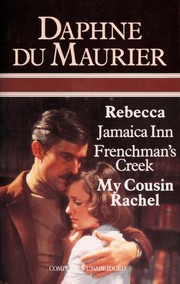
The obvious and correct first book: an unnamed second wife, a dead first one, and a housekeeper who will not let her go. Read it before anything else — its plot has leaked into so much later fiction that the only way to be surprised by it is to get there early.

The same trick, sharper: a young man convinced his cousin's widow is a murderer, narrating a case he cannot prove. Read it second, because the pleasure is in recognising the shape from Rebecca and still not knowing the answer at the end.
The Cornish Novels
BeginnerRead the adventure novels that built her popular reputation, and see how much of her power comes from landscape.
▸ Study plan for this stage
Pace: 2 to 3 weeks, ~30 pages a day. Jamaica Inn (304 pages) in ten days and Frenchman's Creek (277 pages) in nine. Both move faster than the first stage — Jamaica Inn is an adventure story and behaves like one.
- Jamaica Inn was written before Rebecca and it shows: the villain is signposted from his first appearance, the moral scheme is simple, and the plotting is cruder than anything in the first stage.
- The moor does the job the unreliable narrator does elsewhere. When you feel afraid in this book, check what the prose was describing — it is usually weather, distance or dark rather than a person.
- Frenchman's Creek genuinely is a romance, the one book of hers that is, and she knew it. Read it here as the exception that shows what the other novels are deliberately refusing to give you.
- The exception is instructive because nobody in it is lying to you: the pirate is charming, the bargain is stated, the danger is external. That is exactly the reassurance Rebecca and My Cousin Rachel withhold.
- Escape is her permanent subject and Dona says it plainly here — a woman bored by domestic life who wants out — where Rebecca's narrator can only imply it.
- Neither of these is her best work, and treating them as the introduction is a large part of why the romance label stuck to her for fifty years.
- The uncle in Jamaica Inn is obviously a monster from the start. What tension is left once you know that, and where does the novel find it?
- Track where your fear comes from in Jamaica Inn — the people or the moor. Which one is on the page at the moments that actually work?
- Dona leaves her family for a pirate and the novel declines to punish her. How does du Maurier get that past a 1941 reader, and what does she give up to do it?
- Frenchman's Creek is warmer and lighter than everything else on this path. Does that make it a worse book? Answer without appealing to seriousness as a virtue.
- What does Cornwall supply these novels that another coastline would not?
- Note every weather passage in Jamaica Inn and check how many arrive immediately before something bad happens. The correlation is not subtle.
- Read the first chapter of Jamaica Inn and the first chapter of Rebecca one after the other. Two years of development are visible inside a single page.
- Write down the moment in Frenchman's Creek when you decide what Dona will choose, then check it against what she does.
- Pick the scene in either novel you would use to argue she is not a romantic novelist, and one you would use to argue she is. Both exist in this stage, which is the honest position.
Next up: The novels keep the horror half-hidden behind plot and landscape; in the short stories she stops hiding it entirely.
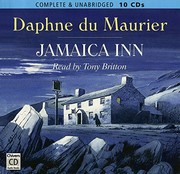
Wreckers on Bodmin Moor, an orphan delivered to an uncle who is plainly a monster, and weather doing half the work. Written before Rebecca and much cruder, but the moor is as good as anything she did.
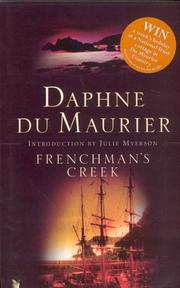
A bored aristocrat and a French pirate on the Helford river — the one book of hers that really is a romance, and she knew it. Read it here as a palate-cleanser and as the exception that shows what the other novels are refusing to do.
The Short Stories
IntermediateMeet the writer the novels only hint at, in the form where she is nastiest and most economical.
▸ Study plan for this stage
Pace: 2 weeks, roughly one story per sitting. The Birds and Other Stories (256 pages) and Don't Look Now and Other Stories (268 pages) are short, but do not read three in a row. Each is built to land in one sitting and they blur badly when stacked.
- This is where the horror is undisguised. If you have been wondering why anyone files her with horror writers, the answer is in these two books rather than in any of the novels.
- The Birds is nothing like the Hitchcock film. It is set on a Cornish farm rather than in California, there is no romance plot, no explanation is offered and no rescue arrives, and it ends with the situation getting worse.
- Don't Look Now is genuinely frightening rather than merely atmospheric, and its last two pages are the most brutal thing she wrote. Do not read it last thing at night if that matters to you.
- The short form suits her better than the novel in one specific way: she never has to explain, and explanation is precisely what weakens Jamaica Inn.
- The Apple Tree, in the first collection, has no supernatural content at all and is arguably nastier than The Birds — the cruelty is entirely between a husband and a dead wife's memory.
- Check what your edition actually contains. These collections have been reissued under different titles with different contents, and it is easy to buy the same stories twice.
- A Border-Line Case in the second collection is late du Maurier at her most ferocious, and it is the clearest evidence that she had stopped caring whether readers found her likeable.
- The Birds never explains why the birds attack. What does the story gain from the refusal, and what would one paragraph of explanation cost it?
- In Don't Look Now, how much have you actually been told about the couple's dead child, and how much of your reaction is assembled from things the story only implies?
- The Apple Tree has no supernatural element. Is it a horror story, and if so, what makes it one?
- Which of these stories would collapse at novel length, and what specifically would break?
- Go back to your impression of Rebecca now. Which book does it look like from here?
- Read The Birds in one sitting, then recall or rewatch the film and write down the three biggest changes. Each one is a decision to make the story safer.
- Check the contents pages of both collections before you start. You may already own one of these stories under a different cover.
- Mark the last line of Don't Look Now, then reread the story's opening paragraph immediately. The joke in the first lines is not a joke.
- For one story, write out the explanation du Maurier declines to give. Then decide whether you would actually want it in the text.
Next up: The stories strip her interest in identity and dissolution down to its bones; the late novels put it back inside long fiction and push it further than the stories can.
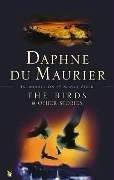
The title story is set in Cornwall, not California, and is far bleaker than Hitchcock's version — no explanation, no rescue. The collection also holds Monte Verita and The Apple Tree, and it is where most readers realise she was a horror writer.

Late stories, including the Venice novella and the ferocious A Border-Line Case. Read it after The Birds; these are the work of someone who has stopped caring whether you find her likeable.
The Deeper Cuts
BeginnerFinish with the strange later novels and the first one, where the identity obsession running through everything is at its most naked.
▸ Study plan for this stage
Pace: 6 weeks, ~35 pages a day. The Scapegoat (348 pages) and The House on the Strand (326 pages) take about ten days each, The King's General (371 pages) eleven, The Loving Spirit (353 pages) ten. Keep The Loving Spirit for last however you order the other three — it is her first novel and works as an or
- One idea runs under all four: a self that can be swapped, escaped or dissolved. Read in this order it stops looking like variety and starts looking like an obsession.
- The Scapegoat was her own favourite of her books, and it is the purest statement of that obsession — a man meets his exact double and simply takes over the other life, family included.
- The House on the Strand is about addiction at least as much as time travel. The narrator keeps taking the drug long after the damage is obvious, and the ending is about the drug rather than the fourteenth century.
- The King's General is the outlier and the best corrective to anyone still holding the romance label: real Civil War history, a real house, a narrator who uses a wheelchair, and a hero who is genuinely unpleasant.
- The Loving Spirit was written at twenty-two and it is uneven — four generations at a pace she had not yet learned to control — but the coastline, the family saga and the preoccupation with the dead are all already there.
- These are her least-read books and the secondary material thins out accordingly. Expect worse cover copy, fewer good introductions, and editions that describe them inaccurately.
- They are placed last because they assume the pattern. Coming to The Scapegoat first, you would read a curious thriller; coming to it ninth, you read the book everything else was circling.
- In The Scapegoat, why does John accept the substitution so readily, and what does the novel think that willingness says about him?
- At what point does The House on the Strand stop being about the past? Name the scene.
- Honor Harris narrates The King's General from a wheelchair. What can she see, say and do that a conventional du Maurier heroine could not?
- What is present in The Loving Spirit that recurs in every later book on this path, and what is missing that she clearly learned afterwards?
- Across nine books, state du Maurier's actual subject in one sentence — a sentence that would not describe a romantic novelist.
- Keep a one-page family tree for The Loving Spirit. Four generations reuse the same names and it is genuinely easy to lose track of who is who.
- After The Scapegoat, list the things John does that the real Jean would not have done. That list is the novel's argument about how much of a person is circumstance.
- Set the ending of My Cousin Rachel beside the ending of The Scapegoat and describe exactly what each one refuses to settle.
- Write the two-sentence case for the du Maurier you would hand someone who has just told you they do not like romance novels.
- Reread the first page of Rebecca last of all. From here it reads as a ghost story rather than as an opening.
Next up: That is her range end to end, romance label to undisguised horror, and you can now place anything of hers you have not read — the remaining stories, the plays, the biographies — inside twenty pages.

An Englishman meets his exact double in a French bar and wakes up living the other man's life and family. Her own favourite among her books, and the purest statement of her interest in identity as something detachable.
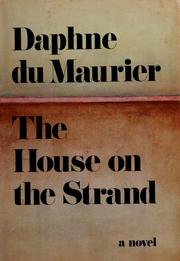
A drug that lets a man walk through fourteenth-century Cornwall while his own life collapses in the present. Read it after The Scapegoat — it is the same escape-from-yourself idea taken to its logical, addictive conclusion.

The Civil War in Cornwall, a real house, a disabled narrator and a genuinely unromantic hero. The best of the historical novels and a useful reminder that she did the research.
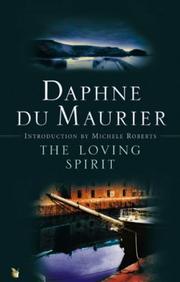
Her first novel, four generations of a Cornish boatbuilding family, written at twenty-two. Read it last: it is where the coastline, the family sagas and the obsession with the dead all begin, and it is much more interesting as an origin than as an introduction.
Discussion
Keep reading
Paths that share books, cover the same subject, or open a related topic.