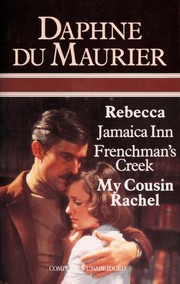
Start with Rebecca, and read My Cousin Rachel immediately after it with nothing in between. The second book depends on your remembering exactly how the first one withheld information, and the pair together makes the case that gets lost on the shelf: she is sold as a romantic novelist and she is not one. The pastel covers are a marketing decision that has outlived her, and a reader who arrives expecting a love story has picked up the wrong book.
The engine in both is a narrator who cannot establish whether the woman at the centre is guilty, and who keeps acting as though the question is settled while telling you it is not. Rebecca's narrator is never named, which is the argument rather than a flourish: a woman occupying a position rather than a life, with the dead first wife still holding the title. Maxim's confession lands halfway through and quietly moves the moral ground — the second half asks you to want something you would not have wanted in the first half, and it is worth noticing that you do.
Be warned about the ending of My Cousin Rachel. It does not tell you the answer, permanently. There is no clue you missed and no last chapter that resolves it. If you need resolution, know that before you start rather than at page 348.
The Cornish novels
Jamaica Inn and Frenchman's Creek. Both are commonly recommended as entry points and both are why the romance label stuck to her for fifty years. Jamaica Inn was written before Rebecca and it shows: the villain is signposted from his first appearance, the moral scheme is simple, and the plotting is cruder. The moor does the work the unreliable narrator does elsewhere, so when you feel afraid in it, check what the prose was actually describing — it is usually weather, distance or dark rather than a person.
Frenchman's Creek genuinely is a romance, the one book of hers that is, and she knew it. Read it here as the exception that shows what the other novels are deliberately refusing to give you: nobody in it is lying to you, the pirate is charming, the bargain is stated, the danger is external.
The short stories
The Birds and Other Stories and Don't Look Now and Other Stories. This is where the horror is undisguised, and the answer to why anyone files her with horror writers. Read roughly one story a sitting; they are built to land in one and blur badly when stacked.
The Birds is nothing like the Hitchcock film — a Cornish farm rather than California, no romance plot, no explanation, no rescue, and an ending in which the situation gets worse. Don't Look Now is genuinely frightening rather than atmospheric, and its last two pages are the most brutal thing she wrote. Check what your edition contains before you buy: these collections have been reissued under different titles with different contents, and it is easy to end up owning the same story twice.
The late books
The scapegoat, The house on the strand, The King's General, and The Loving Spirit last of all. One idea runs under all four — a self that can be swapped, escaped or dissolved — and read in this order it stops looking like variety and starts looking like an obsession.
The scapegoat was her own favourite and is the purest version: a man meets his exact double and simply takes over the other life, family included. The house on the strand is about addiction at least as much as time travel; the narrator keeps taking the drug long after the damage is obvious. The King's General is the best corrective to anyone still holding the romance label — real Civil War history, a narrator who uses a wheelchair, and a hero who is genuinely unpleasant. The Loving Spirit was written at twenty-two, is uneven, and works as an origin rather than an introduction, so keep it for the end.
These are her least-read books and the secondary material thins out accordingly: expect worse cover copy, fewer good introductions, and editions that describe them inaccurately.
Where to stop
Rebecca, My Cousin Rachel and the two story collections are the writer at full strength. Go further only if the pattern has started to interest you more than the plots. More classic fiction reading orders are on Discover.
Follow the full ordered path here: Daphne du Maurier Reading Order: Where to Start.