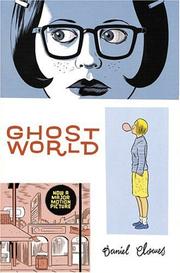
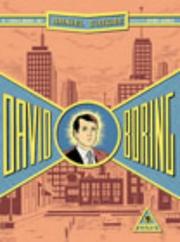
Start with Ghost World, then read David Boring immediately after. That pairing is the whole recommendation. Ghost World is where almost everyone arrives — two teenage girls in a nowhere suburb, drifting apart over one summer — and it is still the best entry point, but it is also his warmest and least formally strange book. David Boring is the same voice pushed somewhere much odder: a noir-shaped story about obsession that keeps stopping to comment on its own shape. Between them you will know whether you want the rest.
It helps to know what the register is before you start. Clowes writes deadpan dialogue and ugly comedy, and he does not defend his characters. Ghost World was serialised in his comic book Eightball before it was collected, which is why it reads as a run of scenes rather than a plot — a feature of how he works rather than a flaw in that particular book.
The Eightball years
Go backwards next, into the comic he serialised through the late eighties and nineties, where both the surreal early mode and the satirical one come from. Like a velvet glove cast in iron is his first long work, ten issues of Eightball, and by some distance the most dreamlike thing he has made — the plot logic is deliberately unrecoverable, so read it first in this stage and the later precision will register as a choice rather than a default. Pussey! is a savage serial about a comics fan turned comics professional and his most direct writing about the industry he works in; it is short, funny, and useful context for the disdain running under everything after. Caricature collects the standalone short stories from the same period, where he tested the tonal shifts that structure the later novels. Twentieth century eightball gathers the gag strips, parodies and one-page pieces, including most of the material his reputation for cruelty rests on.
Taking the form apart
Three books where the page layout, the colour and the strip format become the subject rather than the delivery mechanism. Ice haven tells a small town through a couple of dozen separate strips, each in a different style and register, that only add up to a crime story if you assemble them yourself; it is the clearest demonstration of what Clowes means by structure. The Death-Ray is a superhero origin told with the genre's colour palette and none of its morality — a boy gets a weapon and uses it badly — and it applies the same formal trickery to a single sustained narrative. Mister wonderful is a blind date told in wide letterboxed panels because it was originally serialised as a newspaper strip; it is short, and the most sympathetic thing in his bibliography.
The late books
Wilson is seventy-odd single-page strips about one insufferable man, each drawn in a different style, each ending on a punchline that is not funny — the gag-strip form turned into a novel. Patience is his first outright science fiction, a time-travel story about a widower, in fluorescent colour and at full length; the emotional directness is new and it lands harder after the cold books. Monica is nine linked stories in nine genres that assemble into one woman's life across the American twentieth century. It is his most difficult and most ambitious book and the right place to finish.
For completists only
The Complete Eightball 1-18 is a two-volume boxed reprint of the first eighteen issues exactly as published, letters pages and covers included. It overlaps heavily with the collections above, so its value is the running context rather than new material. Read it last, if at all.
Do you need to read in order?
Not strictly. Clowes works almost entirely in standalone graphic novels rather than a numbered series, so there is nothing to keep track of between books. The order here is chronological within each stage and exists for a different reason: his career runs from deliberate incoherence through formal experiment to a late plainness, and reading it that way makes each stage legible as a decision. Start with Ghost World and David Boring regardless. More comics reading paths are on Discover.
Follow the full ordered path here: Daniel Clowes Reading Order: Where to Start and What Order to Read His Comics In.
Ready to learn something deeply?
Build a reading path — free