Robert Langdon books in order: where to start with Dan Brown
Dan Brown has written a small enough body of work that you can read all of it, and the only real question is order. The Robert Langdon novels run in a clear internal sequence that the films scrambled — Angels and Demons comes first, The Da Vinci Code second — and the two early technothrillers stand outside it entirely. This path takes the Langdon books in publication order, which is also their internal chronology, then circles back to the standalones. One standing caveat applies throughout: the novels present art-historical, religious and scientific claims as fact in the front matter, and historians and scientists have disputed a great many of them, so read the thrillers as thrillers.
Start Here: The First Two Langdon Novels
BeginnerMeet Robert Langdon in the correct order and see the formula the rest of the series runs on: one night, one city, one secret society, chapters that end mid-scene.
▸ Study plan for this stage
Pace: Two to three weeks, one novel a week. Both run long in print but the chapters are two to four pages and the pace makes them fast reading. Read Angels and Demons first: it precedes The Da Vinci Code both in publication and in Langdon's internal chronology, whatever the film release order suggests. An
- The Langdon formula: a twenty-four-hour clock, one city, one secret organisation, and a symbolic puzzle chain
- Short chapters ending mid-scene as the primary pacing device
- The symbologist as an exposition machine - a protagonist whose profession is explaining things to the reader
- The female expert co-lead who supplies the second body of knowledge and the personal stake
- The trusted-mentor reversal that both books use at the same structural point
- Setting as guided tour: real churches, real institutions, real routes, with the fiction laid over them
- The FACT page convention and the disputes it has attracted
- What is the recurring shape of the antagonist reveal in both books, and at what page fraction does it land?
- How much of the plot is solved by Langdon's knowledge and how much by coincidence or convenient access?
- Which claims from the FACT pages are load-bearing to the plot, and which are decoration you could cut?
- Why does reading order matter here, given that each novel resolves its own plot?
- What does Brown do with real locations that a wholly invented setting would not allow?
- Count the chapters in Angels and Demons and compute the average length, then note for ten consecutive chapters exactly where the break falls relative to the scene
- List every clue in The Da Vinci Code in order and mark each as solved by Langdon's expertise, by another character, or by luck
- Chart the twenty-four-hour timeline of Angels and Demons hour by hour and check whether the physical movements are possible in the time given
- Take one disputed claim from either FACT page, read what a historian has written about it, and then decide whether the plot survives without it
Next up: With the formula visible from its two strongest executions, the rest of the sequence is worth reading partly to watch that formula hold, stretch and occasionally sag.

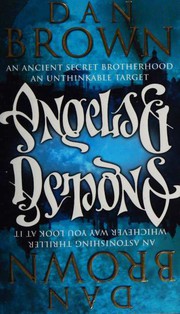
The first Langdon novel and the correct entry point, whatever the film release order suggests — the Vatican and the Illuminati, with CERN antimatter as the ticking clock. Catalogued under both 'Angels and Demons' and the ampersand form 'Angels & Demons'; they are the same novel.
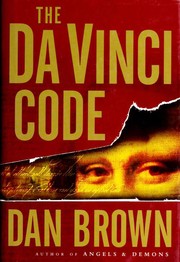
The book that made him, and a direct sequel in the sense that Langdon is already the man Angels and Demons made him. Its claims about Leonardo, the Priory of Sion and early Christianity were contested at length by historians on publication; the plotting is the reason to read it.
The Rest of the Langdon Sequence
BeginnerFinish the series in order and get a feel for how the formula holds up — and where it slackens — across twenty years.
▸ Study plan for this stage
Pace: 7-9 weeks. The Lost Symbol, Inferno, Origin and The Secret of Secrets each run 550-700 pages and take a week and a half at normal pace, though the chapter structure makes them faster than the count suggests. Read them in that order - it is both publication and internal order. Two edition notes: the
- Formula drift across twenty years: how much of the original structure survives and which parts loosen
- The rotating science topic - noetic science, transhumanism and population, artificial intelligence and religion, consciousness research
- The antagonist with a thesis: the villain as the character who has the argument, and the plot as the rebuttal
- Inferno's amnesia device, which withholds from Langdon and so from the reader
- The institution as setting: the Capitol, Florence's museums, the Guggenheim Bilbao, Prague
- Where the sequence is weakest, and what the weak books have in common
- What structural element does Inferno add that the first four books do not have, and what does it buy?
- Why does the noetic-science material in The Lost Symbol carry less charge than the Vatican or the Louvre did?
- How does the antagonist's argument change across the four books, and does the plot ever concede any of it?
- Which of Origin's claims about artificial intelligence were plausible when it was written in 2017, and which read differently now?
- After six books, what exactly is the formula - can you state it in five lines?
- Build a table of all six Langdon novels with columns for city, institution, organisation, ticking clock, co-lead and reveal, and read the formula off it
- Take the opening fifty pages of Inferno and mark precisely what Langdon does not know, then note where each gap is filled
- Time yourself over the first fifty pages of each of the four books in this stage and record where the hook lands in each
- Write down Origin's specific predictions about AI and check each against what has actually happened since 2017
- Compare the reveal in The Lost Symbol with the reveal in Angels and Demons and identify what makes one land harder
Next up: With the series finished, the two pre-Langdon technothrillers show the same machinery being assembled before Brown found the character to hang it on.
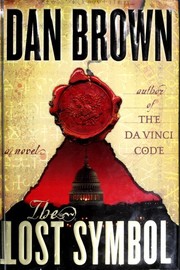
Washington DC and Freemasonry. The weakest of the sequence by most readers' accounts — the noetic-science thread does not carry the same charge as the Vatican or the Louvre — but it is next in order and there is no reason to skip it if you are reading the series through.
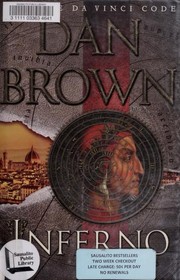
Florence, Dante and a population-control plot; a return to form after The Lost Symbol, and structurally the most inventive of the later books because of what Langdon does not know at the start.
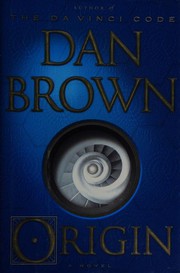
Spain, the Guggenheim Bilbao and a confrontation between religion and artificial intelligence. Read fifth. Open Library's record carries a wrong publication year; this is the 2017 novel, the fifth Langdon book.

The sixth and most recent Langdon novel, set in Prague around consciousness research. Placed last because it assumes you know the character; a very recent release, so library availability may lag the rest of the series.
The Standalones, Which Sit Outside the Series
BeginnerRead the two pre-Langdon technothrillers and understand why they are not part of the sequence at all.
▸ Study plan for this stage
Pace: Two to three weeks. Digital Fortress (447 pp) and Deception Point (559 pp), a week each, read after the series rather than before - they are earlier and rougher, and reading them first gives a misleading impression. Neither has any connection to Langdon. Digital Fortress's treatment of cryptography
- The pre-Langdon machinery: a code, an agency, a conspiracy, a countdown - present but not yet running smoothly
- The female scientist protagonist carrying the book before Langdon existed to carry it
- The technothriller register versus the symbologist novel, and what changed between 1998 and 2000
- Deception Point's Arctic and NASA set pieces, and the political-thriller shape underneath
- The recurring structural furniture that later books reuse in different clothes
- Where the specialist criticism of the cryptography lands, and which parts of the plot depend on it
- What is present in Digital Fortress that becomes the Langdon formula, and what is missing?
- How does Brown handle exposition before he has a professor to deliver it?
- Which set pieces in Deception Point reappear, relocated, in the Langdon books?
- Which cryptographic claims in Digital Fortress does the plot actually require to be true?
- Is either standalone better than any book in the Langdon sequence, and by what measure?
- Read the first chapter of Digital Fortress and the first of Angels and Demons back to back and list every craft difference between the two
- Identify the three set pieces in Deception Point that later Langdon novels reuse in a different setting, and name the later equivalents
- Write down each cryptographic claim Digital Fortress makes and check it against any introductory account of public-key cryptography
- Compare how each of the two standalones opens its conspiracy against how The Da Vinci Code does, and note what the later book cut
Next up: That is the fiction complete; one book remains in the bibliography that is not a thriller at all, and is worth knowing about only so a catalogue listing does not confuse you.
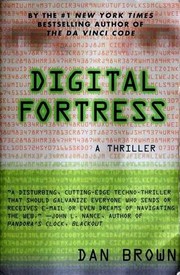
His first novel, an NSA cryptography thriller with no connection to Langdon. Read it after the series rather than before — it is where the code-and-conspiracy machinery is being assembled and not yet running smoothly, and its treatment of cryptography drew heavy criticism from people who work in the field.
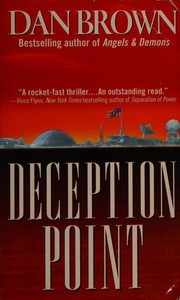
A NASA-meteorite conspiracy set largely in the Arctic, and the closest he has come to a straight political thriller. Independent of everything else here; read it if you liked Digital Fortress.
The Outlier
BeginnerKnow that the bibliography contains one book that is not a thriller at all, so you are not surprised by it in a catalogue.
▸ Study plan for this stage
Pace: An afternoon. Wild Symphony (44 pp) is an illustrated children's picture book, illustrated by Susan Batori, with a companion musical score that plays alongside the pages. It is included here for bibliographic completeness rather than as a stage in any reading order - it has nothing to do with the no
- The book is a children's picture book with animal characters, each attached to a short musical movement
- Susan Batori is the illustrator; Brown wrote the text and the music
- Brown released music commercially before he published fiction, which the novels' recurring interest in music and mathematics reflects
- There is no connection of character, setting or continuity to any novel
- Why completist bibliographies and catalogues list it beside the thrillers, and why that misleads
- Does anything in the book connect to the novels other than the author's name?
- What does Brown's pre-1998 music career explain about the CERN, Vatican-choir and cryptographic-music material in the thrillers?
- Why does this book appear in bibliographies of a thriller writer at all?
- Would you shelve it with the novels, and what would that decision be based on?
- Read it in one sitting with the accompanying music playing and note which animal each movement belongs to
- Compare its page-turn rhythm with a chapter break in Angels and Demons - both are engineered pauses, for very different readers
- Look up Brown's pre-1998 music releases and place them on a timeline against his novels' publication dates
Next up: That completes the bibliography; from here the natural continuation is other conspiracy-and-cipher thrillers, or the historical and art-historical sources the novels borrow from and rearrange.

An illustrated children's picture book with accompanying music, illustrated by Susan Batori. Included only for completeness — it has nothing to do with the novels and is not a stage in the reading order in any meaningful sense.
Discussion
Keep reading
Paths that share books, cover the same subject, or open a related topic.