Robert Langdon Reading Order: Where to Start with Dan Brown
Dan Brown wrote Angels and Demons first, in 2000, and almost nobody read it — then The Da Vinci Code sold eighty million copies in 2003 and the earlier book was reissued and became a bestseller in its turn, which is why so many readers meet Langdon in the wrong order. This path settles it: read them as written, because Angels and Demons introduces Langdon from scratch and The Da Vinci Code does not. It then adds Brown's two non-Langdon thrillers and the real books the plots are assembled from.
Start Where Langdon Started
BeginnerRead the first two Langdon novels in the order Brown wrote them. ORDER CHOSEN: publication order by original date, not by fame or by US reissue date. Angels and Demons appeared in 2000 and sold poorly; The Da Vinci Code followed in 2003 and made the earlier book a bestseller retroactively. Written order wins because the first book does the work of introducing Langdon, his method and the symbology conceit, and the second assumes it.
▸ Study plan for this stage
Pace: Two to three weeks for 1,064 pages. Angels & Demons is 575 pages and The Da Vinci Code 489, and both are built out of very short chapters with a cliffhanger at nearly every break, so they read far faster than those counts imply — many readers finish either in three or four evenings. Read them in thi
- The Langdon formula: a twenty-four-hour clock, one city, one institution, a murdered expert and a chase through real locations
- Short chapters ending on a reversal as the pacing engine, and how many of those reversals are genuine
- Symbology as a fictional discipline — what it lets a protagonist do that a historian could not
- Ambigrams, anagrams and puzzles as the plot's connective tissue rather than as decoration
- The mixture of documented fact, contested claim and outright invention presented in a single register
- Why the second book is better constructed than the first despite the first doing more setup
- Count the chapter endings in the first hundred pages of Angels & Demons that are real reversals and the ones defused on the next page. What ratio does Brown run?
- Langdon's expertise repeatedly delivers exactly the fact the plot needs. Where does that stop being plausible, and does it matter?
- The Da Vinci Code opens with an assertion that its descriptions of documents and rituals are accurate. What work is that page doing?
- Both novels put a religious institution in the antagonist's role. Are the two treatments the same, and where do they differ?
- Reading them in written order, what specifically does The Da Vinci Code assume you already have?
- Keep a running list of factual claims from The Da Vinci Code that you would not previously have doubted; the list is the input to the last stage of this path.
- Time yourself over fifty pages of Angels & Demons and note where you stopped; the chapter structure is designed to make stopping hard and it is worth catching it working.
- Map Langdon's route through Rome in Angels & Demons against a real map of the city and see how much of the geography is accurate.
- Write down the puzzle solutions before Langdon gives them, and count how many were solvable from information you had.
Next up: With the formula established and its best-executed version read, the next stage follows Langdon through the three later novels and watches the formula widen from religion to science.
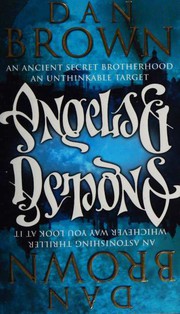
The Illuminati, the Vatican conclave and a canister of antimatter, over one night in Rome. First because it is Langdon's actual introduction — the ambigrams, the walk-and-lecture structure and the twenty-four-hour clock are all established here and never explained again. Ship the ampersand spelling: our catalogue holds separate records for Angels & Demons and Angels and Demons, and this is the one that returns the 2000 novel.
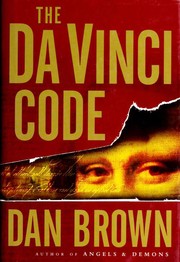
The Louvre murder, the Priory of Sion and the Holy Grail as a person. Second by publication and by design: it is the better-constructed book and the one worth reading with the machinery of the first still fresh.
The Rest of the Series, in Order
BeginnerFollow Langdon through the three later novels, each of which takes one city and one institution, and see the formula deliberately widen from religion to science.
▸ Study plan for this stage
Pace: Three to four weeks for 1,812 pages — The Lost Symbol 604, Inferno 576, Origin 632. These are longer than the first two and the same chapter structure carries them, so the reading pace does not change much; the fatigue is structural rather than textual. The Lost Symbol is the weakest of the five and
- One city, one institution, one field of expertise per book, and the diminishing returns as the pattern repeats
- The Freemasons and noetic science in The Lost Symbol as the point where the formula visibly strains
- Dante's Inferno used as a map for a treasure hunt, with the nine circles as the plot's structure
- Origin's move from religious conspiracy to artificial intelligence, and what changes when the antagonist is a technology
- The recurring twist shape — an ally who is not one — and how many times a reader can be caught by it
- How Brown handles a real living institution differently from a historical one
- The Lost Symbol came six years after The Da Vinci Code. Which parts of it read as a formula being executed rather than a story being told?
- Noetic science is presented as a real research field. How does the novel manage the reader's scepticism, and does it succeed?
- How much of Inferno's structure depends on Dante, and how much would survive if the poem were replaced by anything else with nine parts?
- Origin's antagonist is a technology rather than an institution. Does the formula still fit?
- Across five books, at which point did you stop being surprised by the twist? What had you learned to look for?
- Write out the shared beats of all five Langdon novels — the summons, the murdered expert, the female specialist, the pursuing agency, the reversal — and mark which book varies which.
- For Inferno, list the circles of Dante's Hell in order before reading, then mark which the novel actually uses.
- In Origin, separate the claims about artificial intelligence that were plausible when the book was published from those that were speculative even then.
- Rank the five novels and write one sentence of justification each; you will need the ranking to decide whether to continue past this stage.
Next up: The next stage steps outside the series to Brown's two standalone thrillers, where the same techniques run without a symbologist to carry the exposition.
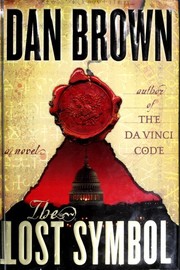
Washington DC, the Freemasons and noetic science, published six years after The Da Vinci Code. Third by publication; it is the weakest of the five and the most interesting as a case study in a formula straining.
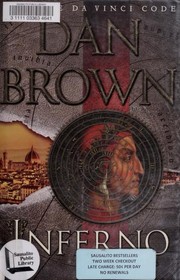
Florence, Venice, Istanbul and a plot built on Dante's poem. Fourth, and the return to form — read it directly after the Dante in the last stage if you want the allusions to do anything.
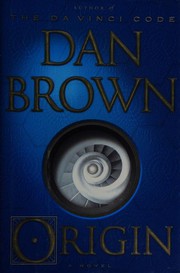
Bilbao and Barcelona, Gaudi, and a computer scientist's answer to where we came from. Fifth and most recent, and the book where Brown swaps religious conspiracy for artificial intelligence — a fair place to stop.
Brown Without Langdon
BeginnerRead the two standalone thrillers, in publication order, to see the same techniques applied without a symbologist to carry the exposition.
▸ Study plan for this stage
Pace: Two weeks for 1,006 pages — Digital Fortress 447 and Deception Point 559. Both read at the same speed as the Langdon books. Read them after the series rather than before, even though Digital Fortress is Brown's actual debut from 1998 and Deception Point was published in 2001 between the first two La
- The structural devices — compressed timeline, very short chapters, alternating threads — as separable from the Langdon character
- Digital Fortress as apprentice work: the same machinery with less to distract from it
- Deception Point as the most conventional thriller Brown has written, and the best evidence that symbology is the franchise rather than the plotting
- Exposition without an expert: how the standalones deliver technical material with no Langdon to lecture
- Cryptography and NASA politics as subject matter chosen the same way the Langdon subjects are chosen
- What a franchise character is actually worth to a formula
- Digital Fortress predates Langdon. Which parts of the Langdon formula are already fully present, and which are missing?
- Without a symbologist, how does Brown deliver technical explanation? Find three different devices he uses.
- Deception Point is the most conventional book here. Is conventional the same as weaker in this case?
- Both standalones sold far less than the Langdon novels. On the evidence of the books themselves, why?
- If Brown had never invented Langdon, what would his career look like from these two?
- Count the chapters and average their length in Digital Fortress and in The Da Vinci Code; the numbers are close and knowing that changes how you read the later books.
- Take one technical explanation from Digital Fortress and one from Angels & Demons and compare who delivers it and how long it takes.
- List every reversal in Deception Point and mark which were foreshadowed; the ratio is a fair measure of the plotting when the symbology is removed.
- Write a paragraph on what Langdon adds, using a specific scene from a standalone that a symbologist would have changed.
Next up: The final stage returns to the first two novels' claims and separates the invented history from the documented kind, using the sources Brown drew on and the scholarship written to answer him.
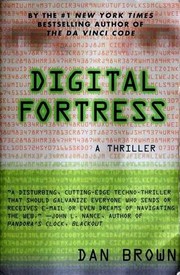
His actual debut, from 1998: the NSA, an unbreakable cipher and a code-breaking machine. Read it after the Langdon books rather than before — it is where the twenty-four-hour structure and the short chapters were invented, and it is much more visible as apprentice work.
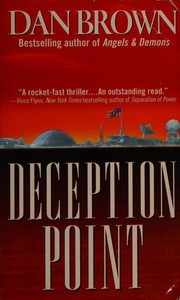
A meteorite under the Arctic ice and a NASA political scandal, published 2001 between the first two Langdon books. The most conventional thriller Brown has written and the best evidence that the symbology is the franchise, not the plotting.
The Real Books Behind the Plots
IntermediateSeparate the invented history from the documented kind by reading the sources Brown drew on and the scholarship written to answer him.
▸ Study plan for this stage
Pace: Four to five weeks for 1,116 pages, and the pace changes completely here — these are non-fiction and poetry rather than thrillers, and none of them can be read at the speed of a Langdon novel. Take Newman's 337 pages first, as an entry-by-entry examination of the novel's claims, and read it in chunk
- The difference between a documented claim, a contested one and an invented one, applied to specific assertions in the novels
- The Priory of Sion as a documented twentieth-century hoax, and how it entered popular history
- Reading an advocacy book as evidence about its authors rather than about its subject
- The 2006 lawsuit over the bloodline thesis, and what it implies about the relationship between the two books
- Dante's nine circles as an actual structure with a moral logic, against the use Brown makes of them
- What a novel that asserts its own accuracy owes the reader, and what a reader owes themselves
- Take five claims from the list you kept in stage one and check each against Newman. How many survive?
- The Holy Blood and the Holy Grail is written as an investigation. What are its actual standards of evidence, and where can you see them applied loosely?
- Newman documents the Priory of Sion hoax. Why did that particular invention travel so far?
- Dante's circles are ordered by a moral scheme. Does Brown's Inferno use the order, or only the names?
- Having read all three, what is the honest description of The Da Vinci Code's relationship to history?
- Go back to the claims list from stage one and mark each one documented, contested or invented, citing Newman's page; that annotated list is the concrete output of this path.
- Read the Baigent, Leigh and Lincoln chapter on the Priory of Sion alongside Newman's treatment of the same material and note where each stops the argument.
- Read the cantos of The Inferno that correspond to the circles Brown's novel visits, and mark what the poem does that the treasure hunt does not use.
- Write one paragraph you would give a friend who has just finished The Da Vinci Code and believes it — the aim is accuracy without condescension, which is harder than it sounds.
Next up: This is the end of the path: five Langdon novels in written order, the two standalones that show what the formula is without him, and the real books the plots were assembled from — from here, Dante rather than Brown is the thread worth following.
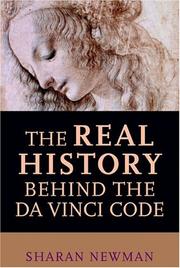
A medieval historian goes through the novel's claims one at a time — the Priory of Sion, the Merovingians, Constantine and the canon. Read it first here: it is the fastest way to find out which parts of the novel are load-bearing fiction.

The 1982 bestseller that supplied the Grail-as-bloodline thesis, and whose authors later sued Brown unsuccessfully for using it. Read it as a primary source on the conspiracy rather than as history — Newman's chapter on the Priory of Sion documents the hoax at its centre. Our catalogue record uses the British title, The Holy Blood and the Holy Grail.

The poem that Brown's fourth novel is a treasure hunt across. Last on this path but genuinely worth the detour: the novel uses the structure of the nine circles as its map, and almost none of that registers without the original.
Discussion
Keep reading
Paths that share books, cover the same subject, or open a related topic.
