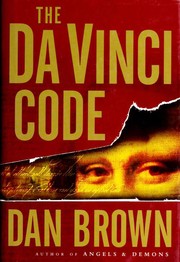
Start with Angels and Demons. It is the first Robert Langdon novel — the Vatican, the Illuminati, and CERN antimatter as the ticking clock — and it comes before The Da Vinci Code in both publication order and internal chronology. The confusion is entirely the films' fault: the adaptations were released in the opposite order, so a great many readers arrive believing The Da Vinci Code is the first book.
It matters more than it usually would, because The Da Vinci Code is a direct sequel in the sense that Langdon begins it as the man the previous novel made him. Read them the other way round and the second book's version of the character arrives unearned. One note before you buy: Angels and Demons is catalogued under both that spelling and the ampersand form, Angels & Demons. They are the same novel.
The Langdon sequence, in order
The formula is fixed and it is worth naming so you know what you are getting: one night, one city, one secret society, and chapters that stop mid-scene. Across six books it holds up better than its critics allow and slackens in predictable places.
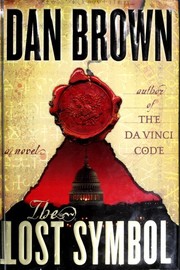
Angels and Demons first, The Da Vinci Code second. The Lost Symbol takes Langdon to Washington DC and Freemasonry, and is the weakest of the sequence by most readers' accounts — the noetic-science thread simply does not carry the charge the Vatican and the Louvre did. There is no reason to skip it if you are reading the series through, and no great loss if you do. Inferno is a return to form, Florence and Dante and a population-control plot, and it is structurally the most inventive of the later books because of what Langdon does not know when it opens. Origin is Spain, the Guggenheim Bilbao, and a confrontation between religion and artificial intelligence. The Secret of Secrets is the sixth and most recent, set in Prague around consciousness research; it assumes you know the character, and because it is a very recent release, library availability may lag the rest of the series.
One standing caveat
The novels open by presenting art-historical, religious and scientific claims as fact, and historians, art historians and scientists have disputed a great many of them — the material on Leonardo, the Priory of Sion and early Christianity in The Da Vinci Code was contested at length on publication, and the cryptography in Digital Fortress drew heavy criticism from people who work in the field. Read the thrillers as thrillers. The plotting is the reason they sold two hundred million copies, and it is a real skill.
The standalones
Digital Fortress is his first novel, an NSA cryptography thriller with no connection to Langdon at all. Read it after the series rather than before: it is where the code-and-conspiracy machinery is being assembled and not yet running smoothly, which is interesting once you know the finished version. Deception Point is a NASA-meteorite conspiracy set largely in the Arctic and is the closest he has come to a straight political thriller. It is independent of everything else; read it if Digital Fortress worked for you.
The outlier
Wild Symphony is an illustrated children's picture book with accompanying music, illustrated by Susan Batori. It is on the bibliography and it has nothing to do with the novels. Listed here so it does not surprise you in a catalogue, not as a stage in any reading order.
Where to stop
If you want the phenomenon rather than the complete shelf, read Angels and Demons and The Da Vinci Code and stop. If those two work on you, Inferno is the next best. The standalones are for completists. The Dan Brown reading path has the full sequence with notes on each.
Follow the full ordered path here: Robert Langdon books in order: where to start with Dan Brown.
Ready to learn something deeply?
Build a reading path — free