Historical costuming is unusual among crafts in that the authoritative books are essentially archives. The value of the core texts is not that someone explains how to sew — it is that someone climbed into a museum store, measured a surviving garment stitch by stitch, and drew it to scale. Modern how-to books built on those measurements are useful; modern how-to books built on guesswork produce costumes that look approximately period and fit nobody.
That is why the reading order runs from primary documentation to construction technique rather than the other way round. Learn to read a scale pattern first, and every later book becomes more useful.
The pattern archives come first
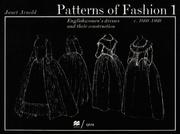
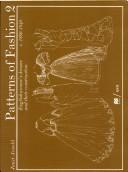
Start with Patterns of Fashion 1. Janet Arnold's series is the foundation of the field: scaled patterns taken directly from extant garments, with notes on construction, materials and wear. Volume one covers Englishwomen's dresses from roughly 1660 to 1860, and reading it teaches the skill everything else depends on — turning a gridded diagram into a garment that fits a real body. Patterns of Fashion 2 continues into 1860 to 1940, where the silhouette changes fast and the tailoring gets sharper.
Arnold's Patterns of fashion 4 is the underpinnings volume — smocks, shirts, ruffs and accessories from about 1540 to 1660 — and it belongs on the same shelf, though you can read it later if your period sits after 1700. Whichever volume matches your era, buy that one first.
Understand the shape underneath
No historical outer garment fits without the correct undergarments, and this is where most beginners go wrong. Corsets and crinolines by Norah Waugh is the standard history of the supporting structures, tracing how the body was reshaped century by century and why the outer silhouette followed. Waugh's The cut of women's clothes, 1600-1930 is the companion volume for the outer layer, and the pairing is close to a complete education in Western dress.
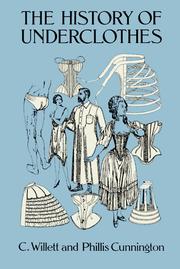
For social and material context, The history of underclothes by C. Willett Cunnington surveys what people actually wore next to the skin, drawing on advertisements, diaries and surviving pieces. It is where you learn that fashionable and typical are rarely the same thing.
Build the corset, then refine the hand
Corsets by Jill Salen is the practical bridge: scaled patterns from surviving stays and corsets across several centuries, with enough construction guidance to actually make one. Use it alongside Waugh rather than instead of her, since Salen's strength is the patterns and Waugh's is the reasoning.
Costume close-up by Linda Baumgarten takes you inside eighteenth-century construction in photographic detail — seam finishes, linings, alterations, the evidence of how garments were remade. It is the book that teaches you to look at an interior rather than a silhouette.
Finish with Couture sewing techniques by Lynda Maynard for the hand skills: interfacing, boning channels, hand-finishing and the small operations that separate a costume from a garment. Modern couture practice is not identical to period practice, but the standard of finish is what you are aiming for.
One practical warning that no book states loudly enough: make a fitted mock-up in cheap fabric before cutting anything good. Scaled patterns from museum garments are drawn from one specific body, often a small one, and the grading you have to do to fit your own torso is where the real skill lies. Expect two or three mock-ups for a first pair of stays, and treat the wasted calico as tuition.
Pair the reading with the full path if you want a running order across several periods.
Read in this sequence and you will build from evidence rather than from a pattern envelope.
Follow the full ordered path here: How to Learn Corsetry and Historical Costuming From Books.