Colm Toibin Reading Order: Where to Start
Colm Toibin writes quiet, exact novels about silence — what Irish families, exiles and closeted men decline to say to each other. Start with the two Enniscorthy novels that are his most loved and most approachable, move into the major fiction where he inhabits other writers and other centuries, then the harder and stranger books, and close with the essays, which show the critic behind the novelist.
Start Here
BeginnerMeet Toibin's restraint and his home ground in the two novels that ask least of a new reader.
▸ Study plan for this stage
Pace: 4 weeks, ~25 pages a day. Brooklyn (262 pages) in ten days — it reads much faster than its weight suggests. Then Nora Webster (383 pages) over two and a half weeks, and slow down deliberately: almost nothing happens in any given chapter, and the accumulation is the whole effect.
- Toibin's central technique: the flat declarative sentence that reports events without emotional colouring, so feeling has to be inferred by the reader
- Silence as subject matter — Enniscorthy families whose crucial information is never spoken aloud, and whose decisions are therefore made off the page
- Eilis Lacey's passivity, and the fact that the novel's great turns happen to her rather than being chosen by her, until one is
- The letter as a plot device and a moral instrument in Brooklyn: what is written home, what is left out, and who is trapped by the omission
- Grief rendered as logistics in Nora Webster — money, jobs, the children's schooling, a car sold — rather than as inner monologue
- Music and singing as the one channel through which Toibin's characters are permitted to feel openly
- The same town in both books, seen from opposite ends of a life, which is why they are read together
- Where exactly does Brooklyn tell you what Eilis feels, and where does it make you supply it? Find one instance of each.
- Why does the news of Rose's death arrive the way it does, and what would be lost if Toibin had dramatized it directly?
- Is Eilis's final decision a choice or a coercion? Point to the pages that decide it for you.
- Nora Webster is a novel about a widow that keeps its distance from her grief. How does Toibin make that distance feel like intimacy rather than coldness?
- What does singing do for Nora that nothing else in the book can, and what does that suggest about Toibin's view of speech?
- Take one page of Brooklyn and underline every adjective. The scarcity is the technique; write a sentence on what fills the space they would have taken.
- Rewrite a paragraph of Nora Webster with the feelings stated outright, then compare. This is the fastest way to feel what restraint buys.
- Note every occasion in Brooklyn on which someone declines to say the obvious thing, and what follows from each silence.
- Keep a list of the practical decisions Nora makes in the first hundred pages; the novel's emotional arc is legible in them alone.
Next up: You can now read a Toibin silence; the major fiction applies the same restraint to a dying son, to Henry James, and to the mother of Christ.

A young woman emigrates from Enniscorthy to 1950s New York and is pulled back. The best entry point in his whole body of work: simple surface, enormous undertow.

A widow in the same town rebuilding a self after her husband's death. Read straight after Brooklyn — the setting and the emotional register are continuous, but the interiority goes deeper.
The Major Fiction
BeginnerSee Toibin's larger project: entering the consciousness of real historical figures and of characters whose grief has no available language.
▸ Study plan for this stage
Pace: 5–6 weeks. The Blackwater Lightship (273 pages) in two weeks. The Master (356 pages) needs three and rewards slowness — take one of its dated chapters per sitting. The Testament of Mary is only 97 pages: read it in a single evening, as it was written to be, and then reread it the next day.
- Three generations of women in one house in The Blackwater Lightship, and Toibin's method of putting people who cannot speak to each other in a room with no exit
- The AIDS-era subject entering Irish fiction through family logistics — who nurses, who is told, who is not welcome
- The Master's technique of ventriloquizing a great stylist in prose plainer than his own, which is a critical argument as much as a novelistic one
- Henry James's renunciations as Toibin's true subject: the life not lived, converted into work, and the cost accounted for scene by scene
- The dated-chapter structure of The Master, moving between five years and a lifetime of memory, and how it substitutes for plot
- The Testament of Mary's voice — old, furious, refusing the account being written about her — as the extreme case of a Toibin narrator declining the story she is in
- Renunciation, exile and the closet as three versions of one pattern, which is why these books belong in a single stage
- In The Blackwater Lightship, what does the grandmother's house make possible that a hospital could not?
- Which characters in that novel are permitted to speak their grief, and what determines who gets the permission?
- How does Toibin dramatize Henry James's decision not to live a life, and does The Master present it as a loss or a bargain?
- Why write a novel about a stylist in an unstyled prose? What is the claim being made about James?
- What is Mary refusing in The Testament of Mary, and what does her fury reveal about the Gospel account she is speaking against?
- These three books deal with a dying man, a dead brother-figure and a crucified son. What does Toibin do at each deathbed that is consistent across all three?
- Diagram who knows what and when in The Blackwater Lightship; the novel's tension is entirely an information problem.
- Read one paragraph of Henry James — the opening of The Portrait of a Lady will do — immediately before starting The Master, so you register the difference in surface.
- Read The Testament of Mary aloud. It was staged as a monologue, and the anger only fully lands in the voice.
- For each of the three books, write down the sentence at which you understood what the character would never say. Compare the three.
Next up: You have his central mode; the next stage takes the same restraint into colder, older and stranger material to see where it holds.
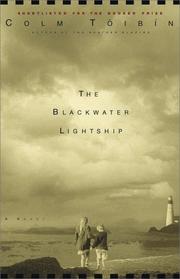
Three generations of women and a dying son in a house above the sea. The most concentrated of the Irish family novels, and the one that establishes his AIDS-era subject matter.

Five years inside Henry James's head. Often called his finest novel; it rewards having already learned to read his silences, which is why it comes after the Enniscorthy books.

The mother of Christ, old and furious, refusing the story being written about her. Very short, very severe — a good demonstration that his quietness is a choice, not a temperament.
Going Deeper
IntermediateWork through the earlier and later novels that are stranger, colder or more formally ambitious.
▸ Study plan for this stage
Pace: 5 weeks. The Heather Blazing (245 pages) in a week and a half. House of Names (280 pages) in two weeks — it moves faster than his Irish novels, but the shifts of narrator need attention. Long Island is a full-length novel of similar scale to Brooklyn; give it a fortnight, and read it only once Brook
- The Heather Blazing's alternating structure — a judge's present and his formative childhood, in strict parallel — which is Toibin's method in its purest early form
- Law, judgement and the Irish state as inherited positions rather than convictions: Eamon Redmond rules as he was raised, not as he reasons
- The pattern of the withheld father, which recurs across the whole body of work and is named directly in the essays later
- House of Names as proof that the family silence Toibin writes about is not specifically Irish — Clytemnestra's household runs on the same withheld information
- Orestes' long central section, narrated in a near-vacuum, as the most formally daring thing he has written
- Gods removed from the myth: Toibin's Mycenae has no divine sanction, so the killings are political and domestic rather than fated
- Long Island as a sequel that reopens a settled ending, in the same way Toibin's characters keep discovering that a decision was never actually closed
- How do the two timelines of The Heather Blazing comment on each other, and where does the alternation deliver a judgement the narrator never voices?
- What has Eamon inherited from his father besides politics, and does the novel treat him as culpable?
- What does removing the gods from the Oresteia change about who is responsible for the killings?
- Why give Orestes so much of House of Names, and what does his ignorance let Toibin do?
- In Long Island, what does the intervening time do to the choice Eilis made at the end of Brooklyn — is it revised, or merely paid for?
- Read a summary of Aeschylus's Oresteia before House of Names; Toibin assumes you know the outline and is interested only in what he changes.
- Chart The Heather Blazing's alternations on one sheet, noting which childhood scene is paired with which adult one. The pairings are not accidental.
- Before starting Long Island, write down in three sentences what you think happened to Eilis after Brooklyn. Compare afterwards.
- Pick a scene of violence in House of Names and count the words spent on it. Toibin's restraint under this material is the test of the method.
- Note where in these three novels a character is finally told something directly — the moments are rare, and worth collecting.
Next up: The novels have been implying their tradition; the essays state it, and retrospectively explain nearly every choice you have just read.
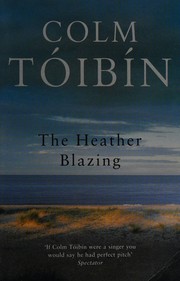
An Irish judge alternates between his career and the childhood that formed him. The early novel where Toibin's method — withheld feeling, patient chronology — first fully works.

Clytemnestra, Electra and Orestes after Agamemnon's return. The furthest he has travelled from Enniscorthy, and proof that the family silence he writes about is not only Irish.

The sequel to Brooklyn, twenty years on. Placed last in the fiction because its power depends entirely on remembering what Eilis chose in the first book.
The Essays
IntermediateRead Toibin as a critic and see the reading that produced the novels.
▸ Study plan for this stage
Pace: 4 weeks, ~20 pages a day. Love in a Dark Time (273 pages) in two weeks, one essay a sitting — each is a self-contained portrait and they blur if you read three in a row. Mad, Bad, Dangerous to Know (253 pages) in two more, and it is best taken as one continuous argument rather than three separate li
- Toibin as a critic reading for biography and concealment — what a writer had to hide, and what the hiding did to the prose
- Love in a Dark Time as an account of the gay tradition he writes inside, from Wilde and Mann to Bishop and Almodóvar
- The Wilde essay in particular as the key to The Master: two ways of handling the same danger, one public and ruinous, one private and productive
- Elizabeth Bishop's reticence as the aesthetic Toibin most openly claims — the poetry of what is left out, applied to prose
- Mad, Bad, Dangerous to Know on the fathers of Wilde, Yeats and Joyce: absent, embarrassing or disgraced men whose sons wrote around them
- Inherited silence between Irish fathers and sons, which is the explicit subject here and the implicit subject of The Heather Blazing
- The critic and the novelist as one operation: these essays are the reading that produced the fiction, not a sideline to it
- What does Toibin say Wilde got wrong, and how does that judgement shape his portrait of Henry James?
- What does he admire in Elizabeth Bishop, and where can you see the same principle at work in Nora Webster?
- How does the argument about Irish fathers in Mad, Bad, Dangerous to Know explain the fathers in his own novels?
- Where does Toibin the critic make a claim that Toibin the novelist would never state so plainly, and why is he able to say it here?
- After the whole path: is Toibin's restraint a moral position, an Irish inheritance, or a technique? Argue for one.
- Read the Wilde essay, then reread twenty pages of The Master. The novel's position on secrecy becomes explicit in the comparison.
- Find a short Elizabeth Bishop poem — 'One Art' or 'The Fish' — read it, then read Toibin's essay on her, then a page of Brooklyn.
- Make a list of the fathers in the six novels of this path and check each against the argument of Mad, Bad, Dangerous to Know.
- Write 400 words on what Toibin thinks silence costs a family, drawing only on the essays, then test it against The Blackwater Lightship.
Next up: That is the whole body of work with its tradition attached — you can now open any Toibin novel and hear what is not being said in it within a page.
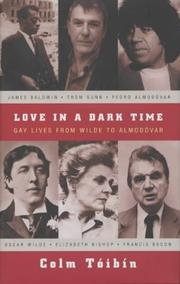
Essays on gay writers and artists from Wilde to Bishop to Almodovar. The most direct account of the tradition he writes inside, and it retrospectively lights up The Master.

On the fathers of Wilde, Yeats and Joyce. A fitting close: a book about Irish sons, absent fathers and inherited silence, which is the subject of nearly every novel in this path.
Discussion
Keep reading
Paths that share books, cover the same subject, or open a related topic.