Colette Reading Order: Where to Start
Colette wrote for fifty years and the obvious starting point — the Claudine novels, which made her famous — is the worst one, because she wrote them under her first husband's name and under his supervision, and they read like the juvenilia of someone who had not yet found her voice. Start instead with Gigi and Cheri, the two short late novels where the voice is fully formed, then go back to Claudine as an origin story you can now hear properly. The path ends with the memoir-essays, which are the books she herself thought were the real work.
Start Here: The Short Late Novels
BeginnerMeet Colette at full strength in under three hundred pages, and learn what she is actually interested in — appetite, ageing, and the economics of being a beautiful woman.
▸ Study plan for this stage
Pace: 2 weeks, and expect the volumes to be thicker than the novels inside them. Gigi is a novella of roughly a hundred pages and is almost never sold alone; the edition in our catalogue runs to 182 pages, which means it carries other stories as well. Cheri is about the same length and is normally bound w
- Colette's novels are short and her publishers know it, so nearly every English volume binds two or three works together. A title on a spine is not a reliable guide to what is inside the covers
- Cheri and The Last of Cheri are two novels that function as one argument. If your volume stops at the end of Cheri you have read the affair without reading what it cost, which is the half that matters
- Page counts in book databases describe editions, not works, and for Colette they are close to meaningless — our record for Cheri lists nine pages. Judge length by the novel, not the catalogue
- Gigi is a comedy about a girl being professionally trained as a courtesan, and the joke is that the training works in the wrong direction
- Her subject is appetite and its price. Food, bodies, money and ageing get the same close attention and none of them get a verdict
- She writes the ageing woman as someone who desires rather than as someone looked at, which in 1920 had very little precedent in French fiction and is still the reason Cheri reads as modern
- All of this is translated, and her prose is sensory and rhythmic in a way that translations diverge over more than the plots suggest. The translator's name on the copyright page is worth a glance
- Before you start: what else is in your volume besides the title work, and does it include The Last of Cheri?
- Lea is the older woman and Cheri is the kept young man. Who holds the power in that arrangement, and at what point does it change hands?
- What is Gigi actually being trained to do, and what does she refuse?
- Colette describes rooms and meals as closely as she describes faces. What is that detail doing for the story rather than the scenery?
- The Last of Cheri takes place after a war the earlier novel barely mentions. What has the war done to a book about a love affair?
- Check the contents page before buying. Gigi and Cheri are both routinely packaged with other novellas, and it is easy to end up owning the same story twice under two different covers, or to miss the sequel entirely.
- Read Cheri and The Last of Cheri back to back with no other book in between. The years that pass between them are the point, and a gap in your reading blunts it.
- Mark three passages where a room or a meal is described at length, and ask in each case who is paying for what is being described.
- Write down what you expect Gigi to become. Then read the last two pages again.
Next up: Now go back to the beginning, where the voice you have just heard was being published under another man's name.
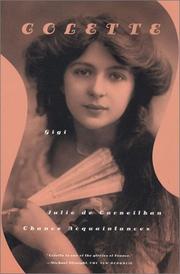
The easiest way in and barely a hundred pages: a girl is trained by her aunt and grandmother for a career as a courtesan, and something goes agreeably wrong. Read it first because it is funny and fast, and because it inoculates you against the sentimental version of Colette the musical left behind.
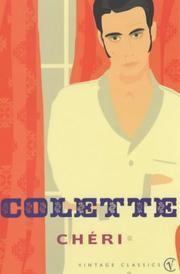
Her masterpiece and the book to read second: an ageing courtesan and the beautiful young man she has kept for six years, watched at the moment it has to end. The sequel, The Last of Cheri, is almost always bound with it in English editions, and you should read it straight on — the two together are one book about what the first one cost.
The Claudine Novels, in Order
IntermediateRead the sequence that made her name, in publication order, understanding it as a serial written to another man's specification and gradually escaping it.
▸ Study plan for this stage
Pace: 3 weeks, ~40 pages a day. There are four Claudine novels here in three volumes: Claudine at School is 202 pages, Claudine in Paris is separate, and the third catalogue entry, Claudine Married/Claudine and Annie, is one book containing the third and fourth novels. Read in that order and do not stop w
- There are four Claudine novels and three volumes on this path, because the last two are bound together. Count novels, not spines, or you will think you have finished when you have not
- All four were first published under the name Willy, her first husband, who took the credit, the money and the copyright, and who directed what went into them. That is a fact about the books, not only about her biography
- Claudine at School was a scandal in 1900 partly because Willy pushed it toward what would sell. The schoolgirl material is his commercial instinct as much as her memory of a provincial lycee
- You can hear two people pulling in different directions inside the same sentences, most audibly in Claudine Married. The sensational scenes and the exact, unsentimental observation are not coming from the same hand
- Colette's name only reached these covers years later, after the divorce and a long fight. Older editions still credit Willy, or Willy and Colette, so the title page varies by printing
- Claudine and Annie moves the narration away from Claudine herself, which is the first sign of the novelist who would later write Cheri
- Read this sequence as apprenticeship rather than as her best work. It is the origin of the voice from stage one, but not yet under her own control
- What is Claudine's voice actually like, and how much of it survives into Gigi and Cheri?
- Where in Claudine Married can you feel the book being steered toward what will sell?
- The marriage in this sequence is not an ending. What does Claudine want from Renaud, and does she get it?
- Claudine and Annie hands the narration to someone else. What does that change, and why might Colette have wanted the distance?
- Knowing these went out under Willy's name, do you read them differently — and should that change how you judge them?
- Check what your volume contains before you buy. Claudine Married and Claudine and Annie are commonly sold as one book, so buying by title can leave you with a duplicate or short one novel.
- Look at whose name is on the title page of the copy you end up with. Editions differ, and some still credit Willy alone.
- Keep a running note of Claudine's age and situation at the start of each novel. The four books cover a lot of ground fast and the jumps are easy to miss.
- Read one paragraph of Claudine at School aloud, then one paragraph of Gigi. The distance between them is the whole career.
Next up: Claudine ends with a woman handing her story to someone else; the next stage is the novel Colette wrote once she had taken her own back.
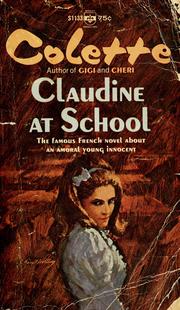
The 1900 scandal: a schoolgirl's diary of a provincial lycee, published under Willy's name alone. It has to come first because everything in the sequence follows from Claudine's voice, which is established here and never really changes.

Claudine transplanted to the city and into a marriage. The move is where the books stop being a schoolgirl romp and start being about what happens to that voice under adult pressure.

The most notorious of the four, and the one Willy pushed hardest for sensational content. Read it in sequence and you can hear two authors pulling in different directions inside the same sentences.
The Independent Woman
IntermediateRead the mid-career novels drawn from her years on the music-hall stage, where the subject becomes a woman choosing solitude over security.
▸ Study plan for this stage
Pace: 10 days, ~35 pages a day. The Vagabond is 208 pages and Break of Day is 136 — the shortest stage on this path. Check your volumes again before you buy, because both are frequently bound with other work rather than sold alone.
- The Vagabond is the first novel published under her own name alone, written out of the years she spent performing in music halls after leaving Willy. The independence in the book was recent and hard-won when she wrote it
- It is a refusal novel: a woman is offered comfort and security and turns it down. Colette takes the offer seriously rather than making the suitor a villain, which is what makes the refusal cost something
- The novel is unusually explicit about money — fees, rents, what a night on stage pays. The argument is financial before it is romantic
- Break of Day narrates through a woman called Colette and weaves in her mother Sido's letters, while remaining a novel. The material has been shaped for the book, and it is autofiction decades before anyone called it that
- Sido becomes the presiding figure of the later work, standing for a kind of attention that none of the lovers offer
- The two novels make the same refusal about twenty years apart. The difference is that the later one carries no regret in it at all
- What exactly is Renee being offered in The Vagabond, and what would accepting cost her that the novel makes you feel?
- How much money does she need to stay free, and how does the book make you aware of the figure?
- Break of Day is narrated by a woman with the author's name. Where does the book want you to believe it, and where is it plainly inventing?
- What does Sido stand for that no lover in Colette stands for?
- Is the refusal in Break of Day the same one as in The Vagabond, or has the question itself changed?
- Note every mention of a fee, a wage or a rent in The Vagabond. The list is short and it is the spine of the novel.
- Underline the passages in Break of Day that read as straight memoir, then ask which of them could be checked against anything. Very little can, and that is the design rather than a lapse.
- Read the last page of The Vagabond and the last page of Break of Day side by side and write one sentence on what twenty years changed.
Next up: Two books remain, and they are the ones that are hardest to classify — and the ones she thought were the real work.
A divorced music-hall performer is offered a comfortable second marriage and has to decide what freedom is worth. Written straight after she left Willy and went on the stage herself, it is the first fully autonomous novel and the hinge of her whole career.

A novel narrated by a woman called Colette, weaving in her mother Sido's letters, about renouncing a young lover. Read it after The Vagabond: it is the same refusal made twenty years later and without the regret.
The Deeper Cuts
IntermediateFinish with the books that are hardest to classify — the scandalous short novel and the essay on desire that she called her most personal work.
▸ Study plan for this stage
Pace: 2 weeks. The Ripening Seed is 127 pages and will go in two evenings. The Pure and the Impure is about the same length and should take you three times as long, because there is no plot pulling you forward and it rewards stopping to reread a paragraph.
- The Ripening Seed is also sold in English as Green Wheat. Same novel, different translation, and searching only one of the two titles will make you think it is unavailable
- It follows two adolescents on a Breton holiday and the older woman who intervenes. It was serialised, and the serialisation was cut short after readers complained — a century on it is still uncomfortable, because Colette declines to moralise about appetite
- The Pure and the Impure is neither novel nor memoir: a sequence of encounters and conversations about what people actually want, with no story to carry you between them
- Colette considered it her best book. It only makes sense once you have read the fiction, because much of what it is doing is quietly annotating the novels you have already finished
- Our catalogue record folds the translator's name into the author's. The book is Colette's, translated into English by Herma Briffault
- Its subjects — opium smokers, women who lived as men, ageing seducers, couples of every arrangement — are described without diagnosis or verdict, which is why it still reads as modern rather than as period documentary
- Both of these are short, which means both are usually bound with other work. The contents check applies here exactly as it did in stage one
- The Ripening Seed refuses to judge anyone in it. Does that make the book more honest, or is it evading something?
- Who holds power in that novel, and does it stay in one place from beginning to end?
- The Pure and the Impure has no plot. What holds it together instead, and does it hold?
- Which encounter in The Pure and the Impure changed how you read one of the earlier novels, and which novel was it?
- Having read from Claudine to here, can you state Colette's actual subject in one sentence that would not fit another novelist?
- If you cannot find The Ripening Seed, search for Green Wheat instead. It is the same book under a different translator's title.
- Read The Pure and the Impure a chapter at a sitting and stop whenever a paragraph makes you look up. It is built for that and not for momentum.
- Go back to the first page of Claudine at School after finishing this stage. The distance travelled is the argument of the whole path.
- List which of the volumes you bought contained more than one work. In Colette's case the answer is most of them, and knowing that before you buy is the single most useful thing on this page.
Next up: You have the whole arc now, from a ghostwritten schoolgirl serial to the essays she thought were her real work — and you can buy any Colette without accidentally buying it twice.

Two adolescents on a Breton holiday and the older woman who intervenes. Short, precise and still uncomfortable a century on, it is the purest example of her refusal to moralise about appetite.

Neither novel nor memoir: a series of encounters with opium smokers, lesbian couples and Don Juans, thinking about what people actually want. Colette considered it her best book, and it makes sense only once you have read the fiction it quietly annotates.
Discussion
Keep reading
Paths that share books, cover the same subject, or open a related topic.