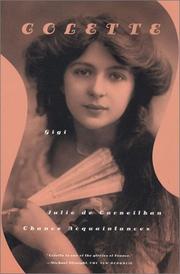
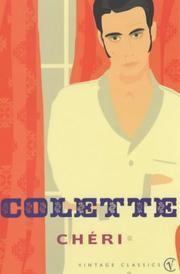
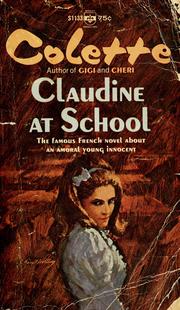
Start with Gigi and Cheri, the short late novels. The obvious alternative is Claudine at school, which came first and made her famous, but those four early books went out under her first husband's name and are apprentice work in a voice not yet under her own control. Meet the finished writer first and the Claudine sequence becomes far more interesting.
Before you buy anything, learn the Colette problem: her novels are short, her publishers know it, and nearly every English volume binds two or three works together. A title on a spine is not a reliable guide to what is inside the covers. Cheri is normally bound with its sequel, The Last of Cheri — and if your volume stops at the end of the first, you have read the affair without reading what it cost, which is the half that matters. Read the two back to back with nothing in between. Page counts in book databases describe editions rather than works and are close to meaningless here; our own record for Cheri lists nine pages.
Gigi is a comedy about a girl being professionally trained as a courtesan, and the joke is that the training works in the wrong direction. Cheri is the reason she still reads as modern: Lea is an ageing woman written as someone who desires rather than as someone looked at, which in 1920 had very little precedent in French fiction. All of this is translated, and her prose is sensory and rhythmic in a way translations diverge over more than the plots suggest, so the translator's name on the copyright page is worth a glance.
The Claudine novels, in order
There are four Claudine novels and three volumes: Claudine at school, Claudine in Paris, and Claudine Married/Claudine and Annie, which is one book containing the third and fourth. Count novels, not spines, or you will think you have finished when you have not — and do not stop when Claudine Married ends, because the next novel starts in the same volume.
All four were first published under the name Willy, her first husband, who took the credit, the money and the copyright, and who directed what went into them. That is a fact about the books and not only about her biography: Claudine at school was a scandal in 1900 partly because he pushed it toward what would sell, and in Claudine Married you can hear two people pulling in different directions inside the same sentences. Her name reached these covers only years later, after the divorce and a long fight, and older printings still credit Willy, or Willy and Colette. Read the sequence as origin rather than as her best work.
The books under her own name
The Vagabond is the first novel published under her own name alone, written out of the years she spent performing in music halls. It is a refusal novel: a woman is offered comfort and security and turns it down, and Colette takes the offer seriously rather than making the suitor a villain, which is what makes the refusal cost something. It is unusually explicit about money — fees, rents, what a night on stage pays — and the argument is financial before it is romantic.
Break of Day narrates through a woman called Colette and weaves in her mother's letters while remaining a novel: autofiction decades before anyone used the word. The two books make the same refusal about twenty years apart, and the difference is that the later one carries no regret in it at all.
The last two
The Ripening Seed is also sold in English as Green Wheat — the same novel under a different translator's title, so searching only one will make you think it is out of print. It follows two adolescents on a Breton holiday and the older woman who intervenes with one of them. It was serialised, and the serialisation was cut short after readers complained; a century on it is still uncomfortable, because Colette declines to moralise about appetite.
The Pure and the Impure is neither novel nor memoir — a sequence of encounters and conversations about what people actually want, with no story to carry you between them. Colette considered it her best book, and it only makes sense after the fiction, because much of what it does is quietly annotate the novels you have already read. Our catalogue record folds the translator's name into the author's; the book is Colette's, translated by Herma Briffault. Read it a chapter at a sitting and stop whenever a paragraph makes you look up.
Where to stop
Cheri with its sequel, plus The Vagabond, is the writer. Everything else is for readers who want the whole arc. More literary reading orders are on Discover.
Follow the full ordered path here: Colette Reading Order: Where to Start.