Coin collecting for beginners: essential books to start numismatics
This curriculum takes a beginner coin collector from zero knowledge to confident, informed collecting across four progressive stages. It starts with the essential language and tools of numismatics, moves through grading and identification, dives into the history and stories behind rare coins, and finally equips the collector with the market savvy and specialization knowledge needed to build a truly valuable, well-curated collection.
Foundations of Numismatics
BeginnerUnderstand the basic vocabulary, tools, and mindset of coin collecting — what to look for, how coins are made, and how to handle and store them properly.
▸ Study plan for this stage
Pace: 4–5 weeks, ~25–30 pages/day. Start with "Coin Collecting for Dummies" (weeks 1–3, ~200 pages), then move to the ANA Grading Standards (weeks 4–5, ~150 pages of focused study with frequent reference back).
- Numismatic terminology: obverse, reverse, mint mark, date, denomination, and condition grades (Poor through Gem Mint State)
- Coin production methods: how coins are struck, minted, and what causes die varieties and errors
- Grading systems and standards: the Sheldon scale (1–70) and how to assess strike, luster, and wear on real coins
- Proper handling, storage, and preservation: why cotton gloves matter, how to use holders and albums, and what damages coins
- The collector's mindset: setting goals (type sets, date sets, mint mark sets), understanding rarity and value, and building a collection systematically
- Authentication and counterfeits: how to spot fakes and verify genuine coins using weight, dimensions, and visual markers
- What is the difference between the obverse and reverse of a coin, and what key information should you look for on each side?
- Explain the Sheldon grading scale and describe the visual characteristics that distinguish a coin graded MS-65 from one graded VF-25.
- Why is proper handling and storage critical for coin preservation, and what are the main threats to a coin's condition?
- How are coins struck and minted, and what are die varieties and mint errors—why do collectors care about them?
- What are the main strategies for building a focused coin collection, and how do you set realistic collecting goals?
- How can you authenticate a coin and identify potential counterfeits or altered pieces?
- Obtain 5–10 inexpensive circulated coins from different eras and denominations; examine each with a magnifying glass and practice identifying the obverse, reverse, mint mark, date, and any visible wear patterns.
- Using the ANA Grading Standards as a reference, grade 3–5 coins on the Sheldon scale; write a brief description of strike, luster, and wear for each, then compare your grades with published values.
- Practice proper handling: put on cotton gloves and carefully place coins in archival holders or albums; document the correct and incorrect ways to touch, store, and display coins.
- Research and document a specific coin type (e.g., Lincoln cents, Morgan dollars, or state quarters); identify all mint marks, key dates, and varieties for that type to understand how collectors build a complete set.
- Visit a local coin show or dealer and ask to examine 3–5 coins in different grades; note the differences in strike, luster, and surface preservation you observe in person.
- Create a simple collecting plan: choose a coin type or era that interests you, define your goal (e.g., 'collect all mint marks from 1950–1960'), and list the coins you need to acquire.
Next up: Mastering these foundational concepts—vocabulary, grading standards, and preservation—equips you to move into specialized collecting strategies, such as focusing on rare dates, error coins, or specific series, and to evaluate coins' investment potential and historical significance.
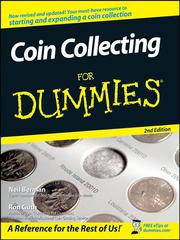
The single best entry point for a true beginner — it demystifies terminology, explains mint marks, coin types, and storage without overwhelming detail. Read this first to build the vocabulary every other book assumes you have.
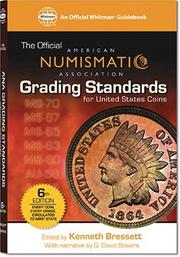
Grading is the single most important skill in collecting; this is the official, industry-standard reference. Read it second so you can immediately apply a shared grading language to every coin you encounter going forward.
Identification & Pricing
BeginnerLearn to identify U.S. coins by date, mint mark, and variety, and understand how to look up fair market values — the practical core of building any collection.
▸ Study plan for this stage
Pace: 8–10 weeks, ~40–50 pages/day. Start with Yeoman's guide (4–5 weeks, focusing on reference sections and coin tables), then transition to Fivaz's guide (3–4 weeks, working through die variety classifications and attribution methods).
- Coin grading standards (MS, AU, XF, VF, F, VG, G, AG, FR, PO) and how they affect market value
- Mint marks, their locations on U.S. coins, and what they reveal about rarity and production
- Date identification and the significance of key dates (low mintage years) across different denominations
- Die varieties and how to spot doubled dies, repunched mint marks, and other striking anomalies using Fivaz's diagnostic photos and descriptions
- How to use Yeoman's pricing tables to cross-reference grade, date, and mint mark with fair market values
- The relationship between rarity, condition, and collector demand in determining a coin's market price
- Diagnostic tools and techniques: loupe inspection, die characteristics, and visual comparison methods for variety attribution
- How do you identify the mint mark on a Morgan dollar, and what does each mint mark tell you about the coin's origin and potential rarity?
- What is the difference between a key date and a semi-key date, and how does Yeoman's guide help you identify them?
- Using Yeoman's pricing tables, how would you determine the fair market value of a 1955 doubled die cent in XF condition?
- What are the main diagnostic features Fivaz uses to identify a doubled die variety, and how would you verify one using a loupe?
- How does a coin's grade (e.g., VF vs. MS-65) impact its market value, and why is accurate grading essential before pricing?
- Describe the process of attributing a die variety: what steps would you follow using Fivaz's guide to confirm a suspected variety?
- Using Yeoman's guide, create a reference chart for three U.S. coin series (e.g., Lincoln cents, Washington quarters, Roosevelt dimes) listing all mint marks, key dates, and their relative rarity rankings.
- Examine 10–15 coins from your collection or borrowed coins with a 10x loupe, identify their dates and mint marks, and cross-reference them in Yeoman's pricing tables to estimate fair market values at multiple grades.
- Select five suspected die varieties from Fivaz's guide (e.g., 1955 doubled die cent, 1969-S doubled die obverse cent), obtain photos or examples, and practice identifying the diagnostic doubling characteristics using Fivaz's descriptions and comparison photos.
- Grade five coins using the standard grading scale (MS, AU, XF, VF, F, VG, G, AG, FR, PO), then look up their values in Yeoman's tables at each grade level to understand how condition dramatically affects price.
- Create a 'variety hunting' checklist for one coin series (e.g., Lincoln cents 1960–1970) using Fivaz's guide, noting which dates and mint marks are known for significant varieties, then examine rolls or lots of that series to search for matches.
- Write a one-page attribution report on a single coin: describe its date, mint mark, grade, suspected variety (if any), diagnostic features observed, and estimated fair market value based on Yeoman's tables and Fivaz's variety rarity notes.
Next up: Mastering identification and pricing equips you to evaluate coins accurately and make informed acquisition decisions—essential preparation for the next stage, which will likely focus on building a coherent collection strategy, authentication, and long-term portfolio management.
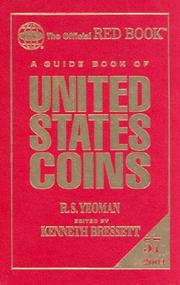
Known universally as the 'Red Book,' this annual guide is the canonical price and identification reference for U.S. coins. It belongs in every collector's hands early and will be referenced for life.

Once you can identify standard coins, this book teaches you to spot valuable die varieties and mint-mark anomalies hiding in ordinary collections — a skill that can turn a modest find into a rare one.
Numismatic History & Rare Coins
IntermediateDevelop a rich understanding of the history behind U.S. coinage, the stories of legendary rare coins, and why certain pieces command extraordinary value.
▸ Study plan for this stage
Pace: 8–10 weeks, ~25–35 pages/day. Start with the Red Book (6–7 weeks, focusing on key sections rather than exhaustive coverage), then dedicate 2–3 weeks to Newman's monograph on the 1804 dollar.
- Morgan Dollar design, mintmarks, and production history (1878–1904, 1921) as documented in Bowers' Red Book
- Grading standards and how condition dramatically affects rarity and value of Morgan dollars
- The legendary 1804 dollar: its mysterious origins, the multiple known specimens, and why it became the most famous American coin
- Provenance and authentication: how ownership history and expert verification establish legitimacy and value
- Market dynamics and collector psychology: why certain dates, mintmarks, and specimens command premium prices
- The relationship between historical context (Comstock Lode silver, U.S. monetary policy) and numismatic significance
- Comparative rarity: how to distinguish between common dates and genuinely scarce or key-date coins
- What are the major design features of the Morgan dollar, and how did they change over its production years?
- Why is the 1804 dollar considered the most famous American coin, and what makes the different specimens (Originals vs. Restrikes) distinct in value and historical importance?
- How does condition grading (using the Sheldon scale or similar) directly impact the value of a Morgan dollar, and what are the key visual markers for each grade?
- What role did mintmarks play in Morgan dollar production, and which mintmark combinations are considered key dates or rare?
- How does provenance—the documented ownership history of a coin—affect its authentication and market value?
- Why did the U.S. Mint produce Morgan dollars in such large quantities, and what historical or economic factors explain the gaps in production?
- Create a visual timeline of Morgan dollar production (1878–1904, 1921) using the Red Book, noting design changes, mintmark variations, and production quantities for each year.
- Examine high-resolution images of at least 10 different Morgan dollars (various dates and mintmarks) and practice grading them using the Sheldon scale; compare your assessments against Red Book valuations.
- Read and annotate Newman's monograph on the 1804 dollar, creating a detailed chart of the known specimens (Originals, Restrikes, Class I–III) with their provenance, current location, and estimated value.
- Research and write a 2–3 page essay on one key-date Morgan dollar (e.g., 1889-CC, 1893-S, 1895-O) using the Red Book as your primary source, explaining why it is rare and valuable.
- Compile a collector's checklist of Morgan dollars by date and mintmark, marking which ones you would prioritize acquiring based on rarity, historical significance, and value-to-cost ratio.
- Interview or correspond with a local coin dealer or experienced collector about how they authenticate Morgan dollars and evaluate provenance; document their methods and insights.
Next up: This stage equips you with deep knowledge of a single iconic series and the historical narratives that drive collector demand, preparing you to explore how these principles apply across other U.S. coin types and to develop your own collecting strategy based on rarity, condition, and provenance.
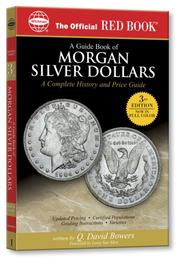
Morgan dollars are among the most collected U.S. coins; this deep-dive covers their history, key dates, mint marks, and grading nuances — a perfect model for how to study any series in depth.
A masterclass in numismatic detective work around one of America's most famous rare coins. Reading this after the history foundations shows how provenance, rarity, and story combine to create legendary value.
Building a Valuable, Curated Collection
ExpertApply professional-level strategies for buying, selling, authenticating, and specializing — transitioning from hobbyist to serious, strategic collector.
▸ Study plan for this stage
Pace: 8–10 weeks, ~40–50 pages/day (Photograde: 2–3 weeks intensive study; Expert's Guide: 5–7 weeks with application work)
- Grading standards and the Sheldon scale: mastering the 70-point system to accurately assess coin condition and market value
- Authentication techniques: identifying counterfeits, alterations, and problem coins using visual inspection, weight, dimensions, and metallurgical analysis
- Market dynamics and pricing: understanding how rarity, demand, historical significance, and condition drive investment-grade coin values
- Specialization strategies: selecting a focused collecting niche (by era, type, mint mark, or variety) to build expertise and competitive advantage
- Buying and selling tactics: negotiating with dealers, evaluating auction results, timing market entry/exit, and building relationships with reputable sources
- Portfolio construction: balancing liquidity, diversification, and long-term appreciation in a curated collection
- Certification and slabbing: evaluating third-party grading services (PCGS, NGC) and understanding how certification affects value and marketability
- How does the Sheldon grading scale work, and what are the key visual differences between MS-64, MS-65, and MS-66 coins?
- What are the primary methods for authenticating rare coins, and how do you identify common counterfeits or problem coins?
- How do rarity, historical significance, and market demand interact to determine the investment value of a coin?
- What specialization strategy would you choose for your collection, and how would you use that focus to build expertise and reduce risk?
- What are the advantages and disadvantages of buying certified (slabbed) coins versus raw coins from dealers?
- How do you evaluate a dealer's reputation, and what red flags should you watch for when buying investment-grade coins?
- Grade 10–15 coins using Photograde's visual standards and the Sheldon scale; compare your grades to certified examples and published auction results to calibrate your eye
- Authenticate 5 suspect coins (or images) by applying Bowers' techniques: check weight, dimensions, strike characteristics, and patina; document your findings
- Build a comparative price analysis: select one coin type (e.g., Morgan dollars, 1950s quarters) and track 20+ sales across auctions, dealer catalogs, and online platforms to identify pricing patterns
- Create a specialization plan: choose a collecting niche, research its history and key varieties, and identify 10–15 target coins you would acquire over the next 2 years
- Conduct a dealer evaluation: contact 3–5 reputable dealers, request price lists or catalogs, compare their offerings and pricing, and document their communication and professionalism
- Simulate a buying decision: select a high-value coin ($500+) from an auction catalog or dealer listing, apply Bowers' valuation framework, and write a 1–2 page investment thesis justifying or rejecting the purchase
Next up: This stage equips you with the professional tools to build and manage a serious collection; the next stage will focus on advanced portfolio strategies, tax implications, estate planning, and leveraging your expertise to mentor others or participate in the collector community at a leadership level.
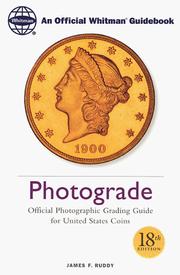
Uses actual photographs of coins at every grade level as a visual reference — the ideal companion to Halperin's text, cementing your eye for quality before you spend serious money at auction or with dealers.
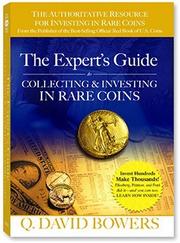
The capstone of this curriculum — Bowers synthesizes market dynamics, authentication, auction strategy, and long-term collection building into one authoritative volume for the collector ready to invest seriously.
Discussion
Keep reading
Paths that share books, cover the same subject, or open a related topic.