Amateur radio for beginners: top books to earn your ham license
This curriculum takes a complete beginner from zero knowledge to confident on-air operator across four tightly sequenced stages. It starts with licensing and core concepts, builds into the physics of antennas and propagation, then advances into operating craft and station-building — each stage assuming the vocabulary and intuition earned in the one before it.
Get Licensed & Learn the Basics
BeginnerPass the Technician (and optionally General) FCC exam and understand the fundamental rules, safety, and concepts of amateur radio.
▸ Study plan for this stage
Pace: 8–10 weeks, ~40–50 pages/day (Technician manual: 4–5 weeks; General manual: 4–5 weeks). Allocate 2–3 days per week for practice exams and hands-on exercises.
- FCC regulations, licensing tiers (Technician, General, Extra), and amateur radio frequency allocations
- Radio wave propagation, antenna fundamentals, and how RF energy travels
- Electrical theory basics: voltage, current, resistance, power, and Ohm's Law
- Modulation modes (AM, FM, SSB, CW) and how they encode information
- Safety practices: RF exposure limits, grounding, and electrical hazards
- Station setup and equipment: transceivers, power supplies, feedlines, and SWR
- Operating procedures: phonetic alphabet, Q-codes, repeater usage, and band plans
- Troubleshooting and maintenance of amateur radio equipment
- What are the key differences between Technician and General class licenses, and what frequency bands does each permit access to?
- Explain the relationship between voltage, current, and resistance using Ohm's Law, and calculate power in a simple circuit.
- How do different modulation modes (FM, SSB, CW) work, and why would you choose one over another for a given situation?
- What are the FCC's RF exposure limits, and how do you ensure your station complies with safety regulations?
- Describe the proper procedure for making a contact on a repeater, including use of phonetic alphabet and Q-codes.
- What is Standing Wave Ratio (SWR), why does it matter, and how do you measure and improve it?
- Take full-length practice exams (Technician and General) from the ARRL manuals' question pools; aim for 85%+ before attempting the real exam.
- Build a simple dipole antenna and measure its resonant frequency using an antenna analyzer or SWR meter.
- Set up a home station with a transceiver, power supply, and feedline; measure and optimize SWR on your antenna.
- Make 10+ contacts on a local repeater, practicing proper phonetics, Q-codes, and operating etiquette; log each contact.
- Solve 20+ circuit problems involving Ohm's Law, power calculations, and impedance matching from the manual's practice sections.
- Research and document the frequency allocations and band plans for Technician and General class privileges in your region.
Next up: Mastery of licensing rules, electrical fundamentals, and basic operating skills positions you to move into the next stage—building practical station skills, exploring specialized modes (digital, satellite, emergency communication), and deepening your understanding of advanced antenna design and RF theory.
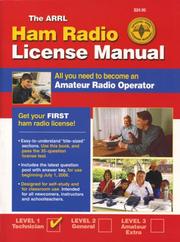
The official ARRL study guide for the Technician exam — the single most widely used licensing resource in the US. Start here to get legally on the air fast.
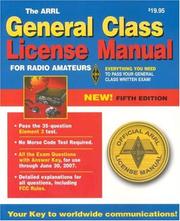
Read immediately after earning your Technician ticket; the General license opens HF (shortwave) bands and is the real gateway to worldwide communication.
Understanding Radio — Electricity & Electronics
BeginnerBuild enough electronics and radio theory intuition to understand why equipment and antennas behave the way they do, without needing an engineering degree.
A gentle, exam-free deep dive into the physics of radio waves, modulation, and propagation that bridges licensing knowledge toward real operating intuition.
Antennas & Propagation
IntermediateUnderstand how radio waves travel and how to build or choose antennas that get your signal out — the single biggest lever on station performance.
▸ Study plan for this stage
Pace: 8–10 weeks, ~40–50 pages/day. Start with ARRL Antenna Book (weeks 1–6, focusing on fundamental antenna types and design principles), then transition to The New Shortwave Propagation Handbook (weeks 7–10, emphasizing real-world propagation conditions and seasonal patterns).
- Antenna fundamentals: radiation patterns, gain, impedance matching, and the relationship between frequency and physical antenna size
- Common antenna types for amateur radio: dipoles, Yagis, verticals, loops, and end-fed wires—their strengths, weaknesses, and practical construction
- Transmission line theory and impedance matching: how to connect antennas to radios efficiently and minimize losses
- Ionospheric propagation mechanisms: skip zones, critical angle, maximum usable frequency (MUF), and how the ionosphere reflects HF signals
- Seasonal and solar cycle effects on propagation: sunspot activity, K-index, A-index, and how to predict band openings
- Ground effects and antenna placement: how terrain, nearby structures, and height above ground affect radiation patterns and performance
- Practical propagation prediction tools: using VOACAP, HF propagation maps, and real-time indices to plan contacts
- Integration of antenna choice with propagation: selecting the right antenna type and orientation for target frequencies and distances
- Explain the relationship between wavelength and physical antenna size, and why a 40-meter dipole performs differently than a 20-meter dipole.
- What is impedance matching, why does it matter, and how do transmission line length and type affect the efficiency of your antenna system?
- Describe the differences between a Yagi, a vertical, and a dipole antenna in terms of radiation pattern, gain, and typical use cases in amateur radio.
- How does the ionosphere reflect radio waves, and what are skip zones? Why can you hear a station 1,000 miles away but not one 100 miles away on HF?
- What is the Maximum Usable Frequency (MUF), and how do sunspot cycles and the K-index influence which bands will propagate on a given day?
- How does antenna height and ground composition affect your radiation pattern and low-angle radiation needed for DX (long-distance) contacts?
- Build or assemble a simple dipole antenna for a single HF band (e.g., 40m or 20m) using the formulas and construction guidance from the ARRL Antenna Book; measure its resonant frequency with an antenna analyzer or SWR meter.
- Measure and document the SWR (Standing Wave Ratio) of your antenna across its intended band; identify the impedance mismatch and experiment with tuning or matching techniques described in the ARRL book.
- Plot the radiation pattern of a Yagi or dipole antenna using EZNEC or another free antenna modeling software (referenced in ARRL Antenna Book); compare theoretical patterns to real-world performance reports.
- Track propagation conditions for one week using real-time indices (K-index, A-index, solar flux) and The New Shortwave Propagation Handbook's prediction tables; log which bands were open and compare to forecasts.
- Use VOACAP or a similar tool (covered in Propagation Handbook) to predict propagation paths to a distant region at different times of day and seasons; verify predictions against actual QSO (contact) logs.
- Redesign or relocate an antenna at your station based on ground effects and height principles from the ARRL book; measure the improvement in signal reports or DX success before and after.
Next up: Mastering antennas and propagation equips you to diagnose why your signal reaches some stations and not others, setting the foundation for the next stage—station design and optimization—where you'll integrate multiple antennas, amplifiers, and receive systems into a coherent, high-performance amateur radio station.

The canonical reference on amateur antennas — covers dipoles, verticals, beams, and feed lines. Read the first half cover-to-cover; use the rest as a reference for life.
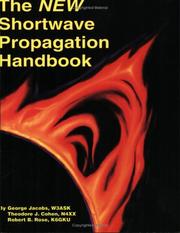
Dedicated entirely to HF propagation — solar cycles, ionospheric layers, gray-line, and band-by-band behavior — giving you the mental model to know when and where to point your signal.
Operating, Station-Building & Going Deeper
IntermediateDevelop real operating skills — contesting, DXing, digital modes, emergency comms — and learn how to assemble a capable, well-engineered station.
▸ Study plan for this stage
Pace: 12–14 weeks, ~40–50 pages/day (with 2–3 practice days per week for hands-on station work)
- Operating protocols and best practices: phonetic alphabet, procedural words (QSOs, CQ calls, RST reporting), band plans, and regulatory compliance
- Contesting fundamentals: exchange formats, logging discipline, multiplier strategy, and optimizing for score in different contest types
- DXing methodology: propagation prediction, spotting networks, pile-up techniques, and low-band DXing specifics (160m, 80m, 40m)
- Digital modes and modern operating: PSK31, FT8, RTTY, and software integration with transceivers
- Station design and RF engineering: antenna systems, feedlines, impedance matching, grounding, and noise reduction
- Receiver performance and selectivity: filters, bandwidth management, and dealing with interference in crowded bands
- Emergency communications: nets, traffic handling, and operating under stress or limited resources
- Practical troubleshooting: diagnosing RF problems, measuring antenna performance, and optimizing station efficiency
- What are the standard RST reporting system and phonetic alphabet, and how do you execute a proper CQ call and respond to a station calling you?
- How do propagation patterns differ on 160m, 80m, and 40m, and what antenna and operating strategies does ON4UN recommend for low-band DXing?
- What is the difference between a run frequency and a search-and-pounce strategy in contesting, and how do you optimize your exchange and logging for score?
- How do you set up and operate FT8 or PSK31 on your station, and what are the advantages and limitations of digital modes compared to SSB?
- What are the key components of a well-engineered station (antenna, feedline, matching, grounding), and how do you measure and troubleshoot RF problems?
- What are the principles of emergency net operation, and how do you handle traffic and maintain discipline during a real emergency activation?
- Execute 10 full CQ calls and QSOs on HF, practicing proper phonetics, RST reporting, and clean operating procedure; log and review each one
- Participate in at least one local or regional HF contest (ARRL CW or SSB, CQWW, or similar); aim for 50+ QSOs and review your log for multipliers and score optimization
- Set up and operate FT8 or PSK31 for at least 5 hours; make 20+ QSOs on digital modes and document the software setup, audio levels, and rig integration
- Conduct a low-band DXing session on 40m or 80m following ON4UN's techniques: identify DX stations, work a pile-up, and analyze propagation conditions during the session
- Measure your antenna's SWR and impedance across a band using an antenna analyzer; identify any issues and adjust feedline routing, matching, or antenna tuning accordingly
- Build or upgrade one station component (dipole antenna, vertical, matching network, or grounding system); document the design, construction, and performance before/after measurements
Next up: Mastery of operating skills and station engineering here establishes the foundation for advanced specialization—whether in antenna theory, RF design, or competitive operating—and prepares you to mentor others and contribute to the broader amateur radio community.
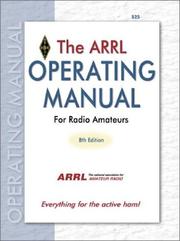
The definitive guide to every major operating activity in amateur radio: DX, contests, nets, digital modes, satellites, and emergency communications. Read it like a menu and go deep on what excites you.

For operators bitten by the DX bug, this advanced classic on 160/80/40m operating and antenna strategy shows the craft and patience that separates good operators from great ones.
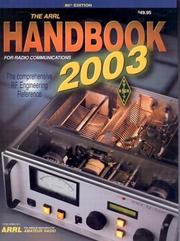
The comprehensive technical bible of amateur radio — circuits, transmitters, receivers, digital modes, and station engineering. Use it as the permanent reference that answers every 'how does this actually work?' question for years to come.
Discussion
Keep reading
Paths that share books, cover the same subject, or open a related topic.