Codex Alera Reading Order: Where to Start
Codex Alera is the easiest reading order on this site: six books, one continuous story, publication order and chronological order identical, no prequels, no novellas, no side stories, and a real ending. The only thing worth knowing before you start is that it is not the Dresden Files — same author, entirely different world, no shared continuity — and that the series was famously written on a bet that Jim Butcher could combine a bad premise with a worse one and still make it work. The stages below simply mark where the story changes scale.
Start Here: Book One
BeginnerLearn the furycrafting system and the politics of Alera through the one character who has no magic at all.
▸ Study plan for this stage
Pace: Two weeks. Furies of Calderon is 476 pages and the first hundred are the slowest in the whole six-book run, because Butcher is teaching you a magic system and an empire at the same time. Give those opening chapters four or five sittings and stop worrying about pace; from roughly the point the storm
- Furycrafting is elemental and personal: every Aleran binds furies of earth, air, fire, water, wood or metal, and social rank is essentially a measure of how much of it you can do. Learn the six elements early — the plot assumes you know which one solves which problem.
- Tavi is the one Aleran in the book with no furies at all. That is the premise, not a late twist, and it is why the world gets explained to you at a pace a powerful protagonist would have made impossible.
- The setting is deliberately Roman: legions, holders and steadholts, Cursors as the imperial intelligence service, a First Lord rather than a king. If a term sounds like Latin, it is doing the job the Latin word does.
- The Marat are the first of several outside peoples, and Butcher's habit is to introduce an enemy and then make you live with their logic. Doroga and Kitai are the test case for that habit.
- Political treachery is set up in this book and never really stops. Note who is working for whom in the opening chapters, because the betrayal that drives the plot is disclosed to the reader long before it is disclosed to the characters.
- The famous origin story — that Butcher wrote the series on a bet that he could take two bad premises, the lost Roman legion and elemental creature-collecting, and make a good book out of both — is visible on the page and is a fair description of what volume one is doing.
- This is not the Dresden Files. Same author, different world, no shared continuity, no crossover, and a third-person multi-viewpoint structure instead of Harry's first person. Nothing you know from those books helps here.
- What can a strong furycrafter do that shapes daily life in the Calderon Valley — travel, farming, war — and what does its absence cost Tavi specifically?
- How does Alera actually govern itself: what is a High Lord, what is a holder, and where does a Cursor sit between them?
- Who betrays whom in this book, and at what point did you know it while the characters did not?
- What do the Marat want, and where does the novel stop treating them as a monster and start treating them as a people?
- By the last chapter, what problem has been solved and what has merely been postponed?
- Write the six fury types on the inside cover with one line each on what they do. You will refer back to it through all six books, and Butcher never re-explains.
- Keep a two-column list as you read: Calderon Valley names on one side, capital and High Lord names on the other. The cast doubles in book two and the split is where confusion starts.
- At the halfway point, stop and say aloud who you think is manipulating the situation from off-page. Then check yourself at the end — the pleasure of the later books is largely this.
- If the first eighty pages feel like a stock farmboy fantasy, keep going to the storm sequence before deciding. That is the honest point at which the book proves what kind of book it is.
Next up: You now have the magic, the map and the political map; the next two books take all three and widen them from one valley to an empire.

The only correct starting point, and it does all the work of teaching you the world: elemental furies, a Roman-styled empire, and a fifteen-year-old shepherd who cannot craft. Butcher front-loads the exposition here so the later books can move, which is why the first hundred pages are the slowest in the series.
The Middle Books
BeginnerWatch the story widen from a valley skirmish to imperial civil war, and pick up the second and third generations of the cast.
▸ Study plan for this stage
Pace: Three to four weeks for 992 pages. Academ's Fury is 544 and Cursor's Fury 448. Read them close together with no long gap — Academ's Fury opens roughly two years on from book one and Cursor's Fury opens directly out of it, and both assume the capital's politics are still fresh in your head. About 40
- Academ's Fury moves Tavi to the Academy in the capital, which is the structural point of the book: the valley taught you the world from below, the capital shows it from the top.
- The Vord enter here, and they are a different order of threat from the Marat — not a people to be understood but an infestation to be survived. Note how differently the narrative treats them.
- Two plots run in parallel across both books, one in the capital and one in the Calderon Valley, and Butcher cuts between them. Neither is filler; they converge.
- Cursor's Fury is the book most readers name as the point the series becomes genuinely good, and the reason is structural: Tavi is given a legion, a false name and a command he is not entitled to, so the story finally lets him act rather than react.
- The Canim arrive as the third outside people, and again the pattern holds — first a horror, then an argument, then a position you can defend. Watch what Butcher does with Nasaug in particular.
- The reveal these two books have been quietly building toward lands in Cursor's Fury. It only works because you have spent 1,400 pages with the information withheld, which is exactly why skipping ahead to the 'good one' ruins it.
- The First Lord's health is a running clock across both volumes. Alera's succession problem is the engine under all the plots, and every faction is positioning against the same expected date.
- What does the Academy show you about Aleran society that the Calderon Valley could not?
- How do the Vord differ from the Marat in what they want, and why does that change the kind of story Butcher can tell with them?
- In Cursor's Fury, what makes Tavi effective as an officer when he still cannot furycraft? Name three specific things he does that a strong crafter would not have thought of.
- Who benefits from the succession crisis, and which of them is playing a longer game than they appear to be?
- The reveal in Cursor's Fury recontextualises book one. Which earlier scene changes most once you know it?
- Before starting Academ's Fury, reread the last chapter of Furies of Calderon. The time skip is easier to absorb from a running start.
- Track the two parallel storylines on a single page — capital events on one line, Calderon events on the other — and mark where they touch. The convergence is the design.
- When the reveal arrives in Cursor's Fury, go back and reread the first chapter of book one immediately. Nothing else on this path repays that ten minutes as well.
- Note every point where Tavi solves a problem with tactics, forgery or negotiation instead of power. That list is the argument the whole series is making.
Next up: With the reveal in hand and the war open, the last three volumes stop being separate novels and become one continuous conclusion.
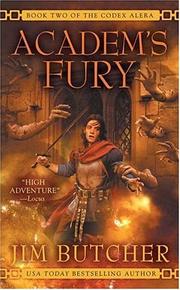
Straight on from book one, with Tavi at the Academy in the capital and a second, far worse enemy introduced. This is where the series stops looking like a standard farmboy fantasy.
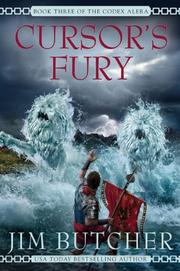
The book most readers name as the point the series becomes genuinely good: a legion, a civil war, and the reveal the first two books were quietly building toward. Do not skip ahead to it — it only lands because of what you already know.
The Back Half
IntermediateFollow the war to its end, in strict order, since the last three volumes are effectively one long conclusion.
▸ Study plan for this stage
Pace: Five to six weeks for 1,513 pages: Captain's Fury 488, Princeps' Fury 560, First Lord's Fury 465. Read them in strict order with the shortest gaps you can manage — Princeps' Fury ends mid-catastrophe by design and reading anything else before the finale is a genuine act of self-harm. Roughly 45 page
- These three are effectively one long conclusion in three volumes. Judged as standalone novels the middle one will look badly shaped; judged as acts of a single book it is doing exactly what it should.
- Captain's Fury opens two years after Cursor's Fury with Tavi commanding in the field. The tone hardens, and from here political manoeuvring costs as many lives as combat does.
- The Canim stop being the enemy and become the complication. Butcher's central move in the back half is to force an alliance between peoples who have already done unforgivable things to each other.
- Princeps' Fury is the darkest of the six and takes the story off the map entirely for a long stretch. It also unleashes the threat the finale exists to answer, so its bleakness is load-bearing rather than gratuitous.
- The Vord Queen is the antagonist the series has been building since Academ's Fury, and she is written as intelligent and adaptive rather than as a swarm. The last two books are largely an argument about whether she can be reasoned with.
- Furycrafting escalates enormously here — great furies, sustained mass-scale crafting, weather as a weapon. The rules established in book one still hold; the scale is what changes.
- First Lord's Fury is a real ending. Six books in, six out, no sequel series, no dangling trilogy. Read the last hundred pages knowing nothing is being held back for later.
- What does Tavi have to concede to make the Canim alliance work, and does the series think the price was right?
- Princeps' Fury spends much of its length away from Alera. What does that absence let Butcher do to the homeland that a present narrator could not?
- How does the Vord Queen learn, and where in the last two books does her learning outpace Alera's?
- Which of the political players from books two and three ends up mattering most in the finale, and were they positioned for it as early as Academ's Fury?
- The series began with a boy who could not furycraft. Does the ending honour that premise or quietly abandon it?
- Six volumes on, what did the Roman framing actually buy the story that a generic fantasy empire would not have?
- Before Captain's Fury, spend ten minutes listing the High Lords and their houses. The back half assumes you can tell Aquitaine, Antillus, Phrygia and Kalare apart without help.
- Read the last chapter of Princeps' Fury and the first chapter of First Lord's Fury on the same day. The join is deliberate and reads as one continuous scene.
- Keep a note of what each of the outside peoples — Marat, Canim, Icemen, Vord — is actually asking for. Laying the four side by side at the end is the clearest way to see the series' recurring argument.
- After the finale, reread the paragraph in Furies of Calderon where Tavi is first described. The distance travelled is the whole point, and it is a two-minute exercise.
- If you enjoyed this and are about to try the Dresden Files, go in expecting nothing in common: first-person urban noir, a different world, no shared continuity. The disappointment readers report is almost always an expectation problem.
Next up: The series is finished and self-contained, so anything you read next is a new commitment rather than a continuation.
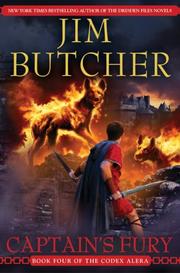
Picks up two years later with Tavi commanding in the field. The tone hardens here, and the political manoeuvring starts to matter as much as the fighting.

The darkest book of the six, and the one that sets the final threat loose. Read it immediately before the finale; it ends mid-catastrophe by design.
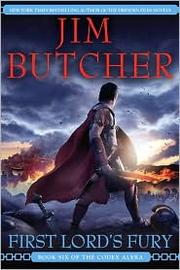
The finale, and a real one — the series ends here, completely, with no sequel series and no loose trilogy waiting. Six books in, six books out, which is rarer in epic fantasy than it should be.
Discussion
Keep reading
Paths that share books, cover the same subject, or open a related topic.