Start with Furies of Calderon. There is nothing to argue about here — Codex Alera is six books telling one continuous story in strict publication order, with no prequels, no side novels and no chronological alternative. What there is to warn you about is the opening.
The first hundred pages of Furies of Calderon are the slowest in the whole run, because Butcher is teaching you a magic system and an empire at the same time. If those pages read like stock farmboy fantasy, keep going to the storm sequence before deciding; that is the honest point at which the book proves what kind of book it is. From there it moves at fifty pages a sitting without effort. Readers who quit almost all quit before it.
One thing to settle before you begin: this is not the Dresden Files. Same author, different world, no shared continuity, no crossover, and a third-person multi-viewpoint structure instead of Harry's first person. Nothing you know from those books helps here, and most reported disappointment with Codex Alera is an expectation problem.
What to hold in your head
Furycrafting is elemental and personal. Every Aleran binds furies of earth, air, fire, water, wood or metal, and social rank is essentially a measure of how much of it you can do. Write the six on the inside cover with one line each — Butcher never re-explains, and the plot assumes you know which element solves which problem. Tavi is the one Aleran with no furies at all, which is the premise rather than a late twist, and it is why the world gets explained at a pace a powerful protagonist would have made impossible.
The setting is deliberately Roman: legions, steadholts, Cursors as the imperial intelligence service, a First Lord rather than a king. Butcher wrote the series on a bet that he could take two bad premises — the lost Roman legion and elemental creature-collecting — and make a good book out of both, and that is a fair description of what volume one is doing.
The middle books
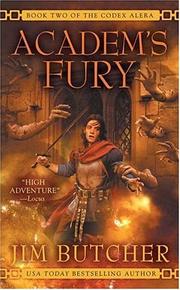
Academ's Fury, then Cursor's Fury. Read them close together with no long gap: the second opens directly out of the first, and both assume the capital's politics are still fresh. Academ's Fury moves Tavi to the Academy, which is the structural point of it — the valley taught you the world from below, the capital shows it from the top. The Vord arrive here, and they are a different order of threat from the Marat: not a people to be understood but an infestation to be survived.
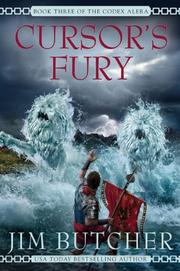
Cursor's Fury is the book most readers name as the point the series becomes genuinely good, because Tavi is finally given a legion, a false name and a command he is not entitled to, so the story lets him act rather than react. Do not skip ahead to it. The reveal it delivers only works because you have spent 1,400 pages with the information withheld, and jumping to the good one destroys the only thing that makes it good.
The back half
Captain's Fury, Princeps' Fury, First Lord's Fury, in strict order with the shortest gaps you can manage. These three are effectively one long conclusion in three volumes. Judged as standalone novels the middle one looks badly shaped; judged as an act of a single book it is doing exactly what it should.
Princeps' Fury is the darkest of the six, takes the story off the map entirely for a long stretch, and ends mid-catastrophe by design. Reading anything else before the finale is a genuine act of self-harm. The Canim stop being the enemy and become the complication — Butcher's central move in the back half is to force an alliance between peoples who have already done unforgivable things to each other — and the Vord Queen is written as intelligent and adaptive rather than as a swarm.
Where it ends
First Lord's Fury is a real ending. Six books in, six out, no sequel series, no dangling trilogy, nothing held back for later. That is unusual enough in epic fantasy to be worth saying plainly, and it is the strongest argument for starting a series that asks for roughly 3,000 pages of your time.
Before Captain's Fury, spend ten minutes listing the High Lords and their houses; the back half assumes you can tell Aquitaine, Antillus, Phrygia and Kalare apart without help. More fantasy series reading orders are on Discover.
Follow the full ordered path here: Codex Alera Reading Order: Where to Start.