Learn Cloud Security: The Best Books, in Order
This curriculum takes an intermediate practitioner from cloud security fundamentals through hands-on AWS/Azure hardening, identity and encryption mastery, and finally into advanced threat modeling and cloud-native defense. Each stage builds the mental models and vocabulary needed to absorb the next, culminating in the ability to design and audit secure cloud architectures end-to-end.
Cloud Security Foundations
IntermediateEstablish a shared vocabulary for cloud risk, the shared-responsibility model, and core controls (IAM, encryption, logging) across major providers before diving into platform specifics.
▸ Study plan for this stage
Pace: 4–5 weeks, ~40–50 pages/day (approximately 200–250 pages total for the foundational chapters on shared responsibility, IAM, encryption, and logging)
- Shared responsibility model: how security duties are divided between cloud provider and customer across IaaS, PaaS, and SaaS
- Cloud risk landscape: unique threats and vulnerabilities introduced by multi-tenancy, virtualization, and distributed infrastructure
- Identity and Access Management (IAM): authentication, authorization, and least-privilege principles in cloud environments
- Encryption fundamentals: data at rest and in transit, key management, and encryption as a foundational control
- Logging, monitoring, and audit trails: visibility into cloud resource activity and compliance requirements
- Compliance and governance frameworks: how regulatory requirements (HIPAA, PCI-DSS, SOC 2) map to cloud controls
- Vendor lock-in and portability: understanding provider-specific implementations and their security implications
- What are the key differences in the shared responsibility model between IaaS, PaaS, and SaaS, and who is responsible for what in each?
- How do multi-tenancy and virtualization introduce unique security risks in cloud environments, and what controls mitigate them?
- What is the principle of least privilege in IAM, and how do you implement it across cloud identities and roles?
- Why is encryption both at rest and in transit critical, and what are the trade-offs between provider-managed and customer-managed key management?
- How do logging and audit trails support both security monitoring and compliance, and what should you log in a cloud environment?
- How do cloud security controls map to common compliance frameworks, and where do gaps often appear?
- Map the shared responsibility model for a specific scenario (e.g., a web application on IaaS): list what the provider secures and what the customer must secure
- Create an IAM policy document that implements least privilege for a fictional cloud application with multiple user roles (admin, developer, viewer)
- Design an encryption strategy for a multi-tier application: specify what data should be encrypted at rest vs. in transit and justify key management choices
- Set up basic cloud logging and monitoring in a free tier account (AWS CloudTrail, Azure Monitor, or GCP Cloud Logging) and interpret a sample audit log
- Conduct a compliance mapping exercise: take a regulatory requirement (e.g., PCI-DSS requirement 3.4 on encryption) and trace how it translates to cloud controls
- Write a brief risk assessment for a hypothetical cloud migration, identifying shared responsibility gaps and proposing mitigating controls
Next up: This stage establishes the foundational vocabulary and principles that apply across all cloud providers, enabling you to recognize how these universal controls (IAM, encryption, logging) are implemented differently in platform-specific architectures in the next stage.

A vendor-neutral primer that maps traditional security disciplines (access control, compliance, incident response) onto cloud models — essential framing before touching AWS or Azure specifics.
Securing AWS in Depth
IntermediateGain practical, hands-on command of AWS-specific security services — IAM policies, SCPs, GuardDuty, KMS, VPC security — and understand how misconfigurations lead to real breaches.
▸ Study plan for this stage
Pace: 4–5 weeks, ~40–50 pages/day, with 2–3 days per week reserved for hands-on labs
- IAM identity-based and resource-based policies: writing, testing, and debugging least-privilege access controls
- Service Control Policies (SCPs) and organizational boundaries: preventing risky actions at the account and OU level
- GuardDuty threat detection: interpreting findings, understanding attack patterns, and responding to suspicious activity
- AWS Key Management Service (KMS): key hierarchies, envelope encryption, key policies, and rotation strategies
- VPC security architecture: security groups, NACLs, VPC Flow Logs, and network segmentation to contain breaches
- Real-world misconfiguration patterns: S3 bucket exposure, overpermissioned roles, unencrypted data, and public databases
- Audit and compliance: CloudTrail, Config, and detective controls to identify and remediate security drift
- Incident response in AWS: containment, forensics, and recovery workflows using native AWS tools
- How do you write an IAM policy that grants only the minimum permissions needed for a specific task, and how do you test it before deployment?
- What is the difference between identity-based and resource-based policies, and when should you use each?
- How do Service Control Policies (SCPs) differ from IAM policies, and how can they be used to enforce security guardrails across an organization?
- What are the main GuardDuty finding types, and how would you respond to a finding indicating potential credential compromise?
- How does KMS key hierarchy work (customer master keys vs. data keys), and why is envelope encryption important for securing large datasets?
- How would you design a VPC security architecture to prevent lateral movement if one EC2 instance is compromised?
- What are the most common AWS misconfigurations that lead to breaches, and how can you detect and remediate them?
- How do you use CloudTrail, Config, and GuardDuty together to create a comprehensive security monitoring and response strategy?
- Create a least-privilege IAM policy for an application that needs to read from a specific S3 bucket and write CloudWatch logs; test it with the IAM Policy Simulator
- Set up an SCP that denies all actions outside your organization's primary AWS region and test it by attempting a cross-region action from a member account
- Enable GuardDuty on your AWS account, generate sample findings using the GuardDuty sample findings feature, and document how you would respond to each finding type
- Create a KMS customer master key (CMK), configure a key policy to allow only specific IAM roles to use it, and encrypt/decrypt test data using the AWS CLI
- Design and implement a multi-tier VPC with public and private subnets, security groups, and NACLs; verify traffic flow with VPC Flow Logs
- Intentionally misconfigure an S3 bucket (make it public) or overpermission an IAM role, then use AWS Config to detect the drift and remediate it
- Enable CloudTrail and Config on your account; create a custom Config rule to detect non-compliant resources (e.g., unencrypted RDS instances)
- Simulate a security incident: assume a compromised IAM user role, use CloudTrail to trace the unauthorized actions, and document a containment and recovery plan
Next up: This stage equips you with hands-on mastery of AWS's core security services and real-world attack patterns, preparing you to architect defense-in-depth strategies and respond to incidents—skills essential for the next stage on advanced threat modeling and multi-account security governance.

A focused, practitioner-oriented guide to AWS security services and patterns; read first to build the AWS-specific mental model before studying attack techniques against it.
Identity, Encryption & Zero Trust
IntermediateMaster the two pillars that underpin every cloud security control — identity (IAM, federation, least privilege) and cryptography (KMS, TLS, secrets management) — and understand Zero Trust architecture as the unifying model.
▸ Study plan for this stage
Pace: 12–14 weeks, ~40–50 pages/day (mix of dense technical content and practical labs)
- Identity and Access Management (IAM) fundamentals: authentication vs. authorization, principals, policies, and the principle of least privilege
- Federation and delegation: SAML, OAuth 2.0, OpenID Connect, and how to decouple identity from application logic
- Zero Trust architecture: the shift from perimeter-based security to continuous verification, and its application across cloud infrastructure
- Cryptographic primitives: symmetric vs. asymmetric encryption, hashing, digital signatures, and when to use each
- Key Management Systems (KMS): key generation, rotation, storage, and lifecycle management in cloud environments
- TLS/SSL and secrets management: securing data in transit and at rest, certificate management, and protecting sensitive credentials
- Practical integration: how IAM, cryptography, and Zero Trust work together to enforce security controls in modern cloud applications
- What is the difference between authentication and authorization, and how does the principle of least privilege apply to both?
- Explain the OAuth 2.0 and OpenID Connect flows described in Wilson's book, and when you would use federation vs. direct identity management.
- What is Zero Trust architecture, and how does it differ from traditional perimeter-based security models?
- Describe the role of symmetric and asymmetric cryptography in modern cloud security, and give examples of when each is appropriate.
- How does a Key Management System (KMS) work, and what are the key lifecycle stages for cryptographic keys?
- What is TLS, how does it protect data in transit, and what are the common pitfalls in certificate management?
- How do IAM, cryptography, and Zero Trust principles combine to create a defense-in-depth security posture in cloud applications?
- Set up a federated identity scenario using OAuth 2.0 or OpenID Connect (e.g., using Auth0, Okta, or a local OIDC provider) and trace the token flow end-to-end.
- Design an IAM policy for a multi-tenant cloud application that enforces least privilege for different user roles (admin, developer, viewer) and document the rationale.
- Implement a Zero Trust access control policy for a sample microservices architecture: define what verification happens at each boundary and how you'd enforce it.
- Generate cryptographic keys using OpenSSL or a cloud KMS (AWS KMS, Azure Key Vault, Google Cloud KMS), rotate them, and document the process.
- Set up TLS/SSL for a web service: generate a self-signed certificate, configure it on a server, and verify the certificate chain and encryption in transit.
- Build a secrets management pipeline (e.g., using HashiCorp Vault, AWS Secrets Manager, or similar) that rotates database credentials and injects them into an application.
- Conduct a security audit of a sample application: identify IAM gaps, cryptographic weaknesses, and Zero Trust violations, then propose remediation steps.
Next up: This stage establishes the foundational security primitives (identity verification and encryption) and the architectural mindset (Zero Trust) that all subsequent cloud security controls—network segmentation, data protection, compliance, and incident response—depend on and reinforce.

Demystifies OAuth 2.0, OIDC, and federation patterns used across AWS Cognito, Azure AD, and cloud-native apps — the vocabulary here is prerequisite for Zero Trust design.

The canonical text on Zero Trust architecture; after understanding identity protocols, this book shows how to apply them to eliminate implicit trust in cloud and hybrid environments.

Provides the rigorous but accessible cryptographic grounding needed to make sound decisions about KMS key policies, TLS configurations, and envelope encryption in any cloud provider.
Multi-Cloud & Cloud-Native Security
ExpertExtend security practices to Azure, Kubernetes, containers, and infrastructure-as-code, and learn to reason about security across heterogeneous cloud-native stacks.
▸ Study plan for this stage
Pace: 12–14 weeks, ~40–50 pages/day (mix of dense technical content and hands-on labs)
- Azure identity and access management (Azure AD, RBAC, managed identities) as a foundation for multi-cloud security
- Azure-specific threat protection: Azure Defender, Azure Security Center, and monitoring across compute, storage, and networking
- Container image security: scanning, signing, registry security, and supply chain integrity
- Runtime container security: isolation mechanisms, seccomp, AppArmor, and detecting container escapes
- Kubernetes architecture security: API server hardening, RBAC, network policies, and secrets management
- Kubernetes attack vectors: privilege escalation, lateral movement, and persistence in cluster environments
- Infrastructure-as-code (IaC) security: securing Terraform/ARM templates and detecting misconfigurations
- Cross-cloud security patterns: applying lessons from Azure and Kubernetes to reason about heterogeneous stacks
- How does Azure AD and RBAC differ from Kubernetes RBAC, and when would you use managed identities vs. service accounts?
- What are the key differences between image-time and runtime container security, and which threats does each address?
- How would you design a secure container supply chain from build to registry to runtime?
- Describe the attack surface of a Kubernetes cluster and explain how network policies, pod security policies, and RBAC mitigate common exploits
- How do you detect and respond to privilege escalation and lateral movement attempts in a Kubernetes environment?
- What security misconfigurations in IaC (Terraform/ARM templates) are most dangerous, and how do you prevent them?
- Set up Azure Security Center and Azure Defender in a test subscription; enable threat detection for VMs, containers, and databases and review alerts
- Build and scan a container image using a vulnerability scanner (Trivy, Clair); sign the image with cosign and verify signatures in a registry
- Deploy a multi-node Kubernetes cluster (AKS or local) and implement network policies to restrict pod-to-pod traffic; verify isolation with test pods
- Configure Kubernetes RBAC: create service accounts, roles, and role bindings; test access control by attempting unauthorized API calls
- Perform a Kubernetes privilege escalation lab: exploit a misconfigured pod (e.g., privileged container, host mount) and demonstrate lateral movement
- Write Terraform code to deploy a secure Azure environment; use a policy-as-code tool (Checkov, Sentinel) to detect and fix misconfigurations
Next up: This stage equips you to secure modern, distributed cloud-native architectures across multiple platforms; the next stage will likely focus on advanced threat detection, incident response automation, and organizational security governance at scale.
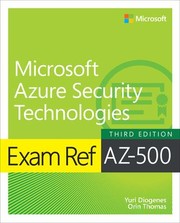
The authoritative practitioner reference for Azure security controls (Defender for Cloud, Azure AD, Key Vault, Policy) — pairs with the AWS knowledge already built to enable true multi-cloud thinking.

Covers Linux primitives, image hardening, Kubernetes RBAC, and runtime security — essential for securing cloud-native workloads that run on top of both AWS EKS and Azure AKS.
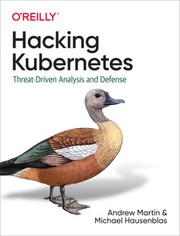
Read after Container Security to see the attacker's view of Kubernetes clusters, reinforcing every defensive control with a concrete threat scenario.
Threat Modeling & Secure Architecture
ExpertSynthesize everything into a repeatable, structured process for designing secure cloud systems from scratch — identifying threats, validating architectures, and embedding security into the SDLC.
▸ Study plan for this stage
Pace: 8–10 weeks, ~40–50 pages/day (with 2–3 days/week for exercises and architecture reviews)
- STRIDE threat modeling methodology: systematically identifying threats across Spoofing, Tampering, Repudiation, Information Disclosure, Denial of Service, and Elevation of Privilege
- Data flow diagrams (DFDs) as the foundation for threat modeling—translating architecture into visual threat surfaces
- Threat trees and attack trees: decomposing attack paths to understand attacker motivation, capability, and likelihood
- Security chaos engineering: proactively injecting failures and attacks into production to validate security assumptions and detect weaknesses before adversaries do
- Embedding threat modeling into the SDLC: making threat modeling a repeatable gate in design, code review, and deployment phases
- Risk quantification and prioritization: translating threats into actionable mitigations ranked by impact and likelihood
- Architectural validation through adversarial thinking: designing for resilience by assuming compromise and testing recovery
- Continuous security validation: treating security architecture as a living system that evolves with threat landscape and operational reality
- How do you construct a data flow diagram for a multi-tier cloud application, and what are the key trust boundaries you must identify?
- Walk through the STRIDE framework: for a given cloud service (e.g., API gateway, database, message queue), what specific threats apply to each category, and how do you prioritize them?
- What is the difference between a threat tree and an attack tree, and when would you use each in threat modeling?
- How do you embed threat modeling as a repeatable process into your SDLC—what gates, artifacts, and roles are required?
- Describe a security chaos engineering experiment: what assumption are you testing, what blast radius do you accept, and how do you measure whether your architecture actually defended as designed?
- Given a cloud architecture with a known vulnerability, how would you use threat modeling and chaos engineering together to validate a mitigation strategy?
- Build a detailed data flow diagram (DFD) for a real or realistic cloud application (e.g., SaaS platform, microservices backend, IoT ingestion pipeline). Identify all trust boundaries, external entities, data stores, and processes. Validate it with a peer.
- Perform a full STRIDE threat modeling session on your DFD: for each element (process, data store, data flow, external entity), systematically enumerate threats in each STRIDE category. Document each threat, its likelihood, impact, and initial mitigation ideas.
- Create an attack tree for one high-impact threat from your STRIDE analysis. Decompose the attack into sub-goals, identify prerequisites and attacker capabilities required at each node, and mark which branches your current architecture defends against.
- Design a security chaos engineering experiment for your architecture: choose one security assumption (e.g., 'our encryption key rotation is transparent to applications' or 'our WAF blocks 99% of injection attacks'), define the blast radius, inject a controlled failure or attack, and measure whether the system behaves as expected.
- Document a threat modeling and mitigation workflow for your organization: define roles (threat modeler, architect, developer, security champion), gates in the SDLC (design review, code review, pre-deployment), required artifacts (DFDs, threat registers, test plans), and decision criteria for accepting or rejecting risk.
- Conduct a post-incident threat modeling review: take a real or realistic security incident in a cloud system, reconstruct the attack path, identify which STRIDE threats it exploited, and design both immediate mitigations and architectural changes to prevent recurrence.
Next up: This stage transforms you from understanding individual security controls into architecting resilient systems that anticipate and survive attacks—preparing you to apply these structured threat modeling and chaos engineering practices to real-world cloud deployments and incident response.

The definitive text on threat modeling methodology (STRIDE, data-flow diagrams, attack trees); provides the structured thinking needed to audit any cloud architecture systematically.

Closes the curriculum by showing how to validate that all the controls built throughout the path actually hold under real adversarial conditions — moving from design to continuous assurance.
Discussion
Keep reading
Paths that share books, cover the same subject, or open a related topic.