How to learn Chess
This curriculum takes a complete beginner from knowing nothing about chess to a deeply strategic and tactical player. Each stage builds on the last: first you learn the rules and basic instincts, then you sharpen tactics, then you develop positional and strategic thinking, and finally you study the endgame and master-level concepts that separate good players from great ones.
Foundations: Rules, Patterns & First Principles
BeginnerUnderstand the rules, basic piece values, fundamental checkmate patterns, and how to think during a game — enough to play confidently and purposefully.
▸ Study plan for this stage
Pace: 6–8 weeks total. Week 1–4: Chess Fundamentals by Capablanca (~15–20 pages/day, reading slowly and replaying every example on a real or digital board). Week 5–8: Bobby Fischer Teaches Chess (~20–25 pages/day, treating every diagram as an active puzzle — cover the answer and solve before reading on).
- Piece movement, captures, and special rules (castling, en passant, promotion) as laid out in Capablanca's opening chapters
- Relative piece values and material balance — Capablanca's framework for deciding when to trade
- King safety and the principle of keeping the king sheltered, especially Capablanca's endgame-first philosophy
- Fundamental checkmate patterns: back-rank mate, smothered mate, and the two-rook roller, introduced through Capablanca's examples and drilled in Fischer's puzzles
- Back-rank weakness recognition — the single most repeated tactical theme throughout Bobby Fischer Teaches Chess
- Counting attackers and defenders before capturing: Fischer's step-by-step method of verifying a combination before playing it
- Basic endgame technique from Capablanca: king + queen vs. king, king + rook vs. king, and the opposition in king-and-pawn endings
- The habit of asking 'Why did my opponent make that move?' before every reply — the thinking process Capablanca emphasizes throughout Chess Fundamentals
- Can you explain every legal move in chess — including castling conditions, en passant, and pawn promotion — without hesitation?
- Using Capablanca's piece-value scale, how would you evaluate whether a trade of a bishop for three pawns is favorable, and why?
- What is a back-rank weakness, and how does Bobby Fischer Teaches Chess train you to spot and exploit it?
- Describe the step-by-step thinking process Fischer uses in his puzzles: what questions do you ask yourself before committing to a combination?
- Walk through the technique for delivering checkmate with king + rook vs. lone king, following Capablanca's method.
- What does Capablanca mean by 'the opposition' in king-and-pawn endgames, and why is it decisive?
- Replay every annotated game and diagram in Chess Fundamentals on a physical or digital board — do not just read the moves, physically make them and pause to understand why Capablanca chose each one.
- After finishing Chess Fundamentals, practice the three fundamental endgames (K+Q vs. K, K+R vs. K, K+P vs. K) against a chess engine set to its weakest level until you can convert each from any starting position within 10 minutes.
- Work through Bobby Fischer Teaches Chess cover-to-cover as a pure puzzle book: cover each solution page, write down your answer, then check — track your score per chapter to measure improvement.
- Set up the back-rank mate positions from Fischer's book from memory after finishing each chapter; if you cannot reconstruct them, re-read that chapter before moving on.
- Play 10 slow games (15+10 or longer) on a free platform (Lichess or Chess.com), and after each game use the engine analysis to identify: (a) the moment you lost or gained the most material, and (b) any missed back-rank tactics.
- Keep a one-page 'pattern journal': every time you encounter a new checkmate or tactical pattern in either book, sketch the diagram and write one sentence explaining the key condition that makes it work.
Next up: By internalizing Capablanca's first principles and Fischer's pattern-recognition drills, the reader can now play purposeful, rule-sound chess — creating the tactical vocabulary and board vision needed to study opening theory, middlegame strategy, and more complex combinations in the next stage.
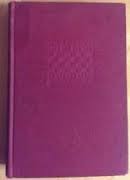
Written by a World Champion, this slim classic teaches the absolute essentials — piece movement, basic endings, and simple strategy — with unmatched clarity. It is the ideal first book because it builds correct intuition from move one.
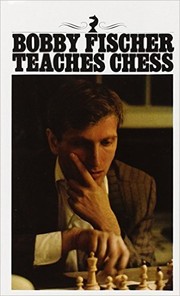
A programmed-learning workbook that drills back-rank mates and basic tactical patterns through hundreds of puzzles. Reading it second cements the pattern recognition that Capablanca's prose introduces.
Tactics: Calculation & Combinational Vision
BeginnerRecognize and execute the core tactical motifs (forks, pins, skewers, discovered attacks, sacrifices) reliably, and develop the habit of calculating short variations before moving.
▸ Study plan for this stage
Pace: 8–10 weeks total. Weeks 1–5: Seirawan's "Winning Chess Tactics" — read ~15–20 pages per day, pausing after each tactical motif chapter to solve all embedded puzzles before moving on. Weeks 6–10: Bain's "Chess Tactics for Students" — work through ~8–12 puzzle sets per day, treating every diagram as a
- Forks (double attacks): recognizing when one piece can simultaneously attack two or more enemy pieces, as introduced and drilled in Seirawan's dedicated fork chapter
- Pins: distinguishing absolute pins (against the king) from relative pins (against a valuable piece) and exploiting both, per Seirawan's pin chapter
- Skewers: understanding the skewer as the 'reverse pin' — attacking a high-value piece to win the piece behind it, covered in Seirawan
- Discovered attacks and discovered checks: seeing how unmasking one piece unleashes another, one of the most powerful motifs Seirawan illustrates with master games
- Double check: the most forcing move in chess — only a king move answers it — as explained in Seirawan's combination chapters
- Sacrifices and combinations: using Seirawan's master-game examples to understand that material can be given up to open lines, expose the king, or force a tactical sequence
- The 'Seeds of Tactical Destruction': Seirawan's framework for spotting preconditions (undefended pieces, exposed kings, overloaded defenders) that signal a tactic is available
- Short-variation calculation habit: applying the 'candidate moves' thought process from Seirawan, then reinforcing it at speed through the high-volume puzzle sets in Bain's book
- After reading Seirawan, can you name and define all five core tactical motifs (fork, pin, skewer, discovered attack, double check) in your own words and give a one-sentence example of each?
- What are Seirawan's 'Seeds of Tactical Destruction,' and how do you use them as a pre-move checklist to decide whether a combination might exist in a position?
- When working through Bain's puzzle sets, can you consistently identify WHICH motif is being tested before calculating the solution — and does naming the motif first speed up your calculation?
- How do you distinguish a combination from a simple tactic, based on Seirawan's master-game examples — and why does a combination often require a temporary sacrifice?
- After completing Bain's book, what is your solve rate on first attempt, and which motif category produced the most errors? What does that tell you about your next training focus?
- Can you reconstruct a 3-move forcing sequence from any puzzle in Bain's book 24 hours after solving it, demonstrating that you calculated rather than guessed?
- Motif flashcard drill (Seirawan phase): After each chapter in Seirawan, write one index card per motif with a hand-drawn diagram of the key position from that chapter. Quiz yourself daily — cover the solution and reconstruct the winning move.
- 'Name it before you solve it' rule (both books): Before calculating any puzzle in Seirawan or Bain, write down the motif you expect to find (fork, pin, etc.). Track your accuracy. This builds pattern recognition separate from calculation.
- Timed puzzle sprints (Bain phase): Set a 2-minute timer per puzzle in Bain's book. Record pass/fail. After every 20 puzzles, review all failures, identify the motif, and redo them untimed to understand the pattern fully.
- Seeds of Tactical Destruction checklist (Seirawan phase): After finishing Seirawan's framework chapter, create a personal written checklist (undefended pieces? exposed king? overloaded piece? pinned defender?). Apply it to every position in Bain's book before calculating.
- Error log journal (Bain phase): Keep a dedicated notebook for every puzzle you get wrong in Bain. Write the position, the motif, why you missed it, and the correct calculation tree. Review the entire log at the end of week 10.
- Board replay of Seirawan's master games: For at least 5 of the complete master-game combinations Seirawan presents, set up the position on a physical or digital board, play through the combination move by move, then reset to the starting position and replay from memory 24 hours later.
Next up: ">Mastering the five core motifs and building a reliable calculation habit in this stage directly prepares the reader for the next stage — positional and strategic thinking — where recognizing the ABSENCE of immediate tactics teaches you to instead improve piece placement, control key squares, and build long-term advantages.
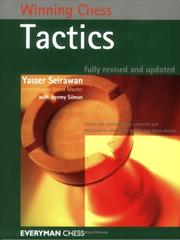
Seirawan explains every major tactical theme with clear prose and well-chosen examples before presenting exercises — a gentler on-ramp to combinational play than pure puzzle books.
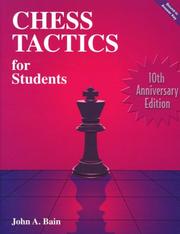
A focused drill book of 434 positions organized by theme. After Seirawan's explanations, this book builds the repetition and speed needed to spot tactics automatically in real games.
Strategy & Positional Play
IntermediateUnderstand pawn structure, piece activity, weak squares, open files, and long-term planning — moving beyond 'find the tactic' toward coherent strategic thinking.
▸ Study plan for this stage
Pace: 12–16 weeks total, divided across three books: Weeks 1–4 — "Winning Chess Strategies" (~20–25 pages/day, lighter read, builds intuition); Weeks 5–10 — "My System" (~15–20 pages/day, dense theory, re-read difficult chapters); Weeks 11–16 — "How to Reassess Your Chess" (~20–25 pages/day, apply everyth
- Pawn structure archetypes (isolated pawns, doubled pawns, passed pawns, pawn chains) and how they dictate long-term plans — introduced by Seirawan and deepened by Nimzovich and Silman
- Piece activity and the principle of placing pieces on their optimal squares — Seirawan's 'winning strategies' are largely built on this foundation
- Nimzovich's concept of Blockade: using pieces (especially knights) to neutralize passed or advanced enemy pawns by occupying the square directly in front of them
- Prophylaxis: anticipating and preventing the opponent's plans before they materialize, a cornerstone idea in 'My System'
- The Outpost: a square that cannot be attacked by enemy pawns, serving as a permanent home for a piece — central to Nimzovich's positional thinking
- Open and half-open files: how to seize, control, and exploit them with rooks, as systematically explained by Nimzovich and reinforced by Silman
- Silman's Imbalances framework: cataloguing the differences between two positions (bishop vs. knight, space, pawn structure, king safety, etc.) to generate a concrete, position-specific plan
- Long-term planning vs. short-term tactics: learning to ask 'What is my strategic goal here?' before calculating moves — the unifying thread across all three books
- After reading Seirawan, can you identify the pawn structure in a given position and articulate one concrete long-term plan for each side based on it?
- Can you explain Nimzovich's concept of Blockade in your own words, give an example piece and square, and describe why it is strategically powerful?
- What is an 'outpost' according to 'My System', and how do you go about creating one — what pawn moves or exchanges are required?
- How does Silman define an 'imbalance', and can you list at least five types of imbalances he identifies and explain how each one suggests a plan?
- Given a middlegame position, can you apply Silman's thinking technique — identify all imbalances, determine who they favor, and propose a multi-move strategic plan?
- How do the ideas of open files (Nimzovich) and piece activity (Seirawan) connect to Silman's concept of 'creating a target' and then attacking it?
- **Pawn Structure Drill (Seirawan phase):** After each chapter of 'Winning Chess Strategies', set up 5 positions from your own games or a database that share the pawn structure discussed. Write one sentence stating White's plan and one stating Black's plan before checking any engine or notes.
- **Nimzovich Annotation Exercise (My System phase):** Play through 10 annotated master games featuring isolated or passed pawns. For each, pause at move 15–20 and write down: (a) which pawns are weak, (b) which piece is the ideal blockader, and (c) what outpost squares exist — then compare your notes to the game continuation.
- **Outpost Creation Practice:** Using a chess board or software, set up positions with a knight vs. bishop imbalance. Manually play both sides, with the goal of either creating or destroying an outpost square. Repeat with 5 different pawn structures.
- **Silman Imbalance Worksheet:** For every 'How to Reassess Your Chess' chapter, take the example positions and fill out a written 'imbalance checklist' (material, pawn structure, space, piece activity, open files, king safety, minor piece quality) before reading Silman's own assessment. Score yourself on how closely your plan matched his.
- **Blind Strategic Planning:** Take 20 positions from master games (middlegame only, no annotations) and write a 3–5 move strategic plan for the side to move using only Silman's imbalance method. Then look up the actual game to see how your plan compares — focus on the reasoning process, not just the moves.
- **Cross-Book Synthesis Review:** At the end of all three books, select 5 of your own recent games. Annotate each using all three lenses simultaneously — Seirawan's piece activity, Nimzovich's blockade/outpost/prophylaxis, and Silman's imbalances — and identify the single moment in each game where a clearer strategic understanding would have changed the outcome.
Next up: Mastering positional thinking and long-term planning through these three books equips the reader with the strategic vocabulary and evaluation framework needed to tackle the next stage — advanced calculation, dynamic play, and complex decision-making — where tactics and strategy must be synthesized under practical time pressure.
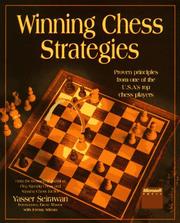
The natural companion to Seirawan's tactics book, it introduces positional concepts (outposts, bishop vs. knight, rook on the seventh) in the same accessible style, bridging tactics and deep strategy.
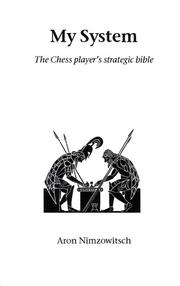
The most influential strategy book ever written, introducing prophylaxis, blockade, and the concept of the passed pawn. It belongs here — after tactical and basic strategic grounding — because its ideas require a foundation to fully appreciate.
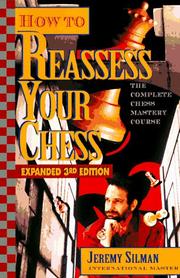
Silman's 'imbalances' framework gives the reader a practical, structured method for forming plans in any position. It synthesizes and operationalizes everything learned so far into a repeatable thought process.
Endgame Mastery
IntermediateMaster essential king-and-pawn endings, rook endings, and piece endings — the phase of the game most directly tied to converting advantages and saving difficult positions.
▸ Study plan for this stage
Pace: 16–20 weeks total. Weeks 1–8: Silman's Complete Endgame Course — read by skill-level chapter (don't skip ahead; Silman structures the book so each tier builds on the last), targeting ~20–25 pages/day, 5 days/week. Weeks 9–20: Dvoretsky's Endgame Manual — denser and more analytical; slow to ~15 pages
- King activity and opposition: understanding direct, diagonal, and distant opposition as the engine of king-and-pawn endings (Silman lays this out progressively by rating tier)
- The Rule of the Square and pawn promotion races: quickly calculating whether a king can catch a passed pawn without moving a piece
- Key squares and the concept of zugzwang: recognizing positions where the obligation to move is a fatal disadvantage, central to both Silman's instructional examples and Dvoretsky's deeper analysis
- Lucena and Philidor positions: the two foundational rook-ending blueprints that Dvoretsky drills exhaustively — every rook ending traces back to one of these
- Rook activity vs. passivity: Dvoretsky's core principle that an active rook (attacking or cutting off the enemy king) almost always outweighs material considerations in the endgame
- Piece-specific endings — bishop vs. knight, same-colored vs. opposite-colored bishops, and rook vs. minor piece: understanding when material equality masks a winning or drawing imbalance
- The 'shouldering' technique and king cut-off with rooks: using the rook to restrict the opposing king's movement, a recurring motif in Dvoretsky's rook chapters
- Practical saving techniques: stalemate traps, fortress construction, and the 50-move rule — Silman introduces these conceptually and Dvoretsky provides tournament-level examples
- After working through Silman's tiered chapters, can you explain why king centralization is the single most important endgame principle, and give a concrete example of a K+P ending where it is decisive?
- Can you set up and correctly execute both the Lucena (building a bridge) and Philidor (third-rank defense) positions from memory, and explain which side each favors and why?
- What is zugzwang, and can you identify at least two types of positions from Dvoretsky's manual where it appears — one in a pawn ending and one in a piece ending?
- How do you evaluate a bishop vs. knight ending? What pawn-structure features (open vs. closed, passed pawns, pawn islands) tip the balance, as discussed in Dvoretsky's piece-ending chapters?
- What is the 'cut-off' technique in rook endings, and how does restricting the enemy king by one file or rank change the theoretical result of a position?
- How does Silman's skill-tiered approach change what you are expected to know at the 'Class D' level versus the 'Expert/Master' level, and which concepts from the lower tiers reappear in more complex form in Dvoretsky?
- Flashcard drilling of critical positions: After each Silman chapter tier, set up the 3–5 most important positions on a physical or digital board (e.g., Lucena, Philidor, K+P opposition) and practice reaching the correct result from both sides without looking at the book.
- Blind reconstruction: Close Dvoretsky's Endgame Manual, write down the name of a position type (e.g., 'Rook + pawn vs. Rook, pawn on the 6th rank'), set it up from memory, and attempt to solve it before re-reading the relevant section to check your logic.
- Timed solving sessions: Pick 10 endgame studies or exercises from Dvoretsky's exercise sections, set a 5-minute timer per position, write down your candidate moves and conclusion, then compare with Dvoretsky's analysis — track your accuracy over weeks to measure improvement.
- Play out theoretical endings against a chess engine set to 'endgame tablebase' mode: Focus specifically on the K+P, R+P vs. R, and B vs. N endings covered in both books; try to hold or win each position and note where your play diverges from the engine.
- Annotate your own recent games: After finishing Silman, go back to 5–10 of your own completed games and identify the moment the endgame began, evaluate whether the resulting ending was theoretically won/drawn/lost, and note which concept from Silman or Dvoretsky was most relevant.
- Weekly 'concept pairing' review: At the end of each week, choose one concept from Silman and find its corresponding deeper treatment in Dvoretsky (e.g., Silman's introduction to rook endings → Dvoretsky's Lucena/Philidor chapter) and write a one-page comparison of how each author presents it and what new detail Dvoretsky adds.
Next up: Mastering the forced logic and precise calculation of endgames — especially Dvoretsky's emphasis on concrete, move-by-move accuracy — directly sharpens the tactical vision and long-range planning skills needed to study middlegame strategy and advanced calculation at the next stage.
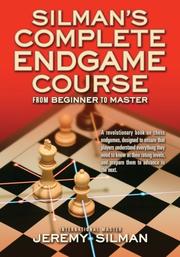
Uniquely organized by rating level, this book lets you study only the endgames relevant to your current strength and progress naturally. It is the most practical endgame primer available for improving players.
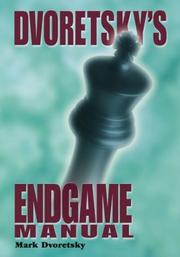
The definitive advanced endgame reference, covering theoretical positions with rigorous depth. Reading it after Silman ensures you have the intuition to absorb its precision without being overwhelmed.
Mastery: Thinking Like a Grandmaster
ExpertDevelop a grandmaster-level thought process, understand how elite players evaluate positions and make decisions under uncertainty, and synthesize all prior learning into a unified, mature chess understanding.
▸ Study plan for this stage
Pace: 10–14 weeks total. Weeks 1–5: "Think Like A Grandmaster" (~20–25 pages/day, including deep study of annotated variations — do not rush). Weeks 6–14: "Garry Kasparov on My Great Predecessors, Part 1" (~15–20 pages/day, pausing frequently to replay games on a board and study Kasparov's annotations in
- The Candidate Moves Method (Kotov): systematically generating and tree-searching candidate moves rather than thinking randomly or re-examining the same lines repeatedly
- The Analysis Tree: how to construct, prune, and evaluate a branching tree of variations without losing your place or double-counting lines
- Positional vs. Combinational Thinking: Kotov's distinction between positions that demand concrete calculation and those that call for strategic/prophylactic judgment
- Evaluation of a Position: the grandmaster checklist — material balance, king safety, pawn structure, piece activity, open files, weak squares — applied as a disciplined pre-move routine
- Time Pressure and Decision-Making Under Uncertainty: Kotov's advice on when to trust calculation vs. intuition, and how to avoid 'time-trouble thinking'
- Historical Evolution of Chess Thought (Kasparov): how Steinitz, Lasker, Capablanca, Alekhine, and others each advanced the conceptual frontier of the game, and what each contributed to the grandmaster mindset
- Kasparov's Annotative Method: reading deeply annotated master games as a tool — understanding not just what move was played but why alternatives were rejected and what the critical moments were
- Synthesis — Unifying Strategy and Tactics: recognizing that elite chess is the seamless integration of long-range planning, concrete calculation, psychological pressure, and dynamic piece play
- According to Kotov, what is the fundamental error most club players make when calculating, and how does the candidate moves method correct it?
- How do you construct an analysis tree for a complex tactical position? What are the rules Kotov gives for when to stop calculating a branch?
- What does Kasparov identify as Steinitz's revolutionary contribution to chess theory, and how did Lasker's pragmatic approach both build on and challenge it?
- How did Capablanca's style differ from Alekhine's, and what does Kasparov's comparative analysis reveal about the tension between technique and creativity at the highest level?
- Using Kotov's evaluation checklist, how would you assess a position where you have a structural advantage but your opponent has active piece play — which factors take priority and why?
- After studying both books, how would you describe the 'grandmaster thought process' in your own words — what happens in a master's mind between receiving a position and committing to a move?
- Candidate Moves Drill (Kotov): Select 10 complex middlegame positions from your own games or puzzle books. Before looking at any solution, write down ALL candidate moves, then build a written analysis tree to at least 3 plies deep. Compare your tree to the engine/solution and identify where you missed branches or incorrectly pruned.
- Timed Calculation Sessions: Set a chess clock for 20 minutes and work through a single sharp position from 'Think Like A Grandmaster.' Practice Kotov's rule of examining each candidate once and not revisiting — train yourself to commit to a line.
- Game Reconstruction (Kasparov's Predecessors): Pick one complete game from 'My Great Predecessors, Part 1' (e.g., a Capablanca endgame or an Alekhine attacking game). Replay it on a physical board, cover Kasparov's notes, and write your own move-by-move commentary. Then compare your annotations to Kasparov's — note every point of divergence.
- Historical Style Imitation: After reading each player's chapter in Kasparov's book, play 3–5 online games consciously attempting to emulate that player's style (e.g., Capablanca's simplification and endgame technique, Alekhine's dynamic piece sacrifices). Reflect in writing on what felt natural and what was difficult.
- Pre-Move Checklist Practice: For one full week of online or OTB play, force yourself to run through Kotov's positional evaluation checklist (material, king safety, pawn structure, piece activity, weak squares, open files) before committing to ANY move in the middlegame. Keep a log of positions where the checklist changed your decision.
- Synthesis Essay: After finishing both books, write a 1–2 page personal 'Chess Philosophy Statement' — your own articulation of how you will think at the board, which grandmaster's style resonates most with you, and how Kotov's methodology will govern your calculation. Revisit this essay in 6 months and revise it.
Next up: By internalizing Kotov's disciplined calculation framework and Kasparov's panoramic view of how chess mastery evolves historically, the reader is now equipped to engage with the most demanding practical and theoretical material — opening preparation at depth, endgame precision, and the psychological dimensions of competitive play — which form the natural frontier beyond this stage.
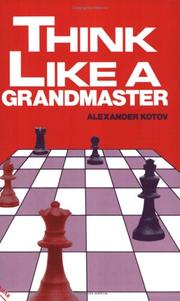
Kotov's classic introduces the 'candidate moves' method of calculation and explains how strong players organize their thinking — a crucial bridge from knowing chess to thinking about chess correctly.
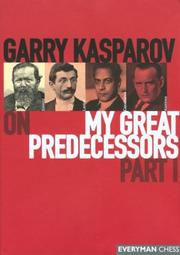
Kasparov's deeply annotated games of the early World Champions show how all strategic, tactical, and endgame concepts combine at the highest level. Reading annotated masterpieces is the final stage of deep learning in chess.
Discussion
Keep reading
Paths that share books, cover the same subject, or open a related topic.