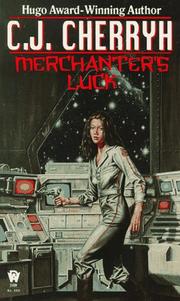
Start with Merchanter's Luck. The two obvious candidates are Downbelow station, which won the Hugo in 1982, and Cyteen, which won it in 1989 and is her acknowledged masterpiece. Both are bad first Cherryh novels. Downbelow station opens with several pages of compressed future history and then juggles a dozen viewpoints across a station under siege; Cyteen is nearly seven hundred pages of laboratory politics and psychological conditioning. Readers who start there generally do not finish.
Merchanter's Luck is short, has two significant characters, and takes place mostly aboard one battered ship. It teaches you how Cherryh writes without asking you to hold a political map in your head at the same time. That matters, because the difficulty in her work is technique rather than plot: she writes in an extremely tight third person that never steps outside a character's head to explain anything. If the character knows what a stationer or a jump point is, you are not told. The first fifty pages of any Cherryh novel are meant to be disorienting, and they resolve.
The Alliance-Union core, in reading order
After Merchanter's Luck, read Downbelow station. It is the pivot of the whole future history — the war between Earth's Company fleet, the merchanter ships and the new Union — and it is far easier once you already know how a merchanter family works.
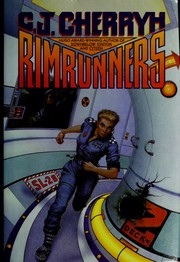
Then Rimrunners, a grim, close-focused novel about a stranded ex-soldier taking a berth on a ship that should not have hired her, and Finity's end, the most conventionally structured of the merchanter books and the gentlest.
Cyteen comes next, and it is worth the wait. It is about the cloning of a murdered scientist and the deliberate reconstruction of a personality, and it is the best thing she has written. Note that some paperback editions split it into three volumes titled The Betrayal, The Rebirth and The Vindication; that is one novel in three parts, not a trilogy. Regenesis is the direct sequel, published twenty years later, and most readers find it a considerable step down — it is for people who did not want Cyteen to end.
Serpent's Reach sits far along the same timeline and is one of her most accessible standalones: a human society bound into the caste structure of a hive-forming alien species.
The Chanur books
The Pride of Chanur is the other genuinely good entry point to Cherryh, and if space opera with almost no humans in it appeals, start here instead. The viewpoint character is a lion-like hani captain, and the human aboard her ship is the incomprehensible alien.
Then a warning that matters: Chanur's venture, The Kif Strike Back and Chanur's homecoming are one continuous novel published in three volumes. They do not have individual endings. Do not begin Chanur's venture unless you have the other two, or you will stop mid-scene. A later standalone, Chanur's Legacy, is not in our catalogue.
Foreigner
Foreigner begins a separate sequence, now well past twenty books, and it is her most popular work. It is also the book with the most notorious opening: roughly the first eighty pages are two prologue sections covering a lost starship and a war two hundred years before the actual protagonist appears. A great many readers give up in there. Push through to Bren Cameron, the human translator living alone among the atevi, and the series becomes what its admirers describe — a very slow, very detailed novel about diplomacy and misread intentions.
Invader and Inheritor complete the first arc. Three-book arcs are the structure throughout the sequence, so this is a clean place to stop.
On chronology
Alliance-Union has an internal timeline spanning centuries, and reading by it is a mistake. Cherryh wrote the books out of order, each assumes nothing, and the chronological first books are not the accessible ones. Read by difficulty. More science fiction paths are on Discover.
Follow the full ordered path here: C.J. Cherryh books in order: where to start with the Alliance-Union universe.