Buy a used car without getting burned
This curriculum takes a complete beginner from "I know nothing about cars" to a confident, savvy used-car buyer in four progressive stages. It starts by building mechanical literacy and consumer awareness, then moves into hands-on inspection skills, negotiation tactics, and finally the financial and legal layer that protects you from the costliest traps.
Foundations — How Cars Work & the Buying Landscape
BeginnerUnderstand how a car works well enough to talk intelligently with sellers and mechanics, and get a clear map of the used-car market so you know what you're walking into.
▸ Study plan for this stage
Pace: 6–8 weeks total: Weeks 1–2 on "How Cars Work" by Tom Newton (~15–20 illustrated pages/day, revisiting diagrams before moving on); Weeks 3–8 on "Auto Repair for Dummies" by Deanna Sclar (~25–30 pages/day, skipping advanced repair procedures and focusing on diagnosis, inspection, and maintenance chapt
- The four-stroke combustion cycle (intake, compression, combustion, exhaust) as explained in Newton's visual breakdowns — the conceptual backbone for understanding engine health
- Major systems and their relationships: engine, cooling, fuel, electrical/battery, transmission, braking, and suspension — Newton maps these as interconnected systems, not isolated parts
- How to 'read' a car's vital signs: fluid levels, fluid color/condition, belt wear, and tire wear patterns as covered in Sclar's maintenance chapters
- The difference between scheduled maintenance and deferred maintenance, and why a used car's service history reveals its true cost of ownership (Sclar's maintenance schedule chapters)
- Basic diagnostic logic: symptom → system → likely cause — Sclar's troubleshooting tables teach you to think like a mechanic without becoming one
- The used-car market landscape: private sellers vs. dealerships vs. auctions, and how each affects price, risk, and recourse (Sclar's consumer guidance sections)
- How odometer readings relate to wear on specific systems — not all miles are equal (highway vs. city, climate, load)
- Why a pre-purchase inspection (PPI) by an independent mechanic is non-negotiable, and what a mechanic is actually checking (grounded in Sclar's inspection walkthroughs)
- Can you trace the path of fuel and air through an engine's four-stroke cycle and explain what a 'misfire' or 'poor compression' would mean in plain language?
- If you pop the hood of a used car, what seven fluid or component checks should you perform on the spot, and what does each abnormal finding suggest?
- What does a car's service history tell you, and which missing maintenance items (e.g., timing belt, transmission fluid) should be immediate red flags or negotiating points?
- What are the key differences in risk and price between buying from a private seller, a franchise dealership, and an independent used-car lot?
- A seller says the car 'runs great' but you notice the coolant reservoir is murky brown and the oil cap has a milky residue — what systems are potentially affected and why is this serious?
- What is a pre-purchase inspection, who performs it, and based on Sclar's guidance, what are the five most critical areas an inspector should evaluate?
- **Diagram recall drill:** After finishing each chapter of Newton's 'How Cars Work,' close the book and sketch the system from memory (e.g., draw the cooling loop, label the parts). Compare to Newton's diagrams and note gaps — repeat until your sketch matches.
- **Hood-pop practice:** Open the hood of any available car (your own, a friend's, or a family member's) and locate every fluid reservoir and component covered in Sclar's maintenance chapters. Check each fluid's level AND condition against Sclar's descriptions of healthy vs. degraded fluid.
- **Service-record simulation:** Find a free sample vehicle history report online (e.g., a demo on Carfax or AutoCheck) and use Sclar's maintenance schedule tables to identify which services are overdue, which are unknown, and what those gaps would cost to remedy.
- **Junkyard or auto-parts store visit:** Walk through a salvage yard or a store like AutoZone and physically handle the parts Newton illustrates — a used alternator, a brake caliper, a serpentine belt. Connecting tactile experience to Newton's diagrams dramatically accelerates retention.
- **Symptom-to-system translation log:** Over two weeks, collect 10 real used-car listings from Craigslist or Facebook Marketplace. For each seller description (e.g., 'slight hesitation on startup,' 'AC needs a recharge'), use Sclar's troubleshooting tables to write a one-sentence translation of what system is likely involved and how serious it is.
- **Mock pre-purchase inspection checklist:** Using Sclar's inspection guidance, build your own one-page PPI checklist organized by system (engine, brakes, body, interior, electrical). Bring it to any car — even your own — and run through it as if you were buying it.
Next up: Mastering how cars work and how the market is structured gives you the technical vocabulary and buyer's mindset needed to move into the next stage — evaluating specific vehicles, decoding pricing tools like Kelley Blue Book, and conducting real-world test drives and inspections with confidence.
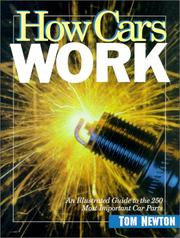
A visual, plain-English primer on engines, transmissions, brakes, and electrical systems. Reading this first gives you the vocabulary to understand every inspection checklist and mechanic's report that follows.
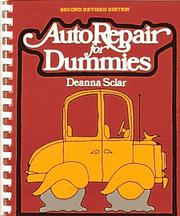
Bridges mechanical theory to real-world maintenance and common failure points. After Newton's overview, Sclar shows what goes wrong and why — essential context before you start evaluating specific used cars.
Research & Selection — Finding the Right Car on Paper
BeginnerKnow how to research reliability data, identify which models hold up over time, decode pricing guides, and build a smart shortlist before you ever visit a lot or private seller.
▸ Study plan for this stage
Pace: 6–8 weeks total. Week 1–3: Read the Consumer Reports 1999 Used Car Buying Guide (~20–25 pages/day), focusing on the reliability ratings, frequency-of-repair records, and model profiles. Week 4–6: Read Lemon-Aid New and Used Cars and Trucks 2007–2018 by Phil Edmonston (~25–30 pages/day), concentratin
- How Consumer Reports collects and presents reliability data through owner surveys, and how to read its frequency-of-repair charts to spot problem-prone systems (engine, transmission, brakes, etc.)
- The concept of 'predicted reliability' vs. 'road-test score' — understanding that a car can drive well but still have a poor repair record, and why both matter when buying used
- How to use the Consumer Reports model profiles to compare vehicles within a class (e.g., compact sedans) and identify which model years to seek out or avoid
- Phil Edmonston's 'Lemon-Aid' rating system — what 'Recommended,' 'Above Average,' and 'Avoid' designations mean, and how his consumer-advocacy perspective differs from Consumer Reports' data-driven approach
- Identifying chronic, model-specific defects catalogued in Lemon-Aid (e.g., rust-prone body panels, transmission failures on specific year ranges) and using them to eliminate candidates early
- Decoding used-car pricing: understanding how both books reference wholesale vs. retail value, regional price variation, and how mileage and condition adjust a vehicle's worth
- Building a weighted shortlist — balancing reliability scores, known defects, ownership costs, parts availability, and budget before setting foot on a lot
- Cross-referencing two independent sources: recognizing where Consumer Reports and Lemon-Aid agree (strong buy signal) and where they diverge (a reason to dig deeper)
- After reading the Consumer Reports Used Car Buying Guide, can you explain what a 'much better than average' reliability rating means and name at least two model years of a specific vehicle that earned it?
- Using Lemon-Aid, can you identify at least one model that Edmonston labels a 'Lemon' or 'Avoid' and articulate the specific recurring defect(s) that earned it that designation?
- How do the pricing frameworks in these two books help you determine whether a seller's asking price is fair, and what factors do they say should raise or lower that price?
- If Consumer Reports gives a model a strong reliability score but Lemon-Aid flags a known safety recall or structural defect for the same years, how should you weigh that conflict when shortlisting?
- What are the key vehicle systems (e.g., engine, transmission, electrical) that both books emphasize checking in the reliability data, and why are those systems especially costly to repair on a used car?
- By the end of both books, can you produce a shortlist of 3–5 candidate vehicles with a written rationale for each — citing specific data points from Consumer Reports and specific warnings or endorsements from Lemon-Aid?
- Reliability Matrix: Create a spreadsheet with your top 8–10 candidate models. For each, record the Consumer Reports reliability rating by system (engine, transmission, brakes, body, etc.) for every model year you're considering. Color-code cells red/yellow/green to visualize trouble spots at a glance.
- Lemon-Aid Defect Log: For each candidate on your list, open Lemon-Aid and write a bullet-point 'defect dossier' — noting every specific fault, recall, or safety issue Edmonston mentions. This forces active reading and gives you a ready reference when inspecting cars later.
- Price Anchor Exercise: Pick one specific vehicle (e.g., a 2010 Toyota Corolla with 80,000 miles in good condition) and use the pricing guidance in both books to establish a fair value range. Then search three real listings online (Craigslist, Facebook Marketplace, or a dealer site) and evaluate whether each asking price is fair, high, or a potential deal.
- Cross-Reference Conflict Report: Find at least one model where Consumer Reports and Lemon-Aid give noticeably different signals. Write a one-page analysis explaining why the sources might differ (survey methodology vs. legal/recall data vs. anecdotal owner reports) and what your conclusion is.
- Shortlist Justification Memo: Draft a one-to-two page 'buying brief' for your top 3 vehicle candidates. For each, cite at least one data point from Consumer Reports and one from Lemon-Aid, state the model years you'd target, the price range you'd accept, and the one or two deal-breaker defects that would make you walk away.
- Model-Year Boundary Test: Choose one model (e.g., Honda Civic or Ford F-150) and use both books to identify the exact model-year 'cliff' — the year where reliability or known defects shift significantly. Practice explaining to a friend why you'd buy a 2012 but not a 2011 (or vice versa) using only evidence from the books.
Next up: Completing this stage gives you a data-backed shortlist of specific makes, model years, and price targets, which is exactly the foundation you need for the next stage — learning how to physically inspect, test-drive, and verify a real car against the red flags and benchmarks you've already identified on paper.

The single most data-rich reliability reference available to a civilian buyer, with model-by-model ratings drawn from hundreds of thousands of owner surveys. Read this to build your shortlist of trustworthy models and eliminate money pits before you shop.

A famously blunt, consumer-advocate guide that names specific problem years and trims that Consumer Reports sometimes softens. Reading it after the CR guide sharpens your shortlist and teaches you to read between the lines of manufacturer claims.
Inspection & Evaluation — Kicking the Tires Like a Pro
IntermediateConduct a thorough in-person inspection, interpret a vehicle history report, understand what a pre-purchase mechanic's inspection covers, and identify red flags that signal hidden damage or neglect.
Covers the full evaluation workflow including decoding dealer paperwork, understanding certified pre-owned programs, and knowing when a deal is structured to hide problems. Builds on the inspection basics with a sharper eye on seller tactics.
Negotiation, Finance & Avoiding the Traps
IntermediateNegotiate price and financing from a position of strength, recognize every common dealer add-on and upsell trap, and close the deal with the right paperwork so you're legally protected.
▸ Study plan for this stage
Pace: 6–8 weeks total. Week 1–4: "Don't Get Taken Every Time" (~25–30 pages/day, reading alongside a notepad to log every dealer tactic described). Week 5–8: "Negotiation Genius" (~20–25 pages/day, pausing after each chapter to map its frameworks back to the car-buying scenarios from Sutton's book).
- The 'Psychological Moment' and dealer time-pressure tactics — Sutton's core argument that dealers engineer urgency, fatigue, and emotion to extract money, and how to neutralize each
- The Four-Square Worksheet trap — how dealers bundle price, trade-in, down payment, and monthly payment into one confusing box to obscure the true cost of the deal
- Dealer profit centers — understanding every revenue stream (front-end gross, back-end F&I products, dealer reserve on financing, add-ons like paint protection and extended warranties) so nothing is hidden
- The importance of separating the negotiation into discrete transactions: new-car price first, trade-in second, financing third — never letting the dealer blend them
- BATNA (Best Alternative to a Negotiated Agreement) from Negotiation Genius — knowing your walk-away point before sitting down, and why a pre-approved bank or credit-union loan IS your BATNA on financing
- Investigative negotiation (Malhotra) — asking strategic questions to uncover the dealer's constraints, inventory pressure, and end-of-month quotas rather than just haggling on price
- Anchoring and counter-anchoring — how the first number sets the psychological range, and Malhotra's techniques for seizing the anchor or neutralizing a dealer's opening offer
- Recognizing and ethically countering hardball tactics — good cop/bad cop (the 'manager'), the nibble, the false deadline, and the 'I have to check with my manager' delay loop
- According to Sutton, what is the Four-Square Worksheet and exactly how does it allow a dealer to give ground on one number while quietly recovering profit on another?
- What are the five most common F&I (Finance & Insurance) back-office upsells Sutton identifies, and what is the reader's recommended response to each?
- Using Malhotra's BATNA framework, how should a buyer establish and strengthen their walk-away position before entering a dealership, and what role does a pre-approved loan play?
- How does Malhotra define 'investigative negotiation,' and what are three specific questions a car buyer could ask a salesperson to surface the dealer's hidden constraints (e.g., inventory age, quota pressure)?
- Sutton describes the tactic of separating the deal into independent transactions. Walk through the correct sequence and explain why collapsing any two of them benefits the dealer.
- How do anchoring effects (Malhotra) interact with the dealer's opening sticker price, and what is the step-by-step counter-anchoring move a buyer should make?
- Four-Square Deconstruction Drill: Find a real dealer advertisement or online listing. Build a mock Four-Square Worksheet using Sutton's template, then reverse-engineer it to isolate the true out-the-door price — practice until you can spot the hidden profit in under 5 minutes.
- BATNA Blueprint: Before any test drive, write a one-page personal BATNA document — your target price (from market research), your walk-away price, your pre-approved loan rate, and two alternative vehicles. Treat this as a living document you update with each negotiation attempt.
- Tactic Recognition Log: While reading Sutton, keep a running two-column log: left column = dealer tactic name, right column = your scripted verbal response. Aim for at least 12 tactic/response pairs you can recall without the book.
- Role-Play Negotiation: With a friend or family member, run a 20-minute mock car negotiation. One person plays the dealer using Sutton's described tactics (Four-Square, the manager delay, the monthly-payment pivot); the other applies Malhotra's investigative questions and anchoring techniques. Debrief using both books.
- F&I Office Simulation: Write out the full list of add-ons Sutton covers (extended warranty, GAP insurance, paint sealant, credit life insurance, etc.). For each, research the actual cost to the dealer vs. the typical markup, then draft a one-sentence decline script you'd feel comfortable saying aloud.
- Paperwork Checklist Creation: Using Sutton's guidance on closing documents, build a personal pre-signing checklist of every line item to verify (out-the-door price, APR vs. dealer-reserve rate, add-ons, trade-in allowance, fees). Test it against a sample deal worksheet found online.
Next up: Mastering negotiation tactics and deal structure gives the reader the transactional confidence to move into the final stage — post-purchase ownership — where understanding warranties, lemon laws, and long-term cost management ensures the smart deal struck at the table stays smart over the life of the vehicle.
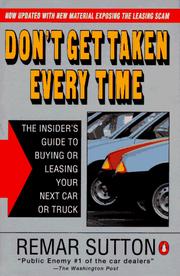
A classic expose of dealer profit tactics written by a former insider — covers the four-square method, payment packing, finance office tricks, and trade-in manipulation. Reading this before you negotiate is like seeing the magician's hand before the trick.
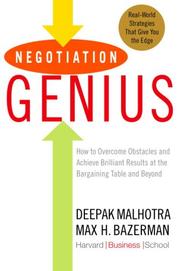
Elevates your negotiation skills beyond car-specific scripts to durable principles — anchoring, framing, and handling pressure — so you can adapt when a seller goes off-script. Placed last because it amplifies everything you've learned rather than teaching car facts.
Discussion
Keep reading
Paths that share books, cover the same subject, or open a related topic.