Become an auto mechanic (EVs included)
This curriculum takes a career-changer from zero mechanical background to job-ready automotive technician across four tightly sequenced stages. Each stage builds on the last: you first develop hands-on intuition and shop culture literacy, then master the diagnostic and systems knowledge needed for ASE certification, then tackle the EV/hybrid transition reshaping the trade, and finally zoom out to understand why skilled physical repair work is durable, meaningful, and automation-resistant — giving you the long-term career confidence to commit fully to the retraining.
Foundations: Tools, Shop Culture & the Mechanic's Mindset
BeginnerBuild hands-on intuition, learn shop vocabulary, understand how cars work as integrated systems, and develop the craftsman's mindset before opening a textbook.
▸ Study plan for this stage
Pace: 10–12 weeks total. Week 1–2: "How Cars Work" by Tom Newton (~5–8 illustrated pages/day; it's a short, visual book — read slowly and sketch diagrams). Week 3–5: "Shop Class as Soulcraft" by Matthew B. Crawford (~20–25 pages/day; pause to journal after each chapter). Week 6–12: "Auto Repair for Dummie
- Systems thinking: Newton's 'How Cars Work' frames the car as interconnected systems (engine, drivetrain, brakes, electrical, cooling) — no system operates in isolation, and a fault in one ripples through others.
- The four-stroke combustion cycle (intake, compression, power, exhaust) as the heartbeat of every gasoline engine — the foundational mental model for diagnosing engine problems.
- Shop vocabulary and visual literacy: Newton's illustrated format teaches you to name parts before you touch them; Sclar's 'Auto Repair for Dummies' reinforces this with labeled diagrams and part identification exercises.
- The craftsman's mindset from Crawford's 'Shop Class as Soulcraft': mechanical work is cognitively demanding, requires full presence, and rewards honest engagement with physical reality over abstract shortcuts.
- The dignity and philosophy of manual trades: Crawford argues that working with your hands cultivates a unique form of knowledge ('embodied cognition') that cannot be learned from manuals alone — doing IS understanding.
- Preventive maintenance logic from Sclar: understanding service intervals, fluid checks, and inspections as a proactive system rather than reactive repairs — the mindset of caring for a machine over time.
- Basic tool identification and safe shop practices: Sclar introduces the essential hand tools, their correct use, and the non-negotiable safety habits (jack stands, ventilation, PPE) that define professional shop culture.
- Reading a car as a diagnostic text: Sclar teaches the reader to interpret symptoms (noises, smells, warning lights, fluid leaks) as a language the car uses to communicate its condition.
- After reading Newton, can you trace the complete path of energy from fuel combustion to wheel rotation, naming each major system the energy passes through?
- Can you explain Crawford's central argument about why manual trades require genuine intelligence, and how does that philosophy change the way you approach learning auto repair?
- Using Sclar's framework, what are the under-the-hood checks you should perform monthly, and what does each fluid's color or consistency tell you about the car's health?
- Can you identify — by name and function — at least 15 hand tools from Sclar's tool section, and explain when you would use each one?
- How does Newton's explanation of the cooling system help you understand why Sclar instructs you never to open a radiator cap on a hot engine? (Connect the two books.)
- What does Crawford mean by 'the resistance of the world,' and how does that concept prepare you mentally for the frustration of a repair that doesn't go as planned?
- 'Newton Sketch Sessions' (during Week 1–2): After each chapter of 'How Cars Work,' close the book and redraw the system diagram from memory — engine, brakes, suspension, electrical. Label every part you can. Compare to Newton's original and fill gaps. Repeat until your sketch matches.
- Pop the hood (during Week 1–2, paired with Newton): On any available car, physically locate every system Newton describes — radiator, battery, alternator, brake fluid reservoir, air filter. Touch it, name it aloud, and cross-reference Newton's diagrams.
- 'Crawford Journal' (during Week 3–5): After each chapter of 'Shop Class as Soulcraft,' write a half-page reflection answering: 'What did Crawford say about the nature of this work, and where have I already experienced this in my own life?' Build a personal philosophy of craft.
- Tool scavenger hunt (during Week 6–7, paired with Sclar): Using Sclar's tool list, visit a hardware store or auto parts store (e.g., AutoZone, O'Reilly). Pick up each tool, read its label, and practice naming it and its function without looking at the book. Buy a starter set of the basics.
- 'Sclar's 30-Point Inspection' live drill (Week 8–10): Using the inspection checklist in 'Auto Repair for Dummies,' perform a full walkaround and under-hood inspection on a real car. Document every finding with a photo and a written note. Identify at least one item that needs attention.
- Symptom-to-system mapping exercise (Week 11–12, synthesizing all three books): Write down 10 common car symptoms (e.g., 'car pulls left when braking,' 'white smoke from exhaust,' 'battery warning light on'). For each, use Newton to identify which system is involved, and Sclar to find the diagnostic or repair procedure. This bridges intuition to procedure.
Next up: ">Mastering the vocabulary, systems thinking, and craftsman's mindset from these three books gives you the mental scaffolding to absorb the technical depth of a formal automotive textbook or ASE study guide in the next stage — you'll recognize the systems, trust the process, and read with the eyes of someone who has already looked under a hood.
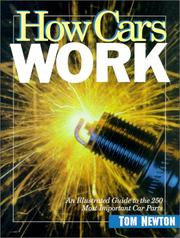
A slim, illustration-driven primer that explains every major vehicle system in plain language — the perfect first read to build the vocabulary every later book assumes you already have.

A philosopher-turned-motorcycle-mechanic makes the intellectual and ethical case for skilled trades work; reading this early anchors your motivation and reframes 'retraining' as a serious, dignified career move.
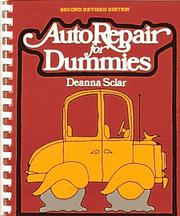
The most widely-used consumer-level repair guide; it bridges the gap between 'how cars work' conceptually and what actually happens under the hood, introducing tools, safety, and basic procedures hands-on.
Core Systems & Diagnostic Fundamentals
BeginnerUnderstand automotive electrical systems, engine operation, and the systematic diagnostic process at the depth required to pass ASE entry-level exams and work productively in a shop.
▸ Study plan for this stage
Pace: 14–16 weeks total. Week 1–6: Erjavec's Tech Manual (~25–30 pages/day, focusing on systems chapters in order — engine, electrical, drivetrain); Week 7–11: Halderman's Diagnosis & Troubleshooting (~20–25 pages/day, reading each chapter twice — once for concept, once for procedure); Week 12–16: Halderm
- Automotive systems thinking — understanding the vehicle as interconnected systems (engine, electrical, fuel, cooling, drivetrain) as laid out in Erjavec's Systems Approach framework
- Engine operation fundamentals — four-stroke cycle, combustion theory, valve timing, and how mechanical condition directly affects performance and emissions (Erjavec, engine chapters)
- Electrical fundamentals — Ohm's Law, series/parallel circuits, voltage drop, and how current flow principles underpin every automotive electrical diagnosis (Halderman, early chapters)
- Wiring diagrams and schematics — reading OEM-style circuit diagrams, identifying fuses, relays, grounds, and power feeds as detailed in Halderman's electrical systems chapters
- Systematic diagnostic process — the 'Diagnostic Routine' (verify, isolate, identify, repair, verify repair) that Halderman uses as the structural spine of his troubleshooting text
- Electronic control systems — PCM/ECM inputs and outputs, sensor types (O2, MAF, MAP, TPS, CKP), and how the computer uses feedback loops to manage engine operation (Halderman, computer systems chapters)
- Scan tool and DVOM use — interpreting live data, freeze-frame data, and DTCs alongside hands-on meter measurements as reinforced throughout Halderman's diagnosis chapters
- NATEF task competency standards — understanding what 'Priority 1' tasks are, how task sheets document the inspection/service process, and why each step maps to a real shop procedure (Halderman NATEF Task Sheets)
- Using Erjavec's systems framework, explain how a fault in the cooling system can produce a symptom that appears to originate in the engine management system.
- Walk through Ohm's Law as Halderman presents it and explain how you would use a DVOM to perform a voltage-drop test on a high-resistance ground circuit.
- Describe the five-step systematic diagnostic process Halderman outlines. Why is 'verify the repair' a distinct step rather than assumed?
- A scan tool shows a P0171 (System Lean, Bank 1) DTC. Using Halderman's diagnostic approach, list at least four possible root causes and explain how you would isolate each one.
- What is the difference between an open circuit and a high-resistance circuit, and how does each affect the operation of an actuator such as a fuel injector?
- After completing a NATEF task sheet on engine compression testing, explain what a reading of 90 psi on one cylinder (vs. 175 psi on the others) indicates, and what your next diagnostic step would be.
- Systems mapping exercise (Erjavec): After each major systems chapter, draw a one-page diagram showing how that system connects to at least two other vehicle systems — label inputs, outputs, and shared components.
- Circuit-building lab (Halderman Diagnosis text): Using a 12V battery, test light, fuse, relay, and jumper wires, physically build each circuit type Halderman describes (series, parallel, series-parallel) and measure voltage and current at each node with a DVOM.
- Wiring diagram scavenger hunt: Pull a free OEM wiring diagram (via ALLDATA or Mitchell1 free trial) for a common vehicle and trace the complete circuit for the cooling fan relay — identify every fuse, ground, and control wire, matching Halderman's diagram-reading methodology.
- DTC simulation drill (Halderman): For each sensor type covered (O2, MAF, TPS, CKP), write out what DTC would set if the sensor failed open, failed shorted, and produced an out-of-range signal — then explain the likely driveability symptom for each.
- NATEF task sheet run-throughs: Complete every Priority 1 task sheet in Halderman's NATEF book on an actual vehicle or a shop-class car. For each task, write one sentence explaining *why* the procedure is performed in the specified order.
- ASE-style mock exam: After finishing all three books, take a 50-question practice test (ASE A1 Engine Repair or A6 Electrical sample questions available free at ase.com) and map every question you miss back to a specific chapter in Erjavec or Halderman to close the gap.
Next up: Mastering the electrical fundamentals, engine theory, and structured diagnostic process in these three books gives you the mental framework and hands-on vocabulary needed to tackle advanced powertrain systems — such as automatic transmissions, advanced driver-assistance electronics, and hybrid/EV high-voltage circuits — which build directly on the circuit analysis and systematic diagnosis skills d

The dominant college-level textbook used in ASE-accredited programs nationwide; it covers every system (engine, drivetrain, brakes, HVAC, electrical) with the depth and terminology examiners expect.

Electrical diagnosis is the core skill separating entry-level techs from certified ones; Halderman's focused treatment of circuits, sensors, and scan-tool use builds exactly the competency the ASE A6 exam tests.
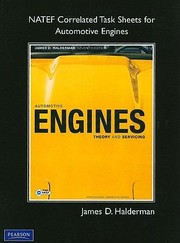
Read after the electrical book, this deepens engine systems knowledge — combustion, lubrication, cooling, and performance diagnostics — rounding out the powertrain half of the ASE certification path.
The EV & Hybrid Transition
IntermediateUnderstand high-voltage hybrid and battery-electric vehicle architecture, safety protocols, and the diagnostic differences that make EV competency the most in-demand — and best-paid — technician skill of the next decade.
▸ Study plan for this stage
Pace: 8–10 weeks, ~20–25 pages/day, 5 days/week — Husain's text is dense with equations and circuit diagrams, so budget extra time for Chapters 4–7 (powertrain modeling) and Chapters 9–11 (power electronics & motor drives); re-read any section where the math feels opaque before moving on.
- High-voltage system architecture: how HEVs, PHEVs, and BEVs differ in topology (series, parallel, series-parallel/power-split) and why each topology affects repairability and diagnostics
- Energy storage systems: Li-ion cell chemistry, battery pack construction (cells → modules → pack), state-of-charge (SOC) and state-of-health (SOH) estimation, and thermal management
- High-voltage safety protocols: orange-cable conventions, service disconnect procedures, lockout/tagout for HV systems, personal protective equipment (PPE) ratings, and interlock circuits
- Electric motors and generators: operating principles of AC induction, permanent-magnet synchronous (PMSM), and switched-reluctance motors as used in traction applications
- Power electronics: the role of the inverter/converter, DC-DC converters, on-board chargers, and how IGBT/MOSFET switching creates the AC waveforms that drive traction motors
- Regenerative braking: energy-recovery logic, blended braking systems, and how the brake-by-wire interface differs from conventional hydraulic diagnosis
- Thermal management systems: coolant loops for battery, motor, and power electronics; heat-pump HVAC; why thermal runaway is a diagnostic and safety priority
- Diagnostic differences vs. ICE vehicles: CAN/LIN network topology unique to EVs, isolation resistance testing, high-voltage interlock loop (HVIL) faults, and OBD-II vs. manufacturer-specific EV fault codes
- Explain the functional difference between a series hybrid and a parallel hybrid powertrain. In which driving scenario does each architecture deliver better efficiency, and what does that mean for the types of faults a technician is likely to encounter?
- Walk through the complete high-voltage safety procedure before touching any orange-cable component on a BEV — from parking the vehicle to verifying zero voltage with a CAT III/IV meter. What does Husain identify as the critical interlock systems that must be confirmed disabled?
- A customer's PHEV shows a reduced EV range and a SOH of 71%. Using the battery management concepts in Husain, describe what cell-level conditions could produce this reading and what tests you would perform to isolate the fault to a specific module.
- How does an inverter convert DC battery voltage into the three-phase AC needed by a PMSM traction motor? Describe the role of pulse-width modulation (PWM) and explain why inverter faults can produce motor torque oscillation symptoms.
- Describe the regenerative braking blending strategy. Why can a conventional brake-pedal pressure test give misleading results on an EV, and what is the correct diagnostic approach?
- What is isolation resistance, why must it remain above a minimum threshold in a high-voltage system, and what sequence of steps would you use to locate an isolation fault using an insulation resistance tester?
- Safety simulation drill: Using a decommissioned or training HV battery pack (or a shop simulator), practice the full lockout/tagout and HV disable sequence from Husain's safety chapters. Time yourself and have a peer verify each step against a written checklist.
- Topology diagram build: Without looking at the book, draw from memory the power-flow diagrams for series, parallel, and power-split (Toyota THS-style) hybrid architectures — label every component, energy path, and control signal. Compare against Husain's figures and correct any gaps.
- Battery math worksheet: Given a pack spec (e.g., 400 V nominal, 75 kWh), calculate cell count in series/parallel, maximum continuous current, and C-rate for a given power demand. Repeat with different chemistries (NMC vs. LFP) using the parameters Husain provides.
- Inverter waveform analysis: Using an oscilloscope (or a free simulator such as PSIM/LTspice), capture or simulate the PWM output of a three-phase inverter at two different motor speeds. Identify switching frequency, dead-time, and how the waveform changes under regenerative vs. motoring mode.
- Fault-code research project: Pull three real EV-specific DTCs (e.g., P0AA6 – Hybrid Battery Voltage System Isolation Fault; P1E00 – Hybrid/EV Battery System; U3003 – Battery Voltage) from a manufacturer service manual. Map each code back to the system architecture described in Husain and write a one-page diagnostic flowchart for each.
- Thermal management teardown (or video teardown): Disassemble (or watch a documented teardown of) an EV battery cooling plate or motor coolant jacket. Sketch the coolant path, identify the temperature sensors, and cross-reference their locations with Husain's thermal management discussion. Note which failure modes could trigger a thermal-runaway protective shutdown.
Next up: Mastering EV/hybrid architecture and safety through Husain gives you the electromechanical foundation needed to tackle advanced-level topics — such as OTA software updates, autonomous-driving sensor integration, and fleet telematics — where the vehicle's electrical backbone you've just learned becomes the substrate for every emerging automotive technology.
Denton is the leading UK/international author on EV systems; this book translates your ICE diagnostic knowledge into the HV battery, motor, inverter, and regenerative-braking domain in a structured, safety-first way.

Steps up the technical depth on power electronics and drivetrain architecture — essential for technicians who want to move beyond basic service into genuine EV diagnostics and who may pursue ASE L3 hybrid certification.
Career Durability: Why Skilled Repair Resists Automation
ExpertDevelop a strategic, long-term view of the automotive technician career — understanding the economic and technological reasons physical diagnostic work is hard to automate, and how to position yourself for advancement.
▸ Study plan for this stage
Pace: 6–8 weeks total: Weeks 1–3 read "The Case Against Education" (~40–50 pages/day, focusing on signaling theory and labor market chapters); Weeks 4–6 read "The Second Machine Age" (~35–45 pages/day, prioritizing chapters on automation, labor polarization, and human-machine complementarity); Week 7–8 re
- Signaling vs. human capital theory (Caplan): formal credentials signal conformity and ability rather than building genuine skill — understanding why trade competence can outperform a degree in labor market value
- The sheepskin effect (Caplan): disproportionate wage returns accrue at diploma completion, not incremental learning — implying that demonstrable shop-floor mastery may rival or beat incomplete college credentials for mechanics
- Labor market sorting (Caplan): employers use education as a filter; skilled tradespeople who build a verifiable portfolio of diagnostic wins can bypass this filter through reputation and certification
- Automation and Moravec's Paradox (Brynjolfsson): tasks that are easy for computers (arithmetic, pattern retrieval) are hard for humans, and vice versa — physical dexterity in unpredictable environments (engine bays, rust-belt undercarriages) remains stubbornly hard to automate
- The 'bounty and spread' tension (Brynjolfsson): technology creates enormous aggregate wealth but also polarizes wages, hollowing out routine middle-skill jobs while rewarding both high-cognitive and high-dexterity roles
- Ideation vs. implementation (Brynjolfsson): computers excel at executing defined algorithms; human technicians excel at novel diagnosis — the mechanic who can interpret ambiguous sensor data and customer descriptions occupies the ideation role machines cannot fill
- Race with the machine, not against it (Brynjolfsson): technicians who leverage scan tools, OBD data, and repair databases as force-multipliers rather than viewing them as threats position themselves as high-value hybrid workers
- Strategic career positioning: combining Caplan's skepticism of credential inflation with Brynjolfsson's framework for human-machine complementarity to chart a durable, advancement-oriented technician career path
- According to Caplan, why does the signaling model of education suggest that a master technician certification (ASE, OEM) may deliver stronger labor-market returns than a general associate's degree for someone pursuing an auto mechanic career?
- How does Caplan's concept of the sheepskin effect apply to automotive trade credentials — and what does it imply about which certifications a technician should prioritize completing fully rather than partially?
- Brynjolfsson identifies categories of tasks that resist automation; using Moravec's Paradox and real shop examples, explain why diagnosing an intermittent electrical fault on a 15-year-old vehicle is unlikely to be fully automated in the near term.
- How does Brynjolfsson's 'bounty and spread' dynamic explain the current wage polarization in the auto repair industry, and which technician skill sets sit in the protected high-dexterity tier versus the vulnerable routine tier?
- Synthesizing both books: if formal education is largely a signal (Caplan) and automation threatens routine cognitive work (Brynjolfsson), what concrete combination of credentials, demonstrable skills, and technology fluency should an advanced technician build to remain economically durable for the next 20 years?
- Brynjolfsson argues that the winning strategy is to race *with* machines rather than against them. Describe three specific ways an automotive technician can use current diagnostic technology (scan tools, ADAS calibration equipment, repair databases) as a complement to human judgment rather than a replacement for it.
- Credential audit: List every automotive certification you hold or are pursuing (ASE, OEM, EPA 609, etc.). Using Caplan's sheepskin-effect logic, identify which ones you are closest to completing and reorder your study priority to finish full credential sets before starting new ones.
- Automation vulnerability matrix: Create a two-column table of 10 tasks you perform weekly in the shop. Label each as 'routine/automatable' (e.g., oil change reminder resets, tire rotations) or 'judgment-intensive/durable' (e.g., NVH diagnosis, intermittent fault tracing) using Brynjolfsson's framework. Use this to identify where to deepen expertise.
- Technology force-multiplier log: For one full work week, document every instance where a digital tool (scan tool, wiring diagram software, OEM repair database) amplified your diagnostic decision rather than replacing it. Write a one-paragraph reflection on how this matches Brynjolfsson's 'race with the machine' thesis.
- Signaling portfolio build: Draft a one-page 'evidence dossier' — a non-resume document listing three complex repairs you diagnosed and resolved, with the symptom, your reasoning process, tools used, and outcome. This operationalizes Caplan's insight that verifiable competence can substitute for credential signals.
- Wage polarization research: Look up current BLS Occupational Outlook data and two or three regional job postings for automotive technicians at different skill tiers (lube tech, general tech, master tech, ADAS specialist). Map the wage spread onto Brynjolfsson's bounty-and-spread model and write a 200-word analysis of where the growth ceiling is and how to break through it.
- 20-year career scenario plan: Write a one-page strategic memo to yourself outlining your career in three phases (0–5 years, 5–12 years, 12–20 years), specifying which skills, certifications, and technology competencies you will develop in each phase to stay in the automation-resistant, high-dexterity tier described by Brynjolfsson — and how you will signal that value without over-investing in form
Next up: By internalizing why physical diagnostic expertise is economically durable and how to signal it efficiently, the reader is now primed to explore the next stage — the specific advanced technical domains (ADAS, EV powertrains, vehicle cybersecurity) that represent the highest-value, hardest-to-automate frontiers a technician can move into for long-term advancement.

Provocative but data-rich argument that credential signaling often beats skill in traditional degree paths — reading this sharpens your understanding of why trade certifications (ASE) offer unusually strong ROI for career-changers.
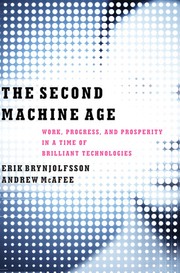
The canonical analysis of which jobs automation takes and which it doesn't; reading it last lets you map its framework directly onto your new career and confirm that tactile, context-dependent diagnostic work sits firmly in the human-advantage column.
Discussion
Keep reading
Paths that share books, cover the same subject, or open a related topic.