The Best Books for 5-Year-Olds: The Learning-to-Read Ladder, in Order
Five is the year the direction of reading reverses: the child stops only being read to and starts reading to you, one word and then one line at a time. So this ladder is built around decoding rather than plot — controlled vocabulary first, then easy readers with jokes the child can get without help, then the first book they finish entirely alone. Reading age and interest age separate sharply here and stay separated for years: a five-year-old who can only decode Hop on Pop still wants Where the Wild Things Are read aloud, so keep the read-aloud going at full strength while these are being sounded out.
Books they read to you, one line at a time
BeginnerDecode a whole page unaided using tightly controlled, heavily rhymed vocabulary — the point where reading becomes something the child does rather than receives.
▸ Study plan for this stage
Pace: There is no page-per-day target here and imposing one is the main way this stage goes wrong. These four run to roughly 60 pages each, but a sitting is a page or two — five minutes, stopping while it is still going well rather than at a natural break. Expect the same book for weeks. Keep reading alou
- This is the rung where the direction of reading reverses — the child starts reading to you, one word and then one line at a time — so the books are chosen for their vocabulary rather than their story.
- Hop on Pop is built out of three-letter rhyming families laid out two or three words to a page, which is the smallest unit of success available. It is the right first book, and The Cat in the Hat is much harder than its reputation suggests.
- Green Eggs and Ham uses about fifty distinct words repeated until they are automatic, which means the last pages are easier than the first. That shape is doing deliberate work: the book gets less demanding as the child tires.
- Go, Dog. Go! drills prepositions and colours through pictures, so a stuck reader can always work the word out from the illustration. Using the picture is a legitimate strategy, not a shortcut.
- Are You My Mother? repeats one question across the whole book, giving the child a sentence they will get right every time to carry them through the harder words between. It also has real narrative suspense, which is rarer at this level than it sounds.
- Sounding out is slow and effortful, and the temptation to supply the word after two seconds is strong. Waiting is usually the more useful thing to do, but so is supplying it before frustration sets in — which of those applies is a judgement you make in the moment, not a rule.
- Rereading a book the child has effectively memorised is not wasted. Fluency and confidence are built on text that is already easy.
- None of this is a schedule or a standard. Reading age and interest age separate sharply at this point and the separation is normal.
- Which words does the child get right every time, and which are being guessed from the picture? Both are useful and they are not the same thing.
- At what point in a sitting does the effort stop being enjoyable? Can you tell before it happens?
- When you wait after a stuck word, what happens — do they get it, or does the waiting itself become the problem?
- Is the child reading or reciting on a familiar page? Does it matter for what you do next?
- Which of the four books gets asked for again, and is it the easiest one or the funniest one?
- Read Hop on Pop with the child doing one page and you doing the next, so a sitting never becomes an unbroken stretch of effort.
- Time one full sitting. Knowing that a good session is four minutes rather than twenty makes it much easier to stop before it sours.
- When a word sticks, count silently to five before helping. Try it for a week and note whether five seconds is too long or too short for this child.
- Read Are You My Mother? aloud yourself once, at speed, before the child works through it. Hearing the shape first makes the repeated question easier to spot.
- Keep a note of the words that came free — the ones no longer being sounded out. The list is the only progress record worth keeping and it is for you, not the child.
Next up: Once decoding a page is possible, the next stage supplies a reason to bother: books where the joke arrives without an adult explaining it.
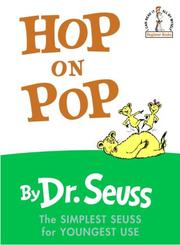
Built out of three-letter rhyming families laid out two or three words to a page, which is the smallest possible unit of success. Start here rather than with The Cat in the Hat, which is far harder than its reputation suggests.
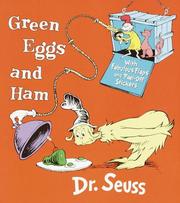
Fifty distinct words in the whole book, repeated until they are automatic. It is the classic first book read cover to cover, and the repetition means the last pages get easier rather than harder.
Prepositions and colours drilled through pictures of dogs doing absurd things, so a stuck reader can always work the word out from the illustration. Read after Green Eggs and Ham for a change of rhythm.
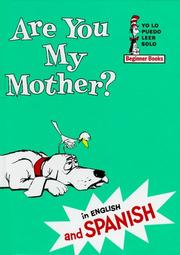
A repeated question across the whole book gives the child one sentence they will get right every time, which carries them through the harder words in between. It is also the first of these with real narrative suspense.
The first books with jokes they get on their own
BeginnerRead for humour rather than practice — the shift that decides whether a five-year-old keeps going.
▸ Study plan for this stage
Pace: These vary more than their page counts suggest — the Elephant and Piggie book and the pigeon book are mostly speech bubbles and go quickly, while The Cat in the Hat is a genuinely long sitting at over two hundred distinct words. Expect the two Willems books to be reread constantly and The Cat in the
- The shift in this stage is from reading as practice to reading for the joke, and that shift is what decides whether a child keeps going.
- Today I Will Fly! is two characters, speech bubbles and almost no narration — closer to a comic than to a book — and it is far easier to read aloud than it looks. It is the one to reach for if Seuss is becoming a chore.
- Speech bubbles give the reader a voice to do rather than a passage to get through, and performing a line is a very different experience from decoding one.
- Don't Let the Pigeon Drive the Bus! argues directly with the reader, who has to shout back, so a hesitant child is performing rather than being examined. It works best after the Elephant and Piggie book, once the format is familiar.
- The Cat in the Hat is far longer and more demanding than the earlier Seuss titles, with over two hundred words and a real plot, which is why it belongs at the top of this stage rather than at the start of the ladder.
- Hairy Maclary from Donaldson's Dairy is a cumulative list of dogs with names that scan, memorised almost at once and then read back with total confidence. Partly-recalled confident reading is doing real work at this stage.
- Reading with expression — different voices, shouting the pigeon's lines — is not a distraction from the skill. It is what makes a child want to do it again.
- If a book becomes a chore, changing the book is almost always better than pressing on. There is no order here that has to be completed.
- Does the child laugh at Today I Will Fly! without help? If not, is it the joke or the reading effort that is in the way?
- With the pigeon book, does the child shout back? What happens if you leave a longer pause after each demand?
- How much of The Cat in the Hat can be decoded, and how much are you reading? Is that ratio comfortable or discouraging?
- Is Hairy Maclary being read or recited, and does the child seem to know the difference?
- Which book in this stage produced the most rereading, and what does that suggest about what to look for next?
- Read Today I Will Fly! with a different voice for each character, and swap roles so the child takes one of them.
- Read the pigeon book and leave a deliberate silence after each of the pigeon's demands. The book is built for the reply and does not work if you fill the gap.
- Read The Cat in the Hat aloud yourself, at full pace, without asking the child to read any of it. Save it for their own reading later.
- Read Hairy Maclary twice in a row and pause before each dog's name on the second pass.
- If any book in this stage produces reluctance twice running, put it away for a month and offer a different one. Note which it was.
Next up: With a reason to read established, the last stage offers the thing this year is actually remembered for: a book finished alone.
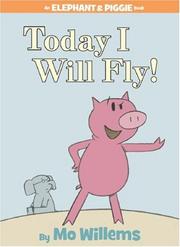
Two characters, speech bubbles, almost no narration — closer to a comic than a book, and enormously easier to read aloud than it looks. This is the one to reach for if Seuss is becoming a chore.
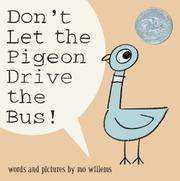
The book argues directly with the reader, who has to shout back, so a hesitant five-year-old is performing rather than being tested. Deliberately placed after the Elephant and Piggie book, because the pigeon's voice is what makes children want to read the rest.
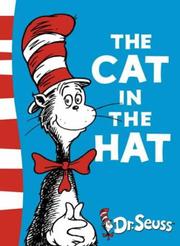
Far longer and more demanding than the earlier Seuss titles here — over two hundred words and a real plot — so it belongs at the top of this stage, not the start of the ladder. A five-year-old reading this fluently is ahead of the year.

A cumulative list of dogs with names that scan, so it is memorised almost instantly and then 'read' with total confidence. That confidence is doing real work at this stage even when it is partly recall.
The first book they finish alone
BeginnerComplete a short book with chapters and no adult in the room, and meet the first non-fiction they can read themselves.
▸ Study plan for this stage
Pace: These four run to roughly 30 to 65 pages with chapter or section breaks, and the breaks are the feature — a five-year-old can stop at the end of a story and feel they finished something rather than abandoned it. Expect a chapter a sitting, and expect long gaps. Read Frog and Toad aloud yourself firs
- The goal of this stage is completion — a whole short book read without an adult in the room — and the books are chosen because their structure makes stopping and finishing the same act.
- Little Bear gives four gentle stories with chapter breaks, which is the bridge between an easy reader and a chapter book: a stopping point every few pages and a sense of having got to the end of something.
- Frog and Toad Are Friends is simple enough to decode and is genuinely good writing — the stories are about friendship being difficult, which is more than the vocabulary implies. For many children it is the first book finished alone.
- Lobel's technique is worth noticing as an adult: the sentences are short because they have to be, and the emotional content is carried by what the characters do rather than by any word a five-year-old would struggle with.
- Owl at Home follows once the format is familiar and quietly raises the difficulty without raising the page count. Its strangeness — an owl who invites winter in — is the appeal, not an obstacle.
- From Seed to Plant is straightforward illustrated non-fiction at roughly the same reading level as the Lobel books, so a child can read a true thing unaided.
- Some children who stall on stories will read an information book straight through without noticing. If fiction is going badly, non-fiction is the obvious thing to try before concluding anything.
- Finishing a book alone is a moment worth noticing and not worth engineering. If it has not happened, more of stage one is the answer, not more pressure here.
- Does the child stop at the chapter breaks in Little Bear, or keep going? Either tells you something about the right length of sitting.
- Which Frog and Toad story gets asked for again? The answer is often the sad one.
- Is Owl at Home's strangeness landing as funny or as puzzling? Does rereading change it?
- Did the non-fiction hold attention differently from the stories? For how long, and was there less resistance?
- What did finishing a book alone actually look like — a whole book, one story, or a chapter? All three are worth marking.
- Looking at the full ladder: which books were reread and which were read once? That list should decide next year, not this order.
- Read one Frog and Toad story aloud yourself and leave the book somewhere accessible. Do not suggest they read the next one.
- Time one chapter of Little Bear read aloud. Knowing that a chapter is four minutes makes it easy to offer at the end of a day.
- Leave From Seed to Plant out alongside the fiction with no framing at all, and see whether it gets picked up.
- When a book is finished alone, say so plainly once and then leave it. Turning it into an occasion tends to make the next one feel like a test.
- Keep the read-aloud going at full strength through this whole stage, with books well above what the child can decode. The two activities support each other and neither replaces the other.
Next up: A child finishing short chapter books alone is ready for longer ones whenever they want them — and the read-aloud, which never stops being worth doing, is what will carry them there.
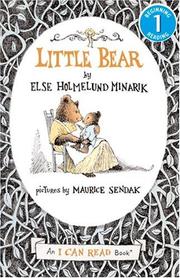
Four gentle stories with chapter breaks, so the child gets a stopping point and a sense of having finished something. It is the bridge between an easy reader and a chapter book.

Simple enough to decode and genuinely good writing — the stories are about friendship being difficult, which is more than the vocabulary suggests. For most children this is the first book they finish on their own, and it is the reason five is a milestone year.

Read after Frog and Toad, when the format is familiar and the child can enjoy how strange it is — an owl who invites winter in and makes tear-water tea. It quietly raises the difficulty without raising the page count.
Straightforward illustrated non-fiction at roughly the same reading level as the Lobel books, so a child can read a true thing unaided. Many five-year-olds who stall on stories will read a whole information book without noticing.
Discussion
Keep reading
Paths that share books, cover the same subject, or open a related topic.