Black and white photography is not color photography with the saturation removed. It asks you to see a scene as a map of tones — where the light falls, how deep the shadows go, where the eye should rest — and that way of seeing has to be learned. Jump straight to technical manuals and you get precision with no vision; start only with picture books and you get inspiration you cannot reproduce.
The proven order builds tonal seeing and craft together, then studies the photographers who defined the form. Each book deepens the one before.
See in tone
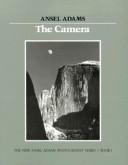
Begin where the tradition begins. The negative is Ansel Adams' foundational text on visualizing a scene as tones and exposing to capture them, the conceptual bedrock of the whole field. Pair it immediately with Ways of Seeing, John Berger's short, provocative book on how images carry meaning, which keeps your technical study anchored to why an image moves anyone. Between them you get both the discipline of tone and the reason it matters.
Master exposure and the print
Craft comes next, and it centers on the zone system, a method for controlling tone from capture to print. The print completes Adams' technical trilogy, carrying an image through to a finished object. The new zone system manual by Minor White makes the system approachable and practical, while Beyond the zone system offers a rigorous, calibrated modern refinement for readers who want measurable control. For the wider fundamentals, The Photographer's Eye keeps composition central, and Black and white photography by Henry Horenstein is the friendly, complete handbook covering film, exposure, and darkroom basics end to end.
Study the masters
Finish with the people who made the medium an art. Ansel Adams: An Autobiography shows how his technique served a lifelong vision of landscape and light. Minor White, the monograph on one of the most poetic photographers of the century, reveals a very different sensibility built on sequence and metaphor. Studying two contrasting masters keeps you from copying one style and teaches you that tone is a language with many dialects.
Read in this order and black and white stops being a filter and becomes a way of seeing. Follow the full path from visualizing a scene in tones to making a print worth hanging.
Follow the full reading path →
Ready to learn something deeply?
Build a reading path — free