Berserk Reading Order and Reading Guide
Berserk has one reading order — volume one forward — but two editions to choose between, and the choice matters. The Dark Horse Deluxe hardcovers collect three of the original volumes each in a larger format, which is both the cheapest way through a very long series and the format that survives being reread; this path uses them, so Deluxe volume 1 is original volumes 1 to 3. The other thing worth knowing before you start is that the opening is not representative: the series begins near its own ending, then spends its best hundred chapters in flashback.
Start Here: The Black Swordsman
IntermediateGet through the deliberately off-putting opening and reach the flashback that the series is actually about.
▸ Study plan for this stage
Pace: Three to four weeks for Berserk Deluxe Volume 1, Volume 2 and Volume 3 — roughly 2,100 pages between them, since each Deluxe hardcover collects three of the original Japanese volumes. Say the edition out loud before you buy anything: this path follows Dark Horse's Deluxe hardcovers, so Deluxe Volume
- The series begins near its own chronological end, so the opening arc is the aftermath of events you have not read yet — the confusion is structural, not accidental
- The Black Swordsman arc as a deliberately off-putting front door: episodic, grotesque, and much cruder in drawing and characterisation than everything after it
- The Brand and the Behelit, introduced as unexplained props in Deluxe Volume 1 and given their meaning hundreds of pages later
- The flashback that begins at the end of Deluxe Volume 1 is the actual series — most of Berserk's reputation rests on the next four hardcovers
- Griffith's arrival in Deluxe Volume 2 changes the genre: the book becomes a war novel about ambition and class, with the horror pushed to the margins
- Miura's drawing as the argument. The crowd scenes and armour in Deluxe Volume 3 are already doing work no other action manga was attempting
- Guts and Casca as a slow-built relationship, established in the mercenary campaign and load-bearing for everything the series does later
- What is Guts hunting in the opening arc, and how much of it makes sense on a first read — and does it need to?
- At what specific point in Deluxe Volume 1 does the flashback begin, and how does the drawing itself change once it does?
- What does Griffith offer the Band of the Hawk beyond military success, and why does Guts in particular respond to it?
- How does Miura use the mercenary campaign to establish a medieval world with real politics rather than a generic fantasy backdrop?
- What is the Behelit shown to do in these volumes, and what have you been told about why?
- Commit to finishing Deluxe Volume 1 before judging the series. Almost every reader who abandons Berserk abandons it inside the first three hundred pages, which are the least representative pages in it.
- Keep a note of every unexplained object or phrase in the opening arc — the Brand, the Behelit, the names dropped in passing. Cross them off as the flashback explains them; almost all of them get paid.
- Compare a fight scene in Deluxe Volume 1 with one in Deluxe Volume 3. Miura's improvement across a few hundred pages is one of the more dramatic in comics and it is worth seeing deliberately.
- Set your own limits on the violence before you begin rather than mid-volume. Reading in daylight, in shorter sittings, and stopping between chapters rather than mid-scene all help.
Next up: The flashback is now running and the Band of the Hawk is at its height, which is exactly the altitude the next two hardcovers need you at before they take everything away.

Collects the first three original volumes: a grim, episodic monster-hunting opening that many readers bounce off. Push on to the end of this volume — the Golden Age flashback begins here and everything changes.

Guts joins the Band of the Hawk and Griffith takes over the book. This is where Berserk stops being a horror serial and becomes a war novel about ambition.

The mercenary campaign at full stretch, with Miura's crowd and armour drawing already extraordinary. Read straight on; the Golden Age is one continuous movement.
The Golden Age
IntermediateFinish the flashback and reach the event the first volume was already the aftermath of.
▸ Study plan for this stage
Pace: Two to three weeks for Berserk Deluxe Volume 4 and Volume 5, about 1,400 pages. Volume 5 in particular should not be broken across many short sittings — the final arc of the flashback is one sustained movement and it is designed to be unbearable in sequence. A specific warning for this stage: the cl
- The Hawks at their peak in Deluxe Volume 4 — Miura spends a whole hardcover on success specifically so that the fall costs something
- The fracture between Guts and Griffith as the series' real subject: it is about whether a friendship can survive one man's ambition being total
- Casca's arc across these two volumes, which is where Berserk's treatment of its central woman is at its most careful and, at the end, at its most brutal
- Griffith's ambition stated plainly — a dream that requires a kingdom, and a man who will price anything against it
- The Eclipse as the hinge the whole series turns on: everything in the opening arc becomes legible the moment it is over
- Miura's use of scale — vast, crowded, hellish compositions that work because you have spent 1,400 pages with the individual faces in them
- The transformation of a war novel back into a horror story, completing the loop to the Black Swordsman arc you started with
- What does Griffith actually want, and at what point in Deluxe Volume 4 does it become clear that Guts is an obstacle to it rather than an asset?
- Why does Guts leave, and is the book asking you to think he was right?
- How does Miura earn the ending of Deluxe Volume 5 — what did he spend the previous four hardcovers building specifically to spend here?
- Reread the first chapter of Deluxe Volume 1 now. What did you misread, and what turns out to have been a straightforward description of something you had not seen yet?
- Is the extremity of the closing sequence doing narrative work, or is it exceeding it? The argument is worth having with yourself rather than outsourcing.
- Read the last two hundred pages of Deluxe Volume 5 in one sitting if you read them at all. Broken up, the sequence becomes gratuitous; in sequence it is at least structural.
- Immediately afterward, reread the opening thirty pages of Deluxe Volume 1. This is the single best-designed reread in long-form manga and it takes twenty minutes.
- Write down what you think Berserk is about now, in one sentence. Compare it with what you would have written after the first stage.
- If you stop here, stop deliberately rather than by drift — this is a legitimate end point for a reader who has got what they came for, and there is no shame in taking it.
Next up: The flashback has closed and delivered you back to the present of the opening volume, so the next stage is the first stretch that can be read forward rather than backward — and the first that rewards having endured the beginning.

The Hawks at the height of their success and the beginning of the fracture between Guts and Griffith. The character work here is why people defend this series.

The end of the Golden Age, and the single most famous sequence in the medium. Read it in one sitting if you can, and be warned that it is extremely graphic.
Conviction
IntermediateFollow Guts after the flashback closes, into the darkest and most religious stretch of the series.
▸ Study plan for this stage
Pace: Three to four weeks for Berserk Deluxe Volume 6, Volume 7 and Volume 8 — around 2,000 pages. Deluxe Volume 7 is the slowest reading in the series so far and benefits from being taken a chapter at a time rather than gulped; Volume 6 and Volume 8 both move fast. The violence remains graphic throughout
- The present tense at last: Deluxe Volume 6 replays the opening arc's events with the flashback's information, and scenes that read as posturing now read as grief
- The Brand as a permanent condition rather than a plot token — Guts is hunted nightly, which turns the series into a story about exhaustion
- The Holy See as Miura's most sustained piece of world-building: an institution with its own politics, heresies and inquisitors, not a backdrop
- Farnese and Serpico introduced as outside eyes on Guts, which is the first time the series looks at him from a normal person's position
- Miura's grotesques at their most inventive in Deluxe Volume 7 — the demonic design work here is the series' technical high point after the Eclipse
- The Conviction arc's argument about faith: that a persecuting church and a demon god are recognisably the same institution
- Deluxe Volume 8 as a genuine reset — it closes the arc, changes Guts's direction, and is the last clean stopping point in the series
- How does Deluxe Volume 6 change the meaning of scenes you read in the first stage without adding new events to them?
- What does the Brand cost Guts practically — in sleep, in company, in where he can go — and how does that shape the plot?
- How does Miura draw the Holy See so that its cruelty and its sincerity are both credible?
- What is Farnese for? What can the series show through her that it cannot show through Guts or Casca?
- By the end of Deluxe Volume 8, what has changed about what Guts is trying to do — and is it still revenge?
- Before starting Deluxe Volume 6, skim the opening arc's chapter titles. You are about to see those events from the other side and the recognition is most of the volume's payoff.
- In Deluxe Volume 7, pick three demon designs and note what ordinary human thing each one is a distortion of. Miura's monsters are almost always arguments.
- Track Casca's situation across all three hardcovers and note how much page time she gets. It is a real and much-discussed weakness of this stretch, and worth forming your own view on.
- Deluxe Volume 8 is the last natural stopping point. If you are wavering, decide here rather than drifting into the next arc and resenting it.
Next up: With the Conviction arc closed and Guts's purpose changed, the series stops being about one man alone in the dark and starts assembling the travelling company that carries it through its long middle.

Back to the present, with the consequences of the Golden Age now legible. The first volume that rewards having endured the opening arc.

The Holy See, the Tower of Conviction, and Miura's grotesques at their most inventive. Slower than the Golden Age and worth the patience.

Closes the Conviction arc and resets the direction of the whole series. A natural stopping point if you need one, though the party that forms next is the best company Guts ever has.
The Journey
IntermediateRead the long middle, where Berserk turns from solitary revenge into a travelling-companions story.
▸ Study plan for this stage
Pace: Three to four weeks for Berserk Deluxe Volume 9, Volume 10 and Volume 11. Around 2,000 pages, and the most variable pacing in the path — Volume 9 is talkier and lighter, Volume 10 widens the map considerably, Volume 11 converges. Read them in order without a long gap: this stretch plants payoffs sev
- Tonal widening: for the first time the series makes room for warmth and comedy between the horror, and readers split hard on whether that is relief or dilution
- The party as a structural change — Guts alone is a horror protagonist, Guts with companions is a fantasy protagonist, and Miura is deliberately changing genre again
- Schierke and the introduction of formal magic, which retroactively systematises the supernatural that earlier volumes left unexplained
- The world map opening out in Deluxe Volume 10: countries, refugee movements and a political plot running in parallel with the personal one
- Griffith's return to the story as a political actor rather than a personal antagonist, which is the series' most interesting late idea
- Miura's page layouts becoming more ambitious as the scale grows — full-page and double-page composition used for landscape and army rather than for gore
- Convergence in Deluxe Volume 11, where the war narrative and Guts's private mission finally intersect
- Does the lighter tone of Deluxe Volume 9 undercut the series or make the horror legible again? Argue both sides before deciding.
- What does Schierke's magic system add, and what does it take away from the earlier volumes' unexplained supernatural?
- How has Griffith's threat changed now that he operates as a ruler rather than as a personal enemy?
- What is the party actually for — protection, plot, or the point that Guts cannot survive alone?
- Where do the payoffs in Deluxe Volume 11 originate? Trace at least two back to where they were planted.
- Keep a short roster of the party as it forms, with one line on why each member is travelling. Miura adds them gradually and their motives are easy to lose.
- Note the panels in Deluxe Volume 10 given over purely to landscape. The ratio changes markedly from the earlier arcs and it tells you what kind of book this has become.
- Pick the moment you think the series stops being about revenge. Mark the page. It is a genuinely contested question among readers and having your own answer is worth more than the consensus.
- Read these three hardcovers within one calendar month if you can. This stretch is the one most damaged by long gaps.
Next up: The company is assembled and the political and personal plots have merged, which is the position the final published volumes take up — and where you will find out how far this series drifted from the book you started.

New companions and a change of tone — lighter stretches start appearing between the horror. Some readers find this the slowest run; others find it the warmest.
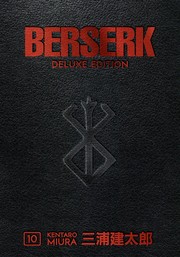
The world of the series widens considerably and the political plot returns. Miura's page layouts get more ambitious as the scale grows.

The war narrative and the personal one converge again. Read in sequence: the payoffs here are set up several volumes back.
The Late Volumes
IntermediateReach the front of the published run and understand where the series stands after Miura's death.
▸ Study plan for this stage
Pace: Three to four weeks for Berserk Deluxe Volume 12, Volume 13 and Volume 14. The pacing here is at its most unhurried and the art at its most detailed, so read them slowly — this is not a stretch to rush, partly because there is nothing waiting on the other side. Volume 14 collects the last of Miura's
- The Fantasia arc: the setting itself is transformed, which lets Miura draw the fantastical openly after twelve hardcovers of keeping it hidden
- Art over pace — the late volumes are the most beautiful and the least eventful, and the trade is deliberate
- The sea voyage and elf island material in Deluxe Volume 13 as the clearest measure of how far the series has travelled from the Black Swordsman arc, and the most divisive stretch among long-time readers
- Casca's storyline in the late volumes, which is the thread most readers are actually still reading for
- The unfinished ending as a fact to be handled rather than a spoiler: Berserk stops mid-arc, and no reading order can fix that
- Griffith's project in its final published state, which the series describes clearly enough that the shape of the intended ending is partly visible
- Thirty-two years of one artist's work, visible end to end — the drawing in Deluxe Volume 14 beside the drawing in Deluxe Volume 1 is the strongest single argument for reading the whole thing
- Has the series lost its way in the elf island material, or has it simply become a different kind of book? The question splits readers and deserves your own answer.
- What does the transformation of the world in the Fantasia arc allow Miura to draw that he could not before?
- Where is Casca's story at the point the published work stops, and what does that leave unresolved?
- From what has been published, what do you think Berserk's ending was going to be — and how confident can you actually be?
- Was it worth it? Berserk is roughly 7,500 pages, it does not finish, and it demands a great deal from a reader. Answering honestly is the most useful thing you can do with the experience.
- Put a page from Deluxe Volume 1 beside a page from Deluxe Volume 14. Nothing else in this path shows you what thirty years of one person drawing looks like.
- Write down where you think the story was going before reading anyone else's theory. The evidence is all in what you have read.
- Decide deliberately whether to follow the continuation published after Miura's death. Some readers regard Deluxe Volume 14 as the honest end of the work; both positions are defensible and drifting into it by accident satisfies nobody.
- Go back and reread the opening chapter one final time. Started as an incomprehensible grotesque, it is now an epilogue to a story you know — which is the trick Berserk was playing on you from page one.
Next up: This is the end of the path and, for now, the end of the work — so the next move is not another volume but deciding what you make of an unfinished masterpiece, which is the only question Berserk leaves its readers.

The Fantasia arc, in which the setting itself is transformed. The art is at its most detailed and the pacing at its most unhurried.

The sea voyage and the elf island material. Divisive among long-time readers, and the clearest example of how far the series drifted from its opening premise.

The last of Miura's work collected in this format. Berserk was unfinished when he died in 2021 and is being continued from his notes, so this is where a reader currently stops rather than an ending.
Discussion
Keep reading
Paths that share books, cover the same subject, or open a related topic.